Category Archives: Research

Research – UK hit hardest by outbreak linked to Brazil nuts; no cases in U.S. yet

Food Safety News

More than 120 people are part of a multi-country Salmonella outbreak linked to Brazil nuts.

Since August 2019, the outbreak, caused by Salmonella Typhimurium and Salmonella Anatum, has affected three European Union countries, the United Kingdom and Canada. The United States was one of more than 30 countries that received Brazil nuts from Bolivia contaminated with Salmonella.

In total, 123 cases of Salmonella Typhimurium have been reported, of which 105 were in the UK, 14 in France, three in Luxembourg and one each in the Netherlands and Canada. One Salmonella Anatum patient was recorded in the UK.

A case-control study in the UK and patient interviews in the UK, France and Luxembourg indicated Brazil nuts and nut bars as likely vehicles of infections. Two batches of Brazil nuts from Bolivia tested positive for Salmonella Typhimurium and Salmonella Anatum matching the outbreak strains.

Research – Food Fraud With Nasty Results – Norovirus

Food Safety Tech

Norovirus Food Safety kswfoodworld

Global food supply chains are complex and therefore quite vulnerable to errors or fraudulent activity. A company in Chile repackaged and falsely labeled cheap raspberries from China, reselling them as top-level organic Chilean raspberries in Canada. These raspberries were linked to a norovirus outbreak in Canada, sickening hundreds of people. A whistleblower complaint helped to uncover this fraudulent scheme that posed a significant risk to human health.

Research – Assessment of spoilage potential posed by Alicyclobacillus spp. in plant-based dairy beverages mixed with fruit juices during storage

Journal of Food Protection

The scope of the present study was to assess the spoilage potential of different Alicyclobacillus spp. in commercial pasteurized (ambient-stable) plant-based dairy beverages mixed with fruit juices at different inoculation levels and storage temperatures. Different products (Coconut and Berry‒CB; Almond, Mango, and Passionfruit‒AMP; Oat, Strawberry, and Banana‒OSB) were inoculated with 10 or 2×10³ spores/mL of either Alicyclobacillus acidoterrestris or A. fastidiosus or A. acidocaldarius strain composites, while non‒inoculated samples served as controls. Samples inoculated with A. acidoterrestris and A. fastidiosus were stored at 30°C and 45°C, while in case of A. acidocaldarius storage took place at 50°C for 240 days. Gas composition, Alicyclobacillus spp. populations, total viable counts, pH, aw, color, and guaiacol off-taste were monitored. CB and AMP supported growth of A. acidoterrestris and A. fastidiosus, reaching populations of 4.0‒5.0 log CFU/mL. In OSB, populations of the latter species remained close to the initial inoculation levels during storage at 30°C, while at 45°C, the populations declined <1 CFU/mL. A. acidocaldarius growth was supported only in CB samples, reaching ca. 3.0 log CFU/mL at 50°C, regardless of initial inoculum size. Total color change was increased during storage, however the instrumentally recorded color changes were not macroscopically visible. Spoilage in terms of guaiacol off-taste, was identified only in CB and AMP samples inoculated with A. acidoterrestris after 60 days at 30°C and 45°C. Considering that these products are becoming increasingly popular and the scarcity of existing literature related to their spoilage by Alicyclobacillus spp., the contribution of the findings and data of present study are critical for assessing the significance of Alicyclobacillus spp. as a potential spoilage hazard in these products and thus, to assist in the design and implementation of effective mitigation strategies by the beverage industry.

USA – Outbreak Investigation of Salmonella Enteritidis: Peaches (August 2020)

FDA

The FDA, along with CDC, Canadian, state and local partners, has been investigating a multistate outbreak of Salmonella Enteritidis infections linked to peaches packed or supplied by Prima Wawona or Wawona Packing Company.

The multistate outbreak of Salmonella Enteritidis infections linked to peaches from Prima Wawona that were sold in several regions of the United States and Canada, investigated by the FDA, along with CDC and Canadian, state, and local partners, is over. As of October 15, 2020, CDC reported a total of 101 cases across 17 states. This outbreak resulted in recalls of bagged and bulk, or loose, peaches packed or distributed by Prima Wawona. FDA also worked to publicly disclose international distribution of recalled product from Prima Wawona in an effort to facilitate the swift removal of all potentially affected product from the international market. More information about international distribution of the recalled product can be found in the previously published table below. FDA’s traceback investigation, which included 18 cases across eight states, identified multiple distributors, packing facilities, and orchards that supplied peaches during the time period of interest. Investigators from FDA, the California Department of Public Health (CDPH) and the California Department of Food and Agriculture (CDFA) visited Wawona packing facilities and/or orchards that likely supplied peaches to Prima Wawona during the timeframe of interest. FDA’s traceback investigation is ongoing; however, the cause and source of the outbreak has not yet been determined.

Thus far, in an effort to investigate several possible pathways of contamination, FDA has completed over 570 product and environmental sample analyses from multiple facility locations and/or peach orchards, including environmental swabs, peaches and peach tree leaf samples. At this time, sample collection and analysis is underway related to additional peach orchards. A genetic match to the outbreak strain has yet to be identified in any of the samples collected, although a different serotype of Salmonella was detected in one sample collected and analyzed during the investigation. No peaches linked to the positive sample ever reached the marketplace. Although the outbreak is being declared over, FDA will continue its investigation and will communicate any findings that could assist future prevention efforts.

Available recall information is included below.

Recommendation

On August 22, 2020, Prima Wawona recalled bagged and bulk, or loose, peaches that they supplied to retailers nationwide.

The recalled products are now well beyond expiration and likely no longer on the market or in consumers’ homes. However, consumers who may have frozen the recalled bagged peaches packed or supplied by Prima Wawona from June 1, 2020 to August 19, 2020 or the recalled loose/bulk peaches packed or supplied by Prima Wawona from June 1, 2020 to August 3, 2020 should throw them away.

Research – Invisible threat: Listeria in smoked fish

Science Daily

In 2018, 701 cases of severe invasive listeriosis were communicated to the Robert Koch Institute (RKI), which translates into 0.8 cases per 100,000 inhabitants. Most listeriosis illnesses reported are severe and are associated with blood poisoning, meningitis or miscarriages, for example. In 2018, the disease was fatal in 5% of cases. Elderly people, people with weakened immune defences, pregnant women and their new-born babies are particularly vulnerable. Listeria can be found in a large variety of foods of plant and animal origin. Cold or hot-smoked fish are often contaminated and are, therefore, also suspected of transmitting this illness. Other fish products and seafood eaten raw, such as sushi, sashimi and oysters or cured products such as graved fish, may also be affected. “Pregnant women, elderly people or those with weakened immune defences should only eat fish and seafood that have been thoroughly heated,” says BfR President Professor Dr. Dr. Andreas Hensel.

Not all Listeria bacteria cause illness. Of the 20 Listeria species described, only Listeria (L.) monocytogenes is a significant cause of infection in humans. Infections during pregnancy can lead to miscarriage, premature birth, stillbirth or the birth of a sick child. Furthermore, listeriosis mainly develops in people whose immune system is weakened by old age, pre-existing medical conditions or medication intake. They often suffer from blood poisoning, encephalitis or meningitis as well as e.g. from endocarditis or bacterial joint inflammation. Listeriosis is associated with relatively high mortality in risk groups. In healthy individuals who do not belong to one of the risk groups, an infection can lead to inflammation of the gastrointestinal tract plus a fever, with progression generally being mild.

The bacterium L. monocytogenes is widespread in the environment and can be found in many foods. High detection rates are found in minced meat, raw meat dishes (e.g. tartare), raw sausage meat (e.g. “Mettwurst” raw minced pork) and raw milk, for example. However, numerous other ready-to-eat foods of animal and plant origin, which are not subjected to further germicidal treatment (e.g. heating) after processing, may also contain L. monocytogenes. Examples include cheese (made from raw or pasteurised milk), pre-cut salads and vegetables, deli salads or sliced sausage products. This is because listeria can survive for a long time in food processing plants in recesses that are difficult to reach for cleaning and disinfection. As a result, the continuous entry of the germs during food production is possible.

Raw, smoked or cured fish products and seafood such as sushi, sashimi, oysters, cold or hot smoked fish (e.g. smoked salmon) and cured fish (e.g. graved salmon) are frequently contaminated with listeria. 7 to 18 % of the samples of cold-smoked or cured fish products examined by the food monitoring authorities in Germany between 2007 and 2017, and 3 to 9 % of the samples of hot-smoked fish products contained L. monocytogenes. Even low germ concentrations are hazardous to risk groups, for example when products are stored at home above the temperatures recommended by the manufacturer or when they are eaten after their best-before date. What’s more, handling contaminated products risks transferring listeria to other foods.

The German Nutrition Society (DGE) recommends at least one fish meal every week. Fish notably contains special fatty acids and the long-chain omega-3 fatty acids docosahexaenoic acid (DHA) and eicosapentaenoic acid (EPA).

The BfR recommends that people who have an increased risk of developing listeriosis should not generally avoid fish, but rather only eat fish or seafood that has been thoroughly heated. Listeria can be reliably killed off by heating food to a core temperature of 70 °C for at least two minutes. Risk groups should refrain from eating raw, smoked and cured fish products and seafood.


Story Source:

Materials provided by BfR Federal Institute for Risk AssessmentNote: Content may be edited for style and length.

Research – Presence of Foodborne Pathogens in Seafood and Risk Ranking for Pathogens

Mary Ann Leibert

This study aims at examining the contamination of coliform bacteria, Escherichia coliListeria monocytogenesVibrio vulnificus, and Vibrio cholerae, which carry extremely serious risks to the consumer health, in 700 seafood belonging to 4 different (raw sea fish, raw mussels, raw shrimp, and raw squid) categories. The total number of samples was determined as 700. When the obtained results were viewed in total, they were found to be 48.14%, 18.71%, 8.57%, and 3.42% for coliform bacteria, E. coliL. monocytogenes, and V. vulnificus, respectively. V. cholerae, one of the factors studied, was not found. Conventional microbiological cultivation methods were used in the analysis stage as well as the real-time PCR method. This study aims at making a risk ranking modeling for consumer health based on product category and pathogens by interpreting the results of the analysis with statistical methods. According to the statistical analysis, significantly binary correlations were determined among some parameters that stimulate one another for reproducing. In the light of the obtained results of the study, it has been concluded that the studies of the most detailed examinations of the microbiological risks associated with seafood, forms of microbial pollution and microorganisms that cause deterioration in seafood and threaten consumer health and the path that their epidemiologies follow, are of primary importance to both protecting consumer health and obtaining safe and quality seafood.

Research – Quaternary ammonium compound resistance as a persistence marker for L. monocytogenes

Journal of Food Protection

Persistent contamination of food manufacturing environments by Listeria monocytogenes is an important public health risk because such contamination events defy standard sanitization protocols, for example, the application of quaternary ammonium compounds such as benzalkonium chloride (BC), providing a source for prolonged dissemination of the bacteria in food products. We performed whole-genome sequence (WGS) analyses of 1279 well-characterized L. monocytogenes isolates from a variety of foods and food manufacturing environments and identified the bcrABC gene cassette associated with BC resistance in 41.5% of isolates. Of particular interest was the finding that all but one of 177 clonal complex (CC) 321 isolates, representing one of the most commonly occurring CCs found in foods and food-production environments, harbored the intact bcrABC cassette. Thirty-nine (38.6) percent of isolates recovered from foods representing 67 different CCs, and 59.2% of strains from food-manufacturing environmental samples representing 26 different CCs, were found to harbor the intact bcrABC cassette. A representative set of 69 isolates with and without bcrABC was assayed for the ability to grow in the presence of BC, and 34 of 35 isolates harboring the bcrABC cassette were resistant to BC. Determination of bcrABC in colony isolates could be achieved using both polymerase chain reaction and whole genome sequencing techniques, providing food testing laboratories with options for the characterization of isolates. The ability to detect bcrABC provides risk managers with a valuable tool to assess the potential for persistent contamination of the food manufacturing environment, which in turn may indicate the need for more targeted surveillance to ensure the efficacy of mitigation actions.

Research – Effects of oilseed substrates (ground nyjer and flax seeds) on the growth and Ochratoxin A production by Aspergillus carbonarius

Wiley Online

kswfoodworld

Image CDC

Aspergillus carbonarius is one of the major Ochratoxin A (OTA) producing fungus. Nyjer and flax seeds are important oilseeds that are used for both human and animal consumption, but they are highly susceptible to fungal growth and mycotoxin contamination. The objectives of this study were to determine the growth and OTA production by A. carbonarius on ground nyjer and flax seeds with water activity levels ranging from 0.82 to 0.98 aw at three incubation temperatures (20, 30, 37°C). It was found that A. carbonarius was not able to grow on the two types of oilseeds with 0.82 or 0.86 aw. Also, the fungus was not able to grow on flax seeds with high water activity (0.98 aw). The OTA was only detected on flax seed samples with 0.94 aw at 20°C. On nyjer seeds, the highest concentration of OTA (271 μg/kg) was detected from samples with 0.98 aw incubated at 20°C for 5 days, while on flax seeds the highest OTA (146 μg/kg) was found on the seed samples with 0.94 aw incubated at 20°C for 15 days. Linear regression models also indicated that 0.98 aw was optimal for both fungal growth and OTA production on nyjer seeds. Overall, ground nyjer seed is better than flax seed to support growth and OTA production by A. carbonarius.

Research – Just What we All Wanted a New Listeria Species – Number 21

Microbiology Research

 sp. nov., isolated from a water trough and the faeces of healthy sheep

In the context of a study on the occurrence of species in an animal farm environment in Valencia, Spain, six -like isolates could not be assigned to any known species.

Phylogenetic analysis based on the 16S rRNA gene and on 231 core genes grouped these isolates in a monophyletic clade within the genus , with highest similarity to .

Whole-genome sequence analyses based on  DNA–DNA hybridization, the average nucleotide  and the pairwise amino acid identities against all currently known species confirmed that these isolates constituted a new taxon within the genus .

Phenotypically, these isolates differed from other species mainly by the production of acid from inositol, the absence of acidification in presence of methyl α--glucoside, and the absence of α-mannosidase and nitrate reductase activities. The name  sp. nov. is proposed for this novel species, and the type strain is CLIP 2019/00642 (=CIP 111799=DSM 110544).

Research – Multistate Salmonella outbreaks tied to pet hedgehogs, lizards

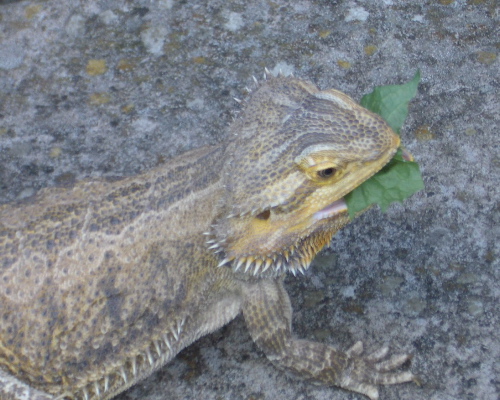
BeardedDragonEatting

CIDRAP

The Centers for Disease Control and Prevention (CDC) has announced two separate outbreaks of Salmonella in states across the United States, totaling 43 cases.

Through whole-genome sequencing, public health investigators have traced the outbreaks to hedgehogs (Salmonella Typhimurium) and bearded dragons (Salmonella Muenster), but no common source for either has been found yet.

Although the CDC has listed no new cases as of Sep 22 and Sep 25 for the bearded dragon– and hedgehog-related cases, respectively, it takes about 2 to 4 weeks from when the illness occurs for it to be added to the investigation numbers.