Category Archives: Research

USA – Keep your Thanksgiving Full of Turkey and Free from Foodborne Illness

USDA

Next week, Americans will enjoy Thanksgiving with family and friends. While the COVID-19 pandemic is still top-of-mind, the U.S. Department of Agriculture (USDA) reminds us all that it’s also important to keep family and friends safe from foodborne illness this Thanksgiving.

“Thanksgiving is one of my favorite times to remind people about food safety,” said Agriculture Secretary Tom Vilsack. “I personally know how much effort it takes to prepare a full Thanksgiving meal, and I always ensure I’m following safe food practices like handwashing, using a food thermometer and avoiding cross-contamination.”

By following the tips below, you’ll lessen the chances of having a visit from foodborne illness — an unwelcome visitor — at your table this Thanksgiving.

Clean and Sanitize

Always wash your hands before preparing and handling food. Handwashing helps to prevent the spread of germs. Recent USDA observational research showed that 95 percent of participants failed to properly wash their hands before handing food. Make sure to follow the steps to wash your hands properly.

Clean and sanitize any surfaces that will touch food such as tabletops, kitchen counters, stoves, sinks, etc.

Avoid Cross-Contamination

In a recent study (PDF, 1.7 MB), USDA found 60 percent of kitchen sinks were contaminated with germs after participants washed or rinsed poultry. USDA advises against washing your turkey; however, if you do wash your turkey in the sink, it must be fully cleaned and sanitized afterwards. To clean, rub down surfaces — including the sink, cutting boards and counter tops — with soap and hot water, and then sanitize them with a cleaning solution to remove any residual germs. You can use a homemade solution of one tablespoon of unscented, liquid chlorine bleach in one gallon of water. Let the surfaces air dry. Be sure to use separate cutting boards—one for meat and another for vegetables and fruit.

Thaw the Turkey Safely

Never thaw a turkey on a counter or in hot water. USDA recommends thawing a turkey in a refrigerator since this allows for slow and safe thawing. The turkey will need about 24 hours for every four to five pounds of turkey. After thawing, it is safe to store in the refrigerator for one to two days. Turkey can also be thawed in a cold-water bath or microwave; however, it must be cooked immediately after it has thawed using these methods. If using the cold-water method, allow 30 minutes per pound and submerge the turkey in its original wrapping to avoid cross-contamination. It’s safe to cook a turkey from its frozen state; however, it will take at least 50 percent longer to fully thaw. Lastly, never leave a raw turkey out at room temperature for more than two hours.

Cook Thoroughly

Make sure your turkey reaches an internal temperature of 165 F. Use a food thermometer to measure the internal temperature in three parts: the thickest part of the breast, the innermost part of the wing and the innermost part of the thigh. USDA recommends using a food thermometer even if the turkey has a pop-up temperature indicator to ensure it has reached 165 F in the three previously stated places. When cooking a turkey breast instead of a whole turkey, check the temperature with the food thermometer to ensure it reaches 165 F at the thickest part the breast. All previously cooked side dishes should be reheated to 165 F.

Stuffing your Turkey

USDA does not recommend stuffing your turkey because it can be a breeding ground for bacteria if not prepared carefully. However, if you plan to stuff your turkey, please keep the following in mind:

  • The wet and dry ingredients for the stuffing should be prepared separately from each other and refrigerated until ready to use.
  • Stuff the turkey loosely — about 3/4 cup of stuffing per pound.
  • Immediately place the stuffed, raw turkey in an oven set no lower than 325 F.
  • A stuffed turkey will take longer to cook. Once it has finished cooking, place a food thermometer in the center of the stuffing to ensure it has reached a safe internal temperature of 165 F.
  • Let the cooked turkey stand 20 minutes before removing the stuffing.

For more information on turkey stuffing, visit Turkey Basics: Stuffing.

The Two-Hour Rule

All perishable foods must be refrigerated within two hours of being cooked, or one hour if the temperature is 90 F or above. After two hours, perishable food will enter the “Danger Zone” (between 40 F and 140 F), which is where bacteria can multiply quickly and cause the food to become unsafe. Discard all foods that have been left out for more than two hours.

Leftovers

After the meal (but within the two-hour rule), separate larger quantities of leftovers in small shallow containers and place them in the refrigerator. Thanksgiving leftovers are safely stored in a refrigerator for up to four days. In the freezer, leftovers can be safely frozen indefinitely but will keep best quality for two to six months. Reheat leftovers to an internal temperature of 165 F. Check the internal temperature of the food in several places with a food thermometer after allowing a resting time.

For Thanksgiving food safety questions, call the USDA Meat and Poultry Hotline at 1-888-MPHotline (1-888-674-6854), email MPHotline@usda.gov or chat live at ask.usda.gov from 10 a.m. to 6 p.m. Eastern Time, Monday through Friday.

Do you have any last-minute turkey day questions? The Meat and Poultry Hotline will be open on Thanksgiving Day from 8am-2pm EST.
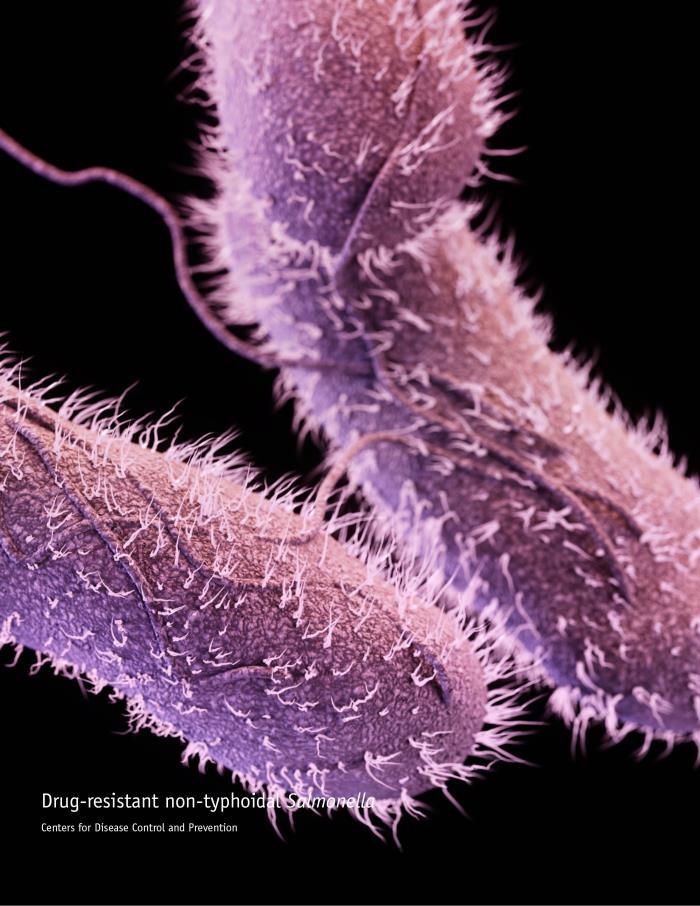
USA – Salmonella Serotypes Associated with Illnesses after Thanksgiving Holiday, United States, 1998–2018

CDC

Food Poisoning Salmonella

Abstract

We sought to determine which Salmonella serotypes cause illness related to the Thanksgiving holiday in the United States and to foods disproportionately eaten then (e.g., turkey). Using routine surveillance for 1998–2018 and a case-crossover design, we found serotype Reading to be most strongly associated with Thanksgiving.

Thanksgiving, celebrated annually in the United States on the fourth Thursday of November, often brings together family and friends who eat specific traditional foods, such as mashed potatoes, cranberry sauce, and pumpkin pie; the most prominent food eaten is turkey (1). In 2017, ≈45 million turkeys were produced for Thanksgiving, ≈18% of annual production (2). Turkey is popular across regions, races, sexes, and generations; 88% of person in the United States report eating turkey during their Thanksgiving meal (1,3,4).

Foodborne Salmonella infections cause substantial illness and death in the United States: an estimated1 million cases, 20,000 hospitalizations, and 400 deaths occur annually (5). Typical illness consists of diarrhea, fever, and abdominal pain lasting 3–7 days; only a minority of persons seek health care. Incubation typically ranges from 6 hours to 6 days (5). Salmonella outbreaks caused by serotypes Hadar and Saint Paul have been most commonly attributed to turkey, and serotypes Enteritidis, Heidelberg, and Typhimurium have been frequent causes of turkey-associated outbreaks (6). During 2015‒2020, Reading and Hadar were the serotypes most often isolated from turkeys (7); less is known about which serotypes cause turkey-associated sporadic Salmonella infections. We aimed to determine which Salmonella serotypes cause sporadic enteric infections after the Thanksgiving holiday and are most likely related to foods disproportionately eaten then, particularly turkey.

Research – Evaluation of the use of ampicillin- and streptomycin-resistant Shiga toxin-producing Escherichia coli to reduce the burden of background microbiota during food safety studies

Wiley Online

Tracking artificially seeded foodborne pathogens in foods with high background microbiota is challenging. Wheat flour and its subsidiary products are known to carry a high native microbial load, which could interfere with tracking and enumeration of target organisms in such matrices. Shiga toxin-producing Escherichia coli (STEC) serogroups O26, O121, and O157:H7 were transformed with the pGFPuv plasmid encoding ampicillin resistance (+Amp) and green fluorescent protein and were additionally conferred resistance to streptomycin (+Amp + Strep) through exposure to incremental concentrations of the antibiotic. Growth characteristics of these antibiotic-resistant strains were compared to those of the nonresistant native strains (NR). The supplementation of ampicillin and ampicillin + streptomycin in growth media was evaluated for its ability to suppress growth of the native microbial load of three different commercial cake mixes. Antibiotic supplementation in growth media was successful in suppressing the native microbiota of the cake mixes, while the growth characteristics of the +Amp + Strep variants of the three STEC strains did not differ significantly from the NR strains (p > .05). These results indicate that STEC strains with ampicillin and streptomycin resistance markers have improved trackability over their wild-type counterparts when isolated from food matrices with high background microbiota. These strains would be advantageous for use in laboratory experiments on STEC survival in wheat and wheat derived products as their detection and enumeration can occur without interference from native microbial load.

Australia – Australians warned not to become complacent about food poisoning

Food Safety News

The Food Safety Information Council (FSIC) has urged consumers not to become complacent about food poisoning.

The message comes as part of Australian Food Safety Week which runs from Nov. 13 to 20. The focus is on food safety in emergency situations and how understanding the hazards and preparing for them can help reduce risks associated with foodborne illness and contamination.

Each year, there are an estimated 4.1 million cases of food poisoning in the country which result in 31,920 hospitalizations, 86 deaths and a million visits to doctors.

Research – Antimicrobial Potential of Plastic Films Incorporated with Sage Extract on Chicken Meat

MDPI

The function of packaging is crucial in the maintenance of fresh meat product quality. This study aimed to assess the efficiency of six films added with coatings 2379L/220 and 2379L/221 (containing sage extracts) to inhibit Salmonella typhimurium, Staphylococcus aureus, and Escherichia coli, which showed that two of the six films had a significant effect. Additionally, the effects of the films on refrigerated skinless chicken breast meat were evaluated based on microbiological content, colour, weight loss, texture and pH. Four of the six films were examined could extend the storability of refrigerated chicken breast fillets for up to seven days. All six treated films improved the pH, colour stability, weight loss, and texture of the chicken fillets. Therefore, these findings suggested that the coatings containing sage extracts having different viscosities (2379L/220 and 2379L/221) were effective as antimicrobial adhesives in food packaging films and can be commercially applied in prolonging the storage of chicken breast meat without affecting their quality. View Full-Text

New Zealand – Second round of consultation on food safety management of berries, leafy vegetables and melons

FSANZ

Food Standards Australia New Zealand (FSANZ) is commencing a second round of public consultation on its review of food safety in the berries, leafy vegetables and melons sectors.
FSANZ has assessed four regulatory and non-regulatory options for each sector to identify a preferred approach to improve food safety management and reduce rates of foodborne illness.
FSANZ Interim Chief Executive Officer Dr Sandra Cuthbert said the agency considered a variety of factors in its assessment.
“We took into account food safety risks, costs of foodborne illness, coverage of existing industry schemes, the lack of a national approach, cost-benefit and submissions to our first round of consultation when reviewing the options for each sector,” Dr Cuthbert said.
“As a result of this assessment, FSANZ’s preferred approach is to recommend the introduction of a combination of regulatory and non-regulatory measures to manage food safety in these sectors, delivering an estimated $138 million in net benefits over a 10-year period.

“We believe this option has the best cost-benefit ratio in terms of the costs of implementation and the benefits in reducing illness.”

Through proposal P1052 – Primary Production and Processing Requirements for Horticulture (Berries, Leafy Vegetables and Melons), FSANZ proposes to:

  • amend the Australia New Zealand Food Standards Code to include a primary production and processing standard for each of the three sectors, and
  • work with industry to develop non-regulatory measures to assist businesses to understand and comply with the standards.

“The food safety management measures included in the draft proposed standards would align with those in existing industry food safety schemes, to support cost-effective implementation by businesses already participating in such schemes,” Dr Cuthbert said.

“Should the proposed draft standards be introduced, they would create a level playing field for businesses in managing food safety and further strengthen consumer confidence in the safety of this fresh produce.

“Although a combination of regulatory and non-regulatory measures is currently FSANZ’s preferred approach, we are seeking information and views on all options.

“We recognise this is an important proposal for the three sectors and have extended the consultation period from six to 12 weeks to ensure we effectively engage businesses, industry and regulators in the process.”

FSANZ invites comments from interested parties on the proposed measures by 6pm (Canberra time) 9 February 2022. FSANZ will consider all submissions before making a final decision. All FSANZ decisions on proposals to develop or update standards are notified to the ministers responsible for food regulation in Australia and New Zealand, who can ask for a review or agree that the standard should become law.

More information

Media contact:

  • 0401 714 265 (Australia)
  •  +61 401 714 265 (from New Zealand)
  • media@foodstandards.gov.au

USA – FDA’s Food Safety and Nutrition Survey (FSANS)

FDA

FDA’s premier, national probability consumer survey designed to elicit consumers’ knowledge, understanding, and reported behaviors on a variety of food safety and nutrition-related topics.

This application can be used to display survey question and demographic frequencies, and to run chi-square tests of independence, by using the “Frequencies” tab.

Several questions in FSANS are multi-part (i.e., grid) questions. These questions can be visualized as a bar chart by using the “Multi-part Questions” tab.

Note: Please zoom your browser if needed. Mozilla Firefox or Google Chrome is recommended for the best user experience.

Food Safety – Another record quarter for international food safety network

Food Safety News

A global food safety network was involved in 65 incidents from July to September, which is more than earlier this year.

It is the third successive quarter that events involving the International Food Safety Authorities Network (INFOSAN) have gone up, with 63 from April to June and 56 in the first quarter of this year.

Salmonella was part of 46 incidents involving a biological hazard followed by Listeria with 11. Next was E. coli with four, a couple each for Bacillus cereus, Hepatitis A, Norovirus and Vibrio parahaemolyticus and one each for Clostridium botulinum and Staphylococcus aureus.

Research – The Prevalence and Epidemiology of Salmonella in Retail Raw Poultry Meat in China: A Systematic Review and Meta-Analysis

MDPI

Foodborne disease caused by Salmonella is an important public health concern worldwide. Animal-based food, especially poultry meat, is the main source of human salmonellosis. The objective of this study was to evaluate the prevalence and epidemiology of Salmonella contamination in raw poultry meat commercialized in China. Following the principle of systematic review, 98 sets of prevalence data were extracted from 74 publications conducted in 21 Chinese provincial regions. The random-effect model was constructed for subgrouping analysis by meat category, preservation type, and geographical location. The prevalence levels differed from high to low among raw poultry meat, including chicken, 26.4% (95% CI: 22.4–30.8%); pigeon, 22.6% (95% CI: 18.2–27.8%); duck, 10.1% (95% CI: 5.3–18.2%); and other poultry meat, 15.4% (95% CI: 12.0–19.5%). Prevalence data on the preservation type revealed that chilled poultry meat might be more likely to experience cross-contamination than non-chilled poultry meat in China. The distribution map of Salmonella for raw poultry meat showed that a higher prevalence level was found in the Shaanxi, Henan, Sichuan, and Beijing regions. All subgroups possessed high amounts of heterogeneity (I2 > 75%). The scientific data regarding the differences in prevalence levels between meat category, preservation method, and geographical region sources might be useful to improve specific interventions to effectively control the incidence of Salmonella in poultry meat. View Full-Text

Research – Microbiological Food Safety of Seaweeds

MDPI

The use of seaweeds in the human diet has a long history in Asia and has now been increasing also in the western world. Concurrent with this trend, there is a corresponding increase in cultivation and harvesting for commercial production. Edible seaweed is a heterogenous product category including species within the green, red, and brown macroalgae. Moreover, the species are utilized on their own or in combinatorial food products, eaten fresh or processed by a variety of technologies. The present review summarizes available literature with respect to microbiological food safety and quality of seaweed food products, including processing and other factors controlling these parameters, and emerging trends to improve on the safety, utilization, quality, and storability of seaweeds. The over- or misuse of antimicrobials and the concurrent development of antimicrobial resistance (AMR) in bacteria is a current worldwide health concern. The role of seaweeds in the development of AMR and the spread of antimicrobial resistance genes is an underexplored field of research and is discussed in that context. Legislation and guidelines relevant to edible seaweed are also discussed. View Full-Text