Category Archives: Pathogen

Canada – Extended Recalls – Eggplants Clostridium botulinum and Nut Mix Salmonella

CFIA

The Canadian Food Inspection Agency (CFIA) and Osmat Imports are warning the public not to consume the Osmat Imports brand Stuffed Eggplants product described below because it may be contaminated with Clostridium botulinum. Toxins produced by these bacteria may cause botulism, a life-threatening illness. The affected product, Osmat Imports brand Stuffed Eggplants, was sold in 2 kg jars (4.4 lbs) bearing UPC 8 37770 00009 7 and Best Before: Lot 6 EXP JA 14. There have been no reported illnesses associated with the consumption of this product. The importer, Osmat Imports, North Vancouver, BC is voluntarily recalling the affected product from the marketplace. The CFIA is monitoring the effectiveness of the recall.

CFIA

The public warning issued on April 4, 2013 has been updated to include an additional product because this product may be contaminated with Salmonella. Previously identified products included in this recall can be found on the Canadian Food Inspection Agency (CFIA) website. The Canadian Food Inspection Agency (CFIA) and Trophy Foods Inc. are warning the public not to consume Trophy brand Nut Mix In Shell because they may be contaminated with Salmonella. This product has been distributed in British Columbia, Alberta, Saskatchewan, Manitoba, and may have been distributed to other provinces. There have been no reported illnesses associated with the consumption of this product. The manufacturer, Trophy Foods Inc., Calgary, Alberta is voluntarily recalling the affected product from the marketplace. The CFIA is monitoring the effectiveness of the recall.
Research – Natural Antimicrobials on Poultry – Whey Protein Isolate Edible Films with Essential Oils

Wiley Online imagesCAYZ5I84

Abstract

Background

Whey protein isolate edible films with oregano or clove essential oils (EOs) incorporated as natural antimicrobials have been developed aimed to enhance the microbial quality of poultry. The effectiveness of the films was determined both against the whole and selected microbiota developed during different periods of cold storage on the surface of skinless chicken breast. Tests were conducted by using both turbidimetric and agar disk diffusion methods.

Results

The antimicrobial edible films developed showed high effectiveness against the main spoilers developed on the surface of skinless chicken breasts cold-stored along 8 days. The films based on oregano EO showed higher effectiveness than those based on clove EO. Still, clove EO could be part of an effective antimicrobial edible film. Enterobacteriaceae was the most susceptible to the effect of the films when the lower concentrations of EO were incorporated. The largest inhibition surfaces obtained were provoked by films with the highest concentration of oregano EO incorporated against Lactic Acid Bacteria.

Conclusion

The antimicrobial edible films developed in this study inhibited the growth of the microbial populations that developed through the chicken breast storage and caused its spoilage. The results of this research have direct application in the food industry to enhance the control of the development of spoilers such as Pseudomona spp. or lactic acid bacteria.


Research – EFSA – ECDC – The European Union Summary Report on Trends and Sources of Zoonoses, Zoonotic Agents

EFSA

The European Food Safety Authority and the European Centre for Disease Prevention and Control analysed the information submitted by 27 European Union Member States on the occurrence of zoonoses and food-borne outbreaks in 2011. Campylobacteriosis was the most commonly reported zoonosis with 220,209 confirmed human cases. The occurrence of Campylobacter continued to be high in broiler meat at EU level.

The decreasing trend in confirmed salmonellosis cases in humans continued with a total of 95,548 cases in 2011. Most Member States met their Salmonella reduction targets for poultry, and Salmonella is declining in these populations. In foodstuffs, Salmonella was most often detected in meat and products thereof.

The number of confirmed human listeriosis cases decreased to 1,476. Listeria was seldom detected above the legal safety limit from ready-to-eat foods.

A total of 9,485 confirmed verotoxigenic Escherichia coli (VTEC) infections were reported. This represents an increase of 159.4 % compared with 2010 as a result of the large STEC/VTEC outbreak that occurred in 2011 in the EU, primarily in Germany. VTEC was also reported from food and animals.

The number of human yersiniosis cases increased to 7,017 cases. Yersinia enterocolitica was isolated also from pig meat and pigs; 132 cases of Mycobacterium bovis and 330 cases of brucellosis in humans were also reported. The prevalence of bovine tuberculosis in cattle increased, and the prevalence of brucellosis decreased in cattle and sheep and goat populations.

Trichinellosis and echinococcosis caused 268 and 781 human cases, respectively and these parasites were mainly detected in wildlife. The numbers of alveolar and of cystic echinococcosis respectively increased and decreased in the last five years. One imported human case of rabies was reported. The number of rabies cases in animals continued to decrease.

Most of the 5,648 reported food-borne outbreaks were caused by Salmonella, bacterial toxins, Campylobacter and viruses, and the main food sources were eggs, mixed foods and fish and fishery products.


© European Food Safety Authority, 2013

RASFF Alerts – Aflatoxin – Pistachios and Groundnuts

RASFF – Aflatoxins (Tot. = 49.4 µg/kg – ppb) in roasted pistachios from Turkey in the UK

RASFF – Aflatoxins (B1 = 4.9 µg/kg – ppb) in groundnuts from South Africa in the Netherlands

Australia – Tasmania Oyster Beds – Norovirus

The MercuryNorwalk_Caspid

SIXTY people have fallen ill after eating contaminated oysters.

All oysters produced by Barilla Bay Seafoods have been recalled from the market after health authorities pinpointed the outbreak yesterday. People who ate the oysters were infected by norovirus, a common cause of gastroenteritis.

None was hospitalised over the Easter weekend but some saw doctors and went to the Royal Hobart emergency department. It is the second incidence of contaminated oysters in southern Tasmania in a week, but health authorities say the two cases are a coincidence. They say the contamination is not related to shellfish from Pitt Water, which was closed last week because of a sewage spill.

Oysters Tasmania spokesman Tom Lewis said the two recalls were a coincidence. “To our knowledge there is no connection,” Dr Lewis said. Barilla Bay Oysters general manager Justin Goc said the company was working closely with the Public Health Director Dr Roscoe Taylor.

“We apologise to the public for inconvenience caused and the public will be informed on developments,” Mr Goc said. The public is asked to dispose of any Barilla Bay Oysters bought from its retail outlet on or before last Sunday or Mures Lower Deck between last Thursday and Saturday. No products from the award-winning oyster company have been sold by Mures Lower Deck since Saturday. Dr Taylor said the Barilla Bay oysters were harvested at lease 113 in Dunalley on the Hobart side of the Denison Canal. He said a survey of the area would be done today in an attempt to find the source of the contamination.

“If people still have Barilla Bay produce in their fridge they should discard it,” he said. People should also not collect and eat wild shellfish.

Why shellfish can become deadly

An adult oyster filters and cleans up to 190 litres of water a day.

They swallow algae, and remove dirt and nitrogen pollution.

Sometimes during the filtering process, bacteria can trigger norovirus which remains in the oyster.

Eating shellfish infected with a norovirus can lead to food poisoning with vomiting, diarrhoea and abdominal pain.

Noroviruses are the most common cause of viral gastroenteritis in humans.

The disease is usually self-limiting and severe illness is rare but it can lead to blood infections of people with compromised immune systems – especially those with chronic liver disease – and can cause severe and life-threatening reactions.


Research – Prevalenc of Samonella on Raw Shelled Peanuts

Ingenta ConnectAflatoxin

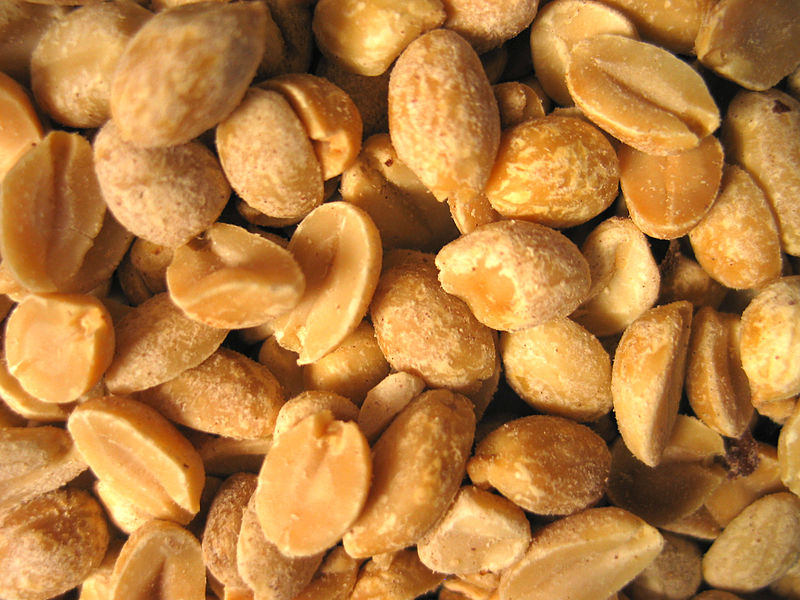
Recalls and/or outbreaks associated with Salmonella contamination in peanut-containing products were reported over the past several years. There are very limited data available on the prevalence and concentration of Salmonella on raw shelled peanuts in the United States. The objectives of this study were to estimate the prevalence of Salmonella on raw shelled peanuts in the United States and to estimate that concentration of Salmonella. Samples of Runner- and Virginia-type raw shelled peanuts from the 2008, 2009, and 2010 crop years were proportionately sampled from each growing region, based on 2007 production volume. Of 944 raw shelled peanut samples (375 g each), 22 (2.33%) were positive for Salmonella by the VIDAS Salmonella assay. Salmonella serovars identified in this study included Agona, Anatum, Braenderup, Dessau, Hartford, Meleagridis, Muenchen, Rodepoort, Tennessee, and Tornow. The concentration levels of Salmonella in positive samples, as determined by a most-probable-number assay, were <0.03 to 2.4 MPN/g. These data will be useful when designing and validating processes for the reduction or elimination of Salmonella in peanuts and/or peanut-containing products.

USA – Recall – Smoked Pork and Pepper Sticks – Listeria monocytogenes

Food Safety Newslisteria-hp

The Minnesota Department of Agriculture (MDA) is telling consumers to avoid smoked pork and beef pepper sticks made by Belgrade Meat Center in Belgrade, Minnesota. Routine product sampling discovered Listeria monocytogenes bacteria in the food. There are no reports of illness to date. You can see pictures of product labels at the MDA web site.

The pepper sticks have the lot number 318130 on the back of the package and Minnesota State Establishment Number 1157. About 20 pounds of the pork and beef pepper sticks were sold at its retail store. Consumers are asked to return the packages to the store.

USA -Smoked Pickled Herring Recall – Clostridium botulinum

Food Poisoning Journal

Little Mermaid Smoke House is recalling Smoked Herring and Pickled Herring fish because the products were found to be uneviscerated, and have the potential to be contaminated with Clostridium botulinum, a bacterium which can cause life-threatening illness or death. Consumers are warned not to use the product even if it does not look or smell spoiled.

Botulism, a potentially fatal form of food poisoning, can cause the following symptoms: general weakness, dizziness, double-vision and trouble with speaking or swallowing. Difficulty in breathing, weakness of other muscles, abdominal distension and constipation may also be common symptoms. People experiencing these problems should seek immediate medical attention.

The following products are recalled: Little Mermaid Smoked Herring fish Sold prior to 04/04/2013 and Little Mermaid Pickled Herring fish Sold prior to 04/04/2013

The recalled products are manufactured by Little Mermaid Smoke House and distributed in the state of California. These products are sold as whole fish, packaged in vacuum sealed packaging, and labeled “Little Mermaid Smoke House” which varies in weight and size. There are no codes listed on the products. The recall includes products sold prior to 04/03/2013.

No illnesses have been reported to date.

Canada – Recalls – Expanded Smoked Salmon – Listeria – Lobster – Clostridium Botulinum

CFIA

The public warning issued on April 3, 2013 has been expanded to include additional products because they may be contaminated with Listeria monocytogenes. Previously identified products included in this recall can be found on the Canadian Food Inspection Agency (CFIA) website.

The Canadian Food Inspection Agency (CFIA) and Central-Epicure Food Products Ltd. are warning the public not to consume the Central-Epicure brand Smoked Atlantic Salmon products described below because they may be contaminated with Listeria monocytogenes.

Consumers who may have purchased Smoked Atlantic Salmon from these locations, and are unsure if they have the affected product, are advised to check with the store to determine if their product is being recalled.

These products are distributed in Ontario.

There have been no reported illnesses associated with the consumption of these products.

The manufacturer, Central-Epicure Food Products Ltd., Toronto, Ontario, is voluntarily recalling the affected products from the marketplace.  The CFIA is monitoring the effectiveness of the recall.
CFIA

The public warning issued on March 23, 2013 has been updated to include an additional product because this product may be contaminated with Clostridium botulinum. Previously identified products included in this recall can be found on the Canadian Food Inspection Agency (CFIA) website.

The Canadian Food Inspection Agency (CFIA) is warning the public not to consume the bottled Lobster described below because it may be contaminated with Clostridium botulinum. Toxins produced by these bacteria may cause botulism, a life-threatening illness.

This product has been distributed in New Brunswick and may have been distributed in other provinces.

The CFIA is monitoring the effectiveness of the recall.


Ireland – Recall Fruit Platters – Salmonella

FSAISalmonella

Freshcut Food Services Limited is recalling SuperValu Fruit Platter with chocolate 685g; Green Orchard Exotic Fruit Salad 400g; Green Orchard Watermelon Wedge 800g and Green Orchard Fruit Platter with dipping chocolate 685g manufactured by them using watermelon from Costa Rica which may be contaminated with Salmonella. Consumers who have already purchased the implicated fruit products should not consume them as they could cause Salmonellosis. Symptoms of Salmonellosis include diarrhoea, stomach cramps, vomiting and fever 12-72 hours after consumption.