Category Archives: Norovirus

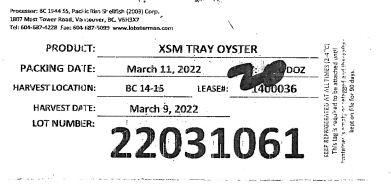
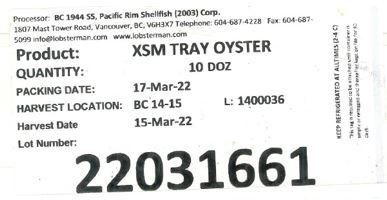
Canada – Pacific Rim Shellfish (2003) Corp brand Oysters recalled due to Norovirus

CFIA

ummary

Product
Oysters
Issue
Food – Microbial Contamination – Norovirus
What to do

Do not consume, use, sell, serve, or distribute the recalled products

USA – CDC – Lettuce, Other Leafy Greens, and Food Safety

CDC

Leafy greens arranged on a white background

Vegetables are an important part of a healthy diet. Leafy vegetables (called leafy greens on this page), such as lettuce, spinach, cabbage, kale, and bok choy, provide nutrients that help protect you from heart diseasestroke, and some cancers.

But leafy greens, like other vegetables and fruits, are sometimes contaminated with harmful germs. Washing leafy greens does not remove all germs. That’s because germs can stick to the surface of leaves and even get inside them. If you eat contaminated leafy greens without cooking them first, such as in a salad or on a sandwich, you might get sick.

Although anyone can get a foodborne illness, sometimes called food poisoning, some groups of people are more likely to get one and to have a serious illness. These groups include:

  • Adults aged 65 and older
  • Children younger than 5 years
  • People who have health problems or take medicines that lower the body’s ability to fight germs and sickness (a weakened immune system)external icon
  • Pregnant people

Eating Leafy Greens

Are leafy greens safe to eat?

Millions of servings of leafy greens are eaten safely every day in the United States. But leafy greens are occasionally contaminated enough to make people sick. To reduce your chance of getting sick, always follow the steps for safely handling and preparing leafy greens before eating or serving them.

Are leafy greens safe for my pet to eat?

Some animals can get sick from some germs that also make people sick. Always follow the steps for safely handling and preparing leafy greens before feeding them to pets and other animals. Never feed recalled food to pets or other animals.

Safely Handling and Preparing Leafy Greens

Do I need to wash all leafy greens?

Prewashed greens don’t need to be washed again. If the label on a leafy greens package says any of the following, you don’t need to wash the greens:

  • Ready-to-eat
  • Triple washed
  • No washing necessary

Prewashed greens sometimes cause illness. But the commercial washing process removes most of the contamination that can be removed by washing.

All other leafy greens should be thoroughly washed before eating, cutting, or cooking.

What is the best way to wash leafy greens?

The best way to wash leafy greens is by rinsing them under running water. Studies show that this step removes some of the germs and dirt on leafy greens and other vegetables and fruits. But no washing method can remove all germs.

Follow these steps to wash leafy greens that you plan to eat raw:

  • Wash your hands for 20 seconds with soap and water before and after preparing leafy greens.
  • Get rid of any torn or bruised leaves. Also, get rid of the outer leaves of cabbages and lettuce heads.
  • Rinse the remaining leaves under running water. Use your hands to gently rub them to help get rid of germs and dirt.
  • Dry leafy greens with a clean cloth or paper towel.

Should I soak leafy greens before washing them?

No. Do not soak leafy greens. If you soak them in a sink, germs in the sink can contaminate the greens. If you soak them in a bowl, germs on one leaf can spread to the other leaves. Rinsing leafy greens under running water is the best way to wash them.

Should I wash leafy greens with vinegar, lemon juice, soap, detergent, or produce wash?

Use plain running water to wash leafy greens and other produce. Kitchen vinegar and lemon juice may be used, but CDC is not aware of studies that show vinegar or lemon juice are any better than plain running water.

Do not wash leafy greens or other produce with soap, detergent, or produce wash. Do not use a bleach solution or other disinfectant to wash produce.

What other food safety steps should I keep in mind when I select, store, and prepare leafy greens and other produce?

  • Select leafy greens and other vegetables and fruits that aren’t bruised or damaged.
  • Make sure pre-cut produce, such as bagged salad or cut fruits and vegetables, is refrigerated or on ice at the store.
  • Separate produce from raw meat, poultry, seafood, and eggs in your shopping cart, grocery bags, and refrigerator.
  • Store leafy greens, salads, and all pre-cut and packaged produce in a clean refrigerator with the temperature set to 40°F or colder.
  • Use separate cutting boards and utensils for produce and for raw meat, poultry, seafood, and eggs. If that isn’t an option, prepare produce before working with raw meat.
  • Wash utensils, cutting boards, and kitchen surfaces with hot, soapy water after each use.
  • Cook thoroughly or throw away any produce that touches raw meat, poultry, seafood or their juices.
  • Refrigerate cooked or cut produce, including salads, within 2 hours (1 hour if the food is exposed to temperatures above 90°F, like a hot car or picnic).

Germs, Outbreaks, and Recalls

How do leafy greens get contaminated with germs?

Germs that make people sick can be found in many places, including in the soil, in the feces or poop of animals, in refrigerators, and on kitchen surfaces.

Germs can contaminate leafy greens at many points before they reach your plate. For example, germs from animal poop can get in irrigation water or fields where theexternal icon vegetables grow. Germs can also get on leafy greens in packing and processing facilities, in trucks used for shipping, from the unwashed hands of food handlers, and in the kitchen. To prevent contamination, leafy greens should be grown and handled safely at all points from farm to fork.

Read a study by CDC and partners on what we have learned from 10 years of investigating E. coli outbreaks linked to leafy greens.

How common are outbreaks linked to leafy greens?

In 2014–2018, a total of 51 foodborne disease outbreaks linked to leafy greens (mainly lettuce) were reported to CDC. Five of the 51 were multistate outbreaks that led CDC to warn the public. Among those five outbreaks, two were linked to packaged salads, two were linked to romaine lettuce, and one could not be linked to a specific type of leafy greens.

Most recently, in 2019–2021, CDC investigated and warned the public about nine multistate outbreaks linked to leafy greens. Among those outbreaks, six were linked to packaged salads, one was linked to romaine lettuce, one was linked to baby spinach, and one could not be linked to a specific type of leafy greens. Learn about these outbreaks.

Most foodborne illnesses are not part of a recognized outbreak. The nearly 2,000 illnesses reported in 2014–2020 outbreaks linked to leafy greens represent only a small part of illnesses caused by contaminated leafy greens during those years.

Does CDC warn the public about every foodborne disease outbreak?

No. CDC does not warn the public about every foodborne outbreak—including ones linked to leafy greens. Some reasons for this include:

  • Most sources of foodborne outbreaks are never identified.
  • By the time a source is identified, it might no longer be in stores, restaurants, or homes. This can happen with foods that are perishable (foods that spoil or go bad quickly), such as leafy greens.
  • Most outbreaks affect people in only one state, so local or state health departments lead the work to identify, investigate, and communicate about those outbreaks. CDC typically communicates only about outbreaks that affect people in more than one state.

Investigating outbreaks linked to leafy greensexternal icon can be especially challenging. These outbreaks often go unidentified or unsolved.

What should I do with leafy greens that are part of a recall?

  • Never eat, serve, or sell food that has been recalled, even if some of it was eaten and no one got sick.
  • Return the recalled food to the store or throw it away at home.
    • Throw out the recalled food and any other foods stored with it or that touched it.
    • Put it in a sealed bag in an outside garbage can with a tight lid (so animals cannot get to it).
    • If the recalled food was stored in a reusable container, wash the container in the dishwasher or with hot, soapy water.
  • Follow CDC’s instructions for cleaning your refrigerator after a food recall.

Organic, Hydroponic, and Home-Grown Leafy Greens

Are organic leafy greens less likely to be contaminated than non-organic ones?

All kinds of produce, including organic leafy greens, can be contaminated with harmful germs at any point from farm to fork. CDC is not aware of any evidence that organic greens are safer.

Learn about some outbreaks linked to organic foodsexternal icon.

Are hydroponic or greenhouse-grown leafy greens less likely to be contaminated?

Leafy greens grown using these methods also can be contaminated with harmful germs at any point from farm to fork.

Learn about an outbreak linked to greenhouse-grown leafy greens.

How do I keep leafy greens in my garden safe to eat?

Home gardens can be an excellent source of fruits and vegetables. Follow these tips to help prevent food poisoning:

  • Plant your garden away from animal pens, compost bins, and manure piles.
  • Water your garden with clean, drinkable water.
  • Keep dirty water, including storm runoff, away from the parts of plants you will eat.

Learn about raised bed gardening pdf icon[PDF – 1 page].

Looking to the Future

What steps are industry and the government taking to make leafy greens safer?

CDC is collaborating with FDA, academia, and industry to investigate the factors that contribute to leafy greens contamination.

The leafy greens industry, FDA, and state regulatory authorities have been implementing provisions of the Produce Safety Ruleexternal icon as part of the FDA Food Safety Modernization Act (FSMA).external icon They are considering what further measures can be taken. FDA’s 2020 Leafy Greens STEC Action Planexternal icon describes the agency’s plans to work with partners to make leafy greens safer.

Canada – Certain Stellar Bay Shellfish brand Chef Creek Oysters recalled due to Norovirus

CFIA

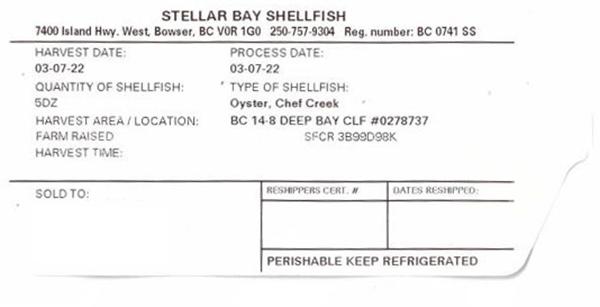
Chef Creek Oysters - label

Last updated

Summary

Product
Oyster, Chef Creek
Issue
Food – Microbial Contamination – Norovirus
What to do

Do not consume, use, sell, serve, or distribute the recalled products.

Issue

Stellar Bay Shellfish is recalling certain Stellar Bay Shellfish brand Chef Creek Oysters from the marketplace due to possible norovirus contamination.

The recalled products have been sold in British Columbia and may have been distributed in other provinces and territories.

What you should do

  • If you think you became sick from consuming a recalled product, call your doctor
  • Check to see if you have the recalled products in your home or establishment
  • Do not consume the recalled products
  • Do not serve, use, sell, or distribute the recalled products
  • Recalled products should be thrown out or returned to the place of purchase
  • Consumers who are unsure if they have purchased the affected products are advised to contact their retailer

People with norovirus illness usually develop symptoms of gastroenteritis within 24 to 48 hours, but symptoms can start as early as 12 hours after exposure. The illness often begins suddenly. Even after having the illness, you can still become re-infected by norovirus. The main symptoms of norovirus illness are diarrhea, vomiting (children usually experience more vomiting than adults), nausea and stomach cramps. Other symptoms may include low-grade fever, headache, chills, muscle aches and fatigue (a general sense of tiredness).  Most people feel better within one or two days, with symptoms resolving on their own, and experience no long-term health effects. As with any illness causing diarrhea or vomiting, people who are ill should drink plenty of liquids to replace lost body fluids and prevent dehydration. In severe cases, patients may need to be hospitalized and given fluids intravenously.

Canada – Norovirus: Dozens affected in British Columbia, linked to raw oysters

Outbreak News Today

french oysters

Vancouver Coastal Health (VCH) is warning consumers to take steps to protect their health following an increase in cases of norovirus associated with consumption of raw B.C. oysters.

Since Monday, March 14, more than 50 people have been affected with acute gastrointestinal illness, such as stomach pain, diarrhea or vomiting, after eating raw oysters. Lab testing has confirmed the presence of norovirus in some of the cases and it is suspected in others.

The BC Centre for Disease Control (BCCDC) has issued a notice to restaurants and retailers in B.C. to advise them of the risk.

Based on an investigation by the BCCDC, local and federal agencies, and the shellfish industry, affected harvest areas are being closed and will reopen when contamination is cleared.

Canada – Certain Stellar Bay Shellfish brand Oysters recalled due to Norovirus

CFIA

Summary

Product
Certain oysters
Issue
Food – Microbial Contamination – Norovirus
What to do

Do not consume, use, sell, serve, or distribute the recalled products

Issue

Stellar Bay Shellfish is recalling certain oysters from the marketplace due to possible norovirus contamination.

The recalled products have been sold in British Columbia, Alberta, Quebec and Ontario and may have been distributed in other provinces and territories.

What you should do

  • If you think you became sick from consuming a recalled product, call your doctor
  • Check to see if you have the recalled products in your home or establishment
  • Do not consume the recalled products
  • Do not serve, use, sell, or distribute the recalled products
  • Recalled products should be thrown out or returned to the place of purchase
  • Consumers who are unsure if they have purchased the affected products are advised to contact their retailer

People with norovirus illness usually develop symptoms of gastroenteritis within 24 to 48 hours, but symptoms can start as early as 12 hours after exposure. The illness often begins suddenly. Even after having the illness, you can still become re-infected by norovirus. The main symptoms of norovirus illness are diarrhea, vomiting (children usually experience more vomiting than adults), nausea and stomach cramps. Other symptoms may include low-grade fever, headache, chills, muscle aches and fatigue (a general sense of tiredness). Most people feel better within one or two days, with symptoms resolving on their own, and experience no long-term health effects. As with any illness causing diarrhea or vomiting, people who are ill should drink plenty of liquids to replace lost body fluids and prevent dehydration. In severe cases, patients may need to be hospitalized and given fluids intravenously.

USA – Nebraska: Norovirus and Rotavirus Outbreaks reported in the south central part of state

Outbreak News Today

norovirus-1080x655

The Two Rivers Public Health District in south-central Nebraska is reporting an increase of both norovirus and rotavirus cases in the district.

Norovirus and rotavirus outbreaks also frequently occur in schools, childcare centers, colleges, and universities. Both norovirus and rotavirus are spread by accidentally getting tiny particles of feces (poop) or vomit from an infected person in your mouth. Outbreaks on school and university campuses have even led to campus closures. Close quarters, shared spaces, and high-touch surfaces make it easy for norovirus and rotavirus to spread.

Health officials strongly recommends taking the following actions:
• Washing hands carefully and frequently
• Staying home when experiencing vomiting and diarrhea
• Careful cleaning of surfaces that have had contact with vomit and diarrhea using an EPA certified cleaning products

RASFF Alert – Norovirus – Oysters

RASFF

Norovirus in oysters from France in Italy

Belgium – Geay brand oysters – Norovirus

AFSCA

Product: Geay brand oysters.
Problem: presence of Norovirus.
Following a notification via the RASFF system (European Food and Feed Rapid Alert System), the presence of Norovirus was detected in oysters (12 or 24 pieces) of the Geay brand.

The FASFC has therefore decided to withdraw this product from sale and to recall it from consumers.

The AFSCA asks not to consume this product and to bring it back to the point of sale where it was purchased.

Product Description :

– Product: Oysters (12 or 24 pieces)
– Brand: Geay
– Batch numbers/product code: 21/02/2022 to 28/02/2022

The product was distributed via several points of sale in Belgium.

For any additional information, you can contact the FASFC contact point for consumers: 0800/13.550 or pointdecontact@afsca.be .

Taiwan – Norovirus on the rise in Taiwan

Outbreak News Today

The Taiwan Centers for Disease Control and Prevention (CDC) reported Thursday that the number of hospital visits for diarrhea in the country has increased recently, and the pathogens detected in cluster incidents are mainly norovirus.

The public is advised to pay attention to food safety and hand hygiene. Seek medical attention as soon as possible and take rest at home if you are sick; catering and accommodation operators must strengthen environmental hygiene management and pay attention to the health status of employees. If you have suspected symptoms, please suspend work immediately to reduce the risk of virus transmission.

According to the monitoring data of the CDC, there were a total of 110,783 outpatient and emergency visits for diarrhea in Taiwan last week (February 20 to February 26), a slight increase from the number of visits in the past two weeks (109,522 in the 7th and 6th weeks, 109,289), but lower than the same period in recent years. In previous years, the number of patients with diarrhea was likely to increase after consecutive holidays. In the past four weeks (weeks 5 to 8), a total of 83 diarrhea cluster reports were received across the country. There were 49 positive cases of pathogen detection, mainly norovirus (46 cases, accounting for 94%).

UK – Norovirus outbreaks increasing in England

Gov UK

Norovirus outbreaks in care homes have risen in recent weeks, leading UKHSA to remind people of simple steps that can be taken to limit the spread of the bug.

The UK Health Security Agency (UKHSA) is reminding the public of simple actions that they can take to reduce the spread of norovirus. The advice comes after routine surveillance in England shows that the number of outbreaks caused by the vomiting bug has increased in recent weeks (4-week period from end January to February), initially in educational settings and now in care home settings.

Norovirus is highly infectious and causes vomiting and diarrhoea but usually passes in a couple of days. It is easily transmitted through contact with infected individuals or contaminated surfaces.

The increase in reported outbreaks was initially in educational settings, particularly in nursery and childcare facilities, with 48% more incidents reported to UKHSA than would be expected.

Reports of norovirus outbreaks in care home settings to UKHSA have also increased in recent weeks in 2022 – with a rise from 24 reported in week 6 (week commencing 7 February), to 40 reported in week 7 (week commencing 14 February).

While outbreaks reported in care home settings overall remain below pre-pandemic expected levels, it is likely they will continue to increase in the coming weeks and a rise in norovirus outbreaks in care home settings often precedes an increase in outbreaks in hospital settings. Therefore, it is important to take steps to limit the spread of norovirus.

Professor Saheer Gharbia, Gastrointestinal Pathogens and Food Safety Directorate, UKHSA, said:

Norovirus, commonly known as the winter vomiting bug, has been at lower levels than normal throughout the pandemic but as people have begun to mix more, the numbers of outbreaks have started to increase again.

Symptoms include sudden onset of nausea, projectile vomiting and diarrhoea but can also include a high temperature, abdominal pain and aching limbs. Stay at home if you are experiencing norovirus symptoms and do not return to work or send children to school or nursery until 48 hours after symptoms have cleared.

Please avoid visiting elderly relatives if you are unwell – particularly if they are in a care home or hospital. As with COVID-19 and other infectious illnesses, hand washing is really important to help stop the spread of this bug, but remember, unlike for COVID-19 alcohol gels do not kill off norovirus so soap and water is best.

How to reduce the spread of norovirus

  1. Stay at home if you are experiencing norovirus symptoms. Do not return to work or send children to school until 48 hours after symptoms have cleared. Also avoid visiting elderly or poorly relatives, particularly if they are in hospital or a care home.
  2. Wash your hands frequently and thoroughly with soap and warm water. Alcohol hand gels don’t kill norovirus.
  3. When an infected person vomits, the droplets contaminate the surrounding surfaces. A bleach-based household cleaner or a combination of bleach and hot water should be used to disinfect potentially contaminated household surfaces and commonly used objects such as toilets, taps, telephones, door handles and kitchen surfaces.
  4. If you are ill, avoid cooking and helping prepare meals for others until 48 hours after symptoms have stopped, as norovirus can be spread through food contaminated by the virus when food is handled by symptomatic people or infected individuals.
  5. Wash any contaminated clothing or bedding using detergent and at 60°C and, if possible, wear disposable gloves to handle contaminated items.

Norovirus activity has risen as people have begun to mix more – it is possible that unusual or out-of-season increases could be seen in the coming months.

UKHSA’s National Norovirus Surveillance Team will continue to closely monitor all available surveillance data to ensure early detection of any unusual norovirus activity and outbreaks.

You can view the National Norovirus and Rotavirus Bulletin here.

Those showing symptoms should avoid visiting their GP, but if they are concerned should contact NHS 111 or talk to their GP by phone.