Category Archives: Mycotoxin

Belgium – Golden Sun brand Basmati rice – Aflatoxin B1

AFSCA

03/01/2022 (update of the recall of 02/18/2022)
LT Foods recall
Product: Golden Sun brand Basmati rice.
Problem: Aflatoxin B1 content too high.
LT Foods has decided, in agreement with the FASFC, to withdraw the product Basmati Rice (1 kg) of the Golden Sun brand from sale and to recall it from consumers because of an excessively high aflatoxin B1 content.

We ask that you do not consume this product and return it to your point of sale. You will be reimbursed even without presenting the receipt. Product description: – Product name: Basmati rice – Brand: Golden Sun – Expiry date (BDD): 05/07/2023 and 06/10/2023 – EAN code: 20364625

 Sale period: from 08/10 /2021 to 02/18/2022 – Type of packaging: plastic packaging (bag) – Weight: 1 kg

The product was distributed in Belgium by Lidl.

For any further information , contact Lidl customer service ( 0800/73520 (free))

RASFF Alerts – Ochratoxin A – Rice – Basmati Rice – Dried White Mulberries

RASFF

Aflatoxin B1 and Ochratoxin A in basmati rice from India in Ireland and the Netherlands

RASFF

Ochratoxin A in organic dried white mulberries from Turkey in Germany and the Netherlands

RASFF

Ochratoxin in rice from Pakistan in Belgium

RASFF Alerts – Aflatoxin – Millet Flour – Pistachios – Basmati Rice – Groundnuts – Pakistan Rice – Brazil Nuts

RASFF

Aflatoxins in Millet flour from Senegal in the Netherlands

RASFF

Aflatoxins in pistachio kernels from Iran in Italy

RASFF

Aflatoxine B1 and Ochratoxine A in basmati rice from India in Ireland and the Netherlands

RASFF

Aflatoxin B1 in Basmati rice from India in Belgium, France and Netherlands

RASFF

Aflatoxin in Egyptian groundnuts in the Netherlands

RASFF

Aflatoxin in Egyptian groundnuts in the Netherlands

RASFF

Aflatoxins in Indian Groundnut Kernels in the Netherlands and Switzerland

RASFF

Aflatoxin in Egypt groundnuts in the Netherlands

RASFF

Aflatoxin in Pakistan Rice in the Netherlands

RASFF

Aflatoxins in Brazil nuts from Bolivia in Belgium, Czech Republic, Denmark, Finland, France, Germany, Greece, Ireland and Netherlands

Research – Aflatoxin B1 in rice: effects of storage duration, grain type and size, production site and season

Journal of Food Protection

Our study aimed to evaluate the AFB1 levels in packed rice marketed in Lebanon and determine the exposure to this toxin from the rice consumption. A total of 105 packed white, parboiled and brown rice bags were collected. ELISA was used to measure AFB1. A comprehensive FFQ was filled by 500 participants to determine the patterns of rice consumption and subsequently the exposure levels to AFB1 from the rice consumption in Lebanon. AFB1 was detected in all rice samples (100%). The average concentration ± standard deviation of AFB1 was 0.5±0.3μg/kg. Contamination ranged between 0.06 and 2.08μg/kg. Moisture content in all rice samples was below the recommended percentage (14%). Only 1% of the samples had an AFB1 level above the European Union (EU) limit (2μg/kg). Brown rice had a significantly higher AFB1 level than white and parboiled rice (p=0.02), while a significant difference was found between both collections for the same brands (p=0.016). Packing season, packing country, country of origin, presence of a food safety management certification, grain size, and time between packing and purchasing had no significant effect. Exposure to AFB1 from rice consumption in Lebanon was calculated as 0.1-2 ng/kg bodyweight/day.

France – Fruit Dessert – Mycotoxin – Patulin

Gov france

Identification information of the recalled product

  • Product category Food
  • Product subcategory Sweet products
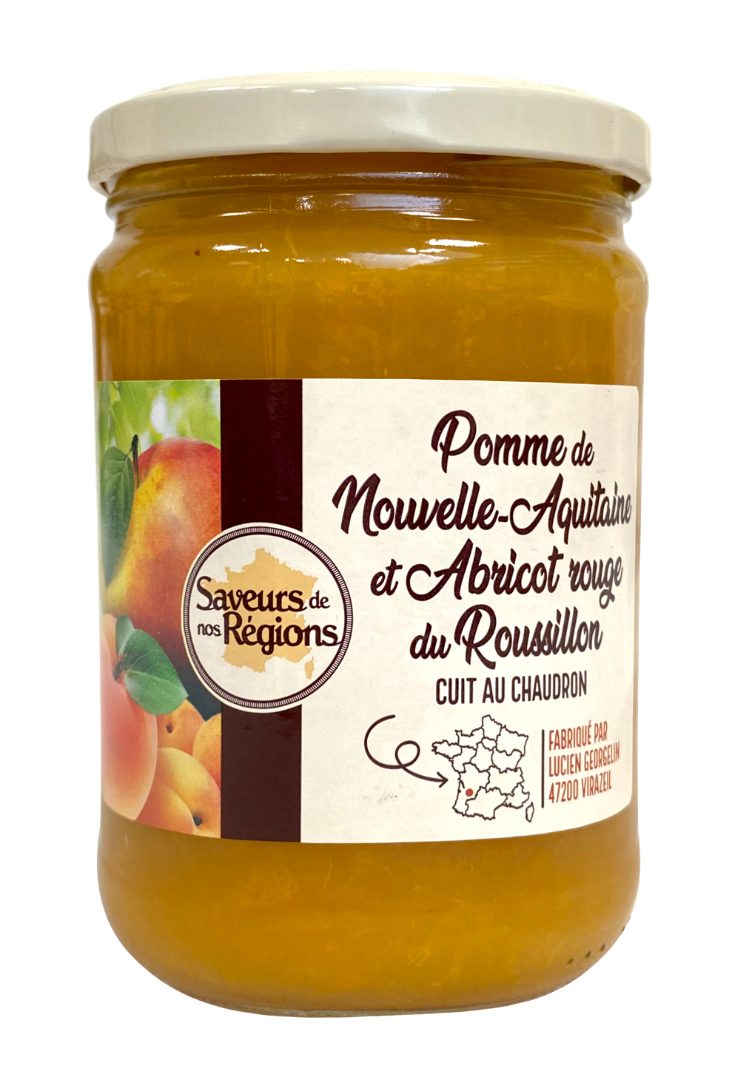
  • Product brand name Flavors of our regions
  • Model names or references Apple Apricot
  • Identification of products
    GTIN Dated
    20291495 Date of minimum durability 20/12/2024
  • Packaging glass jars
  • Marketing start/end date From 21/12/2021 to 18/02/2022
  • Storage temperature Product to be stored at room temperature
  • Further information New Aquitaine apple and Roussillon red apricot
  • Geographic area of ​​sale Regions: Auvergne-Rhône-Alpes, , Burgundy-Franche-Comté, , Centre-Val de Loire, , Île-de-France, , New-Aquitaine, , Occitanie, , Provence-Alpes-Côte d’azur
  • Distributors Some Lidl supermarkets. See attached list.
  • List of points of sale20220201_List_SM.pdf

Practical information regarding the recall

  • Reason for recall An analysis revealed a Patulin content higher than the limit authorized by European regulations.
  • Risks incurred by the consumer Patulin
  • Additional description of the risk Patulin is a mycotoxin which can present a health risk in the event of significant and repeated consumption over the long term.

Belgium – Golden Sun brand Basmati rice – Aflatoxin B1

AFSCA

LT Foods recall
Product: Golden Sun brand Basmati rice.
Problem: Aflatoxin B1 content too high.
LT Foods has decided, in agreement with the FASFC, to withdraw the product Basmati Rice (1 kg) of the Golden Sun brand from sale and to recall it from consumers because of an excessively high aflatoxin B1 content.

We ask that you do not consume this product and return it to your point of sale. You will be reimbursed even without presenting the receipt. Product description: – Product name: Basmati rice – Brand: Golden Sun – Best before date (BDD): 06/10/2023 – EAN code: 20364625

 Sale period: from 08/10/2021 to 18/02 /2022 – Type of packaging: plastic packaging (bag) – Weight: 1 kg The product was distributed in Belgium by Lidl.
For any further information , contact Lidl customer service ( 0800/73520 (free))

Belgium – Basmati rice “Basmati rijst Aromatisch” from the AH brand – Ochratoxin

AFSCA

Recall by Albert Heijn
Product: Basmati rice “Basmati rijst Aromatisch” from the AH brand.
Problem: the product contains too high an ochratoxin content.

In agreement with the FASFC, Albert Heijn reminds consumers of the basmati rice “Basmati rijst Aromatisch” of the Albert Heijn brand with the expiry date 10/08/2023. The product contains too high an ochratoxin content. Consumption of this product may pose a health risk.

Albert Heijn asks its customers not to consume this product and to return it to the point of sale where it was purchased. The product will be refunded or exchanged there. Please contact a doctor in case of any health problem.

Product description

• Product category: rice
• Product name: Basmati rijst Aromatisch
• Brand: Albert Heijn
• Expiry date (BDD): 10/08/2023
• Sale period: from 11/08/2021, product no. is no longer on sale in stores
• Nature of packaging: cardboard
• Weight: 400 g

For any further information , please contact Albert Heijn via 0800 777 05.

Belgium – “Farinha de Milho Amarela” corn flour from the Matias brand – Mycotoxins – Fumonisin

AFSCA

FASFC recall
Product: “Farinha de Milho Amarela” corn flour from the Matias brand.
Problem: Exceeding the fumonisin standard.


The FASFC is today recalling consumers the corn flour “Farinha de Milho Amarela” (500g) of the Matias brand.

This recall follows a RASFF (Rapid Alert System for Food and Feed) concerning the exceeding of the fumonisin standard.

The AFSCA asks not to consume this product and to bring it back to the point of sale where it was purchased.

Product: “Farinha de Milho Amarela” corn flour
Brand: Matias
Batch number: 070621D2
Expiry date (BDD): 01/04/2022
Weight: 500g

This product was sold via various stores in Belgium including:

SPRL PORTUGAL MARKET CHAUSSÉE DE FOREST, 173 1060 SAINT GILLES
SPRL LUSOBEL RUE DE VERGNIES, 38 1050 BRUXELLES
SPRL A DESPENSA DE ATHUS 19, GRAND RUE 6791 ATHUS

For any additional information, you can contact the FASFC contact point for consumers: 0800/13.550 or pointdecontact@afsca.be .

RASFF Alerts – Aflatoxin – Rice – Dried Figs – Peanuts – Groundnuts – Nutmeg- Golden Sun Basmati Rice

RASFF

Aflatoxin in Pakistan Rice in the Netherlands

RASFF

Aflatoxin in Pakistan Rice in the Netherlands

RASFF

Aflatoxins beyond the limits allowed in Dried Figs from Turkey in Italy

RASFF

Excessive aflatoxin levels (aflatoxin B1 and total aflatoxin) in dried figs from Turkey in Germany

RASFF

Aflatoxin in peanuts from Argentina in the Netherlands

RASFF

Aflatoxin in groundnut kernels from Argentina in the Netherlands

RASFF

Aflatoxin in Indian groundnuts in the Netherlands and Switzerland

RASFF

Aflatoxin in Indian groundnuts in the Netherlands and Switzerland

RASFF

Aflatoxin in Turkish Figs in the Netherlands and Germany

RASFF

Aflatoxin B1 found in golden sun basmati rice from Pakistan in Belgium and the Netherlands

RASFF

Aflatoxin in Indonesian Nutmeg in the Netherlands

Research – How do Time, Tannin and Moisture Content Influence on Toxicogenic Fungal Populations during the Storage of Sorghum Grains?

Journal of Food Protection

Cereal grains are usually ensiled to improve their nutritional value and are one of the main sources of feed for dairy cattle. However, during storage, grains can be contaminated with toxicogenic fungi. Sorghum is one of the most economically important cereals in the world. Therefore, the aim of this work was to evaluate the influence of storage duration and tannin and moisture contents on toxicogenic fungal populations in sorghum grain storage. Samples were prepared with variety high in tannins (genotypes Morgan 108 and ACA 558, >5g/kg DM) and with variety low tannin content (genotypes Flash 10 and ACA 546, <1g/kg DM) were collected and manually compacted in experimental laboratory silos where they received different moisture content treatments, namely low (15-25%), medium (26-32%) and high (33-42%). Freshly harvest grains were analyzed at time 0 and storage grains were analyzed at different times (30, 90 and 180 days). Fungal isolation and identification were performed following conventional mycological methods. Penicillium citrinum (34%), Aspergillus flavus (60%) and Fusarium nygamai (68%) were the most abundant species. Rapid detection of aflatoxins and fumonisins in each sample was performed by ELISA according to the AOAC method, and the quantification of aflatoxin B 1 was performed by HPLC. Aflatoxins were detected in four samples with levels of 6.7-28.8 µg/kg and aflatoxin B 1 with a level of 2-14 µg/kg in pre- and post-storage grains . Fumonisins were only detected in two freshly harvested samples with levels of 500-900 µg/kg . In general, the storage time favored the increase of Penicillium population, instead the Aspergillus and Fusarium are reduced. Conversely the abundance of the three population was not affected by the moisture content. The results of this study show that fungal population must be analyzed at different times.