Category Archives: Mould Toxin

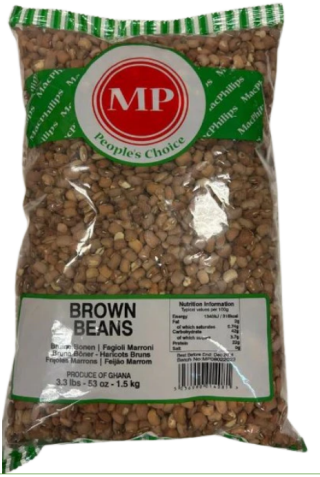
Luxembourg – Brown beans from the MP brand – Aflatoxin

SAP

The following product is recalled in Luxembourg:

Name Brown beans
Brand MP
Minimum durability date (MDD) 01/30/2026
Batch MP 012024

Danger  : Too high aflatoxin content

Aflatoxins are mycotoxins produced by certain species of  Aspergillus moulds  that thrive when the temperature and humidity of the food are high. Aflatoxins are considered genotoxic and carcinogenic by the European Food Safety Authority and can be dangerous at high and repeated consumption.

The product can be distributed by different points of sale in Luxembourg.

RASFF Alerts – Aflatoxin – Dried Figs – Corn Flour – Hazelnut Meal -Peanuts – Groundnuts -Almond Kernels – Peanut Butter

RASFF

Exceedance of aflatoxin B1 at the level of 21.62 +/- 3.46 µg/kg and the sum of aflatoxins B1, B2, G1, G2 at the level of 26.35 +/- 4.6 µg/kg in dried figs from Greece in Poland and Germany.

RASFF

Aflatoxins in corn flour from Colombia in Spain

RASFF

Aflatoxins in hazelnut meal from Georgia in Germany and Bulgaria

RASFF

Aflatoxins in peanuts from USA in Bulgaria

RASFF

Aflatoxin in groundnuts from the United States in the Netherlands, Switzerland and Germany

RASFF

Aflatoxins in almond kernels from the United States in Italy and Germany

RASFF

Border rejection notification on peanuts due to presence of aflatoxins from India in Denmark

RASFF

Aflatoxins in peanut butter from United States in Belgium

RASFF Alert- Ochratoxin – Dried Raisins

RASFF

Exceeding the MRL for ochratoxin A (17.4 µg/kg +/- 4.2 µg/kg) in dried raisins from Afghanistan, supplier from Turkey in Poland

RASFF Alerts – Ochratoxin A – Raisins – Organic Buckwheat – Dried Figs -Capsicum Powder

RASFF

Too high content of ochratoxin A in capsicum pepper from China in Germany and Switzerland

RASFF

Ochratoxin A in organic buckwheat from Poland in Netherlands and Germany

RASFF

Ochratoxin-A in Turkish dried figs in Germany and the Netherlands

RASFF

Ochratoxin in raisins from China via Lithuania in Latvia, Estonia and Poland

RASFF Alerts – Aflatoxin – Peanut Butter – Peanuts – Groundnuts – Sunflower Meal

RASFF

Aflatoxins in peanut butter from United States in Belgium

RASFF

Aflatoxin B1 in U.S.A. peanuts in the Netherlands

RASFF

Aflatoxins in peanuts from the United States in France

RASFF

Aflatoxin B1 in groundnuts from USA in the Netherlands

RASFF

Aflatoxins in Indian peanuts in the Netherlands and Switzerland

RASFF

Aflatoxins in Indian peanuts in the Netherlands and Switzerland

RASFF

Aflatoxin in USA groundnuts in the Netherlands

RASFF

Aflatoxin B1 in U.S.A. peanuts in the Netherlands

RASFF

Aflatoxins in Chinese Organic Peanut Kernels in the Netherlands

RASFF

Aflatoxins in organic sunflower meal from Germany in France

RASFF

Aflatoxin in groundnut kernels from the USA in the Netherlands

RASFF

Aflatoxin B1 in groundnut kernels from Argentina in the Netherlands

RASFF

Aflatoxin B1 in groundnuts from Argentina in the Netherlands

RASFF

Aflatoxin B1 in groundnuts from the USA in the Netherlands and Germany

Research – Mycotoxin control in cereals: safe guarding food

Safe Food Net

The aim of this research was to review (and where possible improve/refine
current rapid screening methods for the mycotoxin T-2 and its metabolites in
cereals for human consumption.
Researchers engaged with the relevant sector of the cereal processing industry in
Ireland and the UK, and the relevant primary production sector, to gain detailed,
valuable information.
The research conducted was designed to clarify deficits in T-2 toxin control in the
relevant processing and primary production sectors, evaluate the robustness of
current analytical detection and control methods therein, augment same if deemed
necessary, and implement workable T-2 toxin control solutions at sectoral level.
Objectives
The specific objectives of the research project were to:
• Conduct a literature review of the most up-to-date scientific and
regulatory data for T-2 toxin and its metabolites, the specific environmental conditions required for their production, and the impact of climate change on their occurrence and distribution.
• Undertake a thorough analysis of the currently available commercial rapid analytical techniques for the screening of T-2 and HT-2 toxins in cereals for direct human consumption.
• Undertake a survey of the relevant processing and primary production sectors to determine what testing they currently conduct for mycotoxins, to fully understand the shortfalls in relation to mycotoxin monitoring and control within the industry.
Conduct a survey of oats and barley (n≥100) using mass spectrometry to identify contamination levels of, not only the mycotoxins of interest, i.e., T-2 and HT-2, but also all other regulated mycotoxins including aflatoxins, deoxynivalenol, zearalenone, fumonisins and ochratoxin A.
• Perform a thorough evaluation of a selected number of rapid test kits to ascertain fitness for purpose and determine how to adapt the most robust methods for better performance. If required, undertake a training workshop on the use of the best performing rapid testing kits.
• Engage with stakeholders to discuss the implications of the findings of
the project and produce a series of conclusions and recommendations
for stakeholders on the island of Ireland.

RASFF Alerts – Aflatoxin – Dried Figs – Groundnuts – Peanut Paste

RASFF

Aflatoxin B1 (16,4 +/- 1,9 µg/kg) and sum of aflatoxins B1 B2 G1 G2 (24,0 +/- 2,4 µg/kg) in dried figs from Germany with raw material from Turkiye in Poland and Germany

RASFF

Aflatoxin B1 and total in Groundnuts from Argentina in the Netherlands

RASFF

Exceeding the MRL for aflatoxin B1 and the sum of aflatoxins B1, B2, G1, G2 in peanut paste from Poland in Slovenia, UAE and UK

Italy – METROCHEF PISTACHIO FLOUR – Ochratoxin A

Salute

Brand : METROCHEF

Name : METROCHEF PISTACHIO FLOUR

Reason for reporting : Recall due to chemical risk

Publication date : 14 August 2024

Documentation

Documentation

Research – Cell-free supernatant of Bacillus tequilensis reduces grey mold/mould caused by Botrytis cinerea of blueberry fruit: Inducing phenylpropanoid pathway metabolism

Frontiers In.org

Botrytis cinerea a blueberry grey mould, is one of the main diseases affecting postharvest storage, causing significant losses. To better control the postharvest gray mould of blueberry, the effects of KXF 6501 fermentation solution (YY) and KXF6501 cell-free supernatant (SQ) on the induction of disease resistance in blueberry fruits were studied using biochemical and transcriptomic analyses. The results showed that YY and SQ controlled the conidial germination and mycelial growth of B. cinerea in vitro. After 3 d of culture, the lesion diameter and incidence of gray mould in blueberry fruits inoculated with YY and SQ were significantly smaller than those in the control group. Transcription spectrum analysis of blueberry peel tissue showed that the YY- and SQ-induced phenylpropane metabolic pathways had more differentially expressed genes (DEGs) than other biological pathways. In addition, biochemical analyses showed that YY and SQ treatments effectively enhanced the activity of enzymes related to the phenylpropane pathway (phenylalanine ammonia-lyase [PAL], cinnamate 4-hydroxylase [C4H], 4-coumarate CoA ligase [4CL], and polyphenol oxidase [PPO]) and stimulated the synthesis of lignin, total phenols, and flavonoids. Compared with the control, the YY and SQ treatments reduced the weight loss rate and better maintained the appearance and nutritional quality of the blueberry fruits. Thus, it can be concluded that Bacillus tequilensis KXF6501 is potentially useful as a suitable bio-control agent in harvested blueberries.

Taiwan – FDA finds toxins in peanut powder and red yeast rice

News TVBS

The Ministry of Health and Welfare’s Food and Drug Administration (FDA, 食品藥物管理署) announced Thursday (Aug. 8) that recent inspections revealed two food products exceeding mycotoxin limits, including excessive aflatoxin in peanut powder and citrinin in red yeast rice.

From April to June, the FDA and local health officials tested 240 samples, including rice, wheat, peanuts, red yeast products, coffee, and baby food. Among these, two products—peanut powder and red yeast rice—failed to meet safety standards.