Category Archives: Mould/Mold

France – 4 waffles – Microbiological Contamination

Gov france

Identification information of the recalled product

  • Product category Feed
  • Product subcategory Cereals and baked goods
  • Product brand name Stephan Pastry
  • Model names or references723: Brussels waffles x 4,280 g in blister pack
  • Identification of products
    GTIN Lot Date
    3533950000617 03823A Date of minimum durability 07/02/2025
  • Packaging Brussels waffles x 4 – 280g in blister pack
  • Marketing start/end date From 02/11/2023 to 02/25/2023
  • Storage temperature Product to be stored at room temperature
  • Further information Break in the cold chain during transport
  • Geographic area of ​​sale Regions: Hauts-de-France
  • Distributors Carrefour – Montsoult logistics warehouse
  • List of points of sale Traceability_Frozen_waffle_Carrefour.pdf

Practical information regarding the recall

  • Reason for recall Break in the cold chain during transport
  • Risks incurred by the consumer Other biological contaminants
    Organoleptic changes
  • Additional description of the risk Bacteriological risk due to the breaking of the cold chain – yeasts, moulds

RASFF Alert – Animal Feed – Ergot – Mould – Mycotoxin – Rye Feed

RASFF

Ergot (Claviceps purpurea) in rye (feed) from Poland in Germany

RASFF Alert – Mold/Mould – Plastic Bottle

RASFF

Mold formation in plastic bottle before end of shelf life Belgium and Netherlands

Belgium – Ground Melon Seeds – Egusi Ground (227g) – Salmonella and Aflatoxin

AFSCA

Ahmed Exotic BV recall
Product: Ground Melon Seeds – Egusi Ground (227g).
Problem: Presence of Aflatoxins and Salmonella.

In agreement with the FASFC, Ahmed Exotic BV is withdrawing ground melon seeds – Egusi Ground (227g) from sale and recalling them from consumers due to the presence of Aflatoxins and Salmonella.

Ahmed Exotic BV asks its customers not to consume this product and to return it to the point of sale in which it was purchased, where they will be reimbursed.


Product Description

– Product Name: Ground Melon Seeds – Ground Egusi
– Brand: Nina
– Date of Minimum Durability (BDD): 01/01/2024
– Article Number: 4455-50
– Period of Sale: from 13 /03/2022 to 07/12/2022
– Type of packaging: plastic bag
– Weight: 227 g

The product has been distributed by Ahmed Exotic BC – Wondelgemstraat at 9000 Ghent

For further information , contact Ahmed Exotic BV, ahmedexotic@hotmail.com

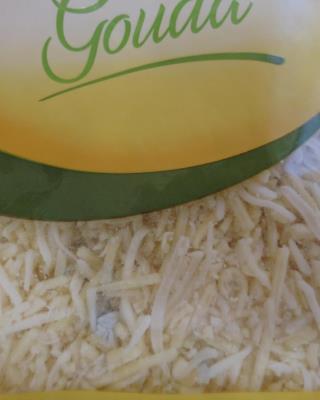
Czech Republic – Milbona Gouda – full-fat cheese, grated – Mold/Mould

Potravinynapranyri

Illustrative photo #6

Place of inspection:
Hodonín ( Dvořákova 4054/10, 695 01 Hodonín )
ID: 26178541
Food group: Milk and milk products Cheese

Milbona Gouda – full-fat cheese, grated
Category: Dangerous foods
Invalid parameter:

fungi visible to the eye

In some of the inspected packages, visible mold was found on the food under the intact packaging.

The food did not have an expiration date. Unsuitable storage temperatures of this product were not detected during the inspection.

Batch: 13-01-23
Expiration date: 13-01-23
Packaging: plastic bag printed sealed
Quantity of the product in the package: 200 g
Producer: Vergeer Holland, PO Box 2, NL-2810 AA Reeuwijk
Date of sample collection: 23/11/2022
Reference number: 23-000053-SZPI-CZ
The sample was detected by the official control of the State Agricultural and Food Inspection.

RASFF Alert – Mould/Mold – Protein Snack

RASFF

Mould in protein snack from Finland in Poland and Spain

RASFF Alert – Mycotoxin – Patulin – Apple Sauce

RASFF

Patulin in apple sauce from the Netherlands in France

Canada – Dubon brand Mixed Forest Mushrooms recalled due to insects and mold/mould

CFIA

Summary

Product
Mixed Forest Mushrooms
Issue
Food – Extraneous Material
Food – Microbial Contamination – Non harmful (quality or spoilage)
What to do

Do not use, sell, serve or distribute the affected product

Audience
Retail

Affected products

Issue

Dubon brand Mixed Forest Mushrooms recalled due to insects and mold.
The recalled product was sold in Quebec.

Research – Major Soilborne Pathogens of Field Processing Tomatoes and Management Strategies

MDPI

Abstract

Globally, tomato is the second most cultivated vegetable crop next to potato, preferentially grown in temperate climates. Processing tomatoes are generally produced in field conditions, in which soilborne pathogens have serious impacts on tomato yield and quality by causing diseases of the tomato root system. Major processing tomato-producing countries have documented soilborne diseases caused by a variety of pathogens including bacteria, fungi, nematodes, and oomycetes, which are of economic importance and may threaten food security. Recent field surveys in the Australian processing tomato industry showed that plant growth and yield were significantly affected by soilborne pathogens, especially Fusarium oxysporum and Pythium species. Globally, different management methods have been used to control diseases such as the use of resistant tomato cultivars, the application of fungicides, and biological control. Among these methods, biocontrol has received increasing attention due to its high efficiency, target-specificity, sustainability and public acceptance. The application of biocontrol is a mix of different strategies, such as applying antagonistic microorganisms to the field, and using the beneficial metabolites synthesized by these microorganisms. This review provides a broad review of the major soilborne fungal/oomycete pathogens of the field processing tomato industry affecting major global producers, the traditional and biological management practices for the control of the pathogens, and the various strategies of the biological control for tomato soilborne diseases. The advantages and disadvantages of the management strategies are discussed, and highlighted is the importance of biological control in managing the diseases in field processing tomatoes under the pressure of global climate change.

RASFF Alert- Mold/Mould – Gouda Cheese

RASFF

Mould on gouda cheese from the Netherlands in Sweden and Denmark