Category Archives: mold

RASFF Alert – Mycotoxins – Pistachios

RASFF

Mycotoxins in pistachios from the USA, via Germany in the Netherlands

RASFF Alert – Mold/Mould – Tortillas

RASFF

Mold in tortillas, from Poland in Sweden and the Netherlands

RASFF Alert – Animal Feed – Mycotoxin in Maize

RASFF

Mycotoxins in maize in Portugal

Research – Fungal and Toxin Contaminants in Cereal Grains and Flours: Systematic Review and Meta-Analysis

MDPI

Abstract

Cereal grains serve as the cornerstone of global nutrition, providing a significant portion of humanity’s caloric requirements. However, the presence of fungal genera, such FusariumPenicilliumAspergillus, and Alternaria, known for their mycotoxin-producing abilities, presents a significant threat to human health due to the adverse effects of these toxins. The primary objective of this study was to identify the predominant fungal contaminants in cereal grains utilized in breadmaking, as well as in flour and bread. Moreover, a systematic review, including meta-analysis, was conducted on the occurrence and levels of mycotoxins in wheat flour from the years 2013 to 2023. The genera most frequently reported were Fusarium, followed by PenicilliumAspergillus, and Alternaria. Among the published reports, the majority focused on the analysis of Deoxynivalenol (DON), which garnered twice as many reports compared to those focusing on Aflatoxins, Zearalenone, and Ochratoxin A. The concentration of these toxins, in most cases determined by HPLC-MS/MS or HPLC coupled with a fluorescence detector (FLD), was occasionally observed to exceed the maximum limits established by national and/or international authorities. The prevalence of mycotoxins in flour samples from the European Union (EU) and China, as well as in foods intended for infants, exhibited a significant reduction compared to other commercial flours assessed by a meta-analysis investigation.


Research – Occurrence of Mycotoxins in Foods: Unravelling the Knowledge Gaps on Their Persistence in Food Production Systems

MDPI

Abstract

In this review, the intricate issue about the occurrence levels of mycotoxins in foods is discussed aiming to underline the main knowledge gaps on the persistence of these toxicants in the food production system. Mycotoxins have been a key challenge to the food industry, economic growth, and consumers’ health. Despite a breadth of studies over the past decades, the persistence of mycotoxins in foods remain an overlooked concern that urges exploration. Therefore, we aimed to concisely underline the matter and provide possible biochemical and metabolic details that can be relevant to the food sector and overall public health. We also stress the application of computational modeling, high-throughput omics, and high-resolution imaging approaches, which can provide insights into the structural and physicochemical characteristics and the metabolic activities which occur in a stored cereal grain’s embryo and endosperm and their relationship with storage fungi and mycotoxins on a cellular level. In addition, there is a need for extensive collaborative network and funding, which will play a key role in finding effective solutions against the persistence of mycotoxins at the genetic and molecular to metabolic levels in the food system.

Czech Republic -MOZZARELLA, natural un-ripened semi-fat cheese – Visible Mould/Mold

Potravinynapranyri

Illustrative photo #2

Place of inspection:
Olomouc ( Polská 1201/1, 779 00 Olomouc )
ID: 26717701
Food group: Milk and milk products Cheese

MOZZARELLA, natural unripened semi-fat cheese
Category: Dangerous foods
Invalid parameter:

fungi visible to the eye

It was a raw material for the preparation of dishes. The sample was taken from the loaded package. There was mold visible to the naked eye on the surface of the food. Food is not considered safe if it shows signs of spoilage. Unsuitable storage temperatures of this product were not detected during the inspection.

Expiration date: 04/02/2024
Packaging: Unwrapped technological packaging
Quantity of the product in the package: 9.604 kg
Date of sample collection: 16/10/2023
Reference number: 23-000876-SZPI-CZ
The sample was detected by the official control of the State Agricultural and Food Inspection.

Research – Qatar team identifies way to inhibit mycotoxin growth in fish feed

Feed Navigator

Qatar based researchers say the findings of their study indicate that aquaculture feed imports from some Asian and European countries can be contaminated with moderate levels of mycotoxins.

Germany – Wittenseer IsoSport Vital lemon-cherry – Visible Mold/Mould

Lebensmittelwarnung

Alert type: Groceries
Date of first publication:

November 20, 2023

Product name:

Wittenseer IsoSport Vital lemon-cherry

Product images:

Wittenseer Sport Vital.png
Manufacturer (distributor):

Wittenseer Quelle Mineralbrunnen GmbH 24361 Groß-Wittensee

Reason for warning:

A microbiological abnormality has been detected, which may be manifested by mold formation on the surface of the beverage or a noticeably different odor.

Packaging Unit: 0.7 liter bottle
Durability: 09/07/2024
Additional Information:

Reference is made to the attached customer information.

Click to access Verbraucherinformation_IsoSport_Vital_Zitrone_Kirsch.pdf

Research -Modeling the Thermal Inactivation of Ascospores from Heat-Resistant Molds in Pineapple Juice and Evaluating Disinfection Efficiency of Sodium Hypochlorite and Chlorine Dioxide

MDPI

Abstract

The contamination and spoilage of heat-treated fruit juices by heat-resistant mold ascospores present significant challenges to the food industry. Understanding effective strategies to mitigate this contamination is vital for ensuring the shelf-life and microbial safety of heat-treated fruit juices. This study investigated the thermal resistance of ascospores from different heat-resistant mold species, including Aspergillus laciniosusA. chevalieriA. denticulatusA. siamensisHamigera pallida, and Talaromyces macrosporus, isolated from pineapple and sugarcane field soils. Ascospores inactivation kinetics in pineapple juice under heat treatment (75–97 °C) were analyzed using log-linear and Weibull models. Among these species, A. laciniosus displayed the highest heat resistance (δ-value: 104.59 min at 85 °C), while A. siamensis exhibited the lowest (δ-value: 3.39 min at 80 °C). Furthermore, A. laciniosus, the most heat-resistant species, showed notable tolerance to sanitizers. The most effective inactivation was achieved using 1.0% (w/v) sodium hypochlorite for 15 min. Chlorine dioxide, however, was generally ineffective and even activated dormant ascospores in some cases. The combination of hot water (65 °C for 5 min) with sanitizer increased ascospore reduction in most species but did not achieve the 3-log reduction required by the European Standard N13697. This study revealed a correlation between ascospore resistance to heat and chlorine dioxide, offering significant findings for practical inactivation strategies

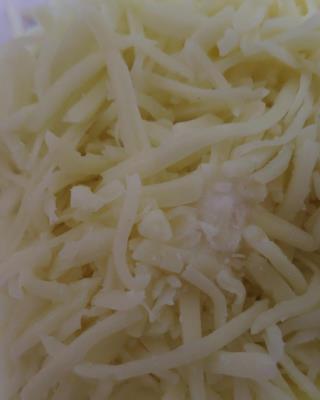
Czech Republic – Pilos Eidam – grated cheese – Visible Mold/Mould

Potravinynapranyri

Illustrative photo #7

Place of inspection:
Pardubice ( Belehradská 548, 530 09 Pardubice )
ID: 26178541
Food group: Milk and milk products Cheese

Pilos Eidam – grated cheese
Category: Dangerous foods
Invalid parameter:

fungi visible to the eye

In some of the inspected packages, mold colonies were present on the surface of the cheese under the intact packaging. Food is not considered safe if it shows signs of spoilage.

Unsuitable storage temperatures of this product were not detected during the inspection. The food did not have an expired minimum durability date.

Batch: A4 361, 26/11/2023
Best before date: 26/11/2023
Packaging: plastic bag sealed
Quantity of the product in the package: 200 g
Manufacturer: Milchwerke Oberfranken West eG, Sulzdorfer Strasse 7, 96484, Moeder
Country of origin:  Germany
Date of sample collection: 6/10/2023
Reference number: 23-000808-SZPI-CZ
The sample was detected by the official control of the State Agricultural and Food Inspection.