Category Archives: Mold Toxin

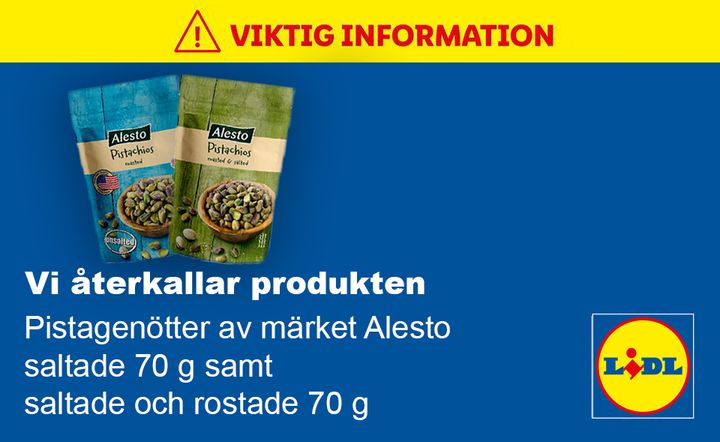
 Belgium – Pistachios – “Pistazienkerne gerostet” (Roasted pistachios) and “Pistazienkerne gerostet & gesalzen” (Roasted and salted pistachios) – from Alesto brand – Ochratoxin A

AFSCA

Recall of Carl Wilhelm Clasen GmbH
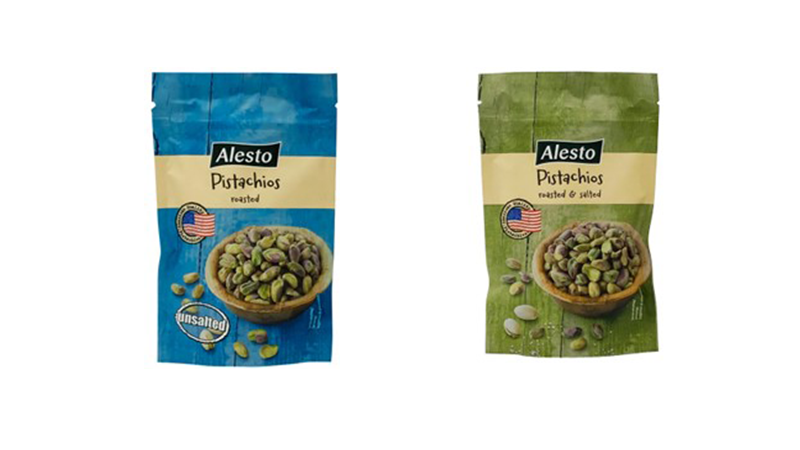
Products: Pistachios – “Pistazienkerne gerostet” (Roasted pistachios) and “Pistazienkerne gerostet & gesalzen” (Roasted and salted pistachios) – from Alesto brand.
Problem: too high content of ochratoxin A.
In agreement with the FASFC, Carl Wilhelm Clasen GmbH withdraws pistachios – “Pistazienkerne gerostet” (Roasted pistachios) and “Pistazienkerne gerostet & gesalzen” (Roasted and salted pistachios) – from the Alesto brand from sale and recalls them from consumers due to an excessively high content of ochratoxin A.

Lidl Belgium asks its customers not to consume these products and to return them to the point of sale where they were purchased. You will be reimbursed even without presenting the receipt.

Description of the products:
– Product name: “Pistazienkerne gerostet” and “Pistazienkerne gerostet & gesalzen”
– Brand: Alesto
– Use-by dates (BDD) and sales periods:
           o “Pistazienkerne gerostet”:
               25/03/2023: from 5/07/2022 to 10/11/2022 inclusive
12/08/2023 and 15/10/2023: from 20/12/2022 to 24/02/2023 inclusive
           o “Pistazienkerne gerostet & gesalzen”:
               23/03/2023: from 5/07/2022 to 10/11/2022 inclusive
09/09/2023 and 16/10/2023: from 20/12/2022 to 24/02/ 2023 included
– Weight: 70g
– Type of packaging: plastic bag

The products were sold through Lidl stores in Belgium.

For any further information , contact Lidl customer service (+32 (0)2 320 6000)
Austria – ALESTO PISTACHIOS, ROASTED & SALTED, 70G – Ochratoxin A

AGES

The manufacturer Carl Wilhelm Clasen GmbH is currently calling the products “Alesto Pistachios, roasted & salted, 70 g” with the best before date September 9th, 2023 and lot number 30030/221213001 and with the best before date October 16th, 2023 and lot number 30030/230119001 as well as “Alesto Pistachios, roasted, 70 g” with the best before date 08/12/2023 and lot number 30031/221212001 and with the best before date 10/15/2023 and lot number 30031/230118001.

Elevated levels of ochratoxin A were detected in the products. Ochratoxin A is a mold toxin (mycotoxin) that can damage the kidneys if ingested over a long period of time. Customers should therefore pay attention to the recall and not consume the products under any circumstances.

The affected products ” Alesto Pistachios, roasted & salted, 70 g” with the best before date September 9th, 2023 and lot number 30030/221213001 and with the best before date October 16th, 2023 and lot number 30030/230119001 and also “Alesto Pistachios, roasted, 70 g” with the best before date 08/12/2023 and lot number 30031/221212001 and with the best before date 10/15/2023 and lot number 30031/230118001 were sold at Lidl Austria.

The products can be returned in all Lidl branches. The purchase price will be refunded, even without presenting the receipt.

Only the products explicitly mentioned are affected by the recall. Other products sold by Lidl Austria from the manufacturer Carl Wilhelm Clasen GmbH and other items from the Alesto brand are not affected by the recall.

If you have any questions, the Lidl Austria customer service is available on the toll-free number 0800 500 810 from Monday to Friday from 8 a.m. to 6 p.m. and on Saturday from 8 a.m. to 5 p.m.

original recall

Sweden – Lidl Sweden recalls pistachios from the Alesto brand – the recall applies to Alesto roasted pistachios 70g and Alesto roasted & salted pistachios 70g – Ochratoxin A

Lidl

Lidl Sweden is recalling pistachios from the Alesto brand. After a routine analysis, it has been shown that the product contains Ochratoxin A above the permitted limit value. Ochratoxin A is added due to mold growth, and is not always visible. The recall applies to roasted pistachios 70 g with a best before date of 13.10.2023 and roasted & salted pistachios 70 g with a best before dates of 12.08.2023 and 14.10.2023.

RASFF Alerts – Aflatoxin – Peanuts- Groundnuts

RASFF

Aflatoxins in peanuts in shell from Egypt in Germany

RASFF

Aflatoxin B1 in groundnut kernels from the United States in the Netherlands

RASFF

Aflatoxin B1 (sample A: 3,56 ± 0,53 µg/kg, sample B: 3,18 ± 0,48 µg/kg) in peanuts blanched halves from Argentina in Poland

RASFF

Aflatoxins in peanuts from Paraguay in Poland

RASFF Alerts – Ochratoxin A – Nutmeg – Organic Rye – Nigella Seeds

RASFF

Ochratoxin A in Indonesian Nutmeg in the Netherlands

RASFF

Ochratoxin A in organic rye from Germany in Austria, Italy , Portugal and Romania

RASFF

Ochratoxin in nigella seeds from Turkey in France, Monaco, Tunisia, Ivory Coast

RASFF Alert- Animal Feed – Mycotoxin – Ergot Alkaloids – Rye Feed

RASFF

Ergot (Claviceps purpurea) in rye (feed) from Poland in Germany

USA – Tampico Spice Company Cayenne Pepper Recalled For Aflatoxin

Food Poisoning Bulletin

Tampico Spice Company Cayenne Pepper is being recalled because it contains elevated levels of aflatoxin, a toxin that can be carcinogenic. This recall notice was posted on the FDA’s Enforcement page, so there is no mention of any adverse events having been reported. The recalling firm is Tampico Spice Company Inc. of Los Angeles, California.

This is a voluntary recall initiated by the firm. The cayenne pepper and seasoning mixes were sold at the retail level in these states: California, Washington, Arizona, Oregon, Utah, Texas, Nevada, and New Jersey. About 5553 pounds of these products are included in this recall.

Italy – Natural sweet almonds 36/38 -Aflatoxins

Salute

Brand : Ambrosio

Name : Natural sweet almonds 36/38

Reason for reporting : Recall due to chemical risk

Publication date : 20 February 2023

Documentation

Documentation

Italy – Natural sweet almonds 36/38 – Aflatoxins

Salute

Brand : ALMENDRAS lopez

Name : Natural sweet almonds 36/38

Reason for reporting : Recall due to chemical risk

Publication date : February 20, 2023

Documentation

Documentation

Research – Implementation of the HACCP System for Apple Juice Concentrate Based on Patulin Prevention and Control

MDPI

Abstract

Patulin (PAT) is a toxic secondary metabolite produced by Aspergillus sp. and Penicillium sp., which acts as a contaminant of most apples and their products. The internationally recognized HACCP system is selected as the theoretical basis to more effectively reduce the PAT in apple juice concentrate (AJC). Through field investigation of apple juice concentrate (AJC) production enterprises, we collected 117 samples from 13 steps of AJC production, including whole apple, apple pulp, and apple juice. PAT contents were analyzed via high-performance liquid chromatography (HPLC) and compared with samples from the different production processes. The result demonstrated that the PAT content was significantly (p < 0.05) influenced by five processes, receipt of raw apples, sorting of raw apples, adsorption step, pasteurization, and aseptic filling. These processes were determined as the CCPs. Monitoring systems for maintaining CCPs within acceptable limits were established, and corrective actions were proposed in case a CCP was surpassed. Based on the above-identified CCPs, critical limits, and control methods (corrective actions), a HACCP plan related to the production process of AJC was established. This study provided important guidance for juice manufacturers wishing to effectively control the PAT content in their products.