RASFF -Shigatoxin-producing Escherichia coli in chilled boneless beef (Bos taurus) from Argentina in the Netherlands
RASFF – Shigatoxin-producing Escherichia coli in chilled boneless beef (Bos taurus) from Argentina in the Netherlands

RASFF -Shigatoxin-producing Escherichia coli in chilled boneless beef (Bos taurus) from Argentina in the Netherlands
RASFF – Shigatoxin-producing Escherichia coli in chilled boneless beef (Bos taurus) from Argentina in the Netherlands
Raw, whole chickens purchased from farmers markets throughout Pennsylvania contained significantly higher levels of bacteria that can cause foodborne illness compared to those purchased from grocery stores in the region, according to a small-scale study by researchers in Penn State’s College of Agricultural Sciences
By comparison, during the same period, 20 percent of raw, whole, organic chickens purchased from grocery stores were found to contain Campylobacter bacteria, and 28 percent tested positive for Salmonella. Just 8 percent of raw, whole, nonorganic, conventionally processed chickens from the grocery stores tested positive for Campylobacter and 52 percent of those contained Salmonella.
When micro-organisms become resistant to antimicrobial agents such as antibiotics, they develop antimicrobial resistance (AMR).
AMR is a health concern for human and non-human antimicrobial usage. Its management and prevention have become more difficult over the past few decades because of excessive use of antimicrobial medicines and the slower marketing of new classes of antimicrobials.
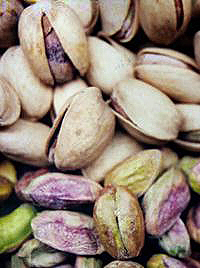
Western Mixers Produce & Nut Company of Los Angeles, California is recalling ARO and/or Treasured Harvest Pistachios, because it has the potential to be contaminated with Salmonella, an organism which can cause serious and sometimes fatal infections in young children, frail or elderly people, and others with weakened immune systems. Healthy persons infected with Salmonella often experience fever, diarrhea (which may be bloody), nausea, vomiting and abdominal pain. In rare circumstances, infection with Salmonella can result in the organism getting into the bloodstream and producing more severe illnesses such as arterial infections (i.e., infected aneurysms), endocarditis and arthritis.
Pistachios were distributed in: California, Nevada, Ohio and Utah; through Retail Stores, Mail Order and various Distributors during the dates of: October 17, 2012 – April 29, 2013.
The ongoing outbreak of Hepatitis A virus (HAV) infection that has affected travellers to Italy from Germany, the Netherlands and Poland, as well as local residents in Italy, may now be affecting Ireland.
Three cases of HAV have been reported in Ireland, although none of the three has any travel history to Italy. Nor have they had any contact with other HAV cases. Isolates of the virus from the three Irish cases reveal an identical sequence to that found in the Italian outbreak.
Onset of illness in the Irish cases was April 2013. Additional case finding activity is currently underway. Exposure of cases in both Italy and Ireland suggests that the same contaminated vehicle of infection has been available in at least these two countries. In Italy, mixed frozen berries have been indicated as the most likely vehicle of infection by epidemiological, microbiological and environmental investigations. In late May, an Italian distributor withdrew mixed frozen berries from the market following identification of a package contaminated with virus identical to the outbreak strain.
The most recent cases in the ongoing HAV infection outbreak have been reported by Italy. The onset of symptoms in these cases was recorded in June 2013. Due to the long shelf life of frozen berries and to the average length of approximately one month for incubation of HAV, more cases are expected to be reported.
While there is evidence pointing towards mixed frozen berries as the vehicle of infection, the specific berry type has not yet been identified. The point of contamination remains unknown at this time and as a result it is not yet possible to exclude the occurrence of associated cases in other EU Member States.
At least 36 people who attended a funeral in western Alabama on July 6 have fallen ill with Salmonella infections, reported the Alabama Department of Public Health Wednesday.
The funeral was held at Eastern Star Baptist Church in York, AL, and was attended by at least 100 people, according to a press release from ADPH.
Of those known to have been sickened, 30 were hospitalized in 9 different states, including Alabama, California, Florida, Georgia, Illinois, Kansas, Michigan, Missouri and Oklahoma.
The health department’s investigation into the outbreak began June 8 after a local hospital reported that 25 people had come in late on July 6 and into the following day complaining of fever, diarrhea, nausea and vomiting.
The warmer coastal water temperature produced by summer weather creates ideal conditions for bacteria that can contaminate oysters, the Washington State Department of Health reminded the public over the Fourth of July weekend.
Vibrio vulnificus and Vibrio parahaemolyticus, two types of bacteria that grow in warm waters and can cause human illness, are known to be carried by oysters, especially in summer months.
There is further information at the link above.
Posted in Bacteria, Food Hygiene, Food Illness, Food Inspections, Food Micro Blog, Food Microbiology, Food Poisoning, Food Safety, Food Safety Alert, Food Testing, Hygiene, Microbiology, Pathogen, Research, Vibrio, Vibrio parahaemolyticus, Vibrio vulnificans, Water
Tagged climate, nature, science, washington state department, washington state department of health
Norovirus, which has epidemiological characteristics that promote a high rate of infectivity and transmission, remains one of the most common causes of childhood gastroenteritis. A new technical report from ECDC provides guidance on steps that can be taken to better prevent and control outbreaks.
The Prevention of Norovirus Infection in Schools and Childcare Facilities report offers guidance to EU Member States regarding the efficacy of different ways to manage the spread of the virus. It also reviews findings related to the prevention and control of outbreaks of gastroenteritis in schools and childcare facilities.
Much of the guidance has been synthesised from numerous other international guideline documents, which have been formed by expert consensus. There is limited primary research on the efficacy of interventions for the prevention and control of norovirus.
Primary prevention measures include effective hand hygiene, frequent cleaning of childcare environments, especially toilet facilities, and adherence to robust food hygiene standards. The effectiveness of each measure is discussed more fully in the report.
This technical report was open to public consultation between 12 July and 31 August 2012. The responses to the consultation were taken into account and the report revised accordingly.
Fresh vegetables may be contaminated by pathogens in different ways after harvest. Pathogenic microorganisms associated with fresh vegetables can cause severe outbreaks of foodborne disease. We discuss here the results of microbiological analysis of carrot samples, as well as of washing, processing, and wastewater samples. Washed, unpeeled carrots generally contained the highest aerobic plate counts (mean, 5.5 log CFU/g). Escherichia coli was not detected in any carrot or water sample examined. The amounts of coliform bacteria and enterobacteria were higher in carrot samples taken from the first steps in the processing line than in samples taken in later phases of the process. Yersinia pseudotuberculosis was not detected in any of the samples by the cultivation method; however, nonpathogenic Yersinia enterocolitica was detected from most carrot samples and almost all washing water and wastewater samples but only from 2 of 10 process water samples. Using a more-sensitive real-time PCR method, pathogenic Y. enterocolitica was found from several carrot samples, and when these positive samples were cultivated, no pathogenic Y. enterocolitica strains were detected.
Posted in Bacteria, E.coli, Food Hygiene, Food Micro Blog, Food Microbiology, Food Safety, Food Technology, Food Testing, Hygiene, Microbiology, Pathogen, Research, Yersinia
Tagged coliform bacteria, cultivation method, escherichia coli, pathogenic microorganisms, wastewater samples, water and wastewater
The 750 feet of developed beachfront at Rhode Island’s Spring Lake is scattered with volleyball courts, paddle boats, canoes, food concessions and an entertainment arcade. That beach, located in Burrillville, did not host the crowd of 2,000 that usually attend its Fourth of July festivities. Instead, days earlier, 92 people who entered the water at Spring Lake left sickened by Shigella bacteria.
The Shigella outbreak sent 16 people to area hospitals and by Sunday forced state officials to close the lake to swimmers. Shigella causes gastrointestinal symptoms, but the illnesses are usually not severe.