Category Archives: Microbiology

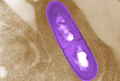
Canada – Recall Gorgonzola Cheese – Listeria monocytogenes

CFIA

The Canadian Food Inspection Agency (CFIA) and Agropur are warning the public not to consume the Il Villaggio brand Gorgonzola Dolce Cheese described in the link above because it may be contaminated with Listeria monocytogenes.

There have been no reported illnesses  associated with the consumption of this product.

The importer, Agropur, St-Hubert, Quebec, is voluntarily recalling the affected product from the marketplace.  The CFIA is monitoring the effectiveness of the recall.
Research – Campylobacter Antibiotic Resistance is Increasing

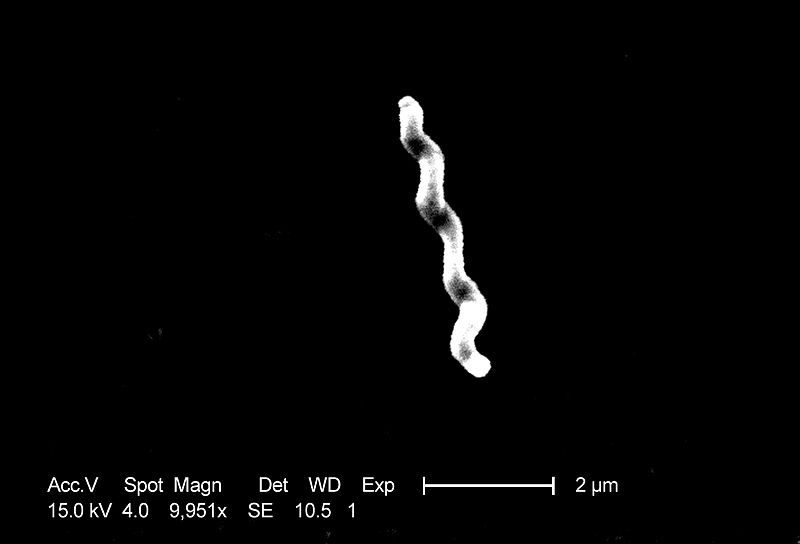
Food Poisoning BulletinCampylobacter_jejuni_01

Antibiotic resistance in Campylobacter is on the rise, according to a new study appearing in the July 7 edition of Emerging Infectious Disease. Researchers from the National Institute of Cholera and Enteric Diseases, Kolkata, India, where Campylobacter rates remain steady throughout the year, tested 142 samples and found that all of them were resistant to trimethoprim–sulfamethoxazole, (Septra, Bactrim) and 97 percent were resistant to quinolone (nalidixic acid) and fluoroquinolones (norfloxacin, ciprofloxacin, and ofloxacin). and erythromycin, azithromycin, gentamicin, furazolidone, and chloramphenicol. Multi-drug resistance was also high.

USA – Organic Oregano Recall – Salmonella

Food Safety News

California company is recalling 1,075 cases of its organic oregano because the product may be contaminated with Salmonella.

Olde Thompson Inc. of Oxnard, CA issued a voluntary recall of its Earth’s Pride Organics brand Organic Oregano — sold exclusively at BJ’s Wholesale — on Friday after the bacteria was discovered as a result of routine sampling.

The product was sold in a 2.2 oz. jar glass jar at BJ’s locations in Connecticut, Delaware, Florida, Georgia, Maine, Maryland, Massachusetts, New Hampshire, New Jersey, New York, North Carolina, Ohio, Pennsylvania, Rhode Island and Virginia between January 1 and July 10 of this year.

Affected lot numbers include 060367, 060692, 061252 and 061864. These numberscan be found on the bottom of the jar.

No illnesses have been linked to consumption of the product to date.

USA – Cyclospora Outbreak Update

BarfBlog 220px-Cyclospora_cayetanensis_stained

Authorities suspect that fresh vegetables are the source of a rare parasite sickening dozens of Iowans.

The Iowa Department of Public Health reported this morning that 45 cyclospora infections have been confirmed in the state in the past few weeks.

That’s up from 22 cases earlier this week.

Only 10 such cases had been reported in the state in the past 20 years. The parasite is usually transmitted by tainted produce or water. It can cause weeks of severe diarrhea.

Federal experts are helping to trace the cause. Officials are urging everyone to wash their produce carefully … though they note that Cyclospora can be difficult to wash off.

Investigators who interviewed the patients believe the outbreak started in tainted vegetables, not fruit.

Food Poisoning Journal – Cyclospora What You Need to Know

The Iowa Department of Public Health, CDC and local public health agencies are investigating an outbreak of an intestinal illness caused by Cyclospora (a rare parasite). As of July 12, 45 cases of Cyclospora infections have been reported in Iowa with dozens more in Nebraska and other Midwestern states. It appears linked to eating fresh vegetables.

Research – Norovirus Transmission

Cambridge Journals OnlineNorwalk_Caspid

Causal mechanisms of norovirus outbreaks are often not revealed. Understanding the transmission route (e.g. foodborne, waterborne, or environmental) and vehicle (e.g. shellfish or recreational water) of a norovirus outbreak, however, is of great public health importance; this information can facilitate interventions for an ongoing outbreak and regulatory action to limit future outbreaks. Towards this goal, we conducted a systematic review to examine whether published outbreak information was associated with the implicated transmission route or vehicle. Genogroup distribution was associated with transmission route and food vehicle, but attack rate and the presence of GII.4 strain were not associated with transmission route, food vehicle, or water vehicle. Attack rate, genogroup distribution, and GII.4 strain distribution also varied by other outbreak characteristics (e.g. setting, season, hemisphere). These relationships suggest that different genogroups exploit different environmental conditions and thereby can be used to predict the likelihood of various transmission routes or vehicles

Cambridge Journals Online

USA – FDA – Pistachio’s – Salmonella

FDASalmonella

Torn and Glasser, Inc of Los Angeles, CA  90021 is voluntarily recalling some packaged Pistachios because it has the potential to be contaminated with Salmonella, an organism which can cause serious and sometimes fatal infections in young children, frail or elderly people, and others with weakened immune systems. Healthy persons infected with Salmonella often experience fever, diarrhea (which may be bloody), nausea, vomiting and abdominal pain. In rare circumstances, infection with Salmonella can result in the organism getting into the bloodstream and producing more severe illnesses such as arterial infections (i.e., infected aneurysms), endocarditis and arthritis.

This decision to recall was made due to the expanded recall of pistachio products by ARO pistachio (Upgraded from a Class II to a Class I) due to the potential of contamination with Salmonella.  The Torn and Glasser recalled products contain pistachios supplied by the ARO processing plant located in Terra Bella Ca 93270.

The recalled product was distributed from February 21, 2012 to April 29, 2013 in CA, AZ, and HI.

UK – FSA – Latest research published by the FSA

FSA

The Agency has produced a summary of its research published in April to June 2013. Several areas of research were covered, including consumer attitudes towards the decontamination of meat and the use of freezing to reduce campylobacter in chicken livers. A full report for each area of research can be found via the links at the bottom of the page.

Evaluation: Freezing to reduce campylobacters in chicken liver
The FSA commissioned a research project to assess whether freezing chicken livers, before they are prepared and cooked in a catering or domestic kitchen, can significantly reduce the incidence of campylobacter contamination. Freezing is a proven effective intervention to control campylobacter contamination of poultry meat. However, there has been a lack of evidence on how effective this treatment is with chicken livers, particularly under conditions similar to those in catering or domestic kitchens where freezer temperatures and freezing rates may vary.

Research – Controlling Salmonella and Listeria with Marinades

Science DirectEurofins Food Testing UK

The effect of marination on the survival and growth of the pathogens Salmonella enterica and Listeria monocytogenes on beef pieces was investigated.

Five marinades were used: soy sauce base marinade without (SB) or with lactic acid (SBLA), red wine base marinade without (WB) or with 0.5% v/v oregano essential oil (WBO), and sterile saline used as control (C). Inoculated fresh beef pieces were marinated for 18 h at 5 °C, removed from the marinade and subjected to storage trials at 5 °C and 15 °C. Heat inactivation studies were also performed on the isolates after exposure to the marinades to determine if marination affects heat resistance of the pathogens.

The marinades with antimicrobials caused a significant decrease in viable count of the pathogens during marinations at 5 °C for 18 h of up to 2.1 and 3.4 log cfu cm−2 for Salmonella and L. monocytogenes, respectively. Marinades without antimicrobials were less bactericidal resulting to reductions ranging from 0.3 to 0.4 and 1.3 to 2.0 log cfu cm−2 for Salmonella and L. monocytogenes, respectively. Growth of L. monocytogenes was observed in the controls at both tested temperatures, while growth of Salmonella was observed in the controls stored at 15 °C. No growth of the pathogens was observed in any of the marinated samples at both temperature tested. No significant changes of heat resistance of the tested pathogens after exposure to the marinades were observed demonstrating the enhanced safety of the marinated beef product.

RASFF Alerts – Salmonella – Sesame Seeds – Poultry – Whole Chickens

RASFF – Salmonella Tennessee (presence /25g) in hulled sesame seeds from India in Greece

RASFF – Salmonella Tennessee (presence /25g) in hulled sesame seeds from India in Greece

RASFF – Salmonella enterica (presence /25g) in frozen poultry meat preparations (Aves) from Brazil in the Netherlands

RASFF – Salmonella spp. (presence /25g) in frozen poultry meat preparations (Aves) from Brazil in the Netherlands

RASFF – Salmonella enteritidis in chilled whole chickens with neck and frozen trussed chickens from Poland in Bulgaria

RASFF Alerts – Aflatoxin – Pistachios – Dried Red Chilli

RASFF – Aflatoxins (B1 = 29 / B1 = 62) in roasted pistachios from Turkey in France

RASFF – Aflatoxins (B1 = 10; Tot. = 10 µg/kg – ppb) in dried red chilli from India in France

RASFF – Aflatoxins (B1 = 45.98; Tot. = 54.84 µg/kg – ppb) in pistachios from Turkey in Germany