Category Archives: Microbiology

UK – Benyfit Natural Pet Food recalls various brands of raw dog food products containing beef due to the possible presence of salmonella

FSA

Benyfit Natural Pet Food Ltd has taken the precautionary step of recalling several types of frozen raw dog food products containing beef because the products might contain salmonella. These products have been sold by various independent pet food stores and online.

Product details

Benyfit Natural 80-10-10 Beef Meat Feast

Pack size 1kg
Batch code 046-076
Best before 16 March 2021
Batch code 046-083
Best before 23 March 2021
Batch code 046-093
Best before 2 April 2021
Batch code 046-100
Best before 9 April 2021
Benyfit Natural 80-10-10 Beef Meat Feast

Pack size 500g
Batch code 047-076
Best before 16 March 2021
Batch code 047-083
Best before 23 March 2021
Batch code 047-093
Best before 2 April 2021
Batch code 047-100
Best before 9 April 2021
Unique Raw Duck, Beef & Ox Recipe

Pack size 1kg
Batch code 710-077
Best before 17 March 2021
Batch code 710-099
Best before 8 April 2021
Benyfit Natural Beef & Tripe

Pack size 1kg
Batch code 013-077
Best before 17 March 2021
Batch code 013-085
Best before 25 March 2021
Batch code 013-093
Best before 2 April 2021
Batch code 013-100
Best before 9 April 2021
Benyfit Natural Beef & Tripe

Pack size 500g
Batch code 014-077
Best before 17 March 2021
Batch code 014-086
Best before 25 March 2021
Batch code 014-093
Best before 2 April 2021
Batch code 014-100
Best before 9 April 2021
Benyfit Natural Succulent Beef

Pack size 1kg
Batch code 010-083
Best before 23 March 2021
Batch code 010-087
Best before 27 March 2021
Batch code 010-090
Best before 30 March 2021
Batch code 010-100
Best before 9 April 2021
Benyfit Natural Succulent Beef

Pack size 500g
Batch code 011-083
Best before 23 March 2021
Batch code 011-090
Best before 30 March 2021
Batch code 011-100
Best before 9 April 2021
Embark on Raw Natural Working Dog Food Beef Complete

Pack size 454g
Batch code 203-078
Best before 18 March 2021
Batch code 203-090
Best before 30 March 2021
Batch code 203-097
Best before 6 April 2021
Neew Dog Premium Beef

Pack size 1kg
Batch code 405-079
Best before 19 March 2021
Batch code 405-090
Best before 30 March 2021
Batch code 405-099
Best before 8 April 2021
Neew Dog Premium Beef

Pack size 500g
Batch code 406-090
Best before 30 March 2021
Batch code 406-097
Best before 6 April 2021
Unique Raw Chicken, Beef & Ox Recipe

Pack size 1kg
Batch code 707-098
Best before 7 April 2021

Risk statement

The products listed above might be contaminated with salmonella. Salmonella is a bacterium that can cause illness in humans and animals. The products could therefore carry a potential risk because of the presence of salmonella, either through direct handling of the pet food, or indirectly, for example from pet feeding bowls, utensils or contact with the faeces of animals.

In humans, symptoms caused by salmonella usually include fever, diarrhoea and abdominal cramps. Infected animals may not necessarily display signs of illness, but symptoms can include diarrhoea.

Action taken by the company

Benyfit Natural Pet Food Ltd is recalling the above products. Customers who bought the affected products online have been contacted. Point of sale notices will be displayed in all retail stores that are selling these products. These notices explain to customers why the products are being recalled and tell them what to do if they have bought the product. Please see the attached notices.

Our advice to consumers

Pet owners: If you have bought any of the above products do not use them. Instead, return them to the store from where they were bought for a full refund. When handling and serving raw pet food it is always advised to clean utensils and feeding bowls thoroughly after use. Consumers should wash hands thoroughly after handling raw pet food, bowls, utensils or after contact with the faeces of animals. Raw pet food should be stored separately from any food (especially ready to eat foods). Care should be taken when defrosting to avoid cross contamination of foods and surfaces.

Research – Genomic epidemiology of domestic and travel-associated Vibrio parahaemolyticus infections in the UK, 2008–2018

Science Direct

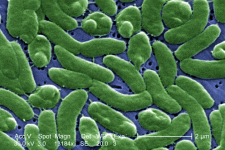
CDC Vibrio

Image CDC

Globally, V. parahaemolyticus is the most prevalent food-poisoning bacterium associated with seafood consumption. To date, the epidemiology of Vibrio parahaemolyticus infections in the UK has remained unexplored. Here we analysed archived V. parahaemolyticus strains isolated from domestic infections and travellers into the UK from 2008 to 2018 and who had submitted clinical samples to Public Health England (PHE)’s Gastrointestinal Bacteria Reference Unit. A total of 48 strains were retrieved from the PHE strain collection, confirmatory tested by PCR and analysed by genome-wide phylogeny using a global collection of genomes with representative strains from the major epidemic clones. Most reported infections entering the UK originated from travellers returning from Southeast Asia, however cases were also reported to have potentially originated from the USA, Cuba, India, Turkey, Caribbean, France, Slovenia and also within the UK, highlighting the wide geographical spread of infections. A large genetic diversity of V. parahaemolyticus strains was observed, with sequence type 3 (ST3; pandemic group) strains the most common sequence type (23 of the 48 analysed strains, 47.9%). The majority of strains were tdh positive (25/48, 71%), with 5 isolates positive for both haemolysin genes (tdh and trh), with 2 isolates trh positive only (5.7%). Six isolates did not possess either haemolysin gene. We demonstrate that whole genome sequencing can be effective to type certain human pathogens entering a traditionally considered “non-endemic” county and this was captured via passive epidemiological surveillance systems. Such approaches may potentially provide a useful snapshot of the diversity of a given pathogen group circulating worldwide.

Research – Effect of Ploidy on Vibrio parahaemolyticus and Vibrio vulnificus Levels in Cultured Oysters

JFP Vibrio_vulnificus_01

Vibrio parahaemolyticus and V. vulnificus are naturally occuring human pathogenic bacteria commonly found in estuarine environments where oysters are cultured. The use of triploid oysters has increased, due to their rapid growth rate and that they maintain a high quality throughout the year. Previous work suggested levels of Vibrio spp. may be lower in triploid oysters, as compared to diploids. Therfore, this study aimed to determine if there is a difference in the abundances of V. parahaemolyticus and V. vulnificus between half-sibling diploid and triploid oysters. In four trials, 100 individual oysters (either iced or temperature abused) were analyzed for V. parahaemolyticus and V. vulnificus using direct plating followed by colony hybridization. Mean levels of V. parahaemolyticus in iced and abused diploid oysters were 3.55 and 4.21 log CFU/g, respectively. Mean levels in iced and abused triploid oysters were 3.49 and 4.27 log CFU/g, respectively. Mean levels of V. vulnificus in iced and abused diploid oysters were 3.53 and 4.56 log CFU/g, respectively. Mean levels in iced and abused triploid oysters were 3.54 and 4.55 log CFU/g, respectively. The differences in Vibrio spp. abundances between diploid and triploid oysters was not significant (p>0.05). However, the differences across treatments were significant (p<0.05), with the exception of V. parahaemolyticus levels in trial 3 (p=0.83). Variation between individual oysters was also observed, with 12 of 808 measurements being outside of the 95 th percentile. This phenomenon of occasional statistical outliers (“hot” or “cold” oysters) has been previously described and supports the appropriateness of composite sampling to account for inherent animal variability. In summary, the data indicate that abundances of V. parahaemolyticus and V. vulnificus are not dependent on the ploidy of cultured oysters, but vary with the type of handling.


Research – Project to look at 2019 Spanish Listeria outbreak

Food Safety News Listeria cdc

Andalusian authorities have allocated €100,000 (U.S. $113,000) for research to learn from the region’s Listeria outbreak in 2019. The project will focus on the epidemiological, microbiological and clinical analysis of the listeriosis outbreak, according to the Ministry of Health and Families in Andalusia.

The outbreak from “La Mecha” brand chilled roasted pork produced by Magrudis affected more than 200 people. During the health alert between mid-August and mid-October three people died and there were five abortions.

USA – With over 500 with Cyclospora in the United States and Canada, what do consumers need to know?

Food Poison Journal

Cyclospora is a parasite composed of one cell, too small to be seen without a microscope. The organism was previously thought to be a blue-green alga or a large form of cryptosporidium. Cyclospora cayetanensis is the only species of this organism found in humans. The first known human cases of illness caused by Cyclospora infection (that is, cyclosporiasis) were first discovered in 1977. An increase in the number of cases being reported began in the mid-1980s, in part due to the availability of better diagnostic techniques. Over 15,000 cases are estimated to occur in the United States each year. The first recorded Cyclospora outbreak in North America occurred in 1990 and was linked to contaminated water. Since then, several cyclosporiasis outbreaks have been reported in the U.S. and Canada, many associated with eating fresh fruits or vegetables. In some developing countries, cyclosporiasis is common among the population and travelers to those areas have become infected as well.

More information at the link above.


Research – Microbiological Quality of Cooked Chicken: Results of Monitoring in England (2013-17)

JFP

Results from monitoring of the microbiological quality of 2,721 samples of ready-to-eat cooked chicken collected between 2013 to 2017 in England were reviewed: 70% of samples were from retail, catering or manufacture and 30% were imported and collected at English ports. Samples were tested for a range of bacterial pathogens and indicator organisms. Six samples (<1%) had unsatisfactory levels of pathogens which were potentially injurious to health. Neither Salmonella nor Campylobacter were recovered from any sample. Two samples from catering settings contained either an unsatisfactory level of Bacillus cereus (5 x 10 6 CFU/g) or an unsatisfactory level of coagulase positive staphylococci (1.6 x 10 4 CFU/g). Listeria monocytogenes was recovered from 36 samples (one at manufacture, 26 at catering and nine at retail) and in four instances, unsatisfactory levels (≥10 2 CFU/g) were detected (three samples collected at catering and one at retail). For L. monocytogenes there were no significant differences between the rates of contamination with between the samples collected from ports, manufacture, retail supermarkets and other retailers (p = 0.288). There were no differences between the rates of contamination for other potential pathogens detected between samples from different settings. The prevalence of hygiene indicators ( Escherichia coli , Enterobacteriaceae and Aerobic Colony Counts) at import was significantly lower than in samples collected from manufacturers, retail or catering (p < 0.01). Samples collected from catering gave poorer results than all other settings. Regardless of the stage in the food chain, samples from Thailand and from other non-EU countries were of significantly better microbiological quality with respect to indicator organisms than those from the UK or from other EU countries (p = <0.001).

Research – Scientists uncover Campylobacter’s swimming tactics

Food Safety News

campy2

Image CDC

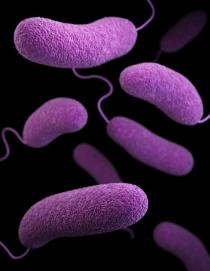
Researchers have found out how Campylobacter can swim faster in stickier liquids, such as in human guts.

Findings could help scientists halt the foodborne bacteria, because they show how the shape of its body and components that help it swim are all dependent on each other to work. This means any disruption to one part could stop the bacteria from getting through the body and into the gut.

Research – Optimization on antimicrobial effects of surfactin against Bacillus cereus spore

JFP

Abstract :The purpose of this study was to establish a three-variable bactericidal model of temperature, time, and concentration to determine the optimal conditions for Bacillus cereus  spore inactivation by surfactin. In order to obtain the binary regression equation of the inactivated spore model, a total of 17 simulations were performed using response surface methodology. The experimental results showed that the three factors each had a discernible but non-equal impact on the inactivation response value. Multiple regression analysis of experimental results using Design-Expert software yielded as the following equation: Optimal inactivation of spores was achieved by treatment with surfactin at a concentration of 4 mg/ml for 40 h at 53 °C, with the response value reaching 1.8. The spores were treated with surfactin under these conditions; the microstructural changes of spores were observed by scanning electron microscopy. We found that the structures of the outer wall of the spores were damaged, while the spores in the control sample showed no visible damage.

Research – Survival and Virulence of Listeria monocytogenes During Storage on Chocolate Liquor, Corn Flakes, and Dry-Roasted, Shelled Pistachios at 4ºC and 23ºC

JFP

The survival and virulence of Listeria monocytogenes was assessed during storage on three low-moisture foods (LMFs), chocolate liquor, corn flakes and shelled, dry-roasted pistachios (a w 0.18, 0.27, 0.20). The LMFs were inoculated with a 4-strain cocktail of L. monocytogenes at 8 log CFU/g, dried, equilibrated and then stored at 4°C, 25–81% relative humidity (RH) and 23°C, 30–35% RH for at least 336 days. At 4°C, L. monocytogenes remained stable on the LMFs for at least 336 days. At 23°C, L. monocytogenes levels declined on the chocolate liquor, corn flakes and pistachios at initial rates of 0.84, 0.88 and 0.32 log CFU/g/month, respectively. After 8 months at 23°C, L. monocytogenes concentrations on the chocolate liquor and corn flakes decreased to below the limit of detection (i.e., 0.48 log CFU/g). Relative populations of each strain were assessed before (i.e., day 0) and after 6 and 12 months of storage at 23°C and 4°C, respectively. Generally, a decline in the relative abundance of the serotype 1/2a strain was observed during storage, coupled with the relative increase of other strains, depending on the LMF and storage temperature. The total viable populations of L. monocytogenes quantified by PMAxx-qPCR after 12-plus months of storage at 4°C were significantly higher than that obtained by plating on TSA-YE by 1.8 to 3.7 logs. Decreases in the culturable population of L. monocytogenes during storage on the LMFs were the result of both cellular inactivation and transition to a viable-but-non-culturable state. The surviving cells, specifically after long-term storage at 4°C on the chocolate liquor and pistachios, remained infectious and capable of intracellular replication in Caco-2 enterocytes. These results have great relevance for predictive modeling used in microbial health risk assessments and support the addition of LMFs to food safety questionnaires conducted during listeriosis outbreaks.

RASFF Alert – Animal Feed -Aflatoxin – Groundnuts

RASFF-Logo

RASFF – aflatoxins (B1 = 25.4 µg/kg – ppb) in groundnuts for bird feed from India in the UK