Category Archives: Microbiology

Canada – Updated Food Recall Warning – Alwatania brand Halva Extra recalled due to Salmonella

CFIA

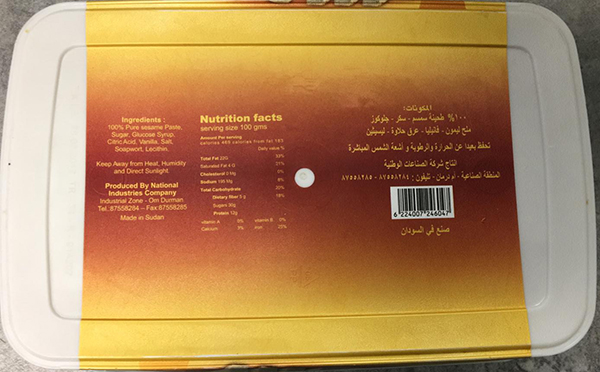
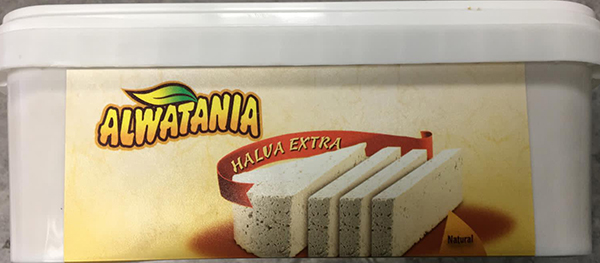
Alwatania - Halva Extra - 1 kg

Recall details

Ottawa, November 12, 2020 – The food recall warning issued on October 30, 2020 has been updated to include additional product information. This additional information was identified during the Canadian Food Inspection Agency’s (CFIA) food safety investigation.

Migahid & Elsawi Co. Ltd. is recalling Alwatania brand Halva Extra from the marketplace due to Salmonella. Consumers should not consume the recalled products described below.

Recalled product

Brand Product Size UPC Codes
Alwatania Halva Extra 1 kg 6 224007 246047 PRO : 20/05/2019
EXP : 19/05/2021

What you should do

If you think you became sick from consuming a recalled product, call your doctor.

Check to see if you have the recalled product in your home. Recalled products should be thrown out or returned to the store where they were purchased.

Food contaminated with Salmonella may not look or smell spoiled but can still make you sick. Young children, pregnant women, the elderly and people with weakened immune systems may contract serious and sometimes deadly infections. Healthy people may experience short-term symptoms such as fever, headache, vomiting, nausea, abdominal cramps and diarrhea. Long-term complications may include severe arthritis.

Background

This recall was triggered by the CFIA’s inspection activities. The CFIA is conducting a food safety investigation, which may lead to the recall of other products. If other high-risk products are recalled, the CFIA will notify the public through updated Food Recall Warnings.

The CFIA is verifying that industry is removing the recalled product from the marketplace.

Illnesses

There have been no reported illnesses associated with the consumption of this product.

Product photos

Printer ready version of photos
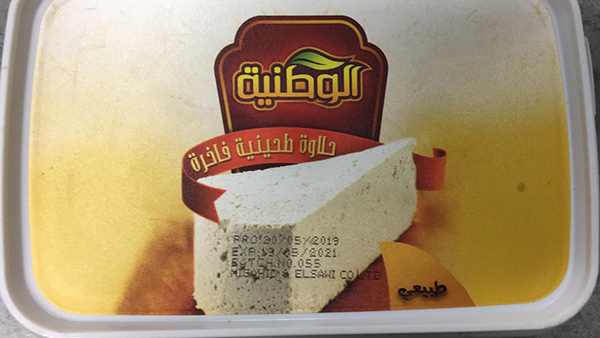
  • Alwatania - Halva Extra - 1 kg
  • Alwatania - Halva Extra - 1 kg - top
  • Alwatania - Halva Extra - 1 kg - bottom

Public enquiries and media

Public enquiries
Toll-free: 1-800-442-2342 (Canada and U.S.)
Telephone: 1-613-773-2342 (local or international)
Email: cfia.enquiries-demandederenseignements.acia@canada.ca
Media relations
Telephone: 613-773-6600
Email: cfia.media.acia@canada.ca

Belgium – Recall of Norenca nv – Ardennes logs – Salmonella

AFSCA

During microbiological checks, the presence of Salmonella was observed in the Ardennes logs.

In consultation with the AFSCA, Norenca nv has therefore decided to withdraw the products concerned from the sale.
Customers who have purchased these products are advised not to consume them and to bring them back to the store, where they will be reimbursed.

Product description: Product

name
: bûches ardennaises Lot: 2045310
Expiration date ( BBD = use-by date): 12/11/2020
Sale period: 11/06/2020 and 11/12/2020

        Label Carrefour Label Metro Makro Label Spar

The product was distributed via:

YVECA BV (Spar) NIEUWSTRAAT 22 8980 BESELARE
GEE SPRL (Spar) RUE DU JOLI BOIS 44/1 6900 AYE
DE LINDE BV (Spar) MARKTSTRAAT 19 9990 MALDEGEM
FALIANGA SPRL

(Spar)


AVENUE DE LA STATION


35


6790


AUBANGE

MAKRO DEURNE

(Makro)


KRIJGSBAAN


1A


2100


DEURNE

MAKRO EKE

(Makro)


SAVAANSTRAAT


1


9810


EKE

NACHTERGAELE BV

(Spar)


OUWEGEMSESTEENWEG


30 A


9750


OUWEGEM (ZINGEM)

GLOBE RETAIL BV

(Spar)


GEELSEBAAN


30


2430


VORST LAAKDAL

EASY COOL STORE

BV (Carrefour Market)


KERKSTRAAT


12


2350


VOSSELAAR

WALLO BV (Spar) RIJKSWEG 185 8710 WIELSBEKE
Spar Pi-One (Spar) OOSTERZELSESTEENWEG 9 9230 OOSTERZELSESTEENWEG
Huldenberg Foods

(Spar)


ELZASSTRAAT


16


3040


ELZASSTRAAT

Sparadiso NV (Spar) MEENSEWEG 30 8900 MEENSEWEG
Berjan BV (Spar) KERKSTRAAT 90 9255 KERKSTRAAT
Wens (Spar) KERKHOFLAAN 24 1910 KERKHOFLAAN
IMAVO BV (Spar) KLEINE STEENWEG 5 2221 KLEINE STEENWEG

Possible symptoms of Salmonella infection

Possible symptoms of Salmonella poisoning are fever, abdominal cramps and diarrhea. These symptoms usually appear within 12 to 48 hours of ingestion.

People who have consumed these products and who present this type of symptom are invited to consult their doctor, notifying him of this consumption.

For more information, customers can contact Norenca via info@norenca.be or 014 / 56.45.11.

USA – Florida Vibrio vulnificus tally this year tops 2019

Outbreak News Today

KSWFOODWORLD

Florida state health officials have reported more Vibrio vulnificus cases and deaths than this year than was reported in 2019, according to the latest data.

Vibrio vulnificus can cause disease in those who eat contaminated seafood or have an open wound that is exposed to warm seawater containing the bacteria. Ingestion of Vibrio vulnificus can cause vomiting, diarrhea and abdominal pain. Vibrio vulnificus can also cause an infection of the skin when open wounds are exposed to warm seawater; these infections may lead to skin breakdown and ulcers.

Research – Consecutive Treatments with a Multicomponent Sanitizer Inactivates Biofilms by Escherichia coli O157:H7 and Salmonella enterica and Removes Biofilm Matrix

Journal of Food Protection

Many foodborne pathogens including E. coli O157:H7 and Salmonella enterica can develop biofilms on contact surfaces at meat processing plants. Due to the high tolerance of the biofilm cells associated with the 3-dimensional biofilm structure and the well-expressed bacterial polymeric extracellular substances (EPS), it is a real challenge to completely inactivate and remove mature biofilms as well as further prevent biofilm reoccurrence and pathogen survival. We evaluated the effectiveness of consecutive treatments by repeatedly applying a multicomponent sanitizer, based on the functional mechanism by synergistic combination of hydrogen peroxide and quaternary ammonia compounds, against biofilms by E. coli O157:H7 and Salmonella strains. Biofilms were treated with 2.5%, 5%, or 10% of the sanitizer applied as foam or liquid solution. The sanitizer at all concentrations significantly reduced the amount of viable biofilm cells as enumerable bacteria were only detected after low concentration treatments (2.5% or 5%) with short exposure periods. Treatments with high concentrations (5% or 10%) of the sanitizer, multiple consecutive treatments and sufficient exposure time effectively controlled pathogen post-sanitization survival. Examination with a scanning electron microscope showed that treatment with the sanitizer at 5% strength significantly dissolved the connecting EPS matrix and removed most of the biofilm matrix. No intact biofilm structure was detected after the 10% sanitizer treatment, instead, scattered individual bacteria with visibly altered cell morphology were observed. The treated bacteria exhibited indented and distorted shapes with shortened cell length and increased surface roughness, indicating severe cell injury and death.  Our observations indicated that consecutive treatments with the multicomponent sanitizer was effective in inactivating E. coli O157:H7 and Salmonella enterica biofilms and preventing pathogen reoccurrence.

Research – Assessment of stabilized hydrogen peroxide for use in reducing Campylobacter levels and prevalence on broiler chicken wings

Journal of Food Protection

Poultry processing establishments utilize antimicrobial processing aids on broiler parts to minimize Campylobacter contamination. A stabilized hydrogen peroxide (SHP) product was assessed for use as an antimicrobial processing aid. In a series of experiments, wing segments with skin were inoculated with 103 – 107 cells of Campylobacter coli followed by treatment with SHP at 15,000 or 30,000 mg/L, peroxyacetic acid at 300 or 3,000 mg/L (ppm), or water. Each treatment was applied by either dip or spray. Rinsates from each wing segment were analyzed for direct counts and prevalence of Campylobacter. Treatment with SHP or PAA significantly reduced Campylobacter levels compared to water controls by up to 2.22 log CFU/mL. At high inoculum levels (106 – 107), SHP and PAA applied by dip had up to 1.27 log CFU/mL further reductions of Campylobacter levels as compared to spray treated wing segments. Additionally, wing drumettes were observed to retain higher levels and prevalence of Campylobacter recovery compared to wing flats at a low inoculation level (103). The results indicated that there was no carry-over effect of SHP (same day vs. 24 h) and dip treatment with SHP or PAA decreased Campylobacter recovery on broiler chicken wing segments compared to a water control. Although 2 log reductions were modest, SHP had similar efficacy as the commonly used processing aid, PAA. SHP shows potential for further investigation as an antimicrobial processing aid for use on poultry parts.

Research – Salmonella contamination of broiler chicken carcasses at critical steps of the slaughter process and in the environment of two slaughter plants

Journal of Food Protection

Research – A bacterial virus helped the spread of a new Salmonella strain

Phys Org.

Salmonella is associated with a large number of cases of foodborne infection resulting in diarrhea and in some cases severe complications. Half of all Salmonella infections in the European Union are linked to pigs, and a new strain called ST34 is dominant in this livestock animal. ST34 has now spread in pig populations worldwide and is pandemic.

The research was led by Eleonora Tassinari and Professor Rob Kingsley from the Quadram Institute and University of East Anglia and his research group, working with Public Health England, Animal and Plants Health Agency, the Earlham Institute and Teagasc Food Research Center. Their study was funded by the Biotechnology and Biological Sciences Research Council, part of UKRI.

They found that the common ancestor of the epidemic in UK pigs existed around 30 years ago but went unnoticed until 2005 when surveillance by the UK governments Animal and Plant Health Agency (APHA) first picked up ST34 in low numbers. Analysis of the genome sequence from human infections using data from Public Health England (PHE) indicated that a bacterial virus called mTmV infected ST34 on multiple occasions starting around 2002.

Belgium – Products: goat cheese from the Bettine, Delhaize and Centurion brands – Listeria monocytogenes

AFSCA

Following a notification via the RASFF system (European Food and Feed Rapid Alert System), the presence of Listeria monocytogenes was detected in goat cheeses of the Bettine, Delhaize and Centurion brands.

The AFSCA has therefore decided to withdraw these products from sale and to recall them to consumers.

The AFSCA also asks not to consume these products and to bring them back to the point of sale where they were purchased.

Product description

Ripened goat cheese from the Bettine brand
– Product name: geitenkaas gerijpt 200g
– Brand: Bettine
– Use-by date (DLC): from 10/28/2020 to 12/30/2020
– Item number: 5020060
– EAN code: 8712023011292
– Weight: 200g

The product was sold via Sligro (Ottergemsesteenweg Zuid 720, 9000 Gent)

White goat cheese from the Bettine brand
– Product name: geitenkaas wit 450g
– Brand: Bettine
– Use-by date (BBD): from 28 /
10/2020 to 12/30/2020 – Article number: 5010434
– EAN code: 8712023020089
– Weight: 450g

The product was sold via Sligro (Ottergemsesteenweg Zuid 720, 9000 Gent), Ramhoreca (zoning du Brûlé 79, 7390 Quaregnon) and via La petite folie (Place de la resistance 9, 7711 Dottignies).

Bûche Sainte Maure (200g) from the brand Delhaize
– Product name: Bûche Sainte Maure 200g
– Brand: Delhaize
– Consumption deadline (DLC): 6/11/2020, 10/11/2020, 11/11/2020, 17/11/2020, 19/11/2020, 24/11/2020, 26/11/2020 , 1/12/2020, 8/12/2020, 15/12/2020 and 23/12/2020
– Weight: 200g

The product was sold through Delhaize stores.

Centurion brand goat log
– Product name: 25% goat cheese log
– Brand: Centurion
– Lots and use-by dates (DLC):
            o Product sold at Match:
                        – DLC = 15/11/2020 with lot number = EG020EGE
                        – DLC = 04/11/202 with lot number = E305E34
                        – DLC = 08/11/2020 with lot number = E8008E8A
                        – DLC = 11/11/2020 with lot number = EG009EGE
            o Product sold at Cora:
                        – Lot = E7017E7A with DLC = 7/11/2020
                        – Lot = E9009EAA with DLC = 10/11/2020
                        – Lot = EG009EGE with DLC = 14/11/2020
                        – Lot = F0007F0A with DLC = 17/11/2020
                        – Lot = F0007F24 with DLC = 17/11/2020
– Weight: 150 g and 200 g

The product was sold through the Match and Cora stores .

About Listeria monocytogenes (identity sheet, recommendations for consumers): http://www.afsca.be/consommateurs/viepratique/intoxicationsalimentaires/listeriainfo/

For any further information, you can contact the AFSCA contact point for consumers: 0800 / 13.550 or pointdecontact@afsca.be .

Research – Investigation into a national outbreak of STEC O157:H7 associated with frozen beef burgers, UK, 2017

Cambridge Org

In November 2017, Public Health England identified an outbreak of Shiga toxin-producing Escherichia coli O157:H7 in England where whole genome sequencing results indicated cases were likely to be linked to a common source, and began investigations. Hypothesis generation included a review of enhanced surveillance data, a case-case study and trawling interviews. The hypothesis of interest was tested through the administration of focussed questionnaires and review of shopping history using loyalty card data. Twelve outbreak cases were detected, eight were hospitalised and four developed haemolytic uraemic syndrome. Frozen beef burgers supplied by a national retailer were identified as the vehicle of the outbreak. Testing of two left-over burger samples obtained from the freezers of two separate (unlinked) cases and a retained sample from the production premises were tested and found to be positive for the outbreak strain. A voluntary recall of the burgers was implemented by the retailer. Investigations at the production premises identified no contraventions of food safety legislation. Cooking guidance on the product packaging was deemed to be adequate and interviews with the cases/carers who prepared the burgers revealed no deficiencies in cooking practices at home. Given the long-shelf life of frozen burgers, the product recall likely prevented more cases.

France – Product recall: JEAN ROZE brand Facon Orloff roast pork tenderloin – Salmonella

Oulah

Product recall: JEAN ROZE brand Facon Orloff roast pork tenderloin

ENCOUNTERED PROBLEM

Presence of salmonella

PROPOSED SOLUTION

Those in possession of this product are asked not to consume it and to return it to the point of sale where it was purchased.

Foodborne illness caused by salmonella results in gastrointestinal disturbances, diarrhea, vomiting and abdominal pain, often accompanied by fever; these symptoms may be more severe in young children, immunocompromised individuals and the elderly. The incubation period can range from 6 to 72 hours.
People who have consumed the products mentioned below and who have these symptoms are invited to consult their doctor, notifying him of this consumption.

FURTHER INFORMATION

▸ Packaging
880g – tray under protective atmosphere

▸ Barcode
0 290 217 xxx xxx (regardless of the x)

▸ Lot
E03010409

▸ DLC
07/11/2020

▸ Health
stamp FR 47.091.002 CE

▸ Source
https: / ermarche.com/