Category Archives: Microbiology

France – Product recall: Carrefour brand basmati rice – Aflatoxin B1

Oulah

Product recall: Carrefour brand basmati rice

ENCOUNTERED PROBLEM

Presence of aflatoxins B1

PROPOSED SOLUTION

Do not consume and return to the point of sale for reimbursement.

Aflatoxins are mycotoxins that can be present in different products such as grains, coffee, rice, raisins and dried fruits. Only a large quantity of contaminated products can lead to health problems.

People with hepatitis are sensitive to aflatoxins.

FURTHER INFORMATION

▸ Barcode
3560070837984

▸ Lot
L HH: MM 02/05/2023

▸ DLC
02/05/2023

▸ Packaging
1kg bag

▸ Consumer service contact
For any further information, you can contact the Carrefour consumer service by dialing N ° Cristal 09 69 39 7000 – non-surcharged call from Monday to Saturday from 9 am to 7 pm.

▸ Source
https://www.carrefour.fr/
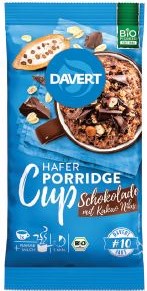
Germany – DAVERT porridge cup chocolate with cocoa nibs 65 g, best before 01.03.22 DAVERT porridge cup chocolate with cocoa nibs 65 g, best before 26.04.22 – Salmonella

LMW

Warning type:Food
Date of first publication:April 20, 2021
Product name:

DAVERT porridge cup chocolate with cocoa nibs 65 g, best before 01.03.22 DAVERT porridge cup chocolate with cocoa nibs 65 g, best before 26.04.22

Product pictures:
Photo Porridge Davert.JPG


Midsona Germany GmbH

Manufacturer (distributor):Midsona Deutschland GmbH Zur Davert 7 59387 Ascheberg
Reason for warning:

Detection of salmonella in one ingredient

Packaging Unit:65 g
Durability:01.03.22 and 26.04.22
Additional Information:

Reference is made to the enclosed customer information.

Contact to the responsible authorities:

Baden-Württemberg:poststelle@mlr.bwl.de

Bavaria:poststelle@lgl.bayern.de
Berlin:poststelle@senjustva.berlin.de
Bremen:Schnellwarnung@gesundheit.bremen.de
Hamburg:poststelle@justiz.hamburg.de
Hesse:Schnellwarnung@rpda.hessen.de
Mecklenburg-Western Pomerania:poststelle@lm.mv-regierung.de
Lower Saxony:poststelle@ml.niedersachsen.de
North Rhine-Westphalia:poststelle@mulnv.nrw.de
Rhineland-Palatinate:Poststelle.Referat22@lua.rlp.de
Saarland:poststelle-luv@lav.saarland.de
Saxony:poststelle@sms.sachsen.de
Saxony-Anhalt:poststelle@ms.sachsen-anhalt.de
Schleswig-Holstein:poststelle@jumi.landsh.de
Thuringia:LM-Ueberendung@tlv.thueringen.de
Press releases and information
title Attachment or web link
Market notice


Research – Contamination of ready-to-eat street food in Pakistan with Salmonella spp.: Implications for consumers and food safety

IJID Online

kswfoodworld salmonella

Highlights

  • Microbial contamination of street food sold in Quetta.
  • 38% (121/320) of ready-to-eat food samples were contaminated with microbial pathogens.
  • Food quality was worse in summer months.
  • Salmonella enteritidis and Salmonella typhimurium were identified by multiplex polymerase chain reaction.
  • Isolated pathogens showed antibiotic resistance.

Abstract

Objectives

Ready-to-eat (RTE) food sold in Quetta, Pakistan was assessed for microbial contamination.

Methods

Equal numbers of samples were collected from four categories of RTE food – burgers, shawarma, pizza and sandwiches – from January 2018 to December 2018. Microbial contamination of individual food samples was assessed by quantifying the total aerobic count obtained from plating samples on bacterial growth medium. Salmonella spp. serovars were identified using polymerase chain reaction.

Results

Approximately 38% (121/320) of RTE food samples were not fit for human consumption. The most contaminated type of RTE food was shawarma (49%). Microbial contamination of food samples was higher in summer compared with the other seasons. Approximately 40% (49/121) of food samples that were not fit for human consumption were contamined with Salmonella spp. Salmonella enteritidis (69%) and Salmonella typhimurium (31%) were the only serovars among the samples testing positive for Salmonella spp. Of the 49 samples with high microbial counts, S. enteritidis was present in 34 samples and S. typhimurium was present in 15 samples. The antibiotic sensitivity results demonstrated that both S. enteritidis and S. typhimurium were resistant to amoxicillin. In addition, S. enteritidis was resistant to chloramphenicol and erythromycin, and S. typhimurium presented high resistance to erythromycin. Both S. typhimurium and S. enteritidis were highly sensitive to kanamycin.

Conclusion

RTE food sold by street vendors in Quetta was found to be contaminated with Salmonella spp. and poses a great health risk to consumers. As such, consumption should be avoided, and the health authorities should take stringent action to ensure the quality of street food in order to reduce the healthcare burden.

Australia – Coles Tasmanian Smoked Salmon 150g – Recall

FSANZ

Date published: 20 April 2021

Update 20 April 2021: Please note distribution has been extended to include Coles Supermarkets in Tasmania.

Product information

Coles Supermarkets Australia Pty Ltd is conducting a recall of Coles Tasmanian Smoked Salmon 150g. The product has been available for sale at in Coles Supermarkets in Victoria (excluding Mildura stores), WA and Tasmania and Coles Online.

Date markings

Use By 07 April 2023

Coles Tasmanian sliced salmon

Problem

The recall is due to an incorrect Use By date. The product was incorrectly labelled with a Use By date of 07 April 2023,
instead of 07 May 2021.

Food safety hazard

The food may cause illness if consumed after 07 May 2021.

Country of origin

Australia.

What to do​

While the product is currently safe to eat, customers should not consume the product beyond the correct Use By date of 07 May 2021.

Customers should return the product to the place of purchase for a full refund.

For further information please contact:

Coles Supermarkets Australia Pty Ltd
1800 061 562
www.coles.com.au

Related links:

Belgium – “American prepared” and “American prepared martino” recall – Salmonella

AFSCA

Norenca
Product recall: “American prepared” and “American prepared martino” recall.
Problem: possible presence of Salmonella.


As a precautionary measure, Norenca NV is now withdrawing from sale the following items due to the possible presence of Salmonella

1. American prepared
– Lot 02114099 – DLC 04/16/21
– Lot 02115102 – DLC 04/20/21
– Lot 02115103 – DLC 04/21/21
– Lot 02115104 – DLC 04/22/21
– Lot 02115105 – DLC 23 /
04/21 – Weight: +/- 175g, +/- 350g and +/- 850g

2. American prepared martino
– Lot 02114099 – DLC 04/16/21
– Lot 02115102 – DLC 04/20/21
– Lot 02115103 – DLC 04/21/21
– Lot 02115104 – DLC 04/22/21
– Lot 02115105 – DLC 04/23/21
– Weight: +/- 175g, +/- 350g and +/- 850g

Sale period: since 04/10/21

Information for consumers

The Norenca company asks its customers not to consume this product and to bring it back to the point of sale.

Possible symptoms of foodborne illness caused by Salmonella are: fever, abdominal cramps and diarrhea, within 12 to 48 hours of consuming the contaminated food. The risk of infection is higher in the elderly, children, pregnant women and people with weakened immune systems.

People who have consumed these products and who present this type of symptoms are invited to consult their doctor without delay, notifying him of this consumption.

NORENCA NV
2440 GEEL
info@norenca.be
014 / 58.45.11

Publisher’s Platform: Pathogen information at your fingertips on our ‘bug’ sites

Food Safety News

Marler Clark developed expertise in foodborne pathogens other than E. coli, we began to post information that we learned during litigation and by working with some of the best experts in the world.  The culmination of those efforts is our “bug” websites, which we offer in the link above, peruse and share with those you care about.

Research – Effect of food matrix type on growth characteristics and hemolysin production of Vibrio alginolyticus

Journal of Food Protection

Food Illness

The growth and hemolysin production of two V.   alginolyticus  strains (HY9901 and ATCC17749T) at 30 °C in briny tilapia, shrimp, scallop, oyster, pork, chicken, freshwater fish and egg fried rice were investigated. Bacterial counts were enumerated by plate counting. Hemolysin production was evaluated by blood agar and hemolytic titer tests. The two V.   alginolyticus  strains displayed similar growth and hemolysin production patterns in the foods. Based on the goodness of fit primary model statistics (R 2 , MSE, BF, AF), the modified Gompertz model was a better fit to V.   alginolyticus  growth in foods than the logistic model. Growth kinetic parameters of V.   alginolyticus  displayed a higher μ max and shorter λ in briny tilapia > shrimp > freshwater fish > egg fried rice > scallop > oyster > chicken > pork. It was notable that the V.   alginolyticus  counts were similar at the stationary phase, with no significant growth behavior difference between raw and cooked foods. Significantly higher (p < 0.05) thermostable direct hemolysin (TDH) activity was produced by V.   alginolyticus  in briny tilapia > freshwater fish > shrimp > chicken > egg fried rice > scallop > oyster > pork. But the hemolytic titer was not consistent with the TDH activity, being significantly higher (p < 0.05) in briny tilapia > egg fried rice > shrimp > freshwater fish > chicken > scallop > oyster > pork. Contrary to current belief, V.   alginolyticus  displayed a higher hemolysin production in some non-seafoods (freshwater fish, egg fried rice and chicken) than in scallop or oyster. This is the first report of growth and toxicity of V. alginolyticus  in different food matrices and confirmation that some non-seafood contaminated with V. alginolyticus  can be even more pathogenic. This study will enhance the awareness of non-seafood safety and improve the V.   alginolyticus  risk assessment accuracy.

Research- Fish, Tilapia, and Shigellosis: A review

AJAR

Foodborne diseases are considered a relevant issue in health around the world due to their incidence, mortality and negative effects on the economic and productive sector. Fish is considered a food of high nutritional quality, being of global production, distribution and commercialization mainly for human consumption. Among the fish worldwide obtained from capture fisheries and mainly aquaculture for human consumption is Tilapia, due to the adaptability of this fish under cultivation conditions in addition to the fact that its meat is of quality and accessible economic value. Fish due to its composition, is highly susceptible to deterioration and contamination by different hazards throughout the food chain, putting the safety of products and public health at risk. Shigellosis is among the diseases that may be contracted from the consumption of food contaminated by bacteria of the genus Shigella spp.; food contamination is mainly related to inadequate or non-hygienic conditions and practices in the production, processing and handling of food. Therefore, the purpose of this review is to provide a general perspective of foodborne diseases, especially shigellosis, causal agents, conditioning factors, related foods such as fish, as well as control and preventive actions in order to protect the food safety and public health.

UK – Sainsbury’s Campylobacter rates in chicken hit FSA threshold

Food Safety News

Campylobacter kswfoodworld

Sainsbury’s has recorded the worst Campylobacter in chicken results for the final three months of 2020 closely followed by Tesco.

Figures come from the top nine retailers in the United Kingdom publishing the latest quarter of testing findings.

The Food Standards Agency (FSA) threshold is 7 percent of birds with more than 1,000 colony forming units per gram (CFU/g) of Campylobacter.

Sainsbury’s reported 7 percent of chickens sampled were above 1,000 CFU/g in the fourth quarter of 2020 (4Q), compared to 2 percent in 3Q, slightly more than 4 percent in 2Q and about 3 percent in 1Q 2020.

RASFF Alerts – Animal Feed – Salmonella – Poultry Meat Meal – Mechanically Separated Chicken

European Food Alerts

RASFF

Salmonella enterica ser. Infantis (presence /25g) in poultry meat meal from the Netherlands in Belgium

RASFF

Salmonella (presence /25g) in category 3 mechanically separated chicken from Germany in Belgium