Category Archives: Microbiology

Research – The Importance of Shiga Toxin-Producing Escherichia coli O145:NM[H28]/H28 Infections in Argentina, 1998–2020

MDPI

Shiga toxin-producing Escherichia coli (STEC) is known as a pathogen associated with food-borne diseases. The STEC O145 serogroup has been related with acute watery diarrhea, bloody diarrhea, hemorrhagic colitis, and hemolytic uremic syndrome (HUS). Argentina has the highest rate of HUS worldwide with 70% of the cases associated with STEC infections. We aimed to describe the epidemiology and genetic diversity of STEC O145 strains isolated across Argentina between 1998–2020. The strains isolated from 543 cases of human disease and four cattle, were pheno-genotipically characterized. Sequencing of five strains was performed. The strains were serotyped as O145:NM[H28]/H28, O145:H25, and O145:HNT, and mainly characterized as O145:NM[H28]/stx2a/eae/ehxA (98.1%). The results obtained by sequencing were consistent with those obtained by traditional methods and additional genes involved in different mechanisms of the pathogen were observed. In this study, we confirmed that STEC O145 strains are the second serogroup after O157 and represent 20.3% of HUS cases in Argentina. The frequency of STEC O145 and other significant serogroups is of utmost importance for public health in the country. This study encourages the improvement of the surveillance system to prevent severe cases of human disease. View Full-Text
Research – Fruit Juice Spoilage by Alicyclobacillus: Detection and Control Methods—A Comprehensive Review

MDPI

Fruit juices have an important place in humans’ healthy diet. They are considered to be shelf stable products due to their low pH that prevents the growth of most bacteria. However thermo-acidophilic endospore forming bacteria of the genus Alicyclobacillus have the potential to cause spoilage of commercially pasteurized fruit juices. The flat sour type spoilage, with absence of gas production but presence of chemical taint compounds (mostly guaiacol) and the ability of Alicyclobacillus spores to survive after pasteurization and germinate under favorable conditions make them a major concern for the fruit juice industry worldwide. Their special characteristics and presence in the fruit juice industry has resulted in the development of many isolation and identification methods based on cell detection (plating methods, ELISA, flow cytometry), nucleic acid analysis (PCR, RAPD-PCR, ERIC-PCR, DGGE-PCR, RT-PCR, RFLP-PCR, IMS-PCR, qPCR, and 16S rRNA sequencing) and measurement of their metabolites (HPLC, GC, GC-MS, GC-O, GC-SPME, Electronic nose, and FTIR). Early detection is a big challenge that can reduce economic loss in the industry while the development of control methods targeting the inactivation of Alicyclobacillus is of paramount importance as well. This review includes a discussion of the various chemical (oxidants, natural compounds of microbial, animal and plant origin), physical (thermal pasteurization), and non-thermal (High Hydrostatic Pressure, High Pressure Homogenization, ultrasound, microwaves, UV-C light, irradiation, ohmic heating and Pulse Electric Field) treatments to control Alicyclobacillus growth in order to ensure the quality and the extended shelf life of fruit juices.

Research – Antimicrobial effect of chitosan and extracellular metabolites of Pediococcus pentosaceus CM175 against Salmonella Typhimurium and Escherichia coli O157:H7

Wiley Online

Foodborne illness outbreaks caused by consuming cantaloupe melon contaminated with Salmonella spp. and Escherichia coli O157:H7 are recurrent. The objective of this work was to investigate the antimicrobial effect of the combination of chitosan (Q) and extracellular metabolites of Pediococcus pentosaceus CM175 (EmPp) on the surface of cantaloupe against E. coli O157:H7 and Salmonella Typhimurium. The minimum inhibitory and bactericide concentrations (MIC and MBC) of Q and EmPp were determined by the method of microdilution in broth and viability in plate, respectively. The antimicrobial effect derived from the combination of Q and EmPp was evaluated using the chessboard technique. The antimicrobial activity of the different treatments in cantaloupe was performed employing plate counting. The viability and membrane integrity of S. Typhimurium and E. coli O157:H7 after treatments application were observed by fluorescence microscopy. The results showed that MIC and MBC of Q against S. Typhimurium were 0.1% and 0.7%, respectively; 0.004% and 0.03% for E. coli O157:H7, respectively; for EmPp, MIC was 8.0% and MBC was 10% for both bacteria. The combination of 0.1% Q and 6.6% EmPp against S. Typhimurium and 0.01% Q and 5.0% EmPp against E. coli O157:H7 showed an additive effect. The highest reductions of S. Typhimurium and E. coli O157:H7 in cantaloupe were exerted by the combinations of 0.1% Q with 6.6% EmPp and 0.01% Q with 5.0% EmPp, respectively. These results show that combination of Q and EmPp could be an effective and promising alternative against the tested pathogens.

Jordan – Homemade leftovers leave three people poisoned in Mafraq

Roya News

Director of Al-Mafraq Governmental Hospital Moqbel Al-Sharafat told Roya Saturday that three people were diagnosed with food poisoning after eating leftovers.

Roya’s correspondent in Mafraq said that the three initially came to the hospital after feeling unwell. They thought they were feeling unwell due to inhaling gases from a heating device. However, later, it was found that they were food poisoned as a result of eating leftover food.

Research – Rainfall strongly affects infectious Vibrio bacteria in Ala Wai Canal

Science Daily

Food Illness

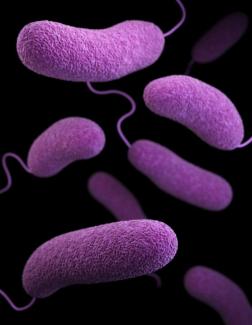
Study authors Olivia Nigro, then a graduate student in the oceanography at UHM and now an assistant professor at HPU, and Grieg Steward, professor in the UHM School of Ocean and Earth Science and Technology (SOEST), first assessed Vibrio in 2006 when Oliver Johnson died from a V. vulnificus infection after having cuts and scrapes exposed to Ala Wai Harbor water.

“His exposure occurred after many days of heavy rainfall, which, given our results, suggests this may have been an exacerbating factor,” said Steward. “At the time, we realized there was almost no data on the ecology of V. vulnificus in the canal, or in Hawai’i generally, and remarkably, very little in tropical waters anywhere.”

After a quick pilot study in 2006 that showed the bacteria are present in high, but not unexpected numbers, the team geared up for a year-long study in 2008-2009 with better methods to understand the variability in abundance over a seasonal cycle.

At higher latitudes, the abundance of V. vulnificus shows a very strong seasonal cycle — nearly disappearing in winter when temperatures are cold. In Hawai’i, temperatures are warm year-round, so freshwater input becomes a more important control.

V. vulnificus occurs naturally in warm, brackish waters,” said Nigro. “So we expect to find this bacterium anywhere that temperatures are warm and freshwater and seawater mix in about equal proportions. When conditions are right, the Ala Wai Canal can be a great incubator for this bacterium!”

India – 1,000 hospitalised due to food poisoning in Mehsana

India Express

Over 1,000 people who attended a wedding dinner in the Savala village of Visnagar, Mehsana on Friday were rushed to health facilities following food poisoning. According to Visnagar taluka police, an inquiry has been initiated and proceedings shall be initiated accordingly.

According to police inspector BL Maheriya of Visnagar taluka police station, the wedding of former Congress leader Wazir Khan Pathan’s son was held on March 3 and the next day on March 4 a dinner was organised at Savala with “12,000-15,000 guests in attendance”, of which around 1,057 guests started exhibiting symptoms of food poisoning such as vomiting and diarrhoea and were admitted at various health facilities in Gandhinagar.

“FSL and FDCA has taken samples of sweets and other food items served at the dinner and the results are awaited. Health department too is working on this and have taken samples of the vomit and stool. Prima facie it seems the caterer may have been negligent and there could have been adulteration in the food,” Gohil said.

Research – Don’t take a risk with food safety during and after floods

Medical Express

Following extensive flooding in eastern Australia the Food Safety Information Council is warning people not to take food safety risks during and after flood.

Lydia Buchtmann, the Council’s Communication Director, said that floodwater can be contaminated with sewage, agricultural and , and other substances that can cause illness so there is a danger that any food, surfaces and cooking utensils that have come into contact with floodwater might be contaminated.

“Spills and sewage discharges can also contaminate  and food gardens. If in doubt throw out any food that might not be safe to eat and follow these simple steps:

  1. Throw out food that has come into contact with floodwater or has an unusual odor, color or texture. Do not taste or cook it.
  2. Check canned and unopened bottled food and throw out any cans that are dented, swollen or damaged. For  that appear useable remove the label and thoroughly wash the outside of the can with drinking-quality water, sanitize the can in bleach for 1 minute, then rinse in drinking-quality water re-label the can with a waterproof pen.
  3. Carefully check dishes, pots, pans, cutlery and kitchen equipment that might have been in contact with floodwater. Throw away damaged or cracked items, items made from porous material such as wood, plastic or rubber including wooden chopping boards as they cannot be adequately sanitized.
  4. Wash utensils and surfaces in hot, soapy, drinking-quality water. Take apart and clean the non-electrical pieces of any kitchen equipment that can be safety taken apart and then rinse in clean, hot water.
  5. Sanitize silverware, metal utensils, pots, pans and kitchen equipment in pieces by boiling in water for 10 minutes. Sanitize dishes by immersing glass, porcelain, china and enamel-ware for 10 minutes in a disinfecting solution of 1 tablespoon of chlorine bleach per 2 liters of warm water. Clean cupboards and counters with hot soapy water then rinse with a chlorine bleach solution before storing dishes or food.
  6. Air dry items because towels might have been splashed with contaminated water.
  7. Commercial and most domestic dishwashers are capable of sanitizing all eating and cooking utensils as part of their normal cycle
  8. Vegetable gardens can take a month to become suitable for harvest after flood or sewage discharge. Discard all leafy green produce or damaged vine or dropped tree fruits. After 1 month, wash other vegetables then sanitize in a weak bleach solution of 1 tablespoons bleach to 2 liters of water. Then rinse in drinking-quality water, peel and use.

“Finally, after a flood tap water and private water supplies such as from tanks, wells and bores sometimes might not be safe to drink and use for cooking and cleaning so monitor public announcements and those from the local water supplier to know if tap water is safe to use. If the water is unsafe, use only bottled, boiled or treated —in that order of preference—for drinking, cooking or preparing , washing utensils and surfaces, brushing teeth, hand washing, making ice, and bathing,” Ms Buchtmann concluded.


Explore further

Proper handling of fresh produce can reduce risk of foodborne illness

Estonia – Imported chicken linked to Campylobacter cases in Estonia

Science Direct

CDC Campy

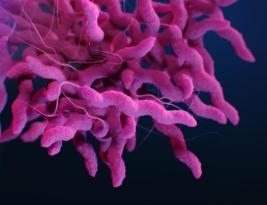
Since 2005 campylobacteriosis has been the most commonly reported gastrointestinal infection in humans in the European Union with more than 200,000 cases annually. Also Campylobacter is one of the most frequent cause of food-borne outbreaks with 319 outbreaks reported to EFSA, involving 1,254 cases of disease and 125 hospitalizations in EU in 2019. Importantly poultry meat is one of the most common source for the sporadic Campylobacter infections and for strong-evidence campylobacteriosis food-borne outbreaks in EU.

 In present study, 429 fresh broiler chicken meat samples of Estonian, Latvian, and Lithuanian origin were collected from Estonian retail level and analyzed on a monthly basis between September 2018 and October 2019. Campylobacter spp. were isolated in 141 (32.9%) of 429 broiler chicken meat samples. Altogether 3 (1.8%), 49 (36.8%), and 89 (66.9%) of Estonian, Latvian, and Lithuanian origin broiler chicken meat samples were positive for Campylobacter spp. Among Campylobacter-positive samples, 62 (14.5%) contained Campylobacter spp. below 100 CFU/g and in 28 (6.5%) samples the count of Campylobacter spp. exceeded 1,000 CFU/g. A high prevalence of Campylobacter spp. in fresh broiler chicken meat of Lithuanian and Latvian origin in Estonian retail was observed. Additionally, 22 different multilocus sequence types were identified among 55 genotyped isolates of broiler chicken meat and human origin, of which 45 were Campylobacter jejuni (C. jejuni) and 10 were Campylobacter coli (C. coli). The most prevalent multilocus sequence types among C. jejuni was ST2229 and among C. coli ST832, ST872. C. jejuni genotypes found in both broiler chicken meat and human origin samples were ST122, ST464, ST7355, and ST9882, which indicates that imported fresh broiler chicken meat is likely the cause of human campylobacteriosis in Estonia.

Research – Hygiene indicators and Salmonella sp. on swine carcass surfaces from two slaughterhouses in northern Portugal.

Journal of Food Protection

The monitorization of carcass surfaces contamination along the slaughter lines enables the verification of the slaughter operations hygiene and the good manufacturing practices. Pork meat is a common source of human non-typhoidal salmonellosis, one of the most frequently reported foodborne illnesses worldwide. This study aimed to gather data on microbial loads in carcass surfaces in two slaughterhouses, before and after evisceration. Salmonella enterica search was made after evisceration, due to the frequent reference to pork as being a common carrier of this microorganism. The contamination of carcass surfaces was evaluated by delimitation of surface area with sterilized templates (100 cm2), and sampled by gauze swabs. Enumeration of total aerobic mesophilic microorganisms, Enterobacteriaceae, and Escherichia coli was performed. The detection of Salmonella was performed for carcass surfaces after evisceration, and from animal liver and floor drains (environmental). Significant differences (p < 0.05) were observed for mesophilic microorganisms, Enterobacteriaceae, and E. coli counts on the external surfaces, with higher counts after evisceration. The neck and abdominal area presented higher levels for mesophilic microorganisms, Enterobacteriaceae and E. coli, and a high prevalence of Salmonella. Salmonella was detected only in one of the studied slaughterhouses; 19 out of 259 analysed carcass samples were positive for Salmonella (7.3%). Salmonella was also detected in two livers and in two floor drains. A collection of 52 Salmonella isolates (44 from carcasses, 5 from livers, 3 from drains) was gathered. Three serovars of Salmonella were identified (Typhimurium 4,5:i- , Wernigerone and Derby), and 53.8% of isolates were multidrug-resistant. The results demonstrate the need for continuous improvement of slaughtering operations and good manufacturing practices, to ensure food safety of pork produced in Portugal.

Research – Microbial Diversity and Safety in Fermented Beverages

MDPI

For thousands of years, humans have exploited the natural process of fermentation of various foods to preserve them, and to enjoy the changes in the sensory characteristics that could be produced. Recently, the world of fermented beverages has gone through a rapid transformation linked to deep changes in consumer preferences, consumption habits, climate, new regulations and entry of emerging countries, accompanied by safety concerns and an important reduction in economic resources available to people. As with all food handling and preparation, we need to be sure the fermented food produced is safe. Fermentation is a complex biological process where microbial diversity takes place and the environment created inside of the fermented food provides the conditions to reduce the risk of pathogenic bacteria growth, thus providing safe food. In addition, food manufacturers fermenting food carefully control their processing and must comply with the National Food Standards Codes. Although these products have a generally good food safety record, sometimes inadequate manufacturing practices or the presence of acidophilic pathogens could compromise food safety. In fact, fermented beverages may adversely become contaminated with pathogens or microbial toxins and thereby transform into vehicles that can transmit diseases to the consumers. Moreover, many microorganisms can deteriorate the physical-chemical and sensory properties as well as the flavor of the final products. In this editorial, we present an overview of a review and six original research papers published in the Special Issue “Fermentation Process and Microbial Safety of Beverages” of the Beverages journal.