Category Archives: Microbiology

Research – University Of São Paulo: Study Shows That Spice Bottles Can Be Vectors Of Contamination During Food Preparation

India Education Diary

Did you know that when preparing an everyday meal, the simple act of cutting meat and vegetables and then seasoning them without washing your hands first can expose you to dangerous contamination?

In a study published in the Journal of Food Protection, researchers from the State University of New Jersey, in partnership with the State University of North Carolina, in the United States, indicated that, during the preparation of meals, seasoning containers can be contaminated with microorganisms harmful to health.

According to Daniele Maffei, researcher at the Food Research Center and professor at USP’s Luiz de Queiroz School of Agriculture (Esalq), the intention of the study was to evaluate cross-contamination on surfaces and kitchen utensils used during meal preparation. Cross-contamination happens when bacteria or other microorganisms that are on one surface are transferred to another; food, for example. “Foodborne outbreaks of foodborne illness occur everywhere in the world, including Brazil. And many of these outbreaks may involve cross-contamination,” she says.

In the study, the behavior of 371 people was evaluated during the preparation of a meal consisting of a raw ground turkey burger and a ready-to-eat salad. To simulate the movement of a pathogen in a kitchen, the researchers inoculated a bacteriophage known as MS2 into meat. It works as a kind of safe tracker, as it infects bacteria, but it doesn’t cause any problems for human health.

“The researchers used swabs to analyze the surfaces of kitchen utensils, including seasoning bottles, containers that are not always evaluated in cross-contamination studies”, explains Daniele. From then on, the scientists observed that the presence of the marker was detected on all types of surfaces analyzed. “The frequency with which this happened for most surfaces was less than 20%, however, in the case of spice bottles, scientists detected the material in up to 48% of the samples, that is, almost half of them.”

In view of this, the specialist points out that it is essential that we take some precautions to avoid cross-contamination, including the correct cleaning of food, countertops, sinks, kitchen utensils and, mainly, seasoning containers, before and after each use. All this, using the correct products to do this cleaning.

“Good practices in food handling are essential to prevent contamination and the occurrence of outbreaks, both in relation to the proper cooking of these foods and not forgetting to wash our hands frequently, in addition to the constant hygiene of work surfaces”, he concludes.
Research – Project looks at E. coli risk during romaine post-harvest cooling

CPS

Several researchers have examined the fate of Shiga toxin-producing E. coli O157:H7 bacteria on romaine lettuce in the field and during post-harvest washing at processors. But little is known about potential changes in the microorganism’s physiology during post-harvest cooling and refrigerated transport to processors, which could affect virulence and/or detectability.
Teresa Bergholz, Ph.D., with Michigan State University, hopes to characterize those changes on inoculated romaine lettuce under simulated post-harvest cold storage.
The goal is to develop an easily accessible online tool the industry can use to identify practices to help reduce the risks of E. coli O157:H7 transmission via romaine lettuce.

Key Take-Aways

• Project focuses on period during romaine lettuce post-harvest cooling and refrigerated transport.
• Researchers will gauge pathogen physiological changes on inoculated romaine lettuce under lab-simulated post-harvest cooling.
• Researchers also will examine cooling’s impacts on E. coli O157:H7 persister cells — a form of dormancy.
• Goal is to develop an online tool to help the industry identify practices that reduce risk of E. coli O157:H7.
Compared to the growing season and processing, the time romaine spends in coolers and refrigerated transport after harvest is relatively small.
“But I think it’s a great place where our project can contribute information about what happens during this short period of time,” Bergholz said.
Also involved in the project, titled “Quantifying risk associated with changes in EHEC physiology during post-harvest pre-processing stages of leafy green production,” is co-principal investigator Jade Mitchell, Ph.D., also with MSU. She brings a background in quantitative microbial risk assessment.
“This project really requires both of our expertise,” said Bergholz, a microbiologist. “This couldn’t be possible without both of us.”
They’ve completed the first of the project’s two parts by systematically reviewing published literature on the subject and identifying data gaps. The information gleaned from the review will be used to develop the basis of a risk model.
At the same time, the researchers are conducting laboratory experiments that simulate cooling and transportation of romaine.
To ensure the results accurately reflect real-world scenarios, Bergholz said they sought industry input.
“We’ve benefited so much from our industry partners who shared their anonymized harvest temperature data,” she said. “We could never have collected the 5,000 data points that they shared with us. They’ve been collecting this data for years.”
The real-world data also changed some of the researchers’ initial assumptions.
“This data is invaluable because we need to have conditions in the lab that make sense,” Bergholz said. “When we have a better sense of the conditions that are actually happening in the field, it helps us tremendously.”
The research also involves E. coli O157:H7 strains from 2018, 2019 and 2020 national foodborne outbreaks.
After inoculating multiple lettuce plants with the pathogen, the researchers put them in a growth chamber for a day. They then cut the romaine and placed it in a cooler to simulate harvest and cold storage.
Each day over a five-day period, the researchers pulled samples and assayed them for the pathogen. Of particular interest was its state of dormancy.
When under stress, some microorganisms — such as E. coli O157:H7 — transition to a dormant state known as persister cells. With a slowed metabolism, persisters don’t reproduce but may still cause disease. When the stressor is removed, the cells’ metabolism returns to normal.
Another form of dormancy is viable but nonculturable, or VBNC. As their name implies, these cells cannot be cultured on agar medium, preventing commonly used detection methods.
As part of the project, the researchers plan to examine whether cold storage impacts persister and VBNC transition.
“There’s still so much that we don’t understand about the persister state and how that might be part of the continuum into VBNC,” she said. “We don’t know if being in the persister state impacts detection. We plan to purposely force cells into the persister state and determine whether we can detect them with industry detection methods.”
The research results will be used to help fill in the gaps of the risk-assessment model, which will focus on practices to reduce E. coli O157:H7 risk during the short window between romaine harvest and pre-processing.
“Maybe there’s something you can do to modify the way you’re harvesting and cooling that lets you reduce risk,” Bergholz said. “Can we shift the harvest time and how quickly we get it to the cooling center?”

Research – Mycotoxins and Essential Oils—From a Meat Industry Hazard to a Possible Solution: A Brief Review

MDPI

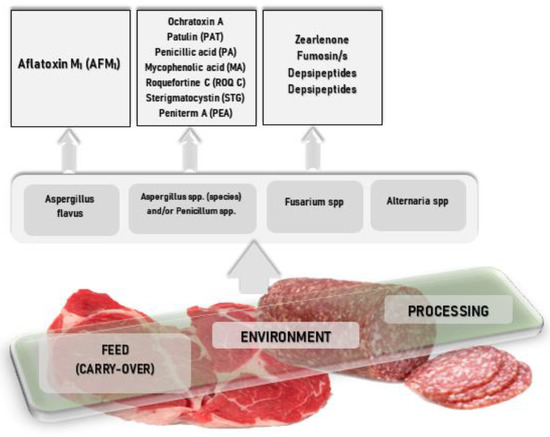
The preservation of food supplies has been humankind’s priority since ancient times, and it is arguably more relevant today than ever before. Food sustainability and safety have been heavily prioritized by consumers, producers, and government entities alike. In this regard, filamentous fungi have always been a health hazard due to their contamination of the food substrate with mycotoxins. Additionally, mycotoxins are proven resilient to technological processing. This study aims to identify the main mycotoxins that may occur in the meat and meat products “Farm to Fork” chain, along with their effect on the consumers’ health, and also to identify effective methods of prevention through the use of essential oils (EO). At the same time, the antifungal and antimycotoxigenic potential of essential oils was considered in order to provide an overview of the subject. Targeting the main ways of meat products’ contamination, the use of essential oils with proven in vitro or in situ efficacy against certain fungal species can be an effective alternative if all the associated challenges are addressed (e.g., application methods, suitability for certain products, toxicity). View Full-Text

Research – Molecular Epidemiological Evidence Implicates Cattle as a Primary Reservoir of Campylobacter jejuni Infecting People via Contaminated Chickens

MDPI

CDC Campy

The study aimed to determine the relative contribution of cattle to the burden of illness in a model agroecosystem with high rates of human campylobacteriosis (≥ 115 cases/100 K), and high densities of cattle, including large numbers of cattle housed in confined feeding operations (i.e., in southwestern Alberta, Canada).
To accomplish this, a large-scale molecular epidemiological analysis of Campylobacter jejuni circulating within the study location was completed. In excess of 8000 isolates of C. jejuni from people (n = 2548 isolates), chickens (n = 1849 isolates), cattle (n = 2921 isolates), and water (n = 771 isolates) were subtyped.
In contrast to previous studies, the source attribution estimates of clinical cases attributable to cattle vastly exceeded those attributed to chicken (i.e., three- to six-fold). Moreover, cattle were often colonized by C. jejuni (51%) and shed the bacterium in their feces.
A large proportion of study isolates were found in subtypes primarily associated with cattle (46%), including subtypes infecting people and those associated with chickens (19%). The implication of cattle as a primary amplifying reservoir of C. jejuni subtypes in circulation in the study location is supported by the strong cattle association with subtypes that were found in chickens and in people, a lack of evidence indicating the foodborne transmission of C. jejuni from beef and dairy, and the large number of cattle and the substantial quantities of untreated manure containing C. jejuni cells.
Importantly, the evidence implicated cattle as a source of C. jejuni infecting people through a transmission pathway from cattle to people via the consumption of chicken. This has implications for reducing the burden of campylobacteriosis in the study location and elsewhere. View Full-Text

 USA – Salmonella Typhimurium outbreak (reference # 1113) 

Food Poisoning News

kswfoodworld salmonella

As of November 16, 2022, a Salmonella Typhimurium outbreak (reference # 1113) has been identified in the United States with no known source as the cause of the outbreak. A total of 264 cases have been identified in connection with the outbreak, though the number of actual cases is thought to be much higher and the investigation remains ongoing. The Food and Drug Administration (FDA) is leading the investigation in collaboration with both federal, state, and local partners. The FDA is currently working vigilantly to find the source of the Salmonella Typhimurium outbreak and will update the public accordingly.

Singapore – Suspension of Rasel Catering Singapore Pte Ltd’s food business operations – Gatroenteritis

SFA

The Ministry of Health (MOH) and the Singapore Food Agency (SFA) are investigating two incidents of gastroenteritis affecting a total of 284 persons who reported gastroenteritis symptoms after consuming food prepared by Rasel Catering Singapore Pte Ltd between 8 and 16 November 2022. They either sought outpatient treatment, self-medicated, or recovered without treatment. None were hospitalised.

Research – Crustaceans (shrimp, crab, and lobster): A comprehensive review of their potential health hazards and detection methods to assure their biosafety

Wiley Online

Abstract

Crustaceans are popular seafood items worldwide owing to their rich nutritional value, unique tastes, and their incorporation in a variety of cuisines. There has been a great concern about the safety of crustaceans for human consumption being more prone to hazardous contaminants due to their exposure to diverse habitats and unhealthy farming and handling practices. These hazards can arise from chemical contaminants such as heavy metals, environmental pollutants, and biotoxins or biological sources, that is, pathogenic microbes and parasites. The different types of chemical contamination of crustaceans as well as biological hazards are reviewed as major part of this review. Although there are many reviews on contaminants in fisheries, nothing is traces to crustaceans. The current review compiles the food safety hazards of crustaceans arising from both chemical and biological origins and their impact on human health in farmed versus wild origins. The different methods of contaminants detection, viz. microbiological, molecular, and analytical methods, as well as control measures viz. cooking and processing methods that can be implemented to safeguard consumer safety are also reviewed. Future perspectives have been raised toward HACCP protocol implementation during handling, processing, and storage of crustaceans and posing real-time freshness monitoring tools such as intelligent packaging.

Research – Combined Pulsed Electric Field with Antimicrobial Caps for Extending Shelf Life of Orange Juice

MDPI

The purpose of this study was to investigate the effectiveness of combined pulsed electric fields (PEF) and antimicrobial packaging treatment in maintaining the quality and stability of orange juice stored at 10 °C. Orange juice was treated by PEF and stored in glass jars with antimicrobial caps coated with 10 µL of carvacrol essential oil (AP). Microbial reductions and physiochemical properties of juice samples were determined after treatments and during storage at 10 °C. Orange juice samples subjected to the combined treatment (PEF+AP) had the lowest yeast and mold populations after 14 day-storage at 10 °C. There were no significant differences in pH, acidity, color, total soluble solid contents, total phenol compounds, and Vitamin C among all samples after treatments. Storage studies showed that PEF, AP, and PEF+AP treatments maintained the quality and stability of orange juice stored at 10 °C for 5 weeks but lost Vitamin C. This study provides valuable information to juice processors for consideration and design of nonthermal pasteurization with antimicrobial packaging of juice products. View Full-Text

Research – Occurrence and Characteristics of Escherichia albertii in Wild Birds and Poultry Flocks in Switzerland

MDPI

Escherichia albertii, a zoonotic pathogen, has sporadically been associated with infectious diarrhea in humans. Poultry and wild birds are considered potential reservoirs. We assessed the occurrence of E. albertii in 280 fecal samples from wild birds (n = 130) and pooled fecal samples collected at slaughterhouse level from poultry flocks (n = 150) in Switzerland. Using an E. albertii-specific PCR targeting the Eacdt gene, 23.8% (31/130) of the samples from wild birds, but not from the pooled poultry fecal samples, tested positive for Eacdt. The positive samples originated from 11 bird species belonging to eight families. Strain isolation was attempted on the PCR-positive samples by subculturing the broth cultures onto xylose–MacConkey plates. Isolation was possible on 12 of the 31 Eacdt-PCR-positive samples. Whole-genome sequencing revealed that the strains belonged to nine distinct sequence types, with ST13420 and ST5967 being represented by two and three isolates, respectively. All strains harbored the eae gene, while two strains were also positive for stx2f. Our study thus shows that E. albertii is present in the Swiss wild bird population, which can potentially act as a source of this pathogen to humans, other animals, and the environment. View Full-Text

Research – Mathematical modeling of Bacillus cereus in Saengsik, a powdered ready-to-eat food and its application in quantitative microbial risk assessment

Wiley Online

Abstract

In this study, we developed a mathematical model to describe the fate of Bacillus cereus in Saengsik, a powdered ready-to-eat food with reduced moisture content, and to estimate the probability of B. cereus infection from Saengsik consumption, using quantitative microbial risk assessment (QMRA). The isothermal kinetic behavior of B. cereus was analyzed as a function of temperature (5–40°C). Bacterial cell counts were fitted to the Weibull model using GinaFit, and the obtained delta values (required time for the first decimal reduction) for each temperature were 128.3–17,124.1 hr and concave (ρ < 1) were observed under all experimental conditions. The obtained delta values were analyzed using the Davey model as a function of temperature, and the performance of the developed model of survival of B. cereus was appropriate based on the validation parameters (BfAf, and RMSE) within the acceptable range. QMRA model was developed using data on the prevalence and concentration of B. cereus along with time and temperature along the retail-to-consumer steps. Using a baseline model with the currently available data, the probability of B. cereus infection was zero. These results provide useful information for the risk assessment and management of microbial risk in foods, especially those with very low-moisture content.