Category Archives: Microbiological Risk Assessment

USA- Shigella Outbreak in Eureka, California Sickens Five, 11 Suspected

Food Poisoning Bulletin

Shigella - kswfoodworld

Image CDC

Shigella outbreak in Eureka, California has sickened at least three people, according to the Humboldt County Department of Health and Human Services. Three cases are lab confirmed, and two cases are being investigated as of February 2022. In a March 5, 2022 update, there are now five cases and 11 more illnesses being investigated according to news reports.

The cases occurred in multiple households and involve school age children, adults, and one person who is experiencing homelessness. The confirmed and suspected cases have been linked to locations on the waterfront area on the U.S. Highway 101 corridor in greater Eureka, according to an update by the health department.

The update, which was on a video narrated by public health nurse Daniel Tran, states, “Based on current and ongoing investigations we suspect the spread may be greater than our current understanding. Therefore, we are alerting medical providers in the area to consider testing for and treating shigella to help both understand the extent of the problem and to help stop the spread of this highly contagious bacterial illness.”

Officials think that the bacteria has been spread through laundromats in the Eureka area where an infected person supposedly washed clothing that was contaminated. Two laundry facilities in Eureka have been sanitized.

UK – Republic of Munchery Ltd recalls pet feed because of the presence of Salmonella

FSA

Republic of Munchery Limited is recalling several pet feed products because of the presence of salmonella in one of the ingredients used to manufacture the products listed below.

Product details

Wilsons Cold Pressed Haggis
Pack size 2kg and 10kg
Best before 07 January 2023
Wilsons Cold Pressed Succulent Chicken
Pack size 2kg and 10kg
Best before All dates from 15 December 2022 up to and including 17 February 2023
Wilsons Cold Pressed Grass Fed Lamb
Pack size 2kg and 10kg
Best before All dates from 13 December 2022 up to and including 10 February 2023
Wilsons Cold Pressed Clear Water Salmon
Pack size 2kg and 10kg
Best before All dates from 15 December 2022 up to and including 23 February 2023
Wilsons Cold Pressed Farmhouse Turkey and Duck
Pack size 2kg and 10kg
Best before All dates from 10 December 2022 up to and including 22 February 2023
Wilsons Cold Pressed Highland Venison and Trout
Pack size 2kg and 10kg
Best before All dates from 16 December 2022 up to and including 14 February 2023
Wilsons Cold Pressed Wild White Fish
Pack size 2kg and 10kg
Best before All dates from 14 December 2022 up to and including 2 February 2023
Wilsons Cold Pressed Working Dog Beef
Pack size 15kg
Best before All dates from 13 December 2022 up to and including 23 February 2023
Wilsons Cold Pressed Working Dog Chicken
Pack size 15kg
Best before All dates from 14 December 2022 up to and including 23 February 2023
Wilsons Cold Pressed Working Dog Pork
Pack size 15kg
Best before All dates from 20 December 2022 up to and including 21 February 2023

Risk statement

The presence of salmonella in the products listed above. Salmonella is a bacterium that can cause illness in humans and animals. The products could therefore carry a potential risk, because of the presence of salmonella, either through direct handling of the product, or indirectly, for example from pet feeding bowls, utensils or contact with the faeces of animals.

Action taken by the company

Republic of Munchery Ltd is recalling the above products. Point of sale notices will be displayed in all retail stores that are selling this product. These notices explain to customers why the products are being recalled and tell them what to do if they have bought the product.

Our advice to consumers

If you have bought any of the above products do not use them. Instead return them to the store from where they were bought for a full refund or contact Republic of Munchery Ltd for further advice by calling 01250798298 or emailing them at info@wilsonspetfood.co.uk

Research – Biofilm through the Looking Glass: A Microbial Food Safety Perspective

MDPI

Food-processing facilities harbor a wide diversity of microorganisms that persist and interact in multispecies biofilms, which could provide an ecological niche for pathogens to better colonize and gain tolerance against sanitization. Biofilm formation by foodborne pathogens is a serious threat to food safety and public health. Biofilms are formed in an environment through synergistic interactions within the microbial community through mutual adaptive response to their long-term coexistence. Mixed-species biofilms are more tolerant to sanitizers than single-species biofilms or their planktonic equivalents. Hence, there is a need to explore how multispecies biofilms help in protecting the foodborne pathogen from common sanitizers and disseminate biofilm cells from hotspots and contaminate food products. This knowledge will help in designing microbial interventions to mitigate foodborne pathogens in the processing environment. As the global need for safe, high-quality, and nutritious food increases, it is vital to study foodborne pathogen behavior and engineer new interventions that safeguard food from contamination with pathogens. This review focuses on the potential food safety issues associated with biofilms in the food-processing environment. View Full-Text

Australia – Don’t take a risk with food safety during and after floods (4 March 2022)

Food Safety Council

Following extensive flooding in eastern Australia the Food Safety Information Council is warning people not to take food safety risks during and after flood.

Lydia Buchtmann, the Council’s Communication Director, said that floodwater can be contaminated with sewage, agricultural and industrial waste, and other substances that can cause illness so there is a danger that any food, surfaces and cooking utensils that have come into contact with floodwater might be contaminated.

‘Spills and sewage discharges can also contaminate water supplies and food gardens. If in doubt throw out any food that might not be safe to eat and follow these simple steps:

  1. Throw out food that has come into contact with floodwater or has an unusual odour, colour or texture. Do not taste or cook it.
  2. Check canned and unopened bottled food and throw out any cans that are dented, swollen or damaged. For cans that appear useable remove the label and thoroughly wash the outside of the can with drinking-quality water, sanitise the can in bleach for 1 minute, then rinse in drinking-quality water re-label the can with a waterproof pen.
  3. Carefully check dishes, pots, pans, cutlery and kitchen equipment that might have been in contact with floodwater. Throw away damaged or cracked items, items made from porous material such as wood, plastic or rubber including wooden chopping boards as they cannot be adequately sanitised.
  4. Wash utensils and surfaces in hot, soapy, drinking-quality water. Take apart and clean the non-electrical pieces of any kitchen equipment that can be safety taken apart and then rinse in clean, hot water.
  5. Sanitise silverware, metal utensils, pots, pans and kitchen equipment in pieces by boiling in water for 10 minutes. Sanitise dishes by immersing glass, porcelain, china and enamel-ware for 10 minutes in a disinfecting solution of 1 tablespoon of chlorine bleach per 2 litres of warm water. Clean cupboards and counters with hot soapy water then rinse with a chlorine bleach solution before storing dishes or food.
  6. Air dry items because towels might have been splashed with contaminated water.
  7. Commercial and most domestic dishwashers are capable of sanitising all eating and cooking utensils as part of their normal cycle
  8. Vegetable gardens can take a month to become suitable for harvest after flood or sewage discharge. Discard all leafy green produce or damaged vine or dropped tree fruits. After 1 month, wash other vegetables then sanitise in a weak bleach solution of 1 tablespoons bleach to 2 litres of water. Then rinse in drinking-quality water, peel and use.

‘Finally, after a flood tap water and private water supplies such as from tanks, wells and bores sometimes might not be safe to drink and use for cooking and cleaning so monitor public announcements and those from the local water supplier to know if tap water is safe to use. If the water is unsafe, use only bottled, boiled or treated water – in that order of preference – for drinking, cooking or preparing food, washing utensils and surfaces, brushing teeth, hand washing, making ice, and bathing, Ms Buchtmann concluded.

India – 42 students affected by food poisoning at Kurnool school

Deccan Chronicle

ANANTAPUR: Some 42 students of the government school in the Viswanagar area of Nandyal town in Kurnool district fell sick after having their mid-day meal at the school premises on Friday.

There was contamination of food as spoilt eggs were used in cooking, which caused food poisoning. Soon after the students started vomiting in the school, they were taken to the government hospital at Nandyal town.

Some 92 children were studying at the government school in Viswanagar locality of Nandyal municipality. The students were served the mid-day meal consisting of rice, asparagus, boiled egg and chickpea as part of the Friday menu fixed by the state government.

Soon after having their lunch, the students went to their classrooms. Many of them soon complained of stomach pain and started vomiting.

About 50 students with sensation of vomiting were shifted to the hospital and a team of doctors treated them. Nandyal hospital superintendent Dr.Vijayakumar said contamination of food was the cause. “All are being provided necessary medical aid. The students are safe,” he said.

USA – TechTalk Podcast Episode 3: Artificial Intelligence in the New Era of Smarter Food Safety

FDA

On March 21, 2022, the third installment of FDA’s new podcast series on technology and food safety will focus on artificial intelligence (AI) and its potential to advance food safety.

This quarterly podcast explores the potential for novel technological approaches and solutions in each of the core elements in the New Era of Smarter Food Safety Blueprint. The second Core Element, called Smarter Tools and Approaches for Prevention and Outbreak Response, includes goals to expand predictive analytics capabilities using AI and machine learning tools.

In this third podcast, Frank Yiannas, Deputy FDA Commissioner for Food Policy and Response, and Donald Prater, Associate Commissioner for Imported Food Safety, will lead a discussion with food industry experts on subjects that include the opportunities that AI offers to help protect consumers from food safety issues, potential uses of AI that food producers could consider, and what’s on the horizon for AI in FDA’s New Era of Smarter Food Safety.

The experts:

  • Maria Velissariou, Global Corporate Research & Development Vice President and Chief Science Officer for Mars Incorporated, a global, family-owned business with a portfolio of confectionary, food and pet-care products and services;
  • Nikos Manouselis, founder and CEO of Agroknow, a food safety intelligence company that predicts food safety risks to inform prevention; and
  • Cronan McNamara – founder and CEO of Creme Global, a company providing food safety data analytics and predictive modeling software and services.

To Listen

The link to listen will be posted on Monday, March 21, 2022 on this page and on the TechTalk Podcast main page on fda.gov.

Registration is not required but questions can be emailed in advance at SmarterFoodSafety@fda.hhs.gov. Questions submitted by March 14, 2022 may be considered by the panelists.

Related Podcasts

Slovakia – Safe defrosting of food – promotional leaflet in Slovakian

MPSR

The National Contact Point EFSA (Department of Food Safety and Nutrition MPRV SR ) in cooperation with the European Food Safety Authority has prepared a leaflet on safe defrosting of food in the Slovak language.

The leaflet presents basic information on defrosting food, usable in every household. By reducing the mistakes that consumers make when handling frozen food incorrectly, the formation of harmful bacteria is eliminated. Proper thawing procedures reduce the risk of foodborne illness and reduce food waste.

Hungary – Hungary seeks data on consumers’ habits with frozen vegetables

Food Safety News

Link to Portal

Hungary’s food agency has launched a survey to find out more on people’s habits related to quick-frozen vegetables.

The National Food Chain Safety Office (Nébih) said it would provide the authority with a picture of the risks at the consumer level for the product category.

An online questionnaire can be completed until March 31 and covers consumer preferences for frozen vegetables and whether they follow the instructions on the label. There are also questions on Listeria monocytogenes, Salmonella and E. coli.

Past outbreak
From 2015 to 2018, an outbreak of Listeria monocytogenes caused by contamination of frozen corn produced in Hungary by Greenyard affected five countries in Europe as well as Australia with 54 confirmed patients and 10 deaths.

Despite the contamination, illnesses could have been prevented or reduced if people had been aware of the food safety risks and how to avoid them, according to Nébih.

To identify the hazards and reduce the risks, the agency is going to assess domestic consumer habits.

The questionnaire seeks answers to what Hungarian consumers think about quick-frozen products, how often they eat them and their preparation habits. The survey also looks at whether people are aware of food safety risks during purchase, transport, home storage and preparation and their knowledge about refrigerator and freezer temperatures as well as thawing and refreezing.

Based on the results, Nébih will put together a guide for consumers highlighting the most important findings. The agency will also give advice on how to minimize the food safety risks associated with quick-frozen vegetables in households.

Fagyasztott zöldségek vásárlásáról és fogyasztásáról gyűjt információkat a Nébih

Új kutatást indít a Nemzeti Élelmiszerlánc-biztonsági Hivatal (Nébih) a magyar lakosság gyorsfagyasztott zöldségekhez kapcsolódó vásárlási, felhasználási és fogyasztási szokásainak megismerése érdekében. A március 31-ig kitölthető online kérdőív többek között arra is kitér, hogy a fogyasztók mennyire kedvelik a fagyasztott zöldségeket, milyen ételekhez vásárolják őket, vagy, hogy figyelembe veszik-e a jelölésen szereplő felhasználási utasításokat. A kutatás segítségével a hatóság átfogó képet kaphat arról, milyen valós kockázatok merülnek fel fogyasztói szinten e termékkategóriával kapcsolatban.
Néhány éve az EU-ban lezajlott egy több országot is érintő, gyorsfagyasztott zöldségekhez kapcsolódó Listeria monocytogenes járvány. Az élelmiszerbiztonsági pandémiában bizonyítottan 46 személy betegedett meg és szorult kórházi kezelésre, valamint 5 haláleset is történt. Szomorú tény, hogy a szennyezés ellenére a megbetegedések megelőzhetők lettek volna, ha a fogyasztók tisztában vannak az élelmiszerbiztonsági kockázatokkal és azok elkerülésének módjával.
A veszélyforrás azonosítása és csökkentése érdekében a Nébih szeretné felmérni a hazai fogyasztói szokásokat. A hivatal https://portal.nebih.gov.hu/felmeres linken elérhető online kérdőíve többek között arra keresi a választ, hogy a magyar fogyasztók mit gondolnak a gyorsfagyasztott termékekről, miket részesítenek előnyben, vannak-e általános és speciális elkészítési szokásaik, továbbá elolvassák-e, betartják-e a jelölésen szereplő utasításokat. A felmérés arra is kitér, hogy a fogyasztók tisztában vannak-e az élelmiszerbiztonsági kockázatokkal a vásárlás, a szállítás, az otthoni tárolás és az előkészítés során.
A kérdőív segítségével a hatóság átfogó képet kaphat arról, hogy melyek a legjelentősebb kockázatok fogyasztói szinten e termékkategóriában. Az eredmények alapján a Nébih egy lakosságnak szóló tájékoztatót is összeállít a későbbiekben, kiemelve a felmérés szerinti kritikus pontokat. Az útmutatóban a hatóság azt is bemutatja majd, hogyan lehet a háztartásokban a gyorsfagyasztott zöldségekhez kapcsolódó élelmiszerbiztonsági kockázatokat a minimumra csökkenteni.
Az adatgyűjtés 2022. március 31-ig tart. A kérdőív kitöltése 10-15 percet vesz igénybe. A felmérés az alábbi linken elérhető: https://portal.nebih.gov.hu/felmeres

2022. március 4.

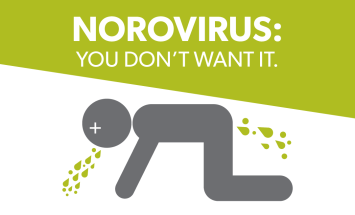
USA – Nebraska: Norovirus and Rotavirus Outbreaks reported in the south central part of state

Outbreak News Today

norovirus-1080x655

The Two Rivers Public Health District in south-central Nebraska is reporting an increase of both norovirus and rotavirus cases in the district.

Norovirus and rotavirus outbreaks also frequently occur in schools, childcare centers, colleges, and universities. Both norovirus and rotavirus are spread by accidentally getting tiny particles of feces (poop) or vomit from an infected person in your mouth. Outbreaks on school and university campuses have even led to campus closures. Close quarters, shared spaces, and high-touch surfaces make it easy for norovirus and rotavirus to spread.

Health officials strongly recommends taking the following actions:
• Washing hands carefully and frequently
• Staying home when experiencing vomiting and diarrhea
• Careful cleaning of surfaces that have had contact with vomit and diarrhea using an EPA certified cleaning products

RASFF Alerts – Animal Feed – Salmonella – Organic Soya Press – Raw Cat Petfood

RASFF

Salmonella Abaetetuba in organic soya press cake from China in Belgium, Germany and Netherlands

RASFF

Salmonella Infantis in raw petfood for cats from the Netherlands in Belgium and France