Category Archives: microbial contamination

New in August on Netflix – Poisoned: The Dirty Truth About Your Food

Food Poison Journal

The doc first premiered at the Tribeca Film Festival with multiple screenings taking place between June 9th and June 17th first premiering at the SVA Theatre on June 9th.  It also was shown in the author, Jeff Benedict’s, hometown, as well as Bill Marler’s, the main character of the film.

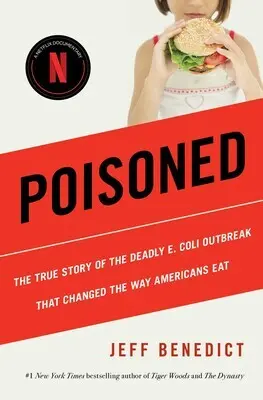
Here’s what you can expect from the documentary based on the book Poisoned by Jeff Benedict (which has an updated cover to reflect the Netflix adaptation).Netflix was first announced to be attached to develop the documentary on the 2011 book back in November 2022.  Here is the link and the cover:

Sweden – Increase in cases of illness with Campylobacter infection

Folkhalsomyndigheten

Campylobacter kswfoodworld

In recent weeks, there has been an increase in the number of people who have contracted campylobacter infection. The rise in the number of cases is preceded by an increase in campylobacter in broiler flocks. Good hygiene when handling raw chicken reduces the risk of becoming infected.

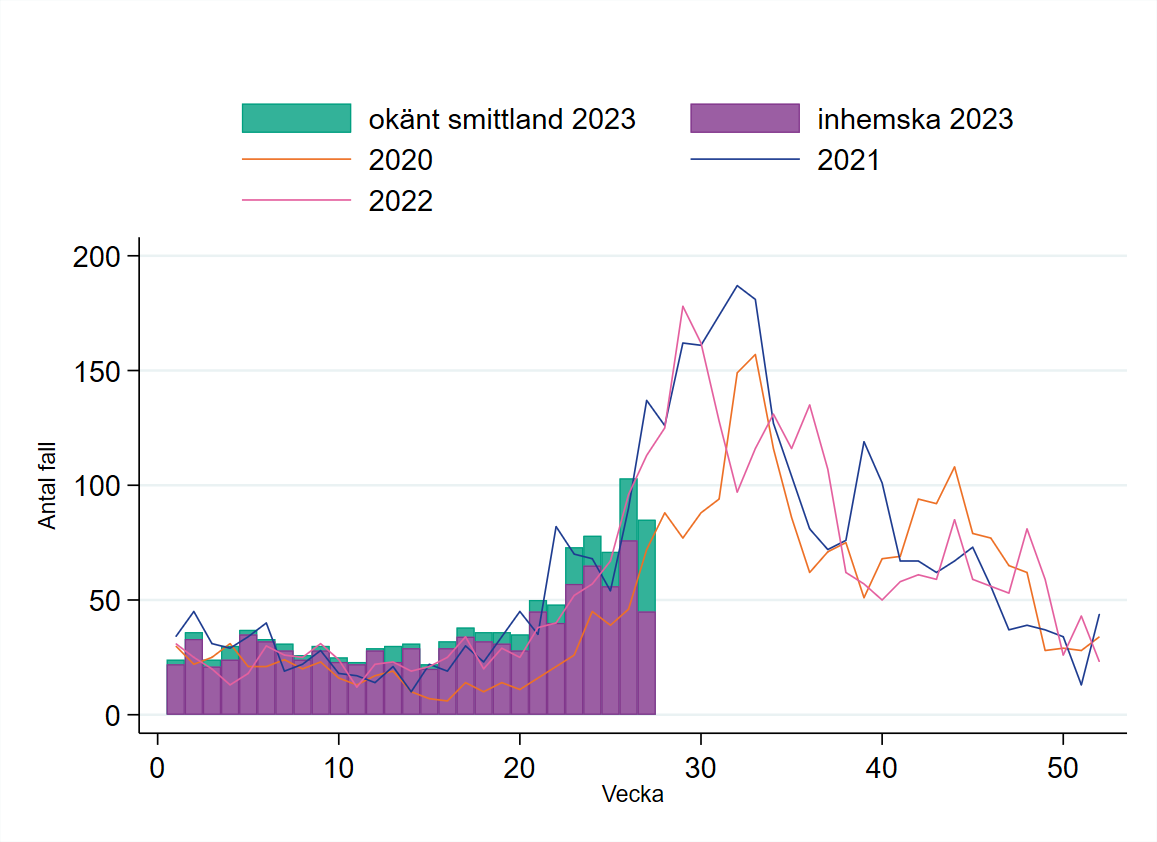
There has been an increase in the number of people who have been infected by the intestinal bacteria campylobacter in recent weeks. During week 26, the number of reported cases increased further compared to previous weeks and the increase looks set to continue.

Figure: The number of reported cases of campylobacter per week infected in Sweden or with an unknown country of infection (230706). Week 27 is not yet complete.

The number of sick people increased from week 21 to 60 cases per week from 30 cases.  In week 26, the cases increased further, a similar increase is seen in 2020-2022.

From mid-June, an increase in the occurrence of campylobacter in Swedish broiler flocks has also been observed. Previous studies have shown a connection between campylobacter infection and the consumption of fresh chicken, where around a third of those who have contracted the disease have been linked to fresh chicken. Campylobacter infection in humans is more common in summer as is the presence of campylobacter in broiler flocks.

Sweden sees another rise in illnesses for 2022


Food Safety News

Most foodborne infections rose in Sweden in 2022 compared to the year before, according to the latest figures.

A report by the National Veterinary Institute (SVA), Folkhälsomyndigheten (the Public Health Agency of Sweden), Livsmedelsverket (the Swedish Food Agency) and Jordbruksverket (Swedish Board of Agriculture) showed a rise for Campylobacter, Salmonella, Listeria, and E. coli infections. Some of this was because of increased travel and more people being infected abroad.

A total of 5,165 cases of campylobacteriosis were reported in 2022 and 57 percent of these were domestic. This is up on more than 4,000 cases in 2021. For domestic infections in 2022, the median age was 51 with a range of 0 to 101. More men, 54 percent, than women were sick.

A correlation between human cases and Campylobacter-positive broiler batches underscores the need for further preventive measures, said the report.

Research – Is Legionella Bacteria Becoming Antibiotic Resistant?

Legionella Control

In this article the water safety specialists at Legionella Control International look at the role of antibiotics in protecting humans against pathogenic organisms, paying particular attention to waterborne bacteria including Pseudomonas aeruginosa and legionella.

USA – No reduction in human illnesses from poultry-caused Salmonella

Food Safety News

“While the prevalence of Salmonella contamination in regulated poultry products has decreased by more than 50 percent in recent years, there has not been a reduction in human illnesses attributable to poultry,” a new USDA report says.

USDA’s Food Safety and Inspection Service (FSIS) has released a survey of Not-Ready-to-Eat Breaded and Stuffed Chicken Products for Salmonella. The June report was prepared by FSIS’s Laboratory Quality Assurance, Response, and Coordination (LQARCS) staff in the Office of Public Health.

According to the survey report: “FSIS worked with the Food Emergency Response Network to test for the presence of Salmonella and sanitary indicator aerobic organism counts using the current validated methods employed by 11 state public health and agriculture laboratories. From July 1, 2022, to September 30, 2022, the laboratories purchased approximately 15 samples of the product per month from nearby retail locations.

USA – Notes from the Field: Multistate Outbreak of Escherichia coli O157:H7 Infections Linked to a National Fast-Food Chain — United States, 2022

CDC

In August 2022, the Michigan Department of Health and Human Services alerted CDC to an approximately fivefold increase in regional cases of Escherichia coli O157:H7 infection. Whole genome sequencing was used to characterize isolates from laboratory-confirmed infections in ill persons. Initial patient interviews indicated that many had consumed meals from the same national fast-food chain. Federal, state, and local officials initiated an investigation to identify the outbreak source and prevent additional cases. This activity was reviewed by CDC and was conducted consistent with applicable federal law and CDC policy.*

CDC defined a case as an E. coli O157:H7 infection with an isolate highly related to the outbreak strain (within 0–2 alleles) by core genome multilocus sequence typing, with illness onset during July 26–August 24, 2022. PulseNet, CDC’s national molecular subtyping network for enteric disease surveillance, detected 109 cases from six states, including Michigan (67; 61%), Ohio (24; 22%), Indiana (11; 10%), Pennsylvania (four; 4%), Kentucky (two; 2%) and New York (one; 1%). The median patient age was 22 years (range = 1–94 years), and 49 (45%) were female. Fifty-two (48%) patients were hospitalized, and 13 (12%) developed hemolytic-uremic syndrome, a recognized complication of E. coli O157:H7 infection; no deaths occurred.

Belgium – Ferrero finds Salmonella again at Belgian factory

Food Safety News

Ferrero has informed Belgian authorities that it has found Salmonella at the site that was behind a major outbreak in 2022.

The confectionery company notified the Federal Agency for the Safety of the Food Chain (FASFC) of the Salmonella detection in the environment of the Arlon factory. It is not clear when the Salmonella positive was found, when authorities were told or whether it is the same type that was behind the outbreak.

Research – Pseudomonas Biofilms Pose Food Safety Threat by Aiding Listeria Survival in Processing Environments

Food Safety.Com

Pseudomonas biofilms can aid the survival of Listeria monocytogenes cells even after disinfection, according to a recent study. Although Pseudomonas are often overlooked as a food safety hazard due to being associated with food spoilage rather than with human foodborne illnesses, the study’s findings suggest that the bacteria may pose a direct threat to food safety in the processing environment.

Pseudomonas are the most commonly found bacteria in food processing environments due to characteristics such as a high growth rate at low temperatures, a high tolerance of antimicrobial agents, and biofilm formation. The bacteria have been of special interest as colonizers in food processing environments, as a food spoilage organism, and as protectors of foodborne pathogens.

Previous research has demonstrated the possibility of surviving bacteria exposed to sub-lethal concentrations of disinfectants being able to co-select for both disinfectant- and antibiotic-resistant properties. Several studies also indicate that interspecies interactions in a biofilm could serve as an accelerator for horizontal gene transfer, as well as facilitate adaptation to environmental conditions and the subsequent decreased susceptibility to antimicrobials. It has been suggested that multi-species, Pseudomonas-dominated biofilms could host and shelter pathogens like L. monocyotogenes.

In the study, researchers from the Norwegian University of Science and Technology isolated Pseudomonas samples from cleaned and disinfected surfaces in a salmon processing facility. A total of 186 isolates were screened for biofilm formation at 12 °C, and were graded as strong, medium, or weak biofilm producers. A high variation in biofilm formation was observed, with 12 percent rated as strong, 29 percent as medium, and 27 percent as weak biofilm producers, as well as 29 percent not producing a detectable biofilm.

Research – Estimating Waterborne Infectious Disease Burden by Exposure Route, United States, 2014

CDC

Abstract

More than 7.15 million cases of domestically acquired infectious waterborne illnesses occurred in the United States in 2014, causing 120,000 hospitalizations and 6,600 deaths. We estimated disease incidence for 17 pathogens according to recreational, drinking, and nonrecreational nondrinking (NRND) water exposure routes by using previously published estimates. In 2014, a total of 5.61 million (95% credible interval [CrI] 2.97–9.00 million) illnesses were linked to recreational water, 1.13 million (95% CrI 255,000–3.54 million) to drinking water, and 407,000 (95% CrI 72,800–1.29 million) to NRND water. Recreational water exposure was responsible for 36%, drinking water for 40%, and NRND water for 24% of hospitalizations from waterborne illnesses. Most direct costs were associated with pathogens found in biofilms. Estimating disease burden by water exposure route helps direct prevention activities. For each exposure route, water management programs are needed to control biofilm-associated pathogen growth; public health programs are needed to prevent biofilm-associated diseases.

Research – Case Study: Clostridium botulinum Poisoning Caused by Canned Pate

Food Safety.Com

Ten cases of Clostridium botulinum poisoning occurred from mid-July to mid-August of 2020, according to the Food Safety Department of Vietnam. All ten victims were treated in the hospital, with two exhibiting severe symptoms. The two elderly victims with severe symptoms of Clostridium botulinum poisoning reported having eaten canned, plant-based pate. Samples of the leftover pate were analyzed by two separate institutions and found to contain Clostridium botulinum toxin, which can be fatal when ingested in a quantity of less than 0.1 mg. 

The Food Safety department convened an urgent meeting with the manufacturer of the pate. The pate was confirmed to have become contaminated with Clostridium botulinum during production. Product recall notices, consumer recommendations, and written requests for handling the case were issued in quick succession.