Salmonella in processed animal proteins of poultry from Slovenia in Hungary
Salmonella spp in organic soybean press cake from China in Germany and Netherlands

Salmonella in processed animal proteins of poultry from Slovenia in Hungary
Salmonella spp in organic soybean press cake from China in Germany and Netherlands
Aflatoxin in cotton meal from Bulgaria in the Netherlands
Posted in Aflatoxin, Animal Feed, Animal Feed Testing, Aspergillus Toxin, Food Micro Blog, Food Microbiology, Food Microbiology Blog, Food Microbiology Testing, microbial contamination, Microbiological Risk Assessment, Microbiology, Microbiology Investigations, Microbiology Risk, Mold Toxin, Mould Toxin, Mycotoxin, RASFF
As of 15 July 2022, 401 confirmed (n=399) and probable (n=2) cases of monophasic S. Typhimurium have been identified in the EU/EEA and the United Kingdom. This is an increase of nine cases since the last update on 3 June 2022. The latest reported case is from the UK with sampling date on 16 June 2022. In addition, cases have been identified in Canada (n=4), Switzerland (n=49), and United States (n=1), bringing the total number of cases to 455 globally.
This outbreak is characterised by high proportion of hospitalised (about 40%) cases, most of these are children below 10 years of age, and some cases with severe clinical symptoms like bloody diarrhoea.
Affected cases have been identified through advanced molecular typing techniques. As this method of testing is not routinely performed in all countries, some cases may be undetected.
Based on epidemiological and microbiological investigations, specific chocolate products from a Belgian chocolate factory were identified as likely vehicles of infection.
The factory was closed on 8 April 2022 (week 14) and product recalls were launched globally. The recalls aimed to prevent the consumption of products potentially contaminated with Salmonella. As a result of control measures, number of cases have declined rapidly.
Further investigations are needed to identify the root cause of the contamination, and to ensure that contaminated products are not put on the market.
| Country | Confirmed cases | Probable cases | Total number of cases |
|---|---|---|---|
| Austria | 14 | 0 | 14 |
| Belgium | 64 | 2 | 66 |
| Czech Republic | 1 | 0 | 1 |
| Denmark | 4 | 0 | 4 |
| France | 121 | 0 | 121 |
| Germany | 34 | 0 | 34 |
| Ireland | 18 | 0 | 18 |
| Italy | 1 | 0 | 1 |
| Luxembourg | 2 | 0 | 2 |
| Netherlands | 3 | 0 | 3 |
| Norway | 1 | 0 | 1 |
| Spain | 3 | 0 | 3 |
| Sweden | 5 | 0 | 5 |
| Total EU/EEA | 271 | 2 | 273 |
| United Kingdom | 128 | 0 | 128 |
| Total EU/EEA and UK | 399 | 2 | 401 |
| Canada | 4 | 0 | 4 |
| Switzerland | 49 | 0 | 49 |
| United States | 1 | 0 | 1 |
| Total | 453 | 2 | 455 |
Posted in food bourne outbreak, Food Illness, Food Micro Blog, Food Microbiology, Food Microbiology Blog, Food Microbiology Research, Food Microbiology Testing, Foodborne Illness, foodborne outbreak, foodbourne outbreak, Illness, microbial contamination, Microbiological Risk Assessment, Microbiology, Microbiology Investigations, Microbiology Risk, outbreak, Salmonella, Salmonella in Chocolate
The FDA Food Safety Modernization Act (FSMA) final rule on Laboratory Accreditation for Analyses of Foods (LAAF) establishes a laboratory accreditation program for the testing of food in certain circumstances. Under the LAAF program, FDA will recognize accreditation bodies (ABs) that will accredit laboratories to the standards established in the final rule (referred to as LAAF-Accredited Laboratories).
For additional information and guidance, see FSMA Final Rule on Laboratory Accreditation for Analyses of Foods (LAAF).
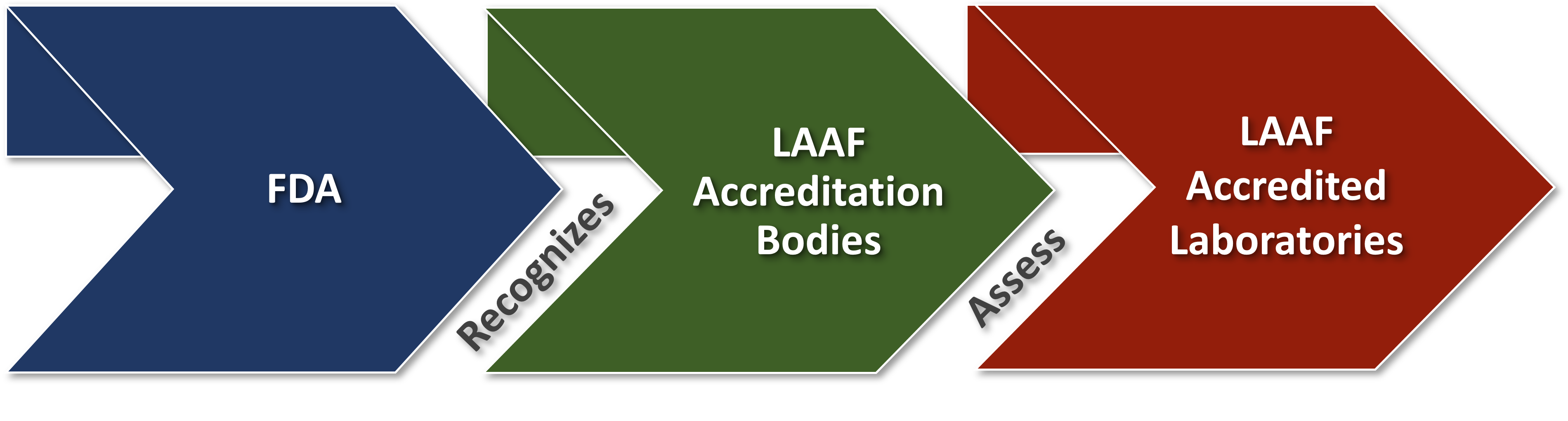
Tables in the link above identify accreditation bodies that have been recognized and laboratories that have been accredited under the LAAF program. One recognized accreditation body (AB) may LAAF-accredit many laboratories. A recognized accreditation body may issue one or many certificates of accreditation for any LAAF-accredited laboratory (AL) location covering one or multiple laboratory scopes (LS). Separate laboratory locations under common ownership may be LAAF-accredited by different recognized accreditation bodies.
| Date Posted |
Ref | Pathogen or Cause of Illness |
Product(s) Linked to Illnesses (if any) |
Total Case Count |
Status |
| 8/3/
2022 |
1080 | Cyclospora | Not Yet Identified | 6 | Active |
| 7/27/
2022 |
1084 | Cyclospora | Not Yet Identified | 60 | Active |
| 6/29/
2022 |
1076 | Not Yet Identified | Frozen Food | See Outbreak Advisory |
Active |
| 6/22/
2022 |
1075 | Salmonella Braenderup |
Not Yet Identified | 74 | Active |
| 6/22/
2022 |
1072 | Salmonella Paratyphi B var. L(+) tartrate+ |
Not Identified | 14 | Closed |
| 6/15/
2022 |
1070 | Listeria monocytogenes |
Not Identified | 12 | Closed |
| 6/8/
2022 |
1068 | E. coli O157:H7 |
Not Identified | 10 | Closed |
| 6/1/
2022 |
1066 | Hepatitis A Virus | Strawberries | See Outbreak Advisory |
Active |
| 5/25/
2022 |
1067 | Salmonella Senftenberg |
Peanut Butter | See Outbreak Advisory | Closed |
| 4/20/
2022 |
1064 | Not Yet Identified |
Dry Cereal | 558 adverse event reports |
Active |
| 4/13/
2022 |
1057 | Listeria monocytogenes |
Ice Cream | See Outbreak Advisory | Active |
| 3/30/
2022 |
1060 | None Identified |
Meal Replacement Drink |
6 adverse event reports |
Closed |
| 3/16/
2022 |
1055 | Salmonella Saintpaul |
Not Identified | 60 | Closed |
| 2/17/
2022 |
1056 | Cronobacter sakazakii |
Powdered Infant Formula |
See Advisory |
Active (IMG) |
| 2/9/
2022 |
1040 | Listeria monocytogenes |
Not Identified | 20 | Closed |
| 2/2/
2022 |
1054 | Enteroinvasive E. coli O143:H26 |
Not Identified |
16 | Closed |
| 1/10/
2022 |
1050 | E. coli O121:H19 |
Romaine | 4 | Closed |
Posted in Cronobacter sakazakii, cross contamination, Cyclospora, E.coli O121, FDA, food bourne outbreak, Food Illness, Food Micro Blog, Food Microbiology, Food Microbiology Blog, Food Microbiology Testing, Foodborne Illness, Foodborne Illness Death, foodborne outbreak, foodbourne outbreak, Hepatitis A, Illness, Listeria, Listeria monocytogenes, microbial contamination, Microbiological Risk Assessment, Microbiology, Microbiology Investigations, Microbiology Risk, O143:H26, outbreak, Salmonella
Arrow Reliance Inc. (d.b.a. Darwin’s Natural Pet Products) has filed suit in US federal court in an attempt to prevent the US Food and Drug Administration (FDA) from issuing a Public Health Alert about possible Salmonella contamination in a cat food product.
Darwin’s, which is based in Tukwila, Washington, filed the their request for a temporary restraining order on July 29, 2022, in the US District Court, Western District of Washington (Case 2:22-cv-01057).
The lawsuit contends that the FDA “wrongfully” threatened to issue the Public Health Alert if the company refused to issue a recall of its adult cat food.
The FDA’s request for a product recall apparently arose after kittens tested positive for Salmonella.
Posted in Animal Feed Salmonella, Food Micro Blog, Food Microbiology Blog, Food Microbiology Research, Food Microbiology Testing, microbial contamination, Microbiological Risk Assessment, Microbiology, Microbiology Investigations, Microbiology Risk, Pet Food, Pet Food Testing, raw pet food, Salmonella
Officials in Finland are trying to find the source of a Salmonella outbreak that has sickened almost 30 people.
Between March and July, 27 people in different parts of Finland have fallen ill with Salmonella Mbandaka infections.
Twenty patients are women. Their average age is 30 years old and the age range is from less than 1 to 74 years old.
Interviews with those who were ill revealed that 17 of 20 had eaten outside the home before becoming sick, said the Finnish Institute for Health and Welfare (THL).
The Finnish Food Authority (Ruokavirasto) and local food control authorities are tracing potential sources based on information given in the interviews.
Posted in food bourne outbreak, Food Illness, Food Micro Blog, Food Microbiology, Food Microbiology Blog, Food Microbiology Research, Food Microbiology Testing, Foodborne Illness, foodborne outbreak, foodbourne outbreak, Illness, microbial contamination, Microbiological Risk Assessment, Microbiology, Microbiology Investigations, Microbiology Risk, outbreak
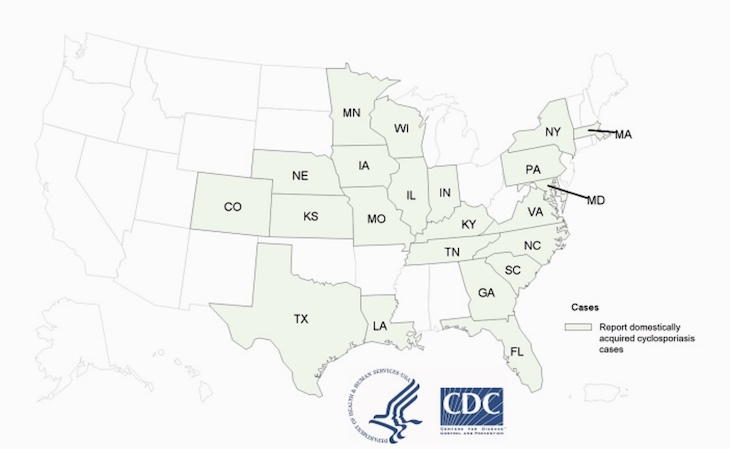
Cyclospora illnesses have spiked to 384 sick in 22 states and 30 hospitalized, according to the Centers for Disease Control and Prevention (CDC). There has been a cyclospora outbreak, in fact, usually several cyclospora outbreaks, in the United States during the spring and summer months every year since 2013. This is an increase of 323 cases since the last update was issued on June 30, 2022. Cases are still being reported.
Posted in Cyclospora, Cyclosporiasis, food bourne outbreak, Food Illness, Food Micro Blog, Food Microbiology, Food Microbiology Blog, Food Microbiology Research, Food Microbiology Testing, Foodborne Illness, foodborne outbreak, foodbourne outbreak, Illness, microbial contamination, Microbiological Risk Assessment, Microbiology, Microbiology Investigations, Microbiology Risk, outbreak
More than 30 people were sick in France in late 2021 as part of an outbreak traced to contaminated cucumbers.
In September 2021, the Hauts-de-France Regional Health Agency was notified of a suspected foodborne outbreak among students in the Lille area. Two hospitalized children were diagnosed with hemolytic uremic syndrome (HUS). HUS is a severe complication associated with E. coli infection that causes kidney failure. The agency asked Santé publique France for support in investigating the incident.
In total, 35 cases of gastroenteritis, half of whom had bloody diarrhea and fever, were identified. Ten people were hospitalized.
Identified cases were 29 children in four schools and five elderly adults who received meals through a local delivery program. One case was the parent of a pupil. Five children and one adult had meals delivered to them at home.
The median age of patients was 8 with a range of 4 to 89 years old and almost two thirds were female.
School cafeterias and the meal delivery service were all supplied by the same municipal canteen.
Posted in food bourne outbreak, Food Illness, Food Micro Blog, Food Microbiology, Food Microbiology Blog, Food Microbiology Research, Food Microbiology Testing, Foodborne Illness, foodborne outbreak, foodbourne outbreak, Haemolytic Uremic Syndrome, HUS, Illness, microbial contamination, Microbiological Risk Assessment, Microbiology, Microbiology Investigations, Microbiology Risk, outbreak, STEC, STEC E.coli
A Salmonella outbreak linked to Kinder chocolate has sickened more than 450 people, based on the latest figures.
Only 10 cases have been reported in the month since the previous European Centre for Disease Prevention and Control (ECDC) update, bringing the total to 455 as of mid-July.
The outbreak has hospitalized a high proportion of people, mostly children younger than 10 years of age, and some had severe clinical symptoms including bloody diarrhea.
The latest monophasic Salmonella Typhimurium case is from the United Kingdom with a sampling date of June 16. Concerns were previously raised by authorities that potentially contaminated chocolate could still be on sale despite a recall in April.
The UK has the most patients with 128 followed by France with 121. Belgium has recorded 66 sick people, 49 are ill in Switzerland, 34 in Germany, 18 in Ireland and 14 in Austria. There are still four cases in Canada and one in the United States.
Sweden, Spain, Norway, Netherlands, Luxembourg, Italy, Denmark and Czech Republic all have single-figure case numbers.
Posted in food bourne outbreak, Food Illness, Food Microbiology, Food Microbiology Blog, Food Microbiology Testing, Foodborne Illness, foodborne outbreak, foodbourne outbreak, Illness, microbial contamination, Microbiological Risk Assessment, Microbiology, Microbiology Investigations, Microbiology Risk, outbreak, Salmonella, Salmonella in Chocolate


