Category Archives: Illness

South Africa – At least 109 pupils treated for suspected food poisoning

Herald live

At least 109 pupils from Ikamva Lesizwe Public School in Kenton-on-Sea received medical treatment on Monday afternoon for suspected food poisoning, believed to have been caused by the umphokoqo (maize meal with sour milk) they ate for lunch.

The pupils started vomiting and experiencing diarrhoea allegedly after eating the meal served at their school during the lunch break as part of the school nutrition programme.

Provincial Education Spokesperson, Malibongwe Mtima says they are investigating the incident.
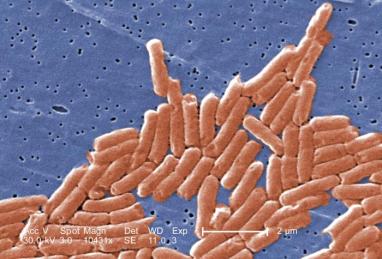
Research – Multistate Outbreak Investigation of Salmonella Infections Linked to Kratom: A Focus on Traceback, Laboratory, and Regulatory Activities

Journal of Food Protection

kswfoodworld.com

During the spring of 2018, the U.S. Food and Drug Administration (FDA), U.S. Centers for Disease Control and Prevention (CDC), states and local public health agencies responded to a multistate outbreak of gastrointestinal illnesses caused by multiple   Salmonella   serovars and associated with consumption of kratom, a product harvested from a tropical tree native to Southeast Asia. The outbreak included 199 case-patients reported by 41 U.S. states, with illness onset dates ranging from January 11, 2017 to May 8, 2018, leading to 54 hospitalizations, and no deaths. Case-patients reported purchasing kratom products from physical and online retail points of service (POS). Products distributed to 16 POS where 24 case-patients from 17 states purchased kratom were selected for traceback investigation. Traceback revealed that the kratom was imported from several countries, the most common being Indonesia. Local and state officials collected product samples from case-patients and retail POS. The FDA collected 76 product samples from POS and distributors, of which 42 (55%) tested positive for   Salmonella  . The positive samples exhibited a wide range of pulsed field gel electrophoresis (PFGE) patterns and whole genome sequence (WGS) genetic heterogeneity, and a total 25 of 42 (60%) yielded at least one isolate indistinguishable from one or more outbreak-related clinical isolates. While it does not exclude a possibility of a single contamination source, the extent of genetic diversity exhibited by the   Salmonella   isolates recovered from product samples and a lack of traceback convergence, suggested that kratom was widely contaminated across multiple sites from which it was grown, harvested, and packaged. As a result of the contamination, kratom products were recalled by numerous firms (both voluntarily and mandatory). Epidemiologic, traceback, and laboratory evidence supported the conclusion that kratom products were associated with illnesses.

India – 15 kids suffer ‘food poisoning’ in Andhra, adulterated food at Anganwadi

New Indian Express

NELLORE: At least 15 children fell sick after they reportedly ate adulterated food at an Anganwadi in Podalakuru town of Nellore district. According to reports, the children were suffering from diarrhoea since Wednesday evening. Parents staged a demonstration at the Anganwadi and blamed the negligent attitude of the staff for delaying treatment to their children.

They alleged that the children began vomiting and fell sick after eating food provided at the Anganwadi. They said the children were admitted to a local hospital for treatment where doctors confirmed that they fell sick due to the adulterated food they ate. The children are getting treated at various hospitals in Podalakuru and Nellore city. Sources said their condition is stable now.

Research – Escherichia coli O103 outbreak associated with minced celery among hospitalized individuals in Victoria, British Columbia, 2021

PHAC

Abstract

Background: In April 2021, a Shiga toxin-producing Escherichia coli (E. coli) (STEC) O103 outbreak was identified among patients at two hospitals in Victoria, British Columbia (BC). The objective of this study is to describe this outbreak investigation and identify issues of food safety for high-risk products prepared for vulnerable populations.

Methods: Confirmed cases of E. coli O103 were reported to the Island Health communicable disease unit. The provincial public health laboratory conducted whole genome sequencing on confirmed case isolates, as per routine practice for STEC in BC. Exposure information was obtained through case interviews and review of hospital menus. Federal and local public health authorities conducted an inspection of the processing plant for the suspect source.

Results: Six confirmed cases of E. coli O103 were identified, all related by whole genome sequencing. The majority of cases were female (67%) and the median age was 61 years (range 24–87 years). All confirmed cases were inpatients or outpatients at two hospitals and were exposed to raw minced celery within prepared sandwiches provided by hospital food services. A local processor supplied the minced celery exclusively to the two hospitals. Testing of product at the processor was infrequent, and chlorine rinse occurred before mincing. The spread of residual E. coli contamination through the mincing process, in addition to temperature abuse at the hospitals, are thought to have contributed to this outbreak.

Conclusion: Raw vegetables, such as celery, are a potential source of STEC and present a risk to vulnerable populations. Recommendations from this outbreak include more frequent testing at the processor, a review of the chlorination and mincing process and a review of hospital food services practices to mitigate temperature abuse.

USA – Gastrointestinal illness outbreak reported at Issaquah restaurant

Komo News

King County Public Health is investigating an outbreak of gastroenteritis associated with an Issaquah restaurant.

Health officials said five people from one party reported becoming ill a few days after after eating food delivering from Chinese Taste on Jan. 29.

The symptoms and timing of illness suggest a bacterial toxin such as Bacillus cereus or Clostridium perfringens, health officials said.

The exact food or drink that caused the illness has not been identified, but health officials said it is not uncommon for outbreaks associated with a bacterial toxin.

South Africa – Court overturns decision in Tiger Brands Listeria case

Food Safety News

How the deadly strain of listeriosis was traced to Tiger Brands' Enterprise  polony factory

A court in South Africa has overturned a previous decision to make companies divulge information in relation to a deadly Listeria outbreak in 2017 and 2018.

The Supreme Court of Appeal ruling reverses a Gauteng High Court verdict on whether subpoenas issued against third parties were relevant to the class-action. Tiger Brands is facing a class-action following an outbreak of listeriosis between January 2017 and September 2018 that sickened more than 1,050 people, killing 218.

EU – Multi-country outbreak of Salmonella Enteritidis sequence type (ST)11 infections linked to eggs and egg products

EFSA

Abstract

On 2 September 2021, France reported an increase in Salmonella Enteritidis ST11 infections. By 11 January 2022, 272 confirmed cases had been reported in five European Union/European Economic Area (EU/EEA) countries and the United Kingdom (UK): Denmark (n=3), France (n=216), the Netherlands (n=12), Norway (n=7), Spain (n=22), and the UK (n=12) in 2021. Two deaths were recorded in adult men. Twenty-five cases were hospitalised. Sixty cases reported consumption of eggs/egg products.

Some cases reported in France in 2021 had visited restaurants serving eggs distributed by a common supplier, Spanish Packing Centre A. The eggs originated from three Spanish farms, one testing positive for the outbreak strain. Fresh table eggs from the farms linked to the outbreak were withdrawn and redirected for use in heat-treated egg products. No other countries received eggs from the same farms via Packing Centre A during summer 2021. Therefore, the source of infection for cases in late 2021 and in countries other than Spain and France could not be established.

This 2021 outbreak is linked microbiologically to a historical cross-border outbreak reported by the Netherlands in 2019. Eggs consumed by cases in the Dutch outbreak were traced back to a Spanish farm, but it was not possible to identify an epidemiological link with the 2021 outbreak. This suggests a wide distribution of the outbreak strain that could affect the food supply chain and/or earlier steps in the production chain. There may be multiple heterogeneous sources of S. Enteritidis ST11, and the outbreak strain could also be circulating at other farms, inside or outside Spain.

The risk of new infections caused by the outbreak strain and contaminated eggs remains high in the EU/EEA. It is therefore important to foster cross-sectoral investigations of contaminations in the egg supply chain in countries where S. Enteritidis ST11 has been detected.

PDF

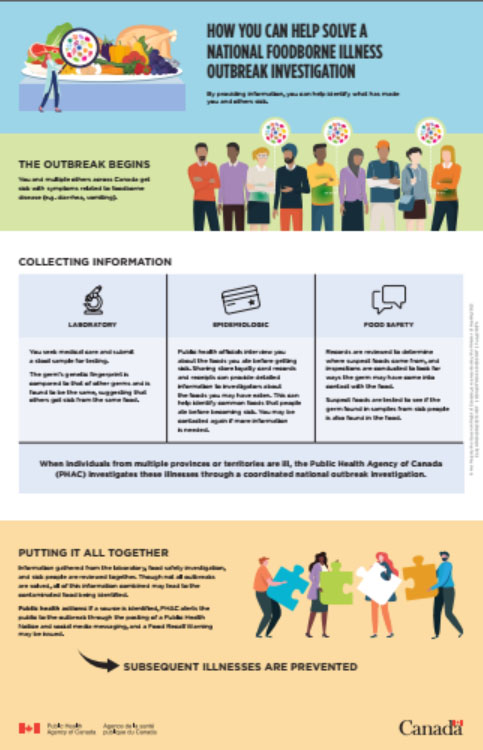
Canada – How you can help solve a national foodborne illness outbreak investigation

PHAC

PDF

By providing information, you can help identify what has made you and others sick

The outbreak begins

You and multiple others across Canada get sick with symptoms related to foodborne disease (e.g. diarrhea, vomiting).

Collecting information

Laboratory:

You seek medical care and submit a stool sample for testing.

The germ’s genetic fingerprint is compared to that of other germs and is found to be the same, suggesting that others got sick from the same food.

Epidemiologic:

Public health officials interview you about the foods you ate before getting sick. Sharing store loyalty card records and receipts can provide detailed information to investigators about the foods you may have eaten. This can help identify common foods that people ate before becoming sick. You may be contacted again if more information is needed.

Food safety:

Records are reviewed to determine where suspect foods came from, and inspections are conducted to look for ways the germ may have come into contact with the food. Suspect foods are tested to see if the germ found in samples from sick people is also found in the food.

When individuals from multiple provinces or territories are ill, the Public Health Agency of Canada (PHAC) investigates these illnesses through a coordinated national outbreak investigation.

Putting it all together

Information gathered from the laboratory, food safety investigation, and sick people are reviewed together. Though not all outbreaks are solved, all of this information combined may lead to the contaminated food being identified.

Public health actions: If a source is identified, PHAC alerts the public to the outbreak through the posting of a Public Health Notice and social media messaging, and a Food Recall Warning may be issued.

Subsequent illnesses are prevented.

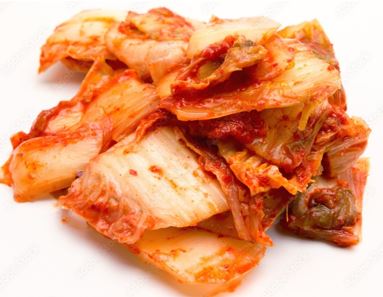
Canada – Public Health Notice: Outbreak of E. coli infections linked to Hankook (Korean characters only) brand Original Kimchi – Update –

PHAC

Kimchi

This notice has been updated to reflect an additional food recall warning issued on February 6 for Hankook (Korean characters only) brand Original Kimchi with a best before date of January 23, 2022.

The Public Health Agency of Canada (PHAC) is collaborating with provincial public health partners, the Canadian Food Inspection Agency (CFIA) and Health Canada to investigate an outbreak of E. coli O157 infections involving 2 provinces: Alberta and Saskatchewan.

Based on the investigation findings to date, the outbreak is linked to Hankook (Korean characters only) brand Original Kimchi. Many of the individuals who were sick reported having eaten Hankook (Korean characters only) brand Original Kimchi before their illnesses occurred.

As of February 7, there have been 14 laboratory-confirmed cases of E.coli O157 illness linked to this outbreak in the following provinces: Alberta (13) and Saskatchewan (1).

Individuals became sick between early December 2021 and early January 2022. No deaths or hospitalizations have been reported. Individuals who became ill are between 0 and 61 years of age. The majority of cases (64%) are female.

The CFIA issued food recall warnings on January 28, 2022 and February 6, 2022 for Hankook (Korean characters only) brand Original Kimchi products. The recalled products were distributed in British Columbia, Alberta, Saskatchewan, and Manitoba.

The CFIA is continuing its food safety investigation, which may lead to the recall of other products. If other products are recalled, the CFIA will notify the public through updated food recall warnings.

Argentina – So far in January, Salta registers about 500 cases of Salmonellosis

Salta

The highest percentage was located in the Capital department. 52% of affected individuals are children up to 9 years of age. Prevention lies in the safe handling of food.

In the first 25 days of January, 571 suspected cases of salmonella infection were reported in the province, of which 482 were confirmed, which represents 84% ​​positivity.

Of this amount, the largest proportion of affected individuals corresponds to the age range of 5 to 9 years, with a total of 130. In second place, with 122 cases, are children aged 0 to 4 years. These data show that 52% of the cases correspond to children between 0 and 9 years of age.

Regarding the location of cases, the department with the highest number is Capital, with 366, which means 76% of the total.

Of 23 departments in which the province of Salta is divided, in the period from January 1 to 25, cases of salmonellosis were registered in 19 of them. There were no cases in La Candelaria, Rosario de la Frontera, San Carlos and Los Andes.

According to records of the Epidemiological Surveillance program of the Ministry of Public Health, in 2021 there were 1,930 suspected cases, with 1,748 confirmed (91% positivity).

Prevention Guidelines

The Ministry of Public Health recommends taking precautions when handling food, since salmonellosis occurs through the ingestion of food contaminated with bacteria of the salmonella genus.