Category Archives: HUS

France – Investigation of grouped cases of haemolytic-uremic syndrome (HUS) and shiga-toxin-producing E. coli (STEC) infections linked to the consumption of Buitoni® brand Fraîch’Up pizzas. 

Sante Publique

Public Health France and the National Reference Center (CNR) E. coli and its associated laboratory (Institut Pasteur, Paris, and Microbiology Laboratory of the Robert Debré Hospital, Paris), in conjunction with the Directorate General for Food, the Directorate General for Competition, Consumer Affairs and Fraud Prevention, and in coordination with the Directorate General for Health, have been investigating since 02/10/2022 an increase in the number of cases of haemolytic uremic syndrome (HUS) pediatric infections and Shiga toxin-producing Escherichia coli (STEC) infections.

The epidemiological, microbiological and traceability investigations carried out since that date have confirmed a link between the occurrence of these grouped cases and the consumption of frozen pizzas from the Buitoni brand Fraîch’Up range contaminated with STEC bacteria. On 03/18/2022, the company proceeded with the withdrawal-recall of all the pizzas in the Fraîch’Up range, marketed since June 2021 and the authorities asked the people who hold these pizzas not to consume them and to destroy them.

The total number of HUS cases linked to the consumption of these pizzas seems to have stabilized since the withdrawal-recall.

Case of SHU in France: update on 04/13/22

As of 04/13/2022, 53 confirmed cases have been identified, of which 51 are linked to STEC O26 strains, and 2 to STEC O103 strains. For 26 other cases of HUS and STEC infections notified to Public Health France, investigations are ongoing.

These 53 cases occurred in 52 children and 1 adult, who presented symptoms between 18/01/2022 (week 3) and 16/03/2022 (week 11) (Figure 1). The epidemic peak is in week 7 (14/02 to 20/02) and week 9 (28/02 to 06/03), with 10 cases each of these weeks. These 53 cases occurred in 12 regions of metropolitan France: Hauts-de-France (11 cases), Ile-de-France (9 cases), New Aquitaine (8 cases), Pays de la Loire (7 cases), Brittany ( 6 cases), Auvergne-Rhône-Alpes (2 cases) [-1 case since the situation update of 06/04/2022 after additional result], Grand Est (2 cases), Occitanie (2 cases), Provence-Alpes- Côte d’Azur (2 cases) and Center Val-de-Loire (2 cases), Bourgogne Franche-Comté (1 case) [-1 case since the situation update of 04/06/2022 after additional result], Normandy ( 1 case) (Figure 2).

The 52 sick children are aged from 1 to 17 years with a median age of 7 years; 23 (44%) are female; 46 (88%) presented with HUS, 6 (12%) with STEC gastroenteritis. Two children died. The adult did not present with HUS [an adult previously reported in the situation update of 06/04/2022 was finally invalidated after additional results].
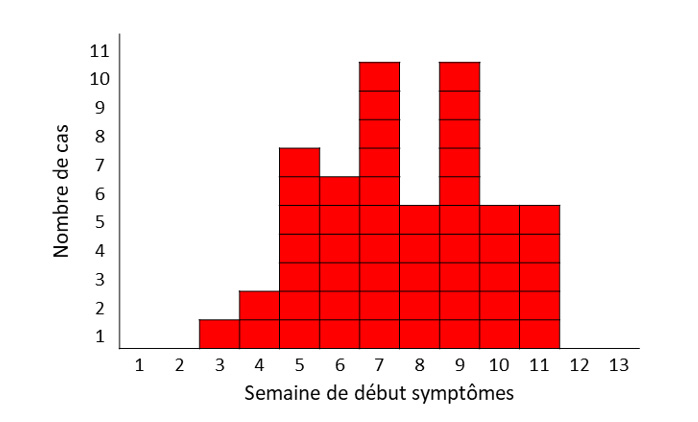
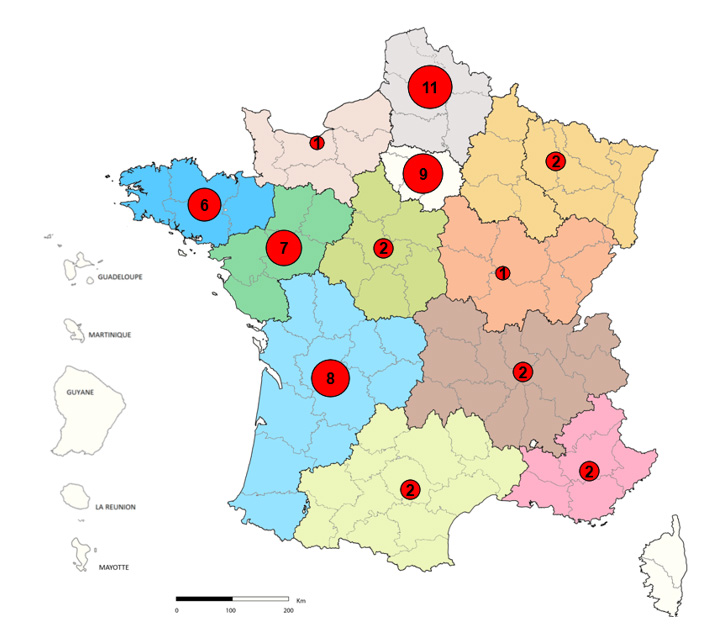
Figure 1: Epidemic curve: number of confirmed cases of HUS and STEC infections (N=51), by week of onset of symptoms – metropolitan France, weeks 3 to 11, 2022
Figure 1: Epidemic curve: number of confirmed cases of HUS and STEC infections (N=51), by week of onset of symptoms - metropolitan France, weeks 3 to 11, 2022
Figure 2: Geographical distribution of confirmed cases of HUS and STEC infections (N=53) linked to the consumption of Buitoni® brand Fraîch’Up pizzas, by region of residence in metropolitan France, weeks 3 to 11, 2022
Figure 2: Geographical distribution of confirmed cases of HUS and STEC infections (N=53) linked to the consumption of Buitoni® brand Fraîch'Up pizzas, by region of residence in metropolitan France, weeks 3 to 11, 2022

Research – France – Update on ongoing investigations into serious cases of haemolytic uraemic syndrome (HUS) in children. Reminder of food risk prevention recommendations. STEC E.coli

Sante Publique

Public Health France and the National Reference Center (CNR) Escherichia coli (Institut Pasteur – Paris), with its associated laboratory (Microbiology Laboratory of the Robert Debré Hospital – Paris), are continuing investigations concerning the increase in the number of cases haemolytic uremic syndrome (HUS) and severe Escherichia coli infection, reported since early February 2022.

Update and ongoing investigations

As of March 11, 2022, 26 cases of HUS or serious infection, linked to E. coli bacteria with similar characteristics, have been identified. These cases occurred in 9 regions of metropolitan France: New Aquitaine (6 cases), Hauts-de-France (5 cases), Ile-de-France (4 cases), Pays de la Loire (4 cases), Brittany (3 case), Bourgogne-Franche-Comté (1 case), Grand Est (1 case), Provence-Alpes-Côte-D’azur (1 case) and Auvergne-Rhône-Alpes (1 case). The sick children, aged 1 to 15 years with a median age of 8 years, presented symptoms between 01/18/2022 and 02/23/2022. Two children died. In addition, 22 additional cases are under investigation.

Public Health France, in conjunction with the CNR, the General Directorate for Food, the General Directorate for Competition, Consumption and the Repression of Fraud, and in coordination with the General Directorate for Health, are continuing investigations into all cases of pediatric HUS reported since January 1, 2022 on national territory in order to identify a possible common source of contamination and to put in place appropriate measures (for example withdrawal-recalls of incriminated products). 

At this stage, the epidemiological investigation has not made it possible to incriminate a particular source of contamination. The health authorities are therefore renewing the general recommendations for the prevention of food risks, in particular for children under 16 years of age.

Recommendations to prevent HUS

The E. coli responsible for HUS are present in the intestines of many ruminant animals (cows, calves, goats, sheep, deer, etc.) and are eliminated by the excrement which can then contaminate the environment (water, manure, soil) and foods. These bacteria tolerate cold well (survival in a refrigerator or freezer), but are destroyed by cooking.

The transmission of the bacterium can be avoided by simple gestures, in particular in children under 16 and the elderly:

  • hand washing should be systematic before meal preparation;
  • meats, and especially minced beef, but also minced meat preparations, must be well cooked through (and not pink through the core);
  • raw milk, cheeses made from raw milk and dairy products made from raw milk should not be consumed by children under 5 years of age; prefer cooked pressed cheeses (such as Emmental, Comté, Gruyère, Beaufort), processed cheese spreads and pasteurized milk cheeses;
  • flour-based preparations (pizza/cookie dough/cake/pie, etc.) should not be eaten raw or undercooked;
  • vegetables, salad, fruit and aromatic herbs, in particular those that are going to be eaten raw, must be carefully washed before consumption, after peeling if necessary;
  • raw foods should be kept separate from cooked or ready-to-eat foods;
  • cooked meals and leftover food must be quickly put in the refrigerator and sufficiently reheated and consumed quickly;
  • kitchen utensils (especially when they have previously been in contact with raw food), as well as work surfaces, must be thoroughly washed;
  • children should not drink untreated water (well water, torrent, etc.) and avoid swallowing it when swimming (lake, pond, etc.);
  • finally, it is necessary to avoid the contact of very young children (under 5 years old) with cows, calves, sheep, goats, deer, etc., and their environment; in case of contact with these animals, hand washing must be systematic.

The health authorities, who are monitoring the evolution of the situation on a daily basis, are fully mobilized to identify the source of this contamination and put in place the appropriate health measures as quickly as possible to avoid the occurrence of new cases. 

Research – The Importance of Shiga Toxin-Producing Escherichia coli O145:NM[H28]/H28 Infections in Argentina, 1998–2020

MDPI

Shiga toxin-producing Escherichia coli (STEC) is known as a pathogen associated with food-borne diseases. The STEC O145 serogroup has been related with acute watery diarrhea, bloody diarrhea, hemorrhagic colitis, and hemolytic uremic syndrome (HUS). Argentina has the highest rate of HUS worldwide with 70% of the cases associated with STEC infections. We aimed to describe the epidemiology and genetic diversity of STEC O145 strains isolated across Argentina between 1998–2020. The strains isolated from 543 cases of human disease and four cattle, were pheno-genotipically characterized. Sequencing of five strains was performed. The strains were serotyped as O145:NM[H28]/H28, O145:H25, and O145:HNT, and mainly characterized as O145:NM[H28]/stx2a/eae/ehxA (98.1%). The results obtained by sequencing were consistent with those obtained by traditional methods and additional genes involved in different mechanisms of the pathogen were observed. In this study, we confirmed that STEC O145 strains are the second serogroup after O157 and represent 20.3% of HUS cases in Argentina. The frequency of STEC O145 and other significant serogroups is of utmost importance for public health in the country. This study encourages the improvement of the surveillance system to prevent severe cases of human disease. View Full-Text

France – Child in France dies of E.coli infection as outbreak monitored

Connexion France

Health authorities have not released more information about the child that has died, but 13 other cases in children have prompted a nationwide investigation into the possible source.

Health authorities in France are monitoring an outbreak of E.coli following the death of a child and the detection of 13 cases across the country.

Santé publique France (SPF) issued the alert after the contaminations were first noticed at the beginning of February. The authority has confirmed that one child has died, but has not released information of the date of the death, location, or the age of the child.

Among children aged 1-15, there have been:

  • 5 cases reported in Nouvelle-Aquitaine
  • 3 cases in Hauts-de-France
  • 3 cases in Ile-de-France
  • 1 case in Brittany
  • 1 case in Pays de la Loire.

All of the children were affected by haemolytic uraemic syndrome (HUS), a potentially serious disease in young children, most often caused by food.

It is usually characterised by severe diarrhoea, which can lead to acute renal failure, and usually caused by bacteria belonging to the Escherichia coli (E.coli) family.

The SPF inquiry is looking into every report of similar cases as they are reported to paediatric units, and is aiming to “identify a common source of contamination and put appropriate measures in place”.

It has “not excluded any possibility at this stage”, it said.

Research – HUS reports down in Italy but stable in France; some linked to raw milk

Food Safety News

Italy and France have reported updated statistics on a potentially fatal complication of E. coli infection.

The complication, hemolytic uremic syndrome (HUS) is a type of kidney failure that can result in lifelong, serious health problems and death.

Italian data is from the start of September 2020 to the end of August 2021 when 49 cases were recorded. There were 84 cases from September 2019 to August 2020. French figures cover 2020 when 167 cases were reported.

USA – IDHP final report on Jackson County Shiga-toxin E. Coli / HUS cases

Food Safety News

The Iowa Department of Public Health (IDPH) has completed a final report on last May’s Shiga-toxin E. coli outbreak in a Jackson County childcare facility.  Pursuant to Iowa Open Records law, IDPH has shared its findings with Food Safety News

The onset of the E. coli illnesses occurred from May 6 to May 22.  IDPH and Jackson County Public Health learned, through the reportable disease system, of a Jackson County child suffering from Shiga-toxin E. coli.

“Local public health spoke to the healthcare provider and the case’s family to get information for IDPH’s Shiga-toxin investigation form,” according to the final report. “JCPH learned the child attended local childcare and placed the child under an exclusion order to exclude the child from childcare until resolution of diarrhea and two consecutive tested negative for Shiga-toxin E. coli.”

USA – Jackson County Public Health Investigating Shiga toxin-producing Escherichia coli (STEC) cases

Jackson County

Jackson County Public Health is investigating an unusually high number of Shiga toxin-producing Escherichia coli (STEC) cases. Since August 8, 2021, 16 cases have been reported to Jackson County, and 12 (75%) of these cases have been hospitalized. Age range for cases is from 11 months to 65 years of age, with the median age being 23.5. Majority of the cases are in the teens and twenties. Of the total cases 62.5% are males.

Jackson County Public Health is working with the Oregon Health Authority on this outbreak investigation.  “Right now, we do not have a definitive hypothesis on what the source of infection may be. The genome sequencing, performed at the state public health lab, has not matched any other cases in the state or nationally,” states Dr. Jim Shames, Health Officer for Jackson County Public Health. “Therefore, we continue to do in-depth interviews with those that have tested positive to help us identify a possible source of exposure.”

Jackson County Public Health is asking medical providers to be aware of the increases in STEC cases in Jackson County and collect and test stool specimens on patients suspected to have bacterial gastroenteritis. Shiga-toxigenic Escherichia coli (including 0157, HUS, and other serogroups) are reportable infections to local and state public health.

USA – Pure Eire Dairy closes in wake of E. coli outbreak

Food Safety News

Pure Eire Dairy in Washington state has closed down for good. State officials linked the dairy to an outbreak of E. Coli infections beginning in May.

As of June 24 there were 17 confirmed patients in the outbreak. Ten of the patients are younger than 10 years old. Ten of the 17 patients have had such severe symptoms they had to be admitted to hospitals. The Washington health department has not released the ages of those who have hospitalized.

Of the 17 outbreak patients, four have developed hemolytic uremic syndrome (HUS), a type of kidney failure that can be fatal. Three of the patients live in Arizona and are thought to have become infected through person-to-person contact by visitors from Washington.

Most of the sick people reported eating organic yogurt made by the Pure Eire Dairy in Othello, WA. Both PCC brand and Pure Eire brand yogurt have been recalled.

Australia Research – Monitoring the incidence and causes of diseases potentially transmitted by food in Australia: Annual report of the OzFoodNet network, 2013–2015

Au Gov

This report summarises the incidence of diseases potentially transmitted by food in Australia, and details outbreaks associated with food that occurred during 2013–2015.
OzFoodNet sites reported an increasing number of notifications of 12 diseases or conditions that may be transmitted by food (botulism; campylobacteriosis; cholera; hepatitis A; hepatitis E; haemolytic uraemic syndrome (HUS); listeriosis; Salmonella Paratyphi (paratyphoid fever) infection; salmonellosis; shigellosis; Shiga toxin-producing Escherichia coli(STEC) infection; and Salmonella Typhi (typhoid fever) infection), with a total of 28,676 notifications received in 2013; 37,958 in 2014; and 41,226 in 2015.
The most commonly-notified conditions were campylobacteriosis (a mean of 19,061 notifications per year over 2013–2015) and salmonellosis (a mean of 15,336 notifications per year over 2013–2015). Over these three years, OzFoodNet sites also reported 512 outbreaks of gastrointestinal illness caused by foodborne, animal-to-person or waterborne disease, affecting 7,877 people, and resulting in 735 hospitalisations and 18 associated deaths.
The majority of outbreaks (452/512; 88%) were due to foodborne or suspected foodborne transmission. The remaining 12% of outbreaks were due to waterborne or suspected waterborne transmission (57 outbreaks) and animal-to-human trans-mission (three outbreaks). Foodborne and suspected foodborne outbreaks affected 7,361 people, resulting in 705 hospitalisations and 18 deaths.
Salmonella was the most common aetiological agent identified in foodborne outbreaks (239/452; 53%), and restaurants were the most frequently-reported food preparation setting (211/452; 47%). There were 213 foodborne outbreaks (47%) attributed to a single food commodity during 2013–2015, with 58% (124/213) associated with the consumption of eggs and egg-based dishes.

Research -Evidence of on-going transmission of Shiga toxin-producing Escherichia coli O157:H7 following a foodborne outbreak

Cambridge Org

In August 2019, public health surveillance systems in Scotland and England identified seven, geographically dispersed cases infected with the same strain (defined as isolates that fell within the same five single nucleotide polymorphism single linage cluster) of Shiga toxin-producing Escherichia coli O157:H7. Epidemiological analysis of enhanced surveillance questionnaire data identified handling raw beef and shopping from the same national retailer (retailer A) as the common exposure. Concurrently, a microbiological survey of minced beef at retail identified the same strain in a sample of minced beef sold by retailer A, providing microbiological evidence of the link. Between September and November 2019, a further four primary and two secondary cases infected with the same strain were identified; two cases developed haemolytic uraemic syndrome. None of the four primary cases reported consumption of beef from retailer A and the transmission route of these subsequent cases was not identified, although all four primary cases visited the same petting farm. Generally, outbreaks of STEC O157:H7 in the UK appear to be distinct, short-lived events; however, on-going transmission linked to contaminated food, animals or environmental exposures and person-to-person contact do occur. Although outbreaks of STEC caused by contaminated fresh produce are increasingly common, undercooked meat products remain a risk of infection.