Category Archives: Foodborne Illness

Sweden – Salmonella Enteritidis (December 2022-)

Folkhalsomyndigheten

hazegg.jpg

Since the beginning of December 2022, 22 cases of illness infected with one and the same strain of Salmonella Enteritidis have been reported to the Public Health Authority. The infection is suspected to originate from eggs that have now been recalled.

At the end of December 2022, Salmonella Enteritidis was identified at a major Swedish egg producer, which has led to several recalls of fresh eggs.

Recalls of eggs – January 2023 (livsmedelsverket.se)

An outbreak of Salmonella Enteritidis involving 22 people from eleven different regions has now been identified and is being investigated. Since several of the sick have eaten dishes containing raw eggs from the now recalled batches, there are strong reasons to suspect a connection to the earlier Salmonella finding at the egg producer. The disease cases are aged 7-90 years (median=40 years), twelve of the cases are women and the illnesses occurred between December 7, 2022 and January 6, 2023 (see Figure 2023-01-18).

During the past ten days, a larger number of people with salmonella infection than usual have been reported. The Salmonella isolates from these disease cases have not yet been typed to determine the specific strain, but since several have stated consumption of products with raw eggs from suspected contaminated batches, there is a risk that the number of people identified as infected in the outbreak will increase.

Although because of the recalls there should be no contaminated eggs left in stores or in restaurants, it is possible that you may have eggs left at home from the recalled batches. Via the Swedish Food Agency’s website, you can find out who these lots are and what you should do with these eggs.

The outbreak is being investigated in collaboration between the Swedish Agency for Agriculture, the Swedish Food Agency, SVA, the Public Health Agency, regional infection control and other regional and local authorities.
USA – Outbreak Investigation of Listeria monocytogenes: Enoki Mushrooms (November 2022)

FDA

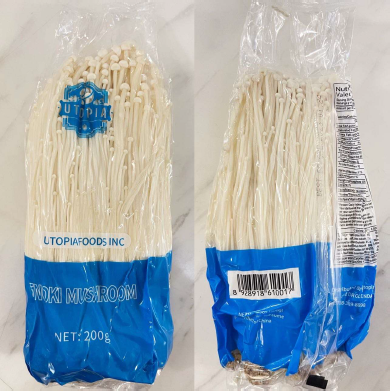
FDA, along with CDC and state and local partners, is investigating an outbreak of Listeria monocytogenes infections linked to enoki mushrooms. FDA has identified imported enoki mushrooms distributed by Utopia Foods, Inc. of Glendale, New York as a likely source of illnesses in this outbreak. Enoki mushrooms are long thin white mushrooms, usually sold in clusters. They are especially popular in East Asian cuisine and are also known as enokitake, golden needle, futu, seafood, or lily mushrooms.

As of November 17, 2022, CDC reports two illnesses included in this outbreak. Based on epidemiological information provided by CDC, both patients report consuming enoki mushrooms or eating at restaurants with menu items containing enoki mushrooms prior to becoming ill.

Through ongoing sampling efforts, FDA and state partners have been collecting and testing samples of enoki mushrooms. An import sample of enoki mushrooms branded as Utopia Foods, Inc. was collected by FDA and was reported as being positive for Listeria monocytogenes. Whole Genome Sequencing (WGS) analysis determined that the strain of Listeria found in this sample matches the strain of Listeria linked to illnesses in this outbreak.

As a result of this testing, Utopia Foods, Inc. voluntarily expanded their original recall (first issued on December 13, 2022) to include their 200g packages of “Enoki Mushrooms”, imported from China, with clear and blue plastic packages with clear markings of “Best before 03/02/2023” or “Best before 03.09.23”. These products were distributed between January 6, 2023, and January 13, 2023, in NY, NJ, and CT to wholesale companies for further distribution.

On December 13, 2022, as a result of earlier testing that determined enoki mushroom product was contaminated with Listeria monocytogenes, Utopia Foods Inc. issued a voluntary recall of 200g packages of “Enoki Mushrooms”, imported from China and shipped nationwide. The Listeria detected in their product at that time has not been linked to this outbreak or any reported illnesses.

FDA’s investigation is ongoing to determine a potential source of contamination and whether any other products are contaminated or linked to illnesses. Additional information will be provided as it becomes available.

Recommendation

Consumers, restaurants, and retailers should not eat, sell, or serve recalled enoki mushrooms from Utopia Foods, Inc. and should return them to the place of purchase for a refund or throw them away.

Listeria is especially harmful if you are pregnant, aged 65 or older, or have a weakened immune system due to certain medical conditions or treatments. If you are in any of these groups, do not eat raw enoki mushrooms. Cook enoki mushrooms thoroughly to kill any foodborne germs. Other people can be infected with Listeria, but they rarely become seriously ill.

Call your healthcare provider right away if you have any of these symptoms after eating enoki mushrooms:

  • People who are not pregnant usually have fever, muscle aches, and tiredness. They may also get a headache, stiff neck, confusion, loss of balance, or seizures.
  • Pregnant people usually have fever, muscle aches, and tiredness. However, Listeria can cause pregnancy loss or premature birth. It can also cause serious illness or death in newborns.

Follow FDA’s safe handling and cleaning advice and use extra vigilance in cleaning and sanitizing any surfaces and containers that may have come in contact with these recalled products to reduce the risk of cross-contamination, including retailers who stored or repackaged recalled enoki mushrooms. Listeria can survive in refrigerated temperatures and can easily spread to other foods and surfaces.


Recalled Product

Enoki Mushrooms - Listeria monocytogenes

Utopia Foods Inc of Glendale, NY, is recalling its 200g packages of “Enoki Mushrooms”, imported from China. The recalled products were distributed nationwide in produce wholesale companies. The product comes in clear and blue plastic package with brand name “Utopia” and barcode # 8928918610017 marked on the packaging. The initial recall includes all products within expiration and the expanded recall includes products with clear markings of “Best before 03/02/2023” or “Best before 03.09.23”. Products included in the expanded recall were distributed between January 6, 2023, and January 13, 2023.


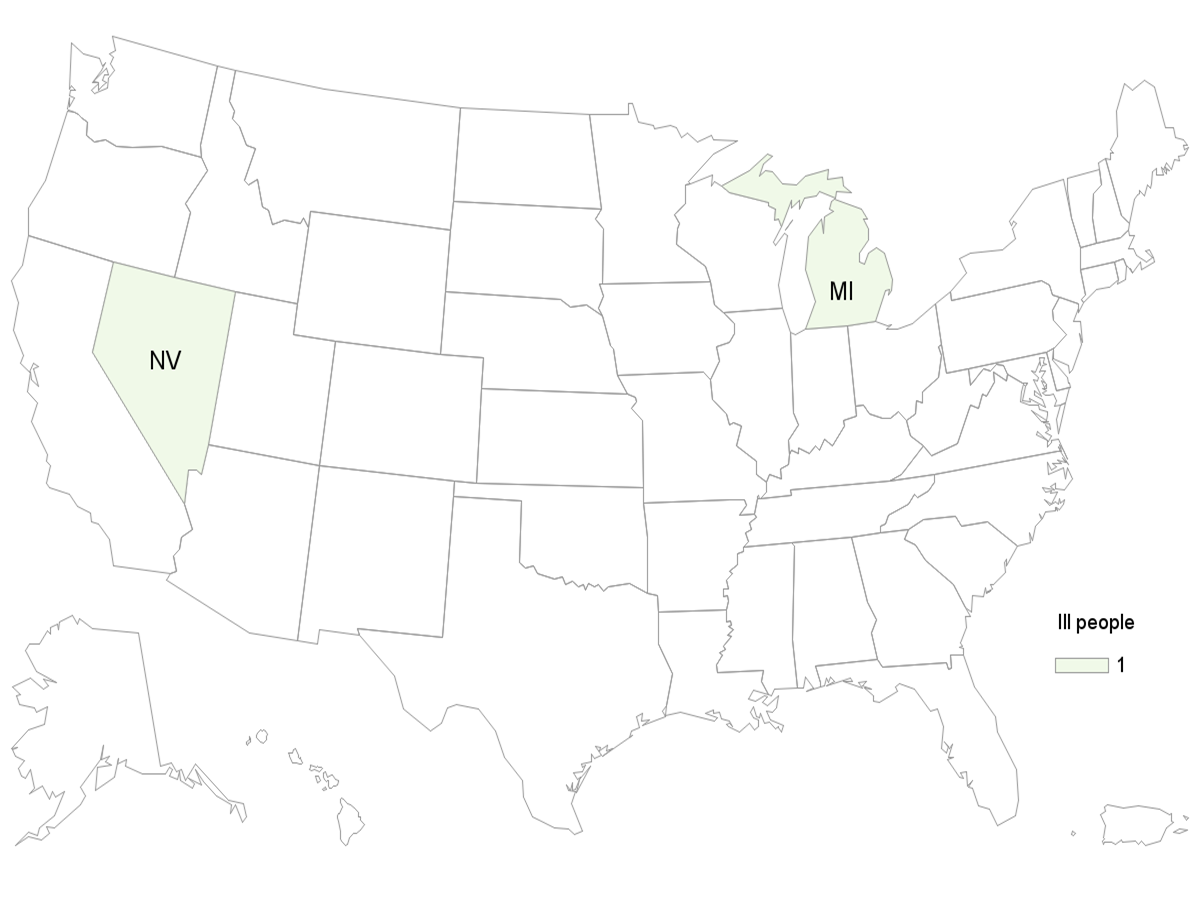
Case Count Map Provided by CDC

CDC Case Count Map - Enoki Mushrooms - Listeria monocytogenes

Case Counts

Total Illnesses: 2
Hospitalizations: 2
Deaths: 0
Last illness onset: October 8, 2022
States with Cases: MI, NV
Product Distribution: Nationwide

Thailand – Bangkok kids suffer food poisoning after eating free noodles for Children’s Day

The Thaiger

A group of Bangkok kids suffered food poisoning after eating free noodles on Friday for Children’s Day. Over 10 ambulances rushed to Wat Naknimit School on Soi Suksawat 14, Suksawat road, to help the 30 kids.

One female student said someone had distributed packs of instant noodles fried with crab sticks, sausages, eggs, and cabbage at a table. They later started to feel ill.

New Zealand – Check your freezer if you bought Pams frozen berries in the South Island

MPI

Anyone who bought Pams frozen Mixed Berries from 4 specific stores in the South Island is urged to check whether they are part of a batch that has been recalled due to a possible risk of hepatitis A associated with frozen berries sourced from Serbia.

New Zealand Food Safety is supporting Foodstuffs South Island in the recall of a specific batch of Pams brand Mixed Berries with a best before date of 14/08/2024. The product was only available for sale from these stores on Saturday, 14 January 2023.

“Foodstuffs South Island Hornby Distribution Centre, in error, released 478 bags of Pams Mixed Berries following the previous recall on 4 October 2022,” said New Zealand Food Safety (NZFS) deputy director-general Vincent Arbuckle.

Frozen berries recalled as a precaution while investigation into source of Hepatitis A continues

“Foodstuffs South Island has identified and removed most of those bags before consumers were able to buy them. However six bags have already been sold and another four are unaccounted for. So we are urging consumers who bought frozen berries from New World Ashburton, Three Parks New World in Wanaka, Pak‘nSave Hornby and Pak‘nSave Wainoni in Christchurch to check their freezers for the recalled product.

“Consumers, especially those with chronic liver damage, the elderly and pregnant people, should not eat frozen berries raw. Bringing them to the boil will make them safe to eat, or they can be returned to the place of purchase for a full refund.”

If you have consumed any of this product and are concerned for your health, contact your health professional, or call Healthline on 0800 611 116.

Today’s recall affects the following product released in error following the recall on 4 October 2022:

  • pams brand Mixed Berries (500g) with a Best Before of 14/08/2024

The product was potentially available in the following South Island stores:

  • ashburton New World
  • hornby Pak’nSave
  • 3 Parks New World, Wanaka
  • wainoni Pak’nSave, Christchurch

“In the current hepatitis A outbreak, case numbers have steadily declined, and the Ministry of Health reported on 12 January 2023 that there were 3 new cases, bringing the total cases to 35,” Mr Arbuckle said.

“New Zealand Food Safety is disappointed to be informed of this error given the hepatitis A outbreak was under control.  We will investigate this error and ensure Foodstuffs South Island put in place appropriate measures to prevent a reoccurrence.”

Up-to-date details of the recall are available on our food recall page.

New Zealand – Pams Brand Frozen Berries – Hepatitis A

MPI

15 January 2023: Foodstuffs Own Brands Ltd is recalling a specific batch of Pams brand Mixed Berries due to a possible link of Hepatitis A associated with frozen berries sourced from Serbia. The Mixed Berries were released from Foodstuffs South Island Hornby Distribution Centre in error following the recall on 4 October 2022.

4 October 2022: Foodstuffs Own Brands Ltd is recalling all batches and all dates of its Pams brand Mixed Berries, Two Berry Mix, Smoothie Berry Mix, and Raspberries as a precaution due to a possible link of Hepatitis A associated with frozen berries sourced from Serbia.

The product incorrectly released was only available in Foodstuffs (Pak’n Save, Four Square and New World) South Island on 14 January 2023. Product with a best before date of 14/08/2024 is affected by this update however, all products in this notice are subject to the recall below.


Product type

Frozen berries

Name of product (size)

Pams brand Mixed Berries 500g
Pams brand Two Berry Mix 1kg
Pams brand Two Berry Mix 750g
Pams brand Smoothie Berry Mix 500g
Pams brand Raspberries 500g
Pams brand Raspberries 350g

Batch marking

All batches

Date making

All dates

Package size and description

The products are sold in various sizes in plastic bags.

Distribution

The products are imported.

The products are sold at Trents Wholesale and Raeward Fresh stores throughout the South Island and in Pak’n Save, New World and Four Square stores throughout New Zealand.

The products have not been re-exported.

Point of sale notice for retailers

If you are a retailer of the products in this recall, download a copy of the point of sale notice. You need to display it in your store for one month.

Point of sale notice – Foodstuffs Own Brands [PDF, 223 KB]

You can also download and display a copy of the Making berries safe to eat poster, providing guidance to consumers.

Making berries safe to eat poster [PDF, 434 KB]

Consumer advice

New Zealand Food Safety’s advice to consumers is to:

  • Briefly boil frozen berries before eating them, or if you have a thermometer at home, ensure cooking temperatures exceed 85 degrees Celsius for 1 minute. Heated berries can be safely refrozen for later use.
  • If you microwave berries, you should stir half-way through the cooking process to make sure they are cooked through. Microwave’s settings will vary, the important thing is to ensure the berries reach boiling.
  • Wash your hands before eating and preparing food.

Until and unless a definitive source is identified, this advice applies to all frozen berry products.

There have been reports of illness in New Zealand. If you have consumed any of these products and have any concerns about your health, seek medical advice.

Alternatively, customers can return the products to their retailer for a full refund.

Hepatitis A update

Information on the cases is available through the following link to the Ministry of Health website.

Hepatitis A and frozen berries − Ministry of Health  

Who to contact

If you have questions, contact Foodstuffs Own Brands Ltd:

  • Phone: 0800 24 51 14
  • Address: 35 Landing Drive, Mangere, Auckland.

Research – Countrywide multi-serotype outbreak of Salmonella Bovismorbificans ST142 and monophasic Salmonella Typhimurium ST34 associated with dried pork sausages in France, September to January 2021 

Eurosurveillance

 is a major cause of gastroenteritis, with 180 million cases globally per year (9% of all infectious gastroenteritis cases) and is responsible for almost half (41%) of the deaths associated to the diarrhoeal disease.  shows the highest rates of demonstrated association to food-borne infection, i.e. 52% for non-typhoidal salmonellosis [1]. In 2019, 87,923 confirmed cases of salmonellosis in humans were reported in Europe, with a European Union (EU) notification rate of 20.0 cases per 100,000 population;  caused 26.6% of all food-borne outbreaks [2]. In France,  remains the main cause of food-borne illness–associated hospitalisation and death [3,4].

Three serotypes are responsible for the majority of  infections in Europe: Enteritidis, Typhimurium and its monophasic variant (,4,[5],12:i:-), together representing 70.3% of the 79,300 confirmed human cases with a known serotype in 2019. After poultry, pork is the most frequent source for salmonellosis in Europe (31%), and it has become the most frequent source for  serotype Typhimurium and its monophasic variant ,4,[5],12:i:-. In France, pork is suspected to be responsible for half of the salmonellosis cases reported every year [2,5,6].

 serotype Bovismorbificans is a relatively frequent food-borne pathogen (57 cases/year in France from 2012–20, and it was the 13th most frequently isolated serotype among human-identified  infections in Europe in 2019 [2]. Serotype Bovismorbificans is often identified in association with consumption of contaminated vegetables [711]. However, it has also been recently involved in outbreaks linked to horse and pork meat in Australia and France [12,13].

RASFF Alert – Foodborne Outbreak – Norovirus

RASFF

Oysters from France but originating in Ireland suspected of causing foodborne disease in Ireland and Denmark

RASFF Alert – Foodborne Outbreak – Norovirus

RASFF

Oysters from Norway suspected of causing a foodborne disease outbreak in Denmark

USA – FDA Closes Mystery Salmonella Outbreak With 274 Sickened

Food Poisoning Bulletin

The FDA has closed another mystery Salmonella outbreak with no resolution. The Salmonella outbreak that sickened at least 274 people has ended, and the investigation has been closed; no food source was identified. This is the 14th outbreak in the last year that has been unsolved by the FDA.

It’s unusual that with so many people sick, a food source could not be found. The pathogen responsible for those illnesses was Salmonella Typhimurium. The FDA did initiate traceback, and conducted sample collection and analysis, but couldn’t solve this mystery Salmonella outbreak.

USA – FDA Core Outbreak Table Update

FDA

What’s New

  • For the outbreak of Salmonella Typhimurium (reference # 1113) in a not identified food, the investigation status has now closed.