Category Archives: Food Toxin

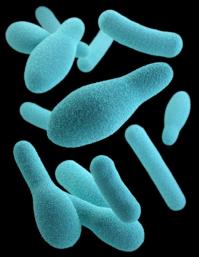
USA – Infant botulism cases prompt alert about honey pacifiers – Clostridium botulinum

DSHS Texas 

CDC Clost Spore

Children under 12 months old should not consume honey

The Texas Department of State Health Services is warning parents and other adults not to give babies pacifiers containing honey after four babies were treated for botulism in Texas. Each infant had been given a honey-containing pacifier purchased in Mexico.

The four illnesses occurred from mid-August to the end of October and caused all four babies to be hospitalized for life-saving treatment. The unrelated infants are residents of West Texas, North Texas and South Texas.

Botulism is a serious illness caused by a toxin that attacks the body’s nerves and can cause difficulty breathing, paralysis and even death. Honey may contain bacteria that produce the toxin in the intestine of babies that eat it. By the time children get to be 12 months old, they’ve developed enough other types of bacteria in their digestive tract to prevent the botulism bacteria from growing and producing toxin.

DSHS today also issued a health alert asking health care providers to look out for cases of infant botulism and to remind parents not to let babies eat honey. The Centers for Disease Control and Prevention and the American Academy of Pediatrics have long advised that children under 12 months old should not consume honey.

Honey-filled pacifiers are not common in the United States but may be available in some specialty stores and through online retailers. Most aren’t designed for the honey to be consumed, but some have a small hole so a child could eat the honey, or the pacifier could accidentally rupture or leak. Parents should also avoid pacifiers containing any other food substance, because they could also pose a risk of botulism.

Texas has had seven to eight cases of infant botulism per year in recent years. Ten confirmed or suspected cases have been reported in 2018. Additional information on botulism is available on the DSHS website.

RASFF Alerts – Ochratoxin A – Raisin Paste – Sultanas

RASFF-Logo

RASFF-ochratoxin A (20.72 µg/kg – ppb) in raisin paste from Turkey, with raw material from Afghanistan in Slovakia

RASFF-ochratoxin A (14.47 µg/kg – ppb) in sultanas from Turkey in Spain

RASFF Alert – Bacillus cereus – Cockles

RASFF-Logo

RASFF -Bacillus (91000 CFU/g) in and inadequate thermal processing of canned common cockles from Spain in Spain

RASFF Alerts – Aflatoxin – Groundnuts – Pistachios – Walnuts – Watermelon Seeds –

RASFF-Logo

RASFF-aflatoxins (B1 = 11; Tot. = 13 µg/kg – ppb) in groundnuts from Argentina in the Netherlands

RASFF-aflatoxins (B1 = 7.7; Tot. = 9.0 µg/kg – ppb) in groundnuts from the United States in Spain

RASFF-aflatoxins (B1 = 44.8; Tot. = 48.2 µg/kg – ppb) in pistachios from Turkey in Greece

RASFF-aflatoxins (B1 = 56; Tot. = 63) in walnuts in shell from Ukraine in Portugal

RASFF-aflatoxins (B1 = 12.7; Tot. = 13.9 µg/kg – ppb) in roasted and salted watermelon seeds (egusi) – from Turkey in Germany

RASFF-aflatoxins (B1 = 7.54; Tot. = 8.09 µg/kg – ppb) in groundnuts in shell from the United States in Poland


Research – A herbal remedy to fight botulinum, the most poisonous bacterial toxin

Research Matters

Bringing a great relief to food lovers, particularly fans of processed foods, scientists from the USA and India have reported having found a herbal compound to fight botulinum, the most poisonous bacterial toxin that causes food poisoning. The study was published in the journal Applied and Environmental Microbiology.

The lethal botulinum toxins are produced by the bacteria Clostridium botulinum. The bacterium grows in an oxygen-free environment and can form spores—a dormant form of the bacteria that are difficult to kill. Botulinum enters our body when we consume improperly processed food that contains the bacterium or its spores. Although mainly a foodborne infection, botulism or poisoning by botulinum, can also be caused by wound infections and by inhalation.

Research -Microbiological Testing Program for E. coli O157:H7 and non-O157 Shiga Toxin-Producing E. coli: Individual Positive Results for Raw Ground Beef (RGB) and RGB Components

USDA

Table 1. Raw Ground Beef Products (RGB) Analyzed for E. coli O157:H7, Current Calendar Year

Sample Source1 Collection Date Where Collected Product Status Positives this Year Samples Analyzed this Year Total Positives2 Total Samples Analyzed2
Federal RGB Verification, Beef Oct 15, 2018 MN Held 4 9,541 540 238,301
Federal RGB Verification, Beef Oct 9, 2018 NC Held 3 9,297 539 238,057
Federal RGB Verification, Beef Mar 26, 2018 OR Held 2 3,085 538 231,845
Federal RGB Verification, Beef Feb 8, 2018 CA Held 1 1,704 537 230,464

Z7_0Q0619C0JGR010IFST1G5B1055

Web Content Viewer (JSR 286)

Actions

Loading…

Microbiological Testing Program for E. coli O157:H7 and non-O157 Shiga Toxin-Producing E. coli: Individual Positive Results for Raw Ground Beef (RGB) and RGB Components

View by Year:  
2018 Positive Results
2017 Positive Results
2016 Positive Results
2015 Positive Results
2014 Positive Results
2013 Positive Results
2012 Positive Results
2011 Positive Results
2010 Positive Results
2009 Positive Results
2008 Positive Results
2007 Positive Results
2006 Positive Results
2005 Positive Results
2004 Positive Results
2003 Positive Results
2002 Positive Results
2001 Positive Results

The table below includes all positive results as of November 4, 2018.

Table 1. Raw Ground Beef Products (RGB) Analyzed for E. coli O157:H7, Current Calendar Year 

Sample Source1 Collection Date Where Collected Product Status Positives this Year Samples Analyzed this Year Total Positives2 Total Samples Analyzed2
Federal RGB Verification, Beef Oct 15, 2018 MN Held 4 9,541 540 238,301
Federal RGB Verification, Beef Oct 9, 2018 NC Held 3 9,297 539 238,057
Federal RGB Verification, Beef Mar 26, 2018 OR Held 2 3,085 538 231,845
Federal RGB Verification, Beef Feb 8, 2018 CA Held 1 1,704 537 230,464

1Sample Sources may include these types of establishments and samples:

  • Federal (verification; follow-up)
  • Retail (verification; follow-up)
  • State (verification; follow-up)
  • Import (verification; follow-up). For Import samples, the column “Where Collected” is defined as Country of Origin. <!–
  • Source may also refer to the type of product (beef, veal, or mixed), as listed on the product label.
  • –>

2Totals: “Total Positives” and “Total Samples Analyzed” are the totals since FSIS began its testing program to detect E. coli O157:H7 in raw ground beef on October 17, 1994.


The table below includes all positive results as of November 4, 2018.

Table 2. Raw Ground Beef Components (RGBC) Analyzed for Target STECs, Current Calendar Year3

Sample Source4 Collection Date Target STECs Where Collected Product Status Posi-
tives this Year
Samples Analyzed this Year5 Total Posi-
tives
Total Samples Analyzed6
Trim Verification, Beef Oct 18, 2018 O111 PA Held 19 6,594 415 59,239
Trim Verification, Beef Oct 9, 2018 O157:H7 SD Held 18 6,262 414 58,907
Trim Verification, Beef Sep 5, 2018 O157:H7 PA Held 17 5,641 413 58,286
Trim Verification, Beef Aug 14, 2018 O103 PA Held 16 5,018 412 57,663
Trim Verification, Beef Jun 6, 2018 O157:H7 MO Held 15 3,583 411 56,228
Trim Verification, Veal Jun 6, 2018 O26 PA Held 14 3,428 410 56,073
Follow-up to RGBC Positive, Beef May 30, 2018 O103 PA Held 13 3,266 409 55,911
Follow-up to RGBC Positive, Beef May 29, 2018 O103 PA Held 12 3,266 408 55,911
Trim Verification, Beef May 21, 2018 O157:H7 TX Held 11 3,147 407 55,792
Trim Verification, Beef May 16, 2018 O103 PA Held 10 2,968 406 55,613
Trim Verification, Beef May 15, 2018 O103 NY Held 9 2,968 405 55,613
Trim Verification, Beef May 9, 2018 O103 PA Held 8 2,968 404 55,613
Other RGBC Verification May 9, 2018 O157:H7 NE Held 7 2,968 403 55,613
Trim Verification, Beef Mar  19, 2018 O157:H7 NM Held 6 1,814 402 54,455
Trim Verification, Beef Mar 1, 2018 O121 ID Held 5 1,507 401 54,148
Trim Verification, Veal Feb 27, 2018 O103 WA Held 4 1,347 400 53,988
Follow-up to RGBC Positive, Beef Jan 27, 2018 O45 WI Held 3 583 400 53,225
Other RGBC Verification Jan 4, 2018 O157:H7 SD Held 2 107 399 52,749
Trim Verification, Beef Dec 28, 2017 O157:H7 WI Held 1 107 398 52,749

Research – FDA Report Released on Restaurant Foodborne Illness Factors

Food Poisoning Bulletin

The FDA has released findings from the first phase of a 10 year study that is looking at restaurant foodborne illness factors  in fast food restaurants and full service restaurants. The report looked at risk factors from 2013 to 2014. The first 10-year study was conducted between 1998 and 2008.

In the 2008 study, the FDA found that the restaurant foodborne illness factors that needed the most improvement were poor personal hygiene, improper food holding/time and temperature, and contaminated equipment and protection from contamination.

More than half of all food poisoning outbreaks in the U.S. every year are associated with restaurant food. In 2014, when looking at outbreaks linked to a single location, restaurants accounted for 485 outbreaks, or 65% of the total, and 4780 illnesses, or 44%. Many of these outbreaks led to lawsuits. The FDA at that time stated it needed more research to identify the root causes for these poor retail food safety practices, and to determine effective intervention strategies.

The restaurant foodborne illness risk factors that were listed for this study include employee handwashing, proper temperature control of perishable foods, improper food holding time, hand-to-hand contact with ready-to-eat foods, cooking raw animal foods to safe final and required internal temperatures, contaminated equipment, and food obtained from unsafe sources.

UK – FSA -E. coli O157 cross-contamination guidance for food business operators and local authorities

FSA

We welcome stakeholder views on the proposed amendments to our guidance document on the control of E. coli O157 and cross-contamination.

About this consultation

This consultation will be of interest to:

  • food businesses where ready-to-eat and raw foods are handled
  • local authority enforcement officers
  • trade bodies, such as The British Hospitality Association and the British Retail Consortium

Consultation subject

The subject of this consultation is guidance which assists local authorities and all types of businesses that handle both raw foods (that can be a source of pathogens including E. coli O157) and ready to eat foods. This includes best practice around hygiene, separation and safety measures to be taken to avoid cross-contamination.

Consultation purpose

Following a routine review of the E.coli O157 guidance, the guide has been moved to a new format to increase understanding and accessibility. There have been no changes to the policy, science or law.

RASFF Alerts – Ochratoxin A – dried Sultanas – Berbere Spice Mixture – Raisins – Mulberries – Dried Figs

RASFF-Logo

RASFF-ochratoxin A (15.7 µg/kg – ppb) in dried sultanas from Turkey in Germany

RASFF-ochratoxin A (28.21 µg/kg – ppb) in berbere spice mixture from Ethiopia in Germany

RASFF-ochratoxin A (22 µg/kg – ppb) in raisins from Turkey in Portugal

RASFF-ochratoxin A (47 µg/kg – ppb) in mulberries from Turkey in the Netherlands

RASFF-ochratoxin A (10.7 µg/kg – ppb) in dried figs from Turkey in Germany

RASFF Alert – Bacillus cereus – TVC – Moulds – Dried Black Fungus

RASFF-Logo

RASFF-Bacillus cereus (10000 CFU/g), too high count of aerobic mesophiles (2000000 CFU/g) and high count of moulds (230000 CFU/g) in dried black fungus from China, via Germany in Austria