Category Archives: Food Toxin

USA -Hodgson Mill Issues Voluntary Recall of Unbleached All-Purpose White Wheat Flour Due to Potential Presence of Pathogenic E.coli

FDA

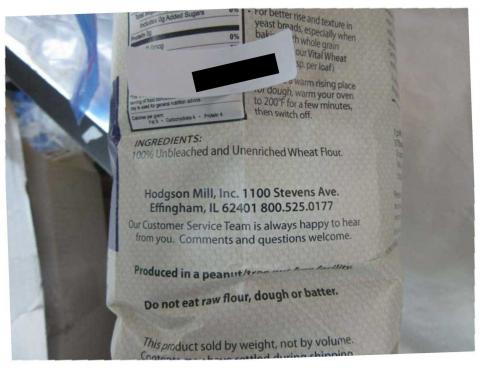
Hodgson Mill of Effingham, IL, announced today a voluntary national recall of specific lots of its Unbleached All-Purpose White Wheat Flour (5 lb.)

We are taking this voluntary precautionary step because of the potential presence of pathogenic E. coli which was discovered through sampling raw uncooked flour. Hodgson Mill has not received any confirmed reports of illnesses related to this product.

The only product affected by this voluntary recall is:

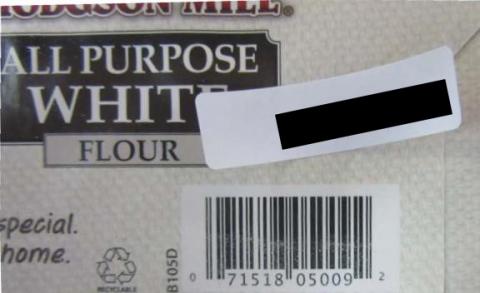
Unbleached All-Purpose White Wheat Flour (5 lb.) UPC 0-71518-05009-2
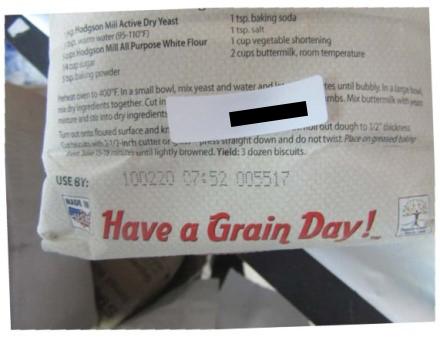
Best By Date 10-01-2020 and 10-02-2020 with lot codes listed Lot# 001042 & 005517

Use By and Lot Code information can be found on the bottom back panel of the 5 lb. Bag. Used By date and Lot Code, along with their location on the bag, must all match in order to represent flour affected by this recall.

Consumer safety is our top priority. Hodgson Mill package states “do not eat raw flour, dough or batter”. The Centers for Disease Control (CDC) warns consumers to not consume raw flour or uncooked raw dough.

E. coli is killed by heat through baking, frying, sautéing, or boiling products made with flour. For more information, refer to the following: https://www.cdc.gov/features/no-raw-dough/index.html. Symptoms of pathogenic E. coli illness include acute, often bloody diarrheal illness and abdominal cramps. Most people recover within a week. However, children, the elderly, and immunosuppressed individuals may develop hemolytic uremic syndrome (HUS), a severe illness which may cause the kidneys to fail.

Consumers are reminded to wash their hands, work surfaces, and utensils thoroughly after contact with raw dough products or flour, and to never eat raw dough or batter.

This lot of flour was milled at an ADM Milling Facility in St Louis, MO and repacked at Hodgson Mill, Inc. facility in Effingham, IL and was distributed by Hodgson Mill through retailers and distribution nationwide and sold through our website www.hodgsonmill.comExternal Link Disclaimer.

Consumers who have purchased 5 lb packages of Unbleached All-Purpose White Wheat Flour with specific lot codes are urged to stop using the product immediately and return them to the place of purchase for a full refund. Consumers with questions may contact the company customer service M-F 9am to 3pm at 1-888-417-9343 x 1.

Any consumers concerned about an illness should contact a physician.

Bakers have trusted Hodgson Mill flour products in their kitchens for many years and because of that trust we have issued this voluntary recall. We remain committed to providing our consumers safe and superior products.


Company Contact Information

Consumers:
 888-417-9343

Product Photos

RASFF Alert – Mycotoxin – DON – Wheat Bran

RASFF-Logo

RASFF – deoxynivalenol (DON) (1516 µg/kg – ppb) in wheat bran from Slovakia in Hungary

RASFF Alert – Moulds -Candies – Greek Yoghurt

RASFF-Logo

RASFF – candies from Ukraine infested with moulds (9500 CFU/g) in Estonia

RASFF – Greek yoghurt from Germany infested with moulds and with yeasts in the Netherlands

RASFF Alert – Bacillus cereus Enterotoxin – Pumpkin Seeds

RASFF-Logo

RASFF – Bacillus cereus enterotoxin (130000 CFU/g) in pumpkin seeds from China in the Netherlands

RASFF Alerts – Aflatoxin – Roasted Red Rice Flour – Shelled Nuts – Dried Figs – Groundnut Kernels – Roasted Hazelnut Kernels

RASFF-Logo

RASFF – aflatoxins (B1 = 15.6; Tot. = 19.0 µg/kg – ppb) in roasted red rice flour from Sri Lanka in Switzerland

RASFF – aflatoxins (B1 = 12.89; Tot. = 14.42 mg/kg – ppm) in shelled nuts from Turkey in Italy

RASFF – aflatoxins (B1 = 13.8 µg/kg – ppb) in dried figs from Turkey in the UK

RASFF – aflatoxins (B1 = 6; Tot. = 26 µg/kg – ppb) in dried figs from Turkey in Slovenia

RASFF – aflatoxins (4.4 µg/kg – ppb) in groundnut kernels from Brazil in Spain

RASFF – aflatoxins (Tot. = 33.2 µg/kg – ppb) in dried figs from Turkey in Germany

RASFF – aflatoxins (B1 = 22.5; Tot. = 25.5 µg/kg – ppb) in roasted hazelnut kernels from Georgia in Bulgaria

RASFF – aflatoxins (B1 = 17.5; Tot. = 39.4 µg/kg – ppb) in dried figs from Turkey in Denmark

RASFF Alert – Animal Feed – Aflatoxin – Groundnut Kernels

RASFF-Logo

RASFF – aflatoxins (B1 = 1100 µg/kg – ppb) in groundnut kernels from Sudan, via the Netherlands, packaged in Denmark in Denmark


India – Aflatoxin M1 – FSSAI may bring animal feed under its purview in view of Aflatoxin M1

FNBNEWS

FSSAI is actively considering to bring the subject of ‘animal feed’ under its purview, after the findings of the ‘National Milk Quality Survey,’ which found presence of Aflatoxin M1, a cancer causing toxin in many milk samples.

The FSSAI has made a recommendation to Ministry of Health in this regard to consider amendment into the FSS Act to bring the subject of ‘Animal Feed’ under FSSAI’s ambit.

The Ministry of Health is learnt to have accepted the proposal, which will bring the amendment for the approval of Parliament soon.

Nearly 6 per cent samples of milk out of 6,432 were tested positive for presence of Aflatoxin M1. The toxin is produced by a fungi which is found in certain animal feed including maize, peanuts and cotton seeds.

The residue of Aflatoxin M1 remains present in milk which is a cause of worry and therefore the apex food regulator wants a control over the animal feed to reduce the chances of aflatoxin passing into milk.


USA -Hodgson Mill Flour Recalled For Possible E. coli Contamination

Food Poisoning Bulletin

Hodgson Mill flour recalled for possible E. coli contamination. Hodgson Mill of Effingham, Illinois is voluntarily recalling specific lots of its Unbleached All Purpose White Wheat Flour sold in 5 pound bags. The potential presence of pathogenic E. coli was found when sampling raw uncooked flour. No reports of illness associated with the consumption of this product have been received to date.

The recalled product is Hodgson Mill Unbleached All Purpose White Wheat Flour sold in 5 pound bags. The UPC number on the product is 0-71518-05009-2. The best by dates printed on the packages are 10-01-2020 and 10-02-2020, and the lot codes are 001042 and 005517. The use by and lot code information are on the bottom back panel of the bag.

Hodgson Mill Flour Recalled For Possible E. coli Contamination

Kenya – What Must Be Done to Get Toxin Out of Kenya’s Food Supply – Aflatoxin

All Africa

An exposé in Kenya has revealed that there are high amounts of a poisonous substance, known as aflatoxin, in many of Kenya’s popular maize flour brands. This is particularly worrying as maize flour is a staple food for most Kenyans. Part of the problem is in how maize is processed and distributed in the country. Vivian Hoffmann shares her insights on this and what must be done to prevent it.

What are aflatoxins and how do they get into our food?

Aflatoxins are toxic chemicals produced by a fungus, Aspergillus flavus. The fungus occurs naturally in soils, but under hot, dry conditions, it can grow and spread to a variety of crops. Maize and groundnut are two crops that are especially susceptible to contamination with aflatoxins.

While aflatoxin is a known carcinogen, and can be fatal to people in large doses, some of the other potential health impacts of consuming moderate amounts of aflatoxin over long periods of time are less well understood.

USA -Investigation of E. coli O157:H7 Outbreak Linked to Romaine from Salinas, California, November 2019

FDA

November 26, 2019

Recommendation

FDA, CDC, and state health authorities are investigating an outbreak of illnesses caused by E. coli O157:H7 in the United States. Epidemiologic, laboratory, and traceback evidence indicates that romaine lettuce from the Salinas, California growing region is a likely source of this outbreak. The CDC is reporting an increase in the case count to 67 and that the most recent illness onset date is November 14, 2019.

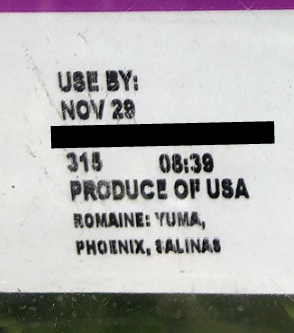
Romaine from Salinas, California Label Enjoy By December 2, 2019


Romaine from Salinas, California Label Use By November 29, 2019

Consumers: Consumers should not eat romaine lettuce harvested from Salinas, California. Additionally, consumers should not eat products identified in the recall announced by the USDA on November 21, 2019.

Romaine lettuce may be voluntarily labeled with a harvest region. If this voluntary label indicates that the romaine lettuce was grown in “Salinas” (whether alone or with the name of another location) do not eat it. Throw it away or return it to the place of purchase.  If romaine lettuce does not have information about harvest region or does not indicate that it has been grown indoors (i.e., hydroponically- and greenhouse-grown), throw it away or return it to the place of purchase. Consumers ordering salad containing romaine at a restaurant or at a salad bar should ask the staff whether the romaine came from Salinas.  If it did, or they do not know, do not eat it.

At this time, romaine lettuce that was harvested outside of the Salinas region has not been implicated in this outbreak investigation. Hydroponically- and greenhouse-grown romaine, which is voluntarily labeled as “indoor grown,” from any region does not appear to be related to the current outbreak. There is no recommendation for consumers to avoid using romaine harvested from these other sources.

Restaurants and Retailers: Restaurants and retailers should not serve or sell romaine harvested from Salinas, California.  If you do not know the source of your romaine lettuce, and if you cannot obtain that information from your supplier, you should not serve, nor sell it.

Suppliers and Distributors: Suppliers, distributors and others in the supply chain should not ship or sell romaine harvested in Salinas, California. If the source of the romaine lettuce is unknown, you should not ship, nor sell the product.

For Restaurants, Retailers, Suppliers and Distributors: Currently, the FDA does not have enough traceback information to identify the specific source of the contamination that would allow us to request a targeted recall from specific growers. At this stage in the investigation, the most efficient way to ensure that contaminated romaine is off the market would be for industry to voluntarily withdraw product grown in Salinas, and to withhold distribution of Salinas romaine for the remainder of the growing season in Salinas. FDA has made this request of industry.

At this time, romaine lettuce that was harvested outside of the Salinas region has not been implicated in this outbreak investigation. Hydroponically- and greenhouse-grown romaine, which is voluntarily labeled as “indoor grown,” from any region does not appear to be related to the current outbreak. There is no recommendation for consumers or retailers to avoid using romaine harvested from these other sources.

Background

According to the CDC, as of November 25, 2019, 67 people infected with the outbreak strain of E. coli O157:H7 have been reported from 19 states. The case patients report that illnesses started on dates ranging from September 24, 2019 to November 14, 2019.

The Maryland Department of Health identified E. coli O157:H7 in an unopened package of Ready Pac Bistro® Chicken Caesar Salad collected from an ill person’s home in Maryland. Analysis of this salad, through Whole Genome Sequencing (WGS), has linked strain E. coli O157:H7 to three Maryland cases and the multi-state outbreak.

The FDA and state partners are conducting a traceback investigation to trace romaine exposures to the source. Preliminary information indicates that ill people in Maryland were exposed to romaine lettuce harvested in Salinas, California.

FDA has deployed investigators to the farms in question to try to determine the source and extent of the contamination. More information will be forthcoming as the investigation proceeds.

Additionally, state partners are conducting laboratory analyses of romaine lettuce samples from case patients potentially linked to the outbreak.

The Salinas region as defined by the United Fresh Produce Association and the Produce Marketing Association Romaine Taskforce ReportExternal Link Disclaimer includes: Santa Cruz, Santa Clara, San Benito, and Monterey counties in California.

Genetic analysis of the E. coli O157:H7 strains from patients in this current outbreak are similar to strains of E. coli O157:H7 associated with a previous outbreak from the Fall of 2017 and the Fall of 2018 that affected consumers in both Canada and the U.S. The 2017 outbreak of E. coli O157:H7 was associated with leafy greens in the U.S. and romaine in Canada. The 2018 outbreak of E. coli O157:H7 was associated with romaine in both countries.