Category Archives: Food Toxin

RASFF Alert – STEC E.coli – Chilled Vacuum Packed Bovine Meat

RASFF-Logo

RASFF – shigatoxin-producing Escherichia coli in chilled vacuum packed bovine meat from Ireland in Italy

Research – Effect of blanching on aflatoxin contamination and cross-contamination of almonds

JFP

Blanching of almonds was examined for reducing aflatoxin content of contaminated nuts.  Almonds with intact pellicles were spiked with aflatoxin B 1 (AFB 1 ) and blanched at 85°C.  Following blanching, almond kernels and pellicles contained 20% and 19% of spiked AFB 1 , respectively.  Blanching water contained an additional 41% of spiked AFB 1 .  In a separate study, post-blanching water was spiked with AFB 1­ and used for subsequent blanching of uncontaminated almonds.  The resulting blanched kernels acquired 3.3% of the AFB 1 from the spiked water, demonstrating a low level of cross-contamination from reused contaminated blanching water.  The effect of blanching temperature on partitioning of AFB 1 from almonds to blanching water was significant at 20 ppb spiking level, but not at 100 ppb.  AFB 1 levels that were unaccounted for in mass balance of blanching components were presumed to be lost due to binding to water-solubilized almond components, and were independent of pH and blanching time.  Blanching reduced total aflatoxins in naturally contaminated almonds by 13-76%, depending on almond quality as well as blanching time and temperature.  These results indicate that the association between almond components and aflatoxin generated through mold contamination is more complex than in spiking experiments.

Ukraine – Ukraine reports 40 botulism cases in first half of 2020

112 UA

cdc clost spore

Image CDC

The Ukraine Ministry of Health has reported 40 cases of botulism since January, including two fatalities.

Since the beginning of 2020, 40 cases of infection with botulism observed in Ukraine; two cases were lethal. Besides, nine and 13-year-old children were among the diseased, as the Public Health Center reported on Facebook.

“The consumption of the home-made preserves, air-dried, smoked, salted fish and other food products purchased in the unauthorized trading may lead to the infection with botulism,” the center reported.

A 59-year-old man died from botulism in Ukraine. On the eve, a man ate homemade canned pork. It was severe acute disease and the state of the patient deteriorated after serum infusion and three surgeries. A man died on December 30, 2019.


Research – Aspergillus mycotoxins and their effect on the host

Pub Med

Abstract

Aspergillus fumigatus is known to produce various immunosuppressive mycotoxins including gliotoxin. However, none of these mycotoxins has been confirmed as being directly related to the pathogenesis of aspergilli. Recent studies have made substantial progress in the determination of mycotoxins as virulence factors. Gliotoxin was found to be produced much faster than previously believed under certain culture conditions, such as at 37 degrees C and under high oxygen content, which is close to the environment in the host. Gliotoxin was also found to be detectable in the sera of aspergillosis mice and of aspergillosis patients. Based on these findings, it is becoming evident that gliotoxin is produced in the infected organs of patients of aspergillosis at a significant level. In addition to these known mycotoxins, A. fumigatus produces many mycotoxins apparently different from known toxins. From the aspect of gene analysis, the deletion of laeA was found to block the expression of metabolic gene clusters such as sterigmatocystin, and the gene is also expected to be related to the production of gliotoxin. The significance of mycotoxins as virulence factors will hopefully be clarified in the near future.


Research – Survival of toxigenic Escherichia coli on chamomile, peppermint, green, black, ginger, and cinnamon teas during storage and brewing

Wiley Online

In this study, the persistence of toxigenic Escherichia coli (E. coli ) on dried chamomile, peppermint, ginger, cinnamon, black and green teas stored under 4, 10, and 25°C was determined. The E. coli survival rate in ginger and cinnamon teas decreased below 0 on Day 5. In the other tested teas, E. coli survivability showed a downward trend over time, but never dropped to 0. Chamomile tea retained the greatest population of viable E. coli . Meanwhile, die‐off of E. coli was higher at 25°C compared to lower temperatures. Additionally, fate of E. coli during brewing at 60, 70 and 80°C was evaluated. The E. coli population was reduced to below 2 Log colony forming units (CFU)/g after 1 min at 80°C, At the same time, the E. coli survival at 60°C was higher than that at 70°C in all tested teas. The data indicated that if E. coli survives after storage of prepared teas, it may also survive and grow after the brewing process, especially if performed using temperatures <80°C. Finally, we analyzed the correlations between temperature, time, tea varieties and E. coli survival, and successfully constructed a random forest regression model. The results of this study can be used to predict changes in E. coli during storage and fate during the brewing process. Results will form the basis of undertaking a risk assessment.

Pakistan – Aflatoxins: A peril which limits the export of maize crop from Pakistan

Cabi Blog

The agriculture sector is one of the most climate-sensitive sectors of Pakistan’s economy. It responds to temperature, precipitation, soil radiation, etc., which are directly associated with climate change. Rising temperature, uneven distribution of precipitation, floods, droughts, and other climatic disasters have affected human life along with socio-economic sectors of the world.

In Pakistan, maize is one of the important cereal crops which contributes 2.2 percent to the valued added products and 0.4 percent to the GDP. It is grown on an area of 1251 hectares with production of 5901 tonnes. In recent years, some mycotoxins, which we refer as Aflatoxins have been detected in maize crop grown in Pakistan. It has limited the export of Pakistani corn which causes losses in the economic benefit for all the chain actors linked with maize.

On the other hand, its consumption in the domestic market has been increased dramatically as Pakistani feed industry process/mill thousands of tons of maize every year to surge the demand of poultry sector. To address the issue of aflatoxin in maize crop, USDA and USAID joined hands with Pakistan Agricultural Research Council (PARC), Rafhan Maize Products Co. Ltd and CAB International to implement a programme namely ‘Aflatoxin Control in Pakistan’ using a cutting-edge USDA biocontrol technology.

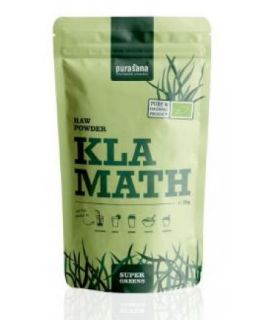
Luxembourg – RECALL: PURASANA BRAND KLAMATH POWDER – HIGH LEVEL OF MICROCYSTINS

SAP

Last name Klamath powder
Mark Purasana
Unit 75 g
Bar code 5400706103343
Lot 1706/04 and 1706/02

Danger  : High level of microcystins


Microcystin can cause adverse effects on the liver or nervous system. People who have consumed the product mentioned above are invited to consult their doctor without delay, notifying him of this consumption.

Sale in Luxembourg by: Auchan

A sale by other operators cannot be excluded.

Source of information: Auchan recall notification

Communicated by: Government Commission for Quality, Fraud and Food Safety .

Food Security Division

7A Thomas Edison Street

L-1445 Strassen

Phone. : +352 247 75620
Fax : +352 27 47 80 68
E-mail : secualim@ms.etat.lu

Further Information Link

TO KNOW MORE

RASFF Alert – Foodborne Outbreak caused by Histamine -Thawed Tuna

RASFF-Logo

RASFF –  foodborne outbreak caused by histamine (>490; >1000 mg/kg – ppm) in thawed tuna (Thunnus albacares) from Sweden, with frozen raw material from the Netherlands in Sweden

RASFF Alert – Histamine – Frozen Mackerel

RASFF-Logo

RASFF – histamine (2464 mg/kg – ppm) in frozen mackerels (Scomber japonicus) from China, via the Netherlands in Italy

RASFF Alerts – Aflatoxin – Kofta Seasoning – Kuli Kuli – Almond Kernels – Groundnuts – Pistachio Kernels

RASFF-Logo

RASFF – aflatoxins (B1 = 8.1 µg/kg – ppb) in kofta seasoning mix from Pakistan in Ireland

RASFF – aflatoxins (B1 = 44.4; Tot. = 50 µg/kg – ppb) in kuli kuli from Nigeria in the UK

RASFF – aflatoxins (B1 = 277; Tot. = 302 µg/kg – ppb) in almond kernels from the United States, via the United Kingdom in Germany

RASFF – aflatoxins (B1 = 5.4 µg/kg – ppb) in groundnuts from Brazil in the Netherlands

RASFF – aflatoxins (B1 = 80.3; Tot. = 100.8 µg/kg – ppb) in pistachio kernels from Iran, dispatched from Turkey in Sweden