Category Archives: Food Testing

Research – A Quantitative Risk Assessment of Human Salmonellosis from Consumption of Pistachios in the United States

Journal of Food Protection

We developed a quantitative risk assessment model to assess the risk of human nontyphoidal salmonellosis from consumption of pistachios in the United States and to evaluate the impact of Salmonella treatments (1- to 5-log reductions). The exposure model estimating prevalence and contamination levels of Salmonella at consumption included steps in pistachio processing such as transport from grower to huller, removal of the hull through wet abrasion, separation of pistachio floaters (immature, smaller nuts) and sinkers (mature, larger nuts) in a flotation tank, drying, storage, and partitioning. The risks of illness per serving and per year were evaluated by including a Salmonella dose-response model and U.S. consumption data. The spread of Salmonella through float tank water, delay in drying resulting in growth, increased Salmonella levels through pest infestation during storage (pre- and posttreatment), and a simulation of the 2016 U.S. salmonellosis outbreak linked to consumption of pistachios were the modeled atypical situations. The baseline model predicted one case of salmonellosis per 2 million servings (95% CI: one case per 5 million to 800,000 servings) for sinker pistachios and one case per 200,000 servings (95% CI: one case per 400,000 to 40,000 servings) for floater pistachios when no Salmonella treatment was applied and pistachios were consumed as a core product (>80% pistachio) uncooked at home. Assuming 90% of the pistachio supply is sinkers and 10% is floaters, the model estimated 419 salmonellosis cases per year (95% CI: 200 to 1,083 cases) when no Salmonella treatment was applied. A mean risk of illness of less than one case per year was estimated when a minimum 4-log reduction treatment was applied to the U.S. pistachio supply, similar to the results of the Salmonella risk assessment for almonds. This analysis revealed that the predicted risk of illness per serving is higher for all atypical situations modeled compared with the baseline, and delay in drying had the greatest impact on consumer risk.
Research – Blood type affects severity of diarrhea caused by E. coli

Science Daily 


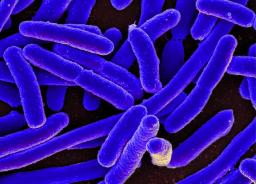
A new study shows that a kind of E. coli most associated with “travelers’ diarrhea” and children in underdeveloped areas of the world causes more severe disease in people with blood type A.

The bacteria release a protein that latches onto intestinal cells in people with blood type A, but not blood type O or B, according to a study led by researchers at Washington University School of Medicine in St. Louis. A vaccine targeting that protein could potentially protect people with type A blood against the deadliest effects of enterotoxigenic E. coli (Escherichia coli) infection.

“We think this protein is responsible for this blood-group difference in disease severity,” said senior author James Fleckenstein, MD, an associate professor of medicine at Washington University. “A vaccine targeting this protein would potentially protect the individuals at highest risk for severe disease.”

The study is published May 17 in The Journal of Clinical Investigation. The work was conducted in collaboration with investigators at Johns Hopkins University, the National Institutes of Health (NIH), and the Naval Medical Research Center.

Research – Antibiotic resistance increases with local temperature

Nature

Bacteria that cause infections in humans can develop or acquire resistance to antibiotics commonly used against them1,2. Antimicrobial resistance (in bacteria and other microbes) causes significant morbidity worldwide, and some estimates indicate the attributable mortality could reach up to 10 million by 20502,3,4. Antibiotic resistance in bacteria is believed to develop largely under the selective pressure of antibiotic use; however, other factors may contribute to population level increases in antibiotic resistance1,2. We explored the role of climate (temperature) and additional factors on the distribution of antibiotic resistance across the United States, and here we show that increasing local temperature as well as population density are associated with increasing antibiotic resistance (percent resistant) in common pathogens. We found that an increase in temperature of 10 °C across regions was associated with an increases in antibiotic resistance of 4.2%, 2.2%, and 2.7% for the common pathogens Escherichia coli, Klebsiella pneumoniae and Staphylococcus aureus. The associations between temperature and antibiotic resistance in this ecological study are consistent across most classes of antibiotics and pathogens and may be strengthening over time. These findings suggest that current forecasts of the burden of antibiotic resistance could be significant underestimates in the face of a growing population and climate change4.

Research – Behavior of 11 Foodborne Bacteria on Whole and Cut Mangoes var. Ataulfo and Kent and Antibacterial Activities of Hibiscus sabdariffa Extracts and Chemical Sanitizers Directly onto Mangoes Contaminated with Foodborne Bacteria

Journal of Food Protection

The behavior of foodborne bacteria on whole and cut mangoes and the antibacterial effect of Hibiscus sabdariffa calyx extracts and chemical sanitizers against foodborne bacteria on contaminated mangoes were investigated. Mangoes var. Ataulfo and Kent were used in the study. Mangoes were inoculated with Listeria monocytogenes, Shigella flexneri, Salmonella Typhimurium, Salmonella Typhi, Salmonella Montevideo, Escherichia coli strains (O157:H7, non-O157:H7 Shiga toxin–producing, enteropathogenic, enterotoxigenic, enteroinvasive, and enteroaggregative). The antibacterial effect of five roselle calyx extracts (water, ethanol, methanol, acetone, and ethyl acetate), sodium hypochlorite, colloidal silver, and acetic acid against foodborne bacteria were evaluated on contaminated mangoes. The dry extracts obtained with ethanol, methanol, acetone, and ethyl acetate were analyzed by nuclear magnetic resonance spectroscopy to determine solvent residues. Separately, contaminated whole mangoes were immersed in five hibiscus extracts and in sanitizers for 5 min. All foodborne bacteria attached to mangoes. After 20 days at 25 ± 2°C, all foodborne bacterial strains on whole Ataulfo mangoes had decreased by approximately 2.5 log, and on Kent mangoes by approximately 2 log; at 3 ± 2°C, they had decreased to approximately 1.9 and 1.5 log, respectively, on Ataulfo and Kent. All foodborne bacterial strains grew on cut mangoes at 25 ± 2°C; however, at 3 ± 2°C, bacterial growth was inhibited. Residual solvents were not detected in any of the dry extracts by nuclear magnetic resonance. Acetonic, ethanolic, and methanolic roselle calyx extracts caused a greater reduction in concentration (2 to 2.6 log CFU/g) of all foodborne bacteria on contaminated whole mangoes than the sodium hypochlorite, colloidal silver, and acetic acid. Dry roselle calyx extracts may be a potentially useful addition to disinfection procedures of mangoes.

Research- Occurrence of Toxigenic Fungi and Mycotoxins on Root Herbs from Chinese Markets

Journal of Food Protection Aspergillus

Herbs derived from roots, leaves, flowers, or fruits of plants are unavoidably contaminated with fungi and mycotoxins during growth, harvest, and storage, thereby posing a health threat to humans. Especially, root herbs (RHs) are more easily contaminated with fungi and mycotoxins because the roots are in direct contact with the soil. Here, we investigated the occurrence of fungi, aflatoxins (AFs), and ochratoxin A (OTA) in eight RHs that are used as medicines, beverages, dietary supplements, and functional foods in China and other countries. Morphological observation and MultiGeneBlast (β-tubulin and calmodulin) were used to identify the potentially toxigenic fungi. Of the 48 samples tested, all were contaminated by fungi, and 1,844 isolates belonging to 25 genera were detected. The genera Aspergillus and Penicillium, which contain potentially toxigenic fungal species, represented a frequency of 10 and 25%, respectively. Thirty-three isolates of Aspergillus flavus, Aspergillus parasiticus, Aspergillus niger, and Penicillium polonicum were arbitrarily selected for analysis of their toxigenic potential. Five of 13 isolates of A. flavus and 1 isolate of A. parasiticus produced AFs, whereas OTA production was not detected for any of the isolates of A. niger and P. polonicum. The occurrence of AFs and OTA in the 48 samples of eight RHs was tested by ultraperformance liquid chromatography–tandem mass spectrometry; 37.50% of samples from six RHs were contaminated with AFs and 16.67% of samples from four RHs were contaminated with OTA. Seven (14.58%) and four (8.33%) samples of ginseng, polygala, and liquorice exceeded the permissible limits of aflatoxin B1 and AFs, respectively. Because ginseng, polygala, and liquorice are widely used as herbs, dietary supplements, and functional foods, the high frequency of AF contamination of these herbs indicated by our current study warrant attention to raise public awareness.

Research – Thermal Inactivation of Shiga Toxin–Producing Escherichia coli in Ground Beef with Varying Fat Content

Journal of Food Protection

Decimal reduction time (D-value) was calculated for six non-O157 Shiga toxin–producing Escherichia coli (STEC) in a laboratory medium and ground beef. For the laboratory medium, an overnight culture of each strain of STEC was divided into 10-mL sample bags and heated in a water bath for a specific time on the basis of the temperatures. Survival curves were generated by plotting the surviving bacterial population against time, and a linear-log primary model was used to estimate the D-values from survival curves. The z-values (the temperature raised to reduce the D-value by one-tenth) were calculated by plotting the log D-values against temperature. Similarly, for ground beef, six fat contents, 5, 10, 15, 20, 25, and 30% of ground beef were formulated for this study. Inoculated meat was divided into 5-g pouches and submerged in a water bath set at specific temperatures (55, 60, 65, 68, and 71.1°C). The average D-value for these strains in a laboratory medium was 17.96 min at 55°C, which reduced significantly (P < 0.05) to 1.58 min at 60°C, and then further reduced (P < 0.05) to 0.46 min at 65°C. In ground beef, a negative correlation (P < 0.05) between fat content of ground beef and D-values was observed at 55°C. However, at temperatures greater than 60°C, there was no impact (P > 0.05) of fat content of ground beef on the thermal resistance of non-O157 STECs. Irrespective of the fat content of ground beef, the D-values ranged from 15.93 to 11.69, 1.15 to 1.12, and 0.14 to 0.09 min and 0.05 at 55, 60, 65, and 68°C, respectively. The data generated from this study can be helpful for the meat industry to develop predictive models for thermal inactivation of non-O157 STECs in ground beef with varying fat content.

Research – Inactivation of Escherichia coli by Ultrasound Combined with Nisin

Journal of Food Protection ecoli

The aim of this study was to investigate the inactivation of nonpathogenic Escherichia coli in nutrient broth and milk through the use of either ultrasound (US) alone or US combined with nisin (US + nisin) treatments. The E. coli cells were treated at 0 to 55°C, 242.04 to 968.16 W/cm2 for 0 to 15 min. The results showed that the inactivation of E. coli by US and US + nisin increased when the temperature, US power density, and treatment time were increased. The inactivation kinetics of E. coli in nutrient broth by US and US + nisin both conformed to linear models. The largest reductions of 2.89 and 2.93 log cycles by US and US + nisin, respectively, were achieved at 968.16 W/cm2 and at 25°C for 15 min. The suspension media of the E. coli cells influenced the inactivation effect of US, while the growth phases of E. coli cells did not affect their resistance to US. Under all experiment conditions of this study, the differences between US and US + nisin in their respective inactivation effects on E. coli were not obvious. The results suggested that nisin had either no effect at all or a weak synergistic effect with US and that the E. coli cells were inactivated mainly by US, thus indicating that the inactivation of E. coli by US is an “all or nothing” event.

Research – Good practices and microbiological quality of food contact surfaces in public school kitchens

Wiley Online

Abstract

The objective of this work was to analyze the hygienic and sanitary conditions of 52 school kitchens and to investigate the microbiological contamination of surfaces that contact food. A specific checklist was used to classify the units’ health risk. Microbiological samples were collected from utensils, bench, and equipment in 10 units to evaluate the contamination levels of these surfaces. In total, 3.8% of the evaluated units had a very low health risk, and 61.5% had a low sanitary risk, indicating that most of the sites were adequately sanitary. Important failures have been identified in the block of buildings and facilities. Inadequacies related to hand hygiene, the absence of the manual of good practices and environmental hygiene were also highlighted. Microbiological analyses resulted in high counts of aerobic mesophiles and enterobacteria. Intervention with the involvement of all the actors of the National School Feeding Program is suggested for improving the situation.

Practical applications

This study is important, since it carried out the survey of the information regarding the adoption of good practices and sanitary conditions in the food production in the school environment, considering the relevance of the subject and vulnerability of the attended public. In this way, such information may guide corrective and preventive actions in the face of observed situations.

RASFF Alerts – Aflatoxin – Groundnuts – Almonds – Hazlenuts – Basmati Rice – Pistachios

kswfoodworld food safety poisoning

RASFF-aflatoxins (Tot. = 16.6 µg/kg – ppb) in groundnuts in shell from Egypt in Germany

RASFF-aflatoxins (Tot. = 45.8 µg/kg – ppb) in groundnuts in shell from Egypt in Germany

RASFF-aflatoxins (B1 = 40.7; Tot. = 44.1 µg/kg – ppb) in almonds from the United States in Italy

RASFF-aflatoxins (B1 = 825; Tot. = 1279 µg/kg – ppb) in groundnuts from Togo in Belgium

RASFF-aflatoxins (B1 = 9.1 µg/kg – ppb) in hazelnuts from Turkey in the UK

RASFF-aflatoxins (B1 = 5.13 µg/kg – ppb) in basmati rice from Pakistan in Italy

RASFF-aflatoxins (B1 = 24 µg/kg – ppb) in pistachios from Iran in Spain

RASFF Alert – Listeria monocytogenes – Chilled Bacon

kswfoodworld food safety poisoning

RASFF-Listeria monocytogenes (presence /25g) in chilled bacon from Poland in Poland