Category Archives: food safety training

EFSA – Story map on Listeria monocytogenes

EFSA

Listeria bacteria are widespread in the environment and they are worldwide commonly found in soil and water, as well as in animal digestive tracts. There are more than 15  species  of bacteria in this genus, but human cases of Listeria infection are almost always caused by Listeria monocytogenes (L. monocytogenes) while Listeria ivanovii is pathogenic in animals but rarely in humans. The other species are not considered to be pathogenic in humans or animals.

L. monocytogenes are able to form communities of bacteria called biofilms and are therefore resistant to a wide range of stresses. This capacity varies among  genotypes . They can tolerate acidic, dry and salty conditions, in the presence or absence of oxygen. Moreover, unlike most pathogenic bacteria, they are able to survive and multiply in refrigerated foods, making ready-to-eat foods of particular concern.

EFSA – Story map on Salmonella

EFSA

Salmonella is a genus of highly diverse bacteria that live in the intestinal tract of humans and animals and are widespread in the environment thanks to their ability to survive and adapt even under extreme conditions.

The more than 2,600 Salmonella  serovars  are divided into typhoidal and non-typhoidal serovars and all of them are potentially harmful and can cause diseases in humans with different level of severity. Typhoidal serovars (S. Typhi and S. Paratyphi) are highly adapted to the human host, which constitutes their exclusive reservoir, so they are transmittable only through human-to-human contact, causing a potentially life-threatening syndrome known as typhoid or paratyphoid fever. Their prevalence is very low in high-income countries, and the few European cases that occur generally involve people returning from trips to low- or middle-income countries.

Non-typhoidal serovars are zoonotic agents. They are transmittable from animals and foods to humans, but also through human-to-human contact, and they can cause various syndromes, most of which are gastrointestinal. Due to its adaptability, Salmonella is widely prevalent in the environment and can infect animals and contaminate food.

EFSA – Story map on Campylobacter

EFSA

The most clinically relevant  species  are Campylobacter jejuni (C. jejuni) and C. coli, which are responsible for almost 95% of Campylobacter-associated diarrheal diseases. Other emerging species have been recently identified as human or animal pathogens. The involvement of some of these species in human disease is still unclear.

Campylobacter are a group of small, curved, gram-negative, non-spore-forming, motile bacteria with a single polar flagellum or bipolar flagella.

Thermotolerant Campylobacter species (e.g. C. jejuni, C. coli) are able to grow at temperatures between 37° and 42˚C but not below 30˚C, while strains of non-thermotolerant Campylobacter species (e.g. C. fetus subsp. venerealis, C. fetus subsp. fetus) may not grow at 42˚C. Generally, they are highly sensitive to oxygen, desiccation, osmotic stress, and low  pH , and they cannot grow in foods during handling or storage at room temperature in moderate climates. Freezing reduces the number of viable Campylobacter, but it must nevertheless be stressed that the bacteria can survive extended periods of refrigeration and freezing.

UK- IFST – Safe Handling of Meat and Seafood

IFST

What is safe handling of meat and seafood?
When handling raw meat and proteins (including poultry and fish), it is important for consumers to take steps to ensure safe selection, handling, storage, preparation and cooking. Adopting good practices, at home can protect from foodborne illnesses caused
by organisms such as Salmonella, Escherichia coli (e.g. E. coli O157), Campylobacter, Listeria and Norovirus.

If meat is kept clean there will be little or no contamination whether biological, physical or
chemical. Safe meat handling practices are necessary because, even though cooking may destroy bacteria, this is not the case for toxins if they have been formed.

See the IFST Factsheet at the Link Above

Italy – Pecorino seasoned with honey ¿ Pecorino seasoned with pear – Listeria monocytogenes

Salute

Brand : Deluxe

Name : Pecorino seasoned with honey ¿ Pecorino seasoned with pear

Reason for reporting : Recall due to microbiological risk

Publication date : 7 December 2023

Documentation

Documentation

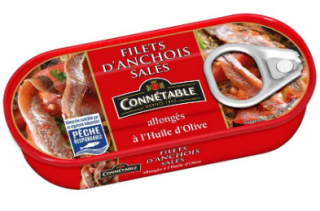
Luxembourg – Salted anchovy fillets from the Connétable brand – Histamine

SAP

The following product is recalled in Luxembourg:

Consumption reminder
Name Salted anchovy fillets
Brand Constable
Unit 50g
Barcode 3 263670 008395
Use-by date (DLC) 05/05/2024
Batch All lots

USA – FDA and Stop Foodborne Illness Co-Host Webinar on Food Safety Culture: Storytelling to Shape, Reinforce and Inspire

FDA

Today, the U. S. Food and Drug Administration (FDA) announced the ninth in the ongoing series of webinars exploring food safety culture will take place on December 6, 2023, from 12 noon to 1:00 pm ET. The webinar series Collaborating on Culture in the New Era of Smarter Food Safety is in partnership with Stop Foodborne IllnessExternal Link Disclaimer, a non-profit public health organization.

This webinar “Food Safety Culture: Storytelling to Shape, Reinforce, and Inspire” will focus on the importance of storytelling in building and reinforcing a strong food safety culture.

Guest speakers on December 6, include:

  • Jeff Almer, Constituent Food Safety Advocate, Stop Foodborne Illness
  • Jorge Hernandez, Quality Assurance Vice President, The Wendy’s Company
  • Lone Jespersen, Principal and Founder, Cultivate SA
  • Conrad Choiniere, PhD, Director, Office of Analytics and Outreach, Center for Food Safety and Applied Nutrition, FDA

The webinar series engages experts from the public and private sectors in a collaborative exchange of ideas and experiences related to the importance of a robust food safety culture in helping to ensure safe food production.

Food safety culture is one of the core elements in the FDA’s New Era of Smarter Food Safety blueprint, which states that dramatic improvements in reducing the burden of foodborne illness cannot be made without doing more to influence the beliefs, attitudes, and, most importantly, the behaviors of people and the actions of organizations.

Register Here!External Link Disclaimer

To learn more about this webinar series and to listen to recordings, visit Collaborating on Culture in the New Era of Smarter Food Safety.

For More Information

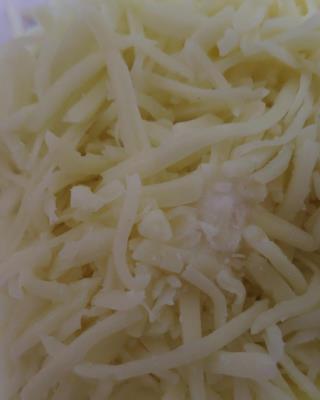
Czech Republic – Pilos Eidam – grated cheese – Visible Mold/Mould

Potravinynapranyri

Illustrative photo #7

Place of inspection:
Pardubice ( Belehradská 548, 530 09 Pardubice )
ID: 26178541
Food group: Milk and milk products Cheese

Pilos Eidam – grated cheese
Category: Dangerous foods
Invalid parameter:

fungi visible to the eye

In some of the inspected packages, mold colonies were present on the surface of the cheese under the intact packaging. Food is not considered safe if it shows signs of spoilage.

Unsuitable storage temperatures of this product were not detected during the inspection. The food did not have an expired minimum durability date.

Batch: A4 361, 26/11/2023
Best before date: 26/11/2023
Packaging: plastic bag sealed
Quantity of the product in the package: 200 g
Manufacturer: Milchwerke Oberfranken West eG, Sulzdorfer Strasse 7, 96484, Moeder
Country of origin:  Germany
Date of sample collection: 6/10/2023
Reference number: 23-000808-SZPI-CZ
The sample was detected by the official control of the State Agricultural and Food Inspection.

RASFF Alerts – Aflatoxin – Dried Figs

RASFF

Aflatoxin in dried figs from Türkiye in Bulgaria

RASFF

Aflatoxin in dried figs from Türkiye in Bulgaria and Sweden

USA – Thaw Your Turkey Safely in Time for Thanksgiving

USDA

The busiest time of the year for USDA’s Meat and Poultry Hotline is the week before Thanksgiving. Calls, chats and emails are answered by food safety specialists who even work on Thanksgiving Day to ensure your meal is safe.

One question often asked is, “How do you properly thaw a turkey?”

Here are safe ways to thaw a turkey — in the refrigerator or in cold water:

  • It takes 24 hours for every four to five pounds of weight for a turkey to thaw in the refrigerator (a 15-pound turkey will take three days to thaw in your refrigerator). A completely thawed turkey can remain in the refrigerator for one or two days before cooking.
  • To thaw in cold water, submerge the bird in its original wrapper in cold tap water, changing the water every 30 minutes. Cook the turkey immediately after thawing.

Remember that thawing a frozen turkey on the kitchen counter — or in a garage during the wintertime (the most common misconception shared by callers) — is not safe. Leaving any frozen package of meat or poultry for more than 2 hours at room temperature is dangerous. Even though the center of the package may still be frozen, the outer layer of the food is in the “Danger Zone” between 40 and 140 F — a temperature range where foodborne bacteria multiply rapidly.

For more turkey thawing tips, check out our fact sheet. Learn more about the latest USDA study on safe food handling and thorough handwashing.

Have a food safety question? Contact the USDA Meat and Poultry Hotline at 1-888-MPHotline (1-888-674-6854) to talk to a food safety specialist or chat live at ask.usda.gov from 10 a.m. to 6 p.m. Eastern Time, Monday through Friday. On Thanksgiving Day, the Hotline will be open from 8 a.m. to 2 p.m. Eastern Time.