Category Archives: food safety training

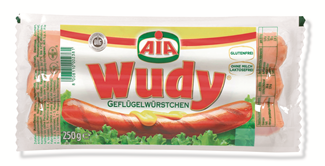
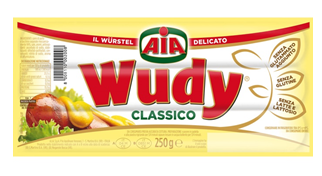
Germany – Various WUDY poultry sausages, some with cheese preparation – Listeria monocytogenes

LMW

Alert type: Food
Date of first publication: 09/26/2022
Product name:

Various WUDY poultry sausages, some with cheese preparation

Product images:
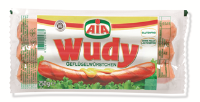
Wudy 1.png
Wudy 2.png
Manufacturer (distributor):

AIA Agricola Italiana Alimentare Spa Piazzale Apollinare Veronesi, 1 (ex via Sant’Antonio, 60) 37036 San Martino Buon Albergo (VR) Italia consumer hotline: +39 0445230153 (Monday – Friday from 08.00 to 17.00)

Reason for warning:

When these products were analyzed, the germ Listeria Monocytogenes was detected.

Packaging Unit:

Various, see Further information

Durability:

Various, see Further information

Lot identification:

EAN numbers see further information

Further information:

  • WUDY Poultry sausages with cheese preparation 150g (EAN: 8008110002343): All packs marked “A”: IT04M CE and best before date up to and including 29/11/2022
  • WUDY poultry sausages 250g (EAN: 8008110002381): All packs marked “A”: IT04M CE and at least expiry date up to and including 25/11/2022
  • WUDY Poultry sausages with cheese preparation 150g (EAN: 8008110002107): All packs marked “A”: IT04M CE and best before date up to and including 24/11/2022
  • WUDY Poultry Sausages PARTY 240g (EAN: 8008110002503): All packs marked “A”: IT04M CE and best before date up to and including 01/10/2022
  • WUDY Poultry Sausages 250g (EAN: 8008110002008): All packs marked “A”: IT04M CE and best before date up to and including 25/10/2022
  • WUDY poultry sausage COCKTAIL 1Kg (EAN: 8008110002268): All packs marked “A”: IT04M CE and best before date up to and including 24/11/2022
  • WUDY Poultry Sausages 1kg MAXYPACK (EAN: 8008110002275): All packs marked “A”: IT04M CE and best before date up to and including 24/11/2022

For more information, please refer to the attached consumer information.

Germany – WUDY and PAVO brand poultry sausages- Listeria monocytogenes

LMW

Alert Details

Alert type: Food
Date of first publication: 09/26/2022
Product name:

WUDY and PAVO brand poultry sausages

Manufacturer (distributor):

Manufacturer/distributor: AIA SpA from Italy The product has also been placed on the German market by various companies.

Reason for warning:

Listeria monocytogenes

Durability: BBD until 30.11.2022
Further information:

Research – Evaluation of the Impact of Compliance with Mitigation Strategies and Frequency of Restaurant Surface Cleaning and Sanitizing on Control of Norovirus Transmission from Ill Food Employees Using an Existing Quantitative Risk Assessment Model 

Journal of Food Protection

Norwalk_Caspid

ABSTRACT

Reduction of foodborne illness caused by norovirus (NoV) continues to be a focus for the food safety community. Using a previously published quantitative risk assessment model, we evaluated more than 60 scenarios examining the impact of implementation of and compliance with risk management strategies identified in the U.S. Food and Drug Administration Food Code for (a) surface cleaning and sanitizing, (b) hand hygiene, (c) exclusion, or (d) restriction of ill employees. Implementation of and compliance with hand hygiene and ill food employee exclusion strategies had the largest impact on the predicted number of highly contaminated food servings and associated consumer illnesses. In scenarios in which gloves were always worn and hand washing compliance was 90%, the model estimated reductions in the number of highly contaminated food servings and ill consumers to 39 and 43% of baseline estimates (i.e., typical practice), respectively. Reductions were smaller when gloves were never worn. Hand washing compliance after using the restroom strongly impacted predicted numbers of highly contaminated servings and consumer illnesses. Ten percent compliance with removing or excluding ill food employees was predicted to increase the number of highly contaminated food servings and ill consumers to 221 and 213% of baseline estimates, respectively. Ninety-four percent compliance with exclusion of ill food employees was predicted to decrease these numbers to 69 and 71% of baseline estimates, respectively. Surface cleaning in food establishments had a relatively small impact on these measures. Restriction of food employees (removed from contact with food and food contact equipment and utensils) was not effective for reducing NoV illness unless this restriction included additional provisions. The results from this study can help risk managers prioritize mitigation strategies and their implementation for controlling the transmission of NoV and subsequent consumer foodborne illness.

HIGHLIGHTS
  • We adapted a discrete event NoV transmission model for use in a food establishment.
  • Compliance with exclusion and hand hygiene rules had the most impact on consumer illnesses.
  • Washing hands before donning and changing gloves efficiently reduces NoV transfer.
  • Restriction of food employees needs additional provisions to be effective.
  • Surface cleaning and sanitizing has the least impact on consumer illnesses.

Research – Toxoplasma gondii Antibodies in Raw Milk and Sera of Cows in China

MDPI

Toxoplasma gondii is a worldwide food-borne protozoa that has harmful influences on animal and human health. Raw milk containing T. gondii has been considered as one of the possible infectious sources for humans. Although China is one of the world’s leading milk consumers, there is still no study to investigate the seroprevalence of T. gondii in raw cow milk in China; especially for cows in rural areas. Thus, we conducted this study to examine the specific anti-T. gondii IgG-antibody in the raw milk and sera of domestic cows in China. In total, 894 cows were randomly selected from rural areas in northeastern China. The positive rate of T. gondii in the milk and serum samples were 6.38% (57/894) and 7.16% (64/894), respectively. Moreover, a history of abortion (OR = 2.03, 95% CI: 1.11–3.72, p = 0.022) was identified as the only risk factor for T. gondii infection in the studied cows. This study investigated the seroprevalence of T. gondii in the raw milk and sera of cows in China; it provided timely and useful data for public health and food safety, especially in rural areas. View Full-Text

New Zealand strengthens tahini controls after outbreak

Food Safety News

Authorities in New Zealand have tightened the import rules around tahini and halva from Syria following a recall and outbreak.

An outbreak of Salmonella Kintambo earlier this year involved three patients who had consumed sesame-based products from Syria. Two people were hospitalized. Sequencing of clinical isolates showed cases were closely genetically related and had the same sequence type as in an ongoing European outbreak linked to the same type of products.

In July, Middle East recalled specific batches of Algota brand Sesame Tahini because of the possible presence of Salmonella.

New Zealand Food Safety testing of tahini and halva products found Salmonella Kintambo, Salmonella Amsterdam and Salmonella Orion.

The agency has amended the sampling plan for such high risk products. Changes mean all consignments of crushed sesame seed products, such as tahini and halva, must be sampled and tested for Salmonella, when exported from Syria or if they originate from the country.

Information – CDC Food Safety Social Media Graphics

CDC

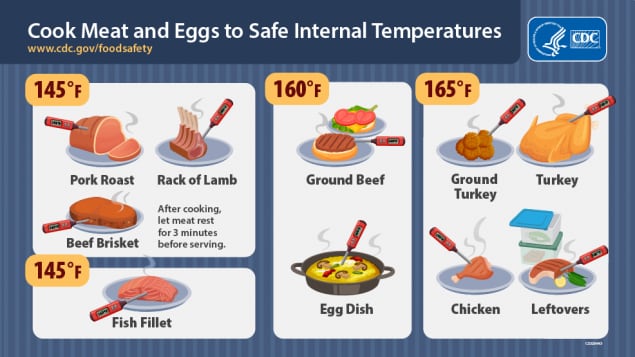
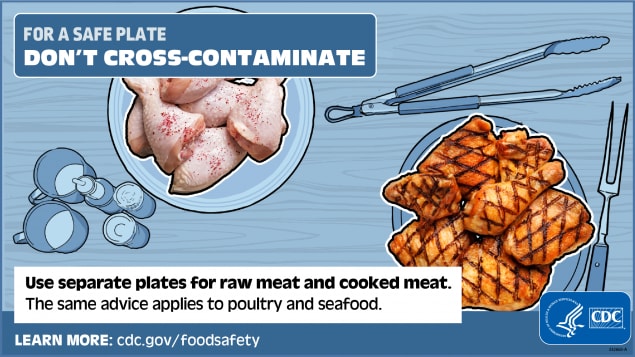
A whole range of free food safety graphics are available at the link above 🙂

Cook Meat and Eggs to a Safe Internal Temperature

Food Safety Education Month Facebook image 7

Luxembourg – RECALL: FLUTE CEREALS & SEEDS OF THE CHÂTEAU BLANC BRAND – Mycotoxin – Ergot Alkaloids

SAP

Deli Traiteur is recalling the following product :

Last name Cereal & seed flute
Mark White Castle
Unity 230g
Use-by date (DLC) 01/13/2023

Danger  : Presence of ergot alkaloids in rye flour

Ergots or sclerotia are formed by a fungus ( Claviceps purpurea ), a parasite of rye and other cereals. Sclerotia or ergots replace the seed and contain alkaloids, in particular lysergic acid from which LSD is derived, toxins responsible for diseases observed in humans as well as in animals (ergotism). Ergotism, more specifically linked to the ingestion of ergot from rye, is known to be responsible for the “Saint Anthony’s fires” or “mal des ardents” observed in humans. Symptoms included slow blood circulation, which caused alternating feelings of extreme heat and cold, and then gangrene in the extremities of the body. Nerve seizures could also occur.

Sale in Luxembourg by: Deli Traiteur

A sale by other operators cannot be excluded.

Information Source: Deli Traiteur Recall Notification

Australian Food Safety Week 2022 will be held from 12 – 19 November 2022

Food Safety Council

The theme will be ‘Food safety – raw and risky’ covering the risk of food poisoning from raw or minimally cooked meat, poultry, fish, eggs and vegetables as well as possible  parasite infections. We will also be celebrating our 25th anniversary of educating the Australian community in food safety.

Our community package for AFSW2022 containing social media tiles, posters, sample media release, a quiz and event registration will be available in September subscribe to our newsletter to keep up to date.

Proudly sponsored by Fit for Food an initiative of our member ACCORD Australasia.

Thanks also to our member SA Health for sponsoring our consumer research

Promote your local event by using our sample media release

Share our Raw and Risky quiz

Reusable Food Containers and Food Safety

Food Safety Council

The Food Safety Information Council today issued advice about safely using reusable food containers, especially as they are gaining acceptance with food retailers.

Cathy Moir, Council Chair, said whether it is your coffee keep cup, refillable water bottle, or if you are taking your own container to the deli, take away or cafe we need to follow some safety tips to make sure we aren’t increasing cases of food poisoning.

‘We support the reduction of singe use plastics but not at the expense of increasing the number of cases of food poisoning. For example, we support the use of thin plastic bags to stop the contamination of ready to eat salad vegetables at the checkout or loose in supermarket trolleys.’ Ms Moir said.

‘But you need to follow these 6 simple tips to keep your food safe:

  1. Make sure the container is easy to keep clean and that you clean it thoroughly with hot water and detergent (or in the dishwasher) between uses. Some types of containers, such as plastic takeaway food containers are only meant for single use or are very difficult to clean so are not suitable to reuse as a food container.
  2. Your container must have a sealable lid that won’t leak and have removable seals for easy cleaning. This is especially important for raw meat that could drip onto other food.
  3. Stick to the rules of the retailer, for example, some retailers won’t accept glass or ceramic containers in case they are dropped and shatter.
  4. Where your retailer doesn’t offer plastic ‘barrier’ bags for fruit and vegetables, that won’t be cooked before eating, take your own washable bag and, as always, thoroughly rinse the fruit and veggies under running water before use. If you do use a plastic produce bag remember that soft plastics can be recycled at RED facilities in many major supermarkets.
  5. If you are purchasing hot food or taking a ‘doggy bag’ of leftovers home from a restaurant transport the food in an insulated bag and use or refrigerate within 2 hours. Make sure the container you use is suitable for reheating in the microwave or oven. Leftovers will last 2 to 3 days in the fridge and should be reheated to 75°C or using the microwave reheat auto function.
  6. Discard your plastic container once it shows signs of wear and tear as cracks, breaks, scores in the plastic can allow contaminants to enter or make the container difficult to clean. This may allow chemicals to migrate into the food or contaminate it with shards of plastic.

‘Finally, don’t forget to empty and wash your reusable water bottles daily after use to prevent bacteria, and even fungi, growing inside the bottle from it touching your mouth or even leaving a half-finished bottle lying about at room temperature. Use hot water and a bottle brush then allow the bottle to air dry thoroughly before refilling or put it in the dishwasher if the bottle is dishwasher safe. If you use a water bladder when jogging or cycling you can clean it with hot water and two tablespoons of baking soda or bleach, hold the bladder up and pinch the bite valve so the solutions runs into the tube, then leave for 30 minutes. Then rinse with clean water. Some brands also sell cleaning tablets to use,’ Ms Moir concluded.

Media contact: Lydia Buchtmann, Food Safety Information Council, 0407 626 688 or info@foodsafety.asn.au

USA – Domestically Acquired Cases of Cyclosporiasis — United States, May–August 2022

CDC

LAST UPDATED AUGUST 25, 2022 4:00 PM EDT

Cyclosporiasis illnesses are reported year-round in the United States. However, during the spring and summer months there is often an increase in cyclosporiasis acquired in the United States (i.e., “domestically acquired”). The exact timing and duration of these seasonal increases in domestically acquired cyclosporiasis can vary, but reports tend to increase starting in May. In previous years the reported number of cases peaked between June and July, although activity can last as late as September. The overall health impact (e.g., number of infections or hospitalizations) and the number of identified clusters of cases (i.e., cases that can be linked to a common exposure) also vary from season to season. Previous U.S. outbreaks of cyclosporiasis have been linked to various types of fresh produce, including basil, cilantro, mesclun lettuce, raspberries, and snow peas.

At a Glance
  • Illnesses: 800
  • Hospitalizations: 52
  • Deaths: 0
  • States reporting cases: 30

CDC, along with state and federal health and regulatory officials, monitor cases of cyclosporiasis in the United States in the spring and summer months to detect outbreaks linked to a common food source. However, many cases of cyclosporiasis cannot be directly linked to an outbreak, in part because of the lack of validated laboratory “fingerprinting” methods needed to link cases of Cyclospora infection. Officials use questionnaires to interview sick people to determine what they ate in the 14-day period before illness onset. If a commonality is found, CDC and partners work quickly to determine if a contaminated food product is still available in stores or in peoples’ homes and issue advisories.

Latest Information

  • The number of reported cases of domestically acquired cyclosporiasis illnesses has increased by 416 cases since the last update on July 28, 2022. Cases continue to be reported.
  • As of August 23, 2022, 800 laboratory-confirmed cases of cyclosporiasis in people who had no history of international travel during the 14-day period before illness onset have been reported to CDC by 31 jurisdictions, including 30 states and New York City, since May 1, 2022.
    • The median illness onset date is June 29, 2022 (range: May 3, 2022–August 12, 2022).
    • At least 52 people have been hospitalized; 0 deaths have been reported.