Category Archives: food recall

RASFF Alerts – Salmonella – Frozen Chicken Meat – Soft Cheese – Frozen Chicken Breast – Chilled Chicken Fillets – Chilled Chicken Breast – Sesame Seeds – Raw Beet Seeds -Frozen Turkey Broil with Apple and Raisins -Frozen Halal Bovine, Chicken and Turkey Kebab – Black Pepper

RASFF-Logo

RASFF – Salmonella enterica ser. Enteritidis (present /25g) and Campylobacter coli (present /25g) in frozen chicken meat from Germany in Austria

RASFF – Salmonella (present /25g) in soft cheese from France in the Netherlands

RASFF – Salmonella (presence /25g) in frozen chicken breasts from Brazil in the UK

RASFF – Salmonella enterica ser. Enteritidis (presence /25g) in chilled chicken fillets from the Netherlands in Belgium

RASFF – Salmonella enterica ser. Enteritidis (presence /25g) in chilled chicken breast from Poland in Slovakia

RASFF – Salmonella enterica ser. Typhimurium (presence /25g) in sesame seeds from India in Italy

RASFF – Salmonella enterica ser. Enteritidis (presence /25g) in chilled chicken breast fillets from Poland in Poland

RASFF – Salmonella enterica ser. Enteritidis (presence /25g) in chilled chicken from Poland in Poland

RASFF – Salmonella enterica ser. Gold Coast (presence /25g) in red beet seeds for sprouting from Italy in Norway

RASFF – Salmonella (presence /25g) in frozen turkey broil with apple and raisins from Belgium in Belgium

RASFF – Salmonella (in 5 out of 5 samples /25g) in frozen halal bovine, chicken and turkey kebab from Slovenia in Croatia

RASFF – Salmonella enterica ser. Enteritidis (presence /25g) in chilled chicken meat and wings from Poland in Italy

RASFF – Salmonella (presence /25g) in black pepper from Brazil in the Netherlands

USA – Lipton Knorr Chicken Soup Mixes Recalled For Possible Listeria monocytogenes

Food Poisoning Bulletin

Unilever United States is voluntarily recalling a limited quantity of Lipton Knorr chicken soup mixes for possible Listeria monocytogenes contamination, according to a press release from the company. The recall was issued on November 22, 2019 but doesn’t appear on the FSIS web site.

These recalled products were manufactured in the United States and Canada, and were distributed nationwide in the U.S. through retail stores and professional kitchens. No illnesses have been reported to date in connection with this recall. This recall is being issued out of an abundance of caution.

The recalled products include some dried chicken soup mixes with specific best by dates. No other Lipton, Knorr, or LeGoût products are affected by this recall.

New Zealand -Marine biotoxin in shellfish for Waihi Beach in the Waikato/Bay of Plenty region

MPI

The Ministry for Primary Industries (MPI) today issued a public health warning advising the public not to collect or consume shellfish harvested from the southern end of Pauanui Beach down to the northern tip of Mount Maunganui, including the Tauranga Harbour.

Routine tests on shellfish samples taken from this region have shown levels of paralytic shellfish poisoning (PSP) toxins above the safe limit of 0.8 mg/kg set by MPI. Anyone eating shellfish from this area is potentially at risk of illness. Please help keep your whānau safe over the Christmas break and avoid collecting shellfish from the affected area.

Due to currents and prevailing winds going in the opposite direction, the presence of toxic shellfish are not believed to be related to the recent eruption of White Island.

Map showing the affected area

Canary Islands – Ciguatera outbreak reported in the Canary Islands

Outbreak News Today File:Gambierdiscus toxicus NOAA.png

Health officials with the Government of the Canary Islands have reported a possible outbreak of ciguatera after finding six cases of food poisoning after consuming black medregal (amberjack) in La Victoria de Acentejo, according to a El Dia report (computer translated).

Ciguatera is not unknown in the Canary Island reporting several cases annually and some 20 outbreaks in the past decade.

More than 400 species of fish, including barracuda, black grouper, blackfin snapper, cubera snapper, dog snapper, greater amberjack, hogfish, horse-eye jack, king mackerel, and yellowfin grouper have been implicated in this food borne illness that’s relatively common in several areas of the world.

This toxin is the result of the accumulation of marine algae and the toxins they produce passing up the food chain. These marine algae hang on to dead coral and seaweed. They are then eaten by herbivore fish which are subsequently eaten by predatory reef fish which concentrates the toxin in its tissue. People get this food borne toxin from eating these contaminated larger fish. The reef fishes are more likely to get contaminated during storms and other turbulence.


USA – Ohio Romaine Outbreak Sickens 12 with E. coli O157:H7 Infections

Food Poisoning Bulletin

The Ohio romaine outbreak has sickened 12 people with E. coli O157:H7 infections, making it the state with the second most illnesses after Wisconsin, with 33 cases as of December 9, 2019. Overall, at least 102 people are sick across the country, with 58 hospitalized and 10 who have developed hemolytic uremic syndrome (HUS), a type of kidney failure.

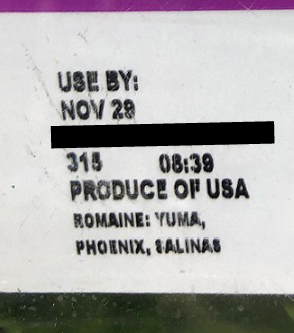
Most romaine products, including baby romaine, chopped romaine, organic romaine, hearts of romaine, romaine in salad wraps, salad bowl kits, sandwiches, packages of precut lettuce, and salad mixes that contain romaine, may be marked with the growing region. This is a voluntary policy put into place after last year’s two romaine E. coli O157:H7 HUS outbreaks. If the label says “Salinas” anywhere, or if the package is unmarked, don’t eat the romaine.

The CDC and FDA have stated that there is one grower associated with all three E. coli O157:H7 romaine outbreaks that are ongoing, but that grower has not been named. Officials have inspected three farms in the Salinas region, but has not named those.

Canada -Food Recall Warning – Certain Coaticook brand Cheddar cheese recalled due to Listeria monocytogenes

CFIA

Recall date:
December 16, 2019
Reason for recall:
Microbiological – Listeria
Hazard classification:
Class 1
Company / Firm:
Laiterie Coaticook Ltée
Distribution:
Quebec
Extent of the distribution:
Consumer

Recall details

Ottawa, December 16, 2019 – Laiterie Coaticook Ltée. is recalling certain Coaticook brand Cheddar cheese from the marketplace due to possible Listeria monocytogenes contamination. Consumers should not consume the recalled products described below.

Recalled products

Brand Product Size UPC Codes
Coaticook Mild Cheddar Cheese 50 g 0 59263 60050 2 Best Before: 03MR20
Coaticook Mild Cheddar Cheese 180 g 0 59263 60180 6 Best Before: 03MR20
Coaticook Mild Cheddar Cheese 320 g 0 59263 60320 6 Best Before: 03MR20
Coaticook Mild Cheddar Cheese 2.27 kg 0260005 Best Before: 03MR20
Coaticook Mild Cheddar Cheese 1.15 kg 0260025 Best Before: 03MR20
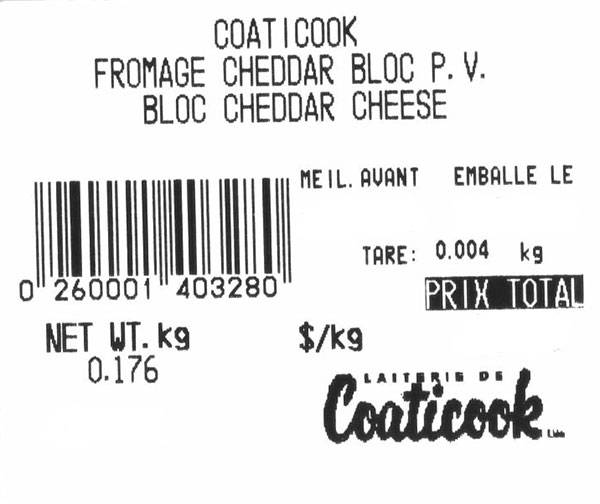
Coaticook Bloc Cheddar Cheese Variable Starting with
0 260001
Best Before: 03MR20
Coaticook Pointe Cheddar Cheese Variable Starting with 0 250006 Best Before: 03MR20

Illnesses

There have been no reported illnesses associated with the consumption of these products.

Product photos

Printer ready version of photos

  • Coaticook Mild Cheddar Cheese - 180 g
  • Coaticook Pointe Cheddar Cheese
  • Coaticook Bloc Cheddar Cheese

Russia -Salmonella sickens dozens in Khanty-Mansiysk, Russia

Outbreak News Today

Salmonella was laboratory confirmed in 35 of 73 pupils of Wonderland kindergarten in Khanty-Mansiysk who were infected with acute intestinal infection, city administrators report.

The Tass news service reports, “As of December 13, 73 cases were registered, four children were hospitalized in the children’s infectious ward of the district clinical hospital, and 35 children were laboratory confirmed with Salmonellosis group D,” Rimir Gimalov, the head of the public health department of the city administration, said in a statement.

According to local authorities, all necessary anti-epidemic measures are being carried out in the kindergarten. The institution was closed for quarantine.

FSA – Yaadgaar recalls Rasmalai due to contamination with Listeria monocytogenes

FSA

Yaadgaar is recalling Rasmalai because Listeria monocytogenes has been found in the product. This product also displays a best before date, instead of a use-by date.

Product details

Rasmalai

Pack size 4 pieces
Best before all best before dates up to and including 1 January 2020

Risk statement

The presence of Listeria monocytogenes in the product listed above.

Symptoms caused by this organism can be similar to flu and include high temperature, muscle ache or pain, chills, feeling or being sick and diarrhoea. However, in rare cases, the infection can be more severe, causing serious complications, such as meningitis.

Some people are more vulnerable to listeria infections, including those over 65 years of age, pregnant women and their unborn babies, babies less than one month old and people with weakened immune systems.

Action taken by the company

Yaadgaar is recalling the above product. Point of sale notices will be displayed in all retail stores that are selling this product. These notices explain to customers why the products are being recalled and tell them what to do if they have bought the product. Please see the attached notice.

Our advice to consumers

If you have bought any of the above product do not eat it. Instead, return it to the store from where it was bought for a full refund.

USA – Lincoln Correctional Center Salmonella Outbreak Sickens 6 in Nebraska

Food Poisoning Bulletin

A Lincoln Correctional Center Salmonella outbreak in Nebraska has sickened at least six inmates, according to a press release by the Nebraska Department of Correctional Services. Food poisoning outbreaks at prisons and jails are fairly common because of close quarters and serving large quantities of food.

USA -Investigation of E. coli O157:H7 Outbreak Linked to Romaine from Salinas, California, November 2019

FDA

December 12, 2019

Case Counts

Total Illnesses: 102
Hospitalizations: 58
Deaths: 0
Last illness onset: November 18, 2019
States with Cases:  AZ (3), CA (4), CO (6), FL (1), IA (1), ID (3), IL (1), MD (4), MI (1), MN (3), MT (1), NE (1), NJ (7), NC (1), NM (2), OH (12), OR (1), PA (8), SD (1), TX (4), VA (4), WA (2), WI (31)

Recommendation

FDA, CDC, and state health authorities are investigating an outbreak of illnesses caused by E. coli O157:H7 in the United States. Epidemiologic, laboratory, and traceback evidence indicates that romaine lettuce from the Salinas, California growing region is a likely source of this outbreak. According to CDC, there have been 102 cases reported in 23 states.  The latest date that one of these patients reports becoming ill was on November 18, 2019.

Romaine from Salinas, California Label Enjoy By December 2, 2019


Romaine from Salinas, California Label Use By November 29, 2019

Consumers: Consumers should not eat romaine lettuce harvested from Salinas, California. Additionally, consumers should not eat products identified in the recall announced by the USDA on November 21, 2019.

Romaine lettuce may be voluntarily labeled with a harvest region. If this voluntary label indicates that the romaine lettuce was grown in “Salinas” (whether alone or with the name of another location) do not eat it. Throw it away or return it to the place of purchase.  If romaine lettuce does not have information about harvest region or does not indicate that it has been grown indoors (i.e., hydroponically- and greenhouse-grown), throw it away or return it to the place of purchase. Consumers ordering salad containing romaine at a restaurant or at a salad bar should ask the staff whether the romaine came from Salinas.  If it did, or they do not know, do not eat it.

At this time, romaine lettuce that was harvested outside of the Salinas region has not been implicated in this outbreak investigation. Hydroponically- and greenhouse-grown romaine, which is voluntarily labeled as “indoor grown,” from any region does not appear to be related to the current outbreak. There is no recommendation for consumers to avoid using romaine harvested from these other sources.

Restaurants and Retailers: Restaurants and retailers should not serve or sell romaine harvested from Salinas, California.  If you do not know the source of your romaine lettuce, and if you cannot obtain that information from your supplier, you should not serve, nor sell it.

Suppliers and Distributors: Suppliers, distributors and others in the supply chain should not ship or sell romaine harvested in Salinas, California. If the source of the romaine lettuce is unknown, you should not ship, nor sell the product.

For Restaurants, Retailers, Suppliers and Distributors: Currently, the FDA does not have enough traceback information to identify the specific source of the contamination that would allow us to request a targeted recall from specific growers.

FDA requested that industry voluntarily withdraw romaine grown in Salinas from the market and is requesting that industry withhold distribution of Salinas romaine for the remainder of the growing season in Salinas. Without more specific traceback information, this was the most efficient way to ensure that contaminated romaine was off the market.

At this time, romaine lettuce that was harvested outside of the Salinas region has not been implicated in this outbreak investigation. Hydroponically- and greenhouse-grown romaine, which is voluntarily labeled as “indoor grown,” from any region does not appear to be related to the current outbreak. There is no recommendation for consumers or retailers to avoid using romaine harvested from these other sources.

Update

Based on the information indicating that ill people in Maryland were exposed to romaine lettuce harvested in Salinas, California, FDA, with the assistance of staff from the California Department of Public Health and the California Department of Food and Agriculture, immediately deployed investigators to three farms in the Salinas area that were identified based on the traceback investigation.

FDA continues to actively investigate the cause of this outbreak. Additionally, FDA is investigating two other E. coli outbreaks, each caused by strains that are different from each other and different from the larger outbreak. One of the additional outbreaks, in Washington state, is linked to romaine lettuce, and the other outbreak, with cases in the U.S. and Canada, is linked to Fresh Express Sunflower Crisp Chopped Salad Kits. As part of these investigations, FDA and state partners are conducting traceback investigations to trace romaine exposures to the source.

Currently, the tracebacks on all three outbreaks have identified a common grower in Salinas. FDA, CDC, and California partners are deploying a team to conduct new investigations at several ranches used by this grower as we try to identify the source of the contamination.