
RASFF-Bacillus cereus (10000 CFU/g), too high count of aerobic mesophiles (2000000 CFU/g) and high count of moulds (230000 CFU/g) in dried black fungus from China, via Germany in Austria

RASFF-Bacillus cereus (10000 CFU/g), too high count of aerobic mesophiles (2000000 CFU/g) and high count of moulds (230000 CFU/g) in dried black fungus from China, via Germany in Austria
RASFF-aflatoxins (B1 = 6.48; Tot. = 12.99 µg/kg – ppb) in unshelled Brazil nuts from Bolivia in Italy
RASFF-aflatoxins (B1 = 16; Tot. = 31 µg/kg – ppb) in groundnuts from Argentina in the Netherlands
RASFF-aflatoxins (B1 = 16; Tot. = 21 µg/kg – ppb) in almond meal from Australia, via Vietnam in the Netherlands
RASFF-aflatoxins (B1 = 26; Tot. = 31 µg/kg – ppb) in blanched groundnuts kernels from Argentina in the Netherlands
RASFF-aflatoxins (B1 = 15; Tot. = 20 µg/kg – ppb) in groundnut kernels from Argentina in the Netherlands
RASFF-aflatoxins (B1 = 120; Tot. = 140 µg/kg – ppb) in peanuts from China in the Netherlands
RASFF-aflatoxins (B1 = 70.4; Tot. = 79.3 µg/kg – ppb) in organic chia seeds (Salvia columbariae) from Austria in Germany
RASFF-aflatoxins (Tot. = 13.4 µg/kg – ppb) in hazelnuts from Georgia in Bulgaria
RASFF-aflatoxins (B1 = 12.7; Tot. = 17.7 µg/kg – ppb) in nuts in honey from Germany in Switzerland
RASFF-too high count of Escherichia coli (1100, 1400, 2400, 3500 MPN/100g) in frozen bivalve molluscs (Donax trunculus) from Turkey in Greece
RASFF-histamine (231 mg/kg – ppm) in dried salted anchovies from Vietnam in Germany

Researchers have identified a compound that strongly inhibits botulinum neurotoxin, the most toxic compound known. That inhibiting compound, nitrophenyl psoralen (NPP), could be used as a treatment to reduce paralysis induced by botulism. Botulinum neurotoxin is considered a potential bioweapon because there is no FDA-approved antidote. The research is published in Applied and Environmental Microbiology, a journal of the American Society for Microbiology.
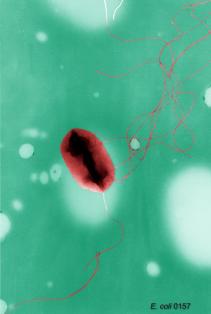
Image CDC
An environmental investigation in an Arizona romaine-growing area near Yuma that was linked to a large Escherichia coli O157:H7 outbreak earlier this year confirmed the outbreak strain in samples of irrigation canal water, which probably contaminated the lettuce.
The US Food and Drug Administration (FDA) yesterday released a report that detailed findings from federal and Arizona officials who visited the area several times over the summer. The event marked the nation’s largest E coli outbreak since 2006, with reports of 210 illnesses from 36 states. Ninety-six patients were hospitalized, 27 had hemolytic uremic syndrome (HUS), a potentially fatal kidney complication, and five people died.
FDA Commissioner Scott Gottlieb, MD, said in a statement yesterday that the agency is committed to taking steps to prevent similar outbreaks in the future and improve the safety of leafy greens. “Since the next romaine growing season for the Yuma region is underway, it’s critical for all of us to understand what happened so we can identify the changes that can prevent future outbreaks and reduce the scope of any problems that could arise,” he said.
The investigation team, led by the FDA, visited the Yuma growing area several times from June through August and collected numerous environmental samples. However, the only ones that tested positive for the outbreak strain were collected in early June from a 3.5-mile stretch of an irrigation canal near Wellton in Yuma County that delivers water to farms. The growing season had ended weeks before the probe, so no leafy greens samples could be tested.
Besides testing irrigation water, the team visited farms to look at other possible factors, including soil amendments, growing and harvesting practices, animal intrusion, adjacent land use, and employee health and hygiene practices. They also examined potential contamination sources at manufacturing and processing operations.
Despite extensive environmental sampling, only the three irrigation water samples were positive. There was a large concentrated animal feeding operation (CAFO) adjacent to the stretch of canal where water tested positive, but investigators didn’t find an obvious route for contamination, and a limited number of samples from the operation didn’t yield the outbreak strain.
The team wasn’t able to determine how the water may have contaminated the lettuce, though they said possibilities include direct application of irrigation water or use of the water to dilute chemicals applied to crops during aerial and land-based spraying. They also said they couldn’t rule out other possible contamination sources that didn’t turn up during the investigation.
Along with its investigation report, the FDA included a list of recommendations for leafy-greens producers, including assuring that agricultural water is safe for its intended use and assessing potential direct or indirect contamination risks near growing fields.
Officials also urged government and nongovernmental groups, including those in Imperial and Yuma counties, to explore other possible sources or routes of contamination. “This information is critical to developing and implementing short- and long-term remediation measures to reduce the potential for another outbreak associated with leafy greens or other fresh produce commodities,” the authors wrote.
| Summary | |
|---|---|
| Category 2: | For Information |
| Alert Notification: | 2018.45 |
| Product: | Octopus – Pazifik-Sardellen getrocknet und gesalzen (Octopus – Pacific Dried and Salted Anchovies) |
| Batch Code: | ‘best-before date’: 18.07.2019; pack size: 40g |
| Country Of Origin: | Viet Nam |
The above batch of Octopus – Pazifik-Sardellen getrocknet und gesalzen (Octopus – Pacific Dried and Salted Anchovies) are being recalled due to elevated histamine levels in the product. In some people, elevated levels of histamine can cause symptoms which are similar to those of an allergic reaction.
At least 50 people including 47 students at the Pongro Secondary School in Kampong Thom province’s Stoung district suffered food poisoning on Monday and were rushed to the hospital for emergency treatment.
A student, Na Srey Khuoch, 14, said she ate rice purchased from a stall owned by Eang Thavy, a teacher at the school in Kampong Chen Choeung commune, and became sick when she arrived home.
“I had a stomach ache and vomited,” she said, adding that she is recovering after receiving treatment at the hospital.
Commune police chief Kruoch Sophorn said the teacher who owned the stall and his deputy police chief Sen Pesith were among those who were treated at the hospital.
He said Pesith fell sick after drinking bottled water bought from another stall while sending students to the hospital.
He said before the incident, the victims had consumed pork rice, milk coffee and bottled water. They fell ill about an hour later.
He said they suffered stomach aches, nausea and diarrhoea, among other symptoms.
Danish officials are investigating an E. coli outbreak that has 26 cases with three out of four being children.
Statens Serum Institut (SSI), the agency responsible for the preparedness against infectious diseases in Denmark, said the source of infection is not yet known but an investigation is under way.
SSI told Food Safety News that the 26 confirmed patients’ ages are between less than 1 year old to 95 years old, with 19 being children younger than five years of age. One person has been hospitalized. No deaths have been reported.
Cases with a specific type of Shiga toxin-producing E. coli (STEC) or Verotoxigenic E. coli (VTEC) have been reported to SSI in the past few weeks.
E. coli O26:H11 illnesses are spread across the country, but are primarily in the cities of Copenhagen, Aarhus and Odense. Illness onset dates range from Aug. 23 to Oct. 10.