Category Archives: Food Poisoning

Iceland – 4 STEC infections in Árnessýsla county children

Outbreak News Today

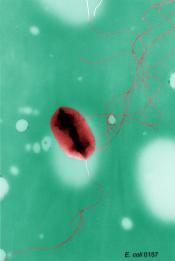
kswfoodworld E.coli O157

Image CDC


Iceland health officials have reported four pediatric Shiga-toxin-producing E. Coli (STEC) cases. Officials say all the children are from the capital of Reykjavik; however, all have probably been infected in Árnessýsla county or, more specifically, in Bláskógabyggð.

The source of the infection is unknown at this time. The Icelandic Food and Veterinary Authority and the South Iceland Health Inspectorate are now working to analyze the origin of the infections and stop further spread.

RASFF Alerts – E.coli – Live Oysters – Spiny Dye Murex Sea Snails – Live Clams

RASFF-Logo

RASFF – too high count of Escherichia coli (1400 MPN/100g) in live oysters from France in France

RASFF – too high count of Escherichia coli (8900 CFU/100g) in spiny dye-murex sea snails from Italy in Spain

RASFF – too high count of Escherichia coli (330 MPN/100g) in live clams (Chamelea gallina) from Italy in Italy

RASFF Alert- Listeria monocytogenes – Chilled Smoked Trout

RASFF-Logo

RASFF – Listeria monocytogenes (presence /25g) in chilled smoked salmon from Belgium in Belgium

RASFF Alerts – STEC E.coli – Chilled Beef

RASFF-Logo

RASFF – shigatoxin-producing Escherichia coli (O104:H4 stx1+, stx2+) in chilled beef from Uruguay in Spain

RASFF – shigatoxin-producing Escherichia coli (O26 /25g) in chilled beef (tapa de cuadril) from Uruguay in Spain

RASFF Alert – Ochratoxin A – Raisins

RASFF-Logo

RASFF – ochratoxin A (21.5 µg/kg – ppb) in raisins from Uzbekistan, via Lithuania in he Czech Republic

RASFF Alerts – Aflatoxin – Groundnuts – Organic Maize -Pistachios – Tiger Nuts

RASFF-Logo

RASFF – aflatoxins (B1 = 6.0 µg/kg – ppb) in groundnuts with shell from Egypt in Germany

RASFF – aflatoxins (Tot. = 8.9 µg/kg – ppb) in groundnuts from Argentina in the Netherlands

RASFF – aflatoxins (B1 = 15.8; Tot. = 16.6 µg/kg – ppb) in organic maize for pop corn from Italy in Italy

RASFF – aflatoxins (B1 = 16.2 µg/kg – ppb) in roasted pistachios from Turkey in Germany

RASFF – aflatoxins (B1 = 186; Tot. = 326 µg/kg – ppb) in dried tiger nuts from Burkina Faso in Spain

RASFF – aflatoxins (B1 = 90.6; Tot. = 181.3 / B1 = 19.4; Tot. = 27.8 µg/kg – ppb) in pistachio nuts from Turkey in Italy

RASFF – aflatoxins (B1 = 17; Tot. = 25 µg/kg – ppb) in groundnuts from Argentina in the Netherlands

RASFF Alert – Animal Feed – Aflatoxin – Groundnuts

RASFF-Logo

RASFF – aflatoxins (B1 = 140; Tot. = 160 µg/kg – ppb) in groundnuts from Sudan in the Netherlands

Philippines – Hundreds hospitalized with suspected food poisoning during Marco’s birthday party

Outbreak News Today

More than 300 people have been hospitalized due to suspected food poisoning during the 90th birthday celebration of Imelda R. Marcos, the former first lady of the Philippines, according to Philippines news sources.

According to Health Secretary Francisco Duque III, 306 are still admitted in the hospital. He went on to say that 149 have been discharged while the rest are still under observation or admitted in the hospital.

The patients “suffered from vomiting and dizziness,” said Richard Gordon, the chairman of the Philippine National Red Cross, which deployed emergency teams to the Ynares Sports Complex east of Manila where the party was held.

Mr. Gordon, who is also a Philippine senator, said hundreds of the estimated 2,000 people at the event apparently became ill after eating chicken adobo, rice and eggs.

Research – Modeling for Survival of Clostridium perfringens in Saeng-sik, a Powdered Ready-to-Eat Food with Low Water Activity

Journal of Food Protection

ABSTRACT

Saeng-sik is a powdered ready-to-eat food with very low moisture that contains dried raw materials such as grains, fruits, mushrooms, and seaweeds. This product is consumed as a convenient and nutritious meal replacement. The objective of this study was to develop a mathematical model for predicting the survival of Clostridium perfringens vegetative cells and spores in saeng-sik as a function of temperature and to validate the model using saeng-sik samples with different microbial communities analyzed by matrix-assisted laser desorption–ionization time-of-flight mass spectrometry. Kinetic data for C. perfringenssurvival in saeng-sik fit well to the Weibull model with high goodness of fit (R2 = 0.92 to 0.98). The obtained δ values (required time for first decimal reduction) for each temperature were 19.62 to 864.86 h, and concave curves (p < 1) were observed under all experimental conditions (5 to 40°C). Kinetic parameters were further described in a secondary model as a function of temperature using a Davey model (R2 = 0.99). The developed model was validated by the bias factor, accuracy factor, and root mean square error, and the values were within acceptable ranges for predictive models, even for saeng-sik samples with different microbial communities. When saeng-sik was rehydrated according to the manufacturer’s recommendations, germination and outgrowth of C. perfringens was observed when the sample was subjected to unusual temperatures during storage, such as at 30°C for 15 h. C. perfringens spores survived in saeng-sik with very low water activity. Because C. perfringens could germinate and grow under such conditions, care must be taken to avoid initial contamination of C. perfringens during the manufacturing process. Our model developed with samples with different microbial communities provides useful information for next-generation microbiological risk assessment taking into consideration the ecology of the food-associated microbial community.

HIGHLIGHTS
  • We developed a mathematical model to predict the survival of C. perfringens in food.

  • C. perfringens vegetative cells and spores were inoculated into dried powder food.

  • The aw of saeng-sik was below 0.1.

  • Weibull and Davey models can successfully describe the survival of C. perfringens.

  • The developed model can be applied to samples with different microbial communities.

USA – Occurrence of Foodborne Agents at Food Service Facilities in the Czech Republic

Journal of Food Protection

ABSTRACT

The aim of this study was to investigate the occurrence of foodborne agents at food service facilities in the Czech Republic. The sampling, performed from April 2016 to November 2017, focused on the microbiological monitoring of the environment at the establishment (EFS; n = 298) and the hands of staff (HFS; n = 159). The analysis targeted the presence of the following bacteria: Escherichia coli (focusing on the presence of Shiga toxigenic E. coli), Bacillus cereus, Staphylococcus aureus, Listeria monocytogenes, Salmonella spp., and Campylobacter spp. A swab method using sterile abrasive sponges was used to detect bacteria in EFS; a glove-juice method was used to monitor microbial contamination on HFS. The presence of E. coliwas confirmed in 11.8% of samples (12.4%, EFS; 10.7%, HFS; P = 0.650). The presence of Shiga toxigenic E. coli was not confirmed in the samples. B. cereus was detected most frequently, in 39.6% of all samples taken (44.6%, EFS; 30.2%, HFS; P= 0.003). S. aureus was detected in 17.9% of samples (17.4%, EFS; 18.9%, HFS; P = 0.703). Of S. aureus isolates, 58.5% were found to be positive for the presence of genes producing staphylococcal enterotoxins (70%, HFS; 52.0%, EFS). L. monocytogenes was detected in only one sample (0.2%; EFS). The presence of Salmonella spp. and Campylobacter spp. was not confirmed. The occurrence of B. cereus, S. aureus, and E. coli was dependent on the season of the year. B. cereus and S. aureus occurred less frequently in the summer months, although E. coli was recorded more frequently. B. cereus, S. aureus,and E. coli were detected in almost half of the tested samples. The relatively high percentage of B. cereus and S. aureusisolates from EFS corresponded with the model in the final European Food Safety Authority reports on the occurrence of foodborne disease outbreaks in the European Union. Managers of food service facilities should focus on reducing the occurrence of B. cereus and S. aureus.

HIGHLIGHTS
  • Contamination of food service facilities in the Czech Republic by foodborne agents was determined.

  • Bacillus cereus, Staphylococcus aureus, and Escherichia coli were detected in almost 50% of samples.

  • The occurrence of B. cereus, S. aureus, and E. coli depended on the season of the year.

  • Regular monitoring of food service facilities for agents of foodborne disease is necessary.