RASFF – ochratoxin A (31.1 µg/kg – ppb) in ground hot paprika from Spain in Italy
RASFF – ochratoxin A (14.78 µg/kg – ppb) in raisins from China in Poland

RASFF – foodborne outbreak suspected (Salmonella spp) to be caused by coppa from Italy in France
Posted in food bourne outbreak, food contamination, Food Hygiene, Food Illness, Food Inspections, Food Micro Blog, Food Microbiology, Food Microbiology Blog, Food Pathogen, Food Poisoning, food recall, Food Safety, Food Safety Alert, Food Testing, foodborne outbreak, foodbourne outbreak, outbreak, Salmonella, Uncategorized
RASFF – rye ergot (Claviceps purpurea) (918.3 µg/kg – ppb) in rye flour from Belgium in Belgium
RASFF – too high count of Escherichia coli (up to 1 100 000 CFU/g) in goat cheese from France in France
RASFF – too high count of Escherichia coli (270; 320 MPN/100g) in live mussels from the Netherlands in France
RASFF – high count of Escherichia coli (100 000 CFU/g) in chilled burrata from Italy in France
RASFF – histamine (1700 mg/kg – ppm) in chilled sardine fillets from France in Belgium
RASFF – Cronobacter sakazakii (presence /10g) in organic corn and tapioca baby food from Spain in Italy
RASFF – aflatoxins (B1 = 65.05; Tot. = 71.47 µg/kg – ppb) in pistachio in shell from the United States in Italy
RASFF – aflatoxins (B1 = 8.6; Tot. = 9.7 µg/kg – ppb) in groundnuts kernels from India in the Netherlands
RASFF – aflatoxins (B1 = 8.15; Tot. = 18.18 µg/kg – ppb) in pistachio kernels from Iran in Slovakia
RASFF – aflatoxins (B1 = 11.6 µg/kg – ppb) in crushed chillies from Sri Lanka in the UK
RASFF – aflatoxins (B1 = 25.63 µg/kg – ppb) in shelled almonds from the United States in Italy
RASFF – aflatoxins (B1 = 29.6; Tot. = 36.5 µg/kg – ppb) in caramel candies with peanuts from Ukraine in Lithuania
RASFF – aflatoxins (B1 = 42.1; Tot. = 46.8 mg/kg – ppm) in groundnuts in shell from Egypt in Italy
RASFF – aflatoxins (Tot. = 9.1 µg/kg – ppb) in raw peanuts from Argentina in the Netherlands
RASFF – aflatoxins (B1 = 23; Tot. = 28 µg/kg – ppb) in groundnuts from Argentina in the Netherlands
RASFF – aflatoxins (B1 = 15; Tot. = 17 µg/kg – ppb) in groundnut kernels from India in the Netherlands
RASFF – aflatoxins (B1 = 21; Tot. = 23 µg/kg – ppb) in sunflower seeds from Serbia in Slovenia
RASFF – aflatoxins (B1 = 15.6; Tot. = 15.9 µg/kg – ppb) in dried chillies from India in the UK
RASFF – aflatoxins (B1 = 3.3; Tot. = 7.4 µg/kg – ppb) in chia seeds from Uganda, via Germany in the Netherlands
RASFF – aflatoxins (B1 = 781; Tot. = 975 µg/kg – ppb) in groundnuts from Sudan in Belgium
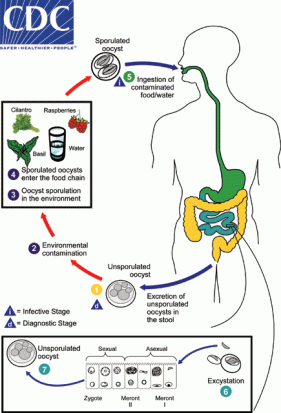
News outlets are reporting that an alleged cyclospora outbreak has occurred after people ate at Cooper’s Hawk Winery & Restaurant, located in the Markets at Town Center near the St. Johns Town Center in Jacksonville, Florida. People who belong to the Exchange Club held a banquet at that venue last month.
Millions of Americans celebrate the Fourth of July with favorite foods grilled in secret barbecue sauces and side dishes made from traditional family recipes. But nothing puts a damper on a celebration like foodborne illness.
Even when food safety rules are followed, foodborne bacteria can sometimes sneak into dishes made by hand that require no additional cooking such as potato and egg salads, cream pies, and sandwiches as well as meats. Food poisoning can cause nausea, vomiting, diarrhea, severe abdominal cramps, and mild fever.
One of the most common causes of food poisoning is the bacterium Staphylococcus aureus, which produces a wide range of toxins, including staphylococcal enterotoxin type E—associated with outbreaks in the United States and other countries.
According to the Centers for Disease Control and Prevention, an estimated 1 in 6 Americans—48 million—get sick, 128,000 are hospitalized and 3,000 die of foodborne diseases each year. Of that group, staphylococcal food poisoning causes an estimated 240,000 illnesses, 1,000 hospitalizations, and 6 deaths annually.
A USDA scientist developed a test that specifically detects Staphylococcus aureus in foods. The new test is faster, more sensitive and less expensive than standard tests.
“The current test detects active toxin only 50 percent of the time compared to the test, which detects it 99 percent of the time,” says Reuven Rasooly, a chemist with the USDA’s Agricultural Research Service (ARS). “The new test also detects toxins within 5 hours compared to 48 to 72 hours for other tests.”
In addition, Rasooly said the new test can distinguish between active toxin, which poses a threat to public health, and inactive toxin, which does not. It can be used by food makers to help keep products safer before they’re sold and by public health officials to trace the source of foodborne outbreaks.
The test, which specifically targets Staphylococcus aureus, is not commercially available. ARS has applied for a patent for this technology and plans to use it to develop additional tests that detect other foodborne toxins that make people sick.
For food consumer resources on keeping your Fourth of July celebrations safe, visit USDA’s Food Safety and Inspection Service for a variety of tips.
According to new research from the University of Texas at Austin’s College of Pharmacy the drug tamoxifen may help fight the lethality of Shiga toxin-producing E. coli (STEC) bacteria. That drug is already approved by the FDA for treatment of diseases such as breast cancer.