RASFF – histamine (325 mg/kg – ppm) in chilled mackerel (Scomber Scombrus) from France in Italy
RASFF – histamine (399 mg/kg – ppm) in chilled defrosted smoked yellowfin tuna (Thunnus albacares) from Spain in Italy

RASFF – Diarrhoeic Shellfish Poisoning (DSP) toxins – okadaic acid (>320 µg/kg – ppb) in live mussels (Mytilus galloprovincialis) from Italy in Italy
RASFF – Diarrhoeic Shellfish Poisoning (DSP) toxins – okadaic acid (up to >320 µg/kg – ppb) in live mussels (Mytilus galloprovincialis) from Italy in Italy
RASFF – dried beet pulp from Ukraine infested with moulds in Poland
RASFF – dried beet pulp from Ukraine infested with moulds in Poland
RASFF – dried beet pulp from Ukraine infested with moulds in Poland
RASFF – dried beet pulp from Ukraine infested with moulds in Poland
RASFF – dried beet pulp from Ukraine infested with moulds in Poland
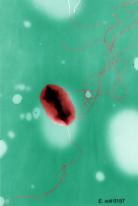
Image CDC
The food recall warning issued on October 7, 2019 has been updated to include additional product information. This additional information was identified during the Canadian Food Inspection Agency’s (CFIA) food safety investigation.
Industry is recalling various raw beef and raw veal products from the marketplace due to possible E. coli O157:H7 contamination. Consumers should not consume and distributors, retailers and food service establishments such as hotels, restaurants, cafeterias, hospitals and nursing homes should not sell or use the recalled products described in the link above.
This recall was triggered by the CFIA’s inspection activities. The CFIA is conducting a food safety investigation, which may lead to the recall of other products. If other high-risk products are recalled, the CFIA will notify the public through updated Food Recall Warnings.
The CFIA is verifying that industry is removing the recalled products from the marketplace.
There have been no reported illnesses associated with the consumption of these products.
SHAH ALAM, Oct 7 — Twenty One of the 197 university students who suffered food poisoning at the Malay Dignity Congress here yesterday are still being treated at hospitals.
Selangor Health director Datuk Dr. Khalid Ibrahim said 20 students were treated at Tuanku Ampuan Rahimah Hospital, Klang while another was in Serdang Hospital.
“The rest of the students were allowed to return home and they were in stable condition.
“Before this, the students were treated at the Emergency Department of Tuanku Rahimah Hospital in Klang, Shah Alam Hospital, Serdang Hospital and KPJ Selangor Specialist Hospital,” he said in a statement today.
He said initial investigations found the first case of food poisoning broke out at 10 am yesterday and the last case was reported at 3pm yesterday believed to be due to eating contaminated nasi lemak.
Ottawa, October 8, 2019 – The food recall warning issued on October 4, 2019 has been updated to include additional product information. This additional information was identified during the Canadian Food Inspection Agency’s (CFIA) food safety investigation.
Ryding-Regency Meat Packers Ltd. (EST. 99) is recalling Ryding-Regency Meat Packers Ltd. brand raw beef products from the marketplace due to possible E. coli O157:H7 contamination. Food service establishments, retailers, distributors and manufacturers should not serve, use, or sell the recalled products described in the link above.
This recall was triggered by the CFIA’s inspection activities. The CFIA is conducting a food safety investigation, which may lead to the recall of other products. If other high-risk products are recalled, the CFIA will notify the public through updated Food Recall Warnings.
The CFIA is verifying that industry is removing the recalled products from the marketplace.
There have been no reported illnesses associated with the consumption of these products.
Ottawa, October 7, 2019 – The food recall warning issued on October 6, 2019 has been updated to include additional product information. This additional information was identified during the Canadian Food Inspection Agency’s (CFIA) food safety investigation.
Industry is recalling various raw beef and raw veal products from the marketplace due to possible E. coli O157:H7 contamination. Consumers should not consume and distributors, retailers and food service establishments such as hotels, restaurants, cafeterias, hospitals and nursing homes should not sell or use the recalled products described in the link above.
This recall was triggered by the CFIA’s inspection activities. The CFIA is conducting a food safety investigation, which may lead to the recall of other products. If other high-risk products are recalled, the CFIA will notify the public through updated Food Recall Warnings.
The CFIA is verifying that industry is removing the recalled products from the marketplace.
There have been no reported illnesses associated with the consumption of these products.
Out of an abundance of caution, The J. M. Smucker Company today announced a voluntary recall of specific lots of Robin Hood® All Purpose Flour distributed and sold in the U.S. due to possible E. coli contamination. This recall does not impact any Robin Hood® items sold in Canada.
No other items manufactured by The J. M. Smucker Company, including other Robin Hood® products distributed and sold in the U.S. or Canada, are impacted by this issue. No illnesses related to this issue have been reported to date.
The impacted products are as follows:
|
Product Name |
UPC Code – Case |
UPC Code – Item |
Lot Codes |
Best if Used By Dates |
|---|---|---|---|---|
| Robin Hood® All Purpose Flour (5 lb) | 0 51500 18010 2 | 0 51500 18010 5 | 8350 513 8351 513 8354 513 8355 513 |
6/16/2020 6/17/2020 6/20/2020 6/21/2020 |
These products were distributed by The J. M. Smucker Company to a variety of retailers in the U.S.
Consumers who have impacted product should stop using the products and should dispose of them. If consumers have questions or have products covered by this recall, they should email the Company by completing this formExternal Link Disclaimer or calling 888-569-6728, Monday through Friday, between 8:00 a.m. and 5:00 p.m. ET.
The recall is being conducted in cooperation with the U.S. Food and Drug Administration.
Raw cow’s milk cheese distributed to at least five European countries has been recalled due to possible E. coli and Listeria contamination.
A warning was issued by German authorities about E. coli O26:H11 and Listeria monocytogenes in the raw cow’s milk Bethmale cheese from France. There have been no illnesses linked to the recall.
Affected cheese has also been distributed to Austria, Belgium, Spain and Switzerland, according to the Rapid Alert System for Food and Feed (RASFF).

The French company Le Moulis SAS recalled products with the names “Moulis vache, Moulis vache prestige” and “Bethmale de marterat” due to Listeria. The items have lot numbers 19163112, 19170119, 19177126, 19184103, 19191110, 19199118 and 19205124 plus best before dates Nov. 29, Dec. 1, 5, 8, 13, 20 and 22, 2019. They have the product code FR 09.214.001.CE.
The firm, based in Luzenac, Moulis in France, also recalled “Moulis vache and Moulis vache prestige” with batch number 19228116 and dates Dec. 20 and 27, 2019 due to Shiga toxin-producing E. coli (STEC) concerns. The items can be identified by the number FR 09.214.001 CE on the pack.
Spanish authority’s warning
The Spanish Agency for Food Safety and Nutrition (AESAN) issued an alert on certain batches of the raw cow’s milk cheese.

Distribution in Spain includes “Moulis cremier” with lot number 19163112 and expiry date Dec. 1, 2019; “Moulis Vache” with lot number 19199118 and expiry date Dec 5, 2019 and “Bethmale de Marterat Vache” with lot number 19199118 and expiry date Dec. 20, 2019.
Health officials in Newfoundland and Labrador are reporting an E. coli outbreak in the province. The Department of Health and Community Services advises that there have been 22 confirmed cases of E.coli in the province this week, and Public Health officials within the department, as well as the regional health authorities are working with Service NL to investigate.
Posted in E.coli, food bourne outbreak, food contamination, food handler, Food Hygiene, Food Illness, Food Inspections, Food Micro Blog, Food Microbiology, Food Microbiology Blog, Food Poisoning, food recall, Food Safety, Food Safety Alert, Food Testing, Food Toxin, foodborne outbreak, foodbourne outbreak, outbreak, Uncategorized