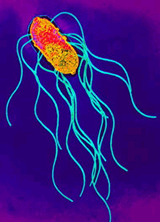
RASFF – Listeria monocytogenes (<10 CFU/g) in chilled horse salami from France in France
RASFF – Listeria monocytogenes (presence /25g) in chilled raw ham from Italy, packaged in Belgium in Belgium

Lipari Foods is expanding its January 6, 2020 and January 13, 2020 recalls of Premo and Fresh Grab sandwiches to include all sandwiches with a Best By date of 2/6/20 and prior, due to potential contamination of Listeria monocytogenes.
The products were distributed exclusively by Lipari Foods in Warren, Michigan to food service and retail stores throughout Alabama, Florida, Iowa, Illinois, Indiana, Kentucky, Maryland, Michigan, Minnesota, Missouri, Ohio, Pennsylvania, Tennessee, West Virginia, and Wisconsin.
This recall was brought to our attention by JLM, who is further expanding their recent recall to include additional sandwiches with additional Best Buy dates due to potential contamination of Listeria monocytogenes. The company has ceased production at the producing facility while continuing to work in close collaboration with the FDA to further investigate the issue. No illnesses have been reported to date in relation to this recall.
Lipari Foods began shipping this product on December 20, 2019
Consumers who have purchased these recalled products should not consume them. Consumers should discard the products or return them to the point of purchase. Consumers with questions should call Customer Service at 800-729-3354, 8:15 am – 4:30 pm, EST, Monday through Friday.
Link to 1st Expanded Recall
Link to Original Recall
The Journal of Clinical Investigation (JCI) recently published “Viewpoint” articles by Johns Hopkins University School of Medicine professors who warn that global climate change is likely to unlock dangerous new microbes, as well as threaten humans’ ability to regulate body temperature.
Johns Hopkins Bloomberg Distinguished Professors Rexford Ahima, M.D., Ph.D., and Arturo Casadevall, M.D., Ph.D., M.S., along with William Dietz, M.D., Ph.D., director of the George Washington University’s Sumner M. Redstone Global Center for Prevention and Wellness, and Susan Pacheco, M.D., associate professor in the Department of Pediatrics at the University of Texas Health Science Center at Houston, authored journal articles relevant to their fields that detail how rising temperatures around the world pose dangerous threats to humanity.
Ahima, director of Johns Hopkins’ Division of Endocrinology, Diabetes and Metabolism, wrote in the journal that “global warming threatens human thermoregulation and survival.”
Marler Clark, a Seattle-based food safety law firm, has petitioned the USDA’s Food Safety and Inspection Service to ban 31 salmonella strains on meat and poultry. The 60-page citizen petition was submitted Jan. 19 on behalf of two individuals and one family sickened by salmonella, plus three nonprofit organizations active in food safety issues — Food & Water Watch, Consumer Federation of America and Consumer Reports.
A novel composite film — created by the bonding of an antimicrobial layer to conventional, clear polyethylene plastic typically used to vacuum-package foods such as meat and fish — could help to decrease foodborne illness outbreaks, according to researchers in Penn State’s College of Agricultural Sciences.
The antimicrobial lining of the film is comprised of a pullulan-based biopolymer produced from starch syrup during a fermentation process, which is already approved for use in foods. Pullulan, a water-soluble “polysaccharide,” is essentially a chain of sugar, glycerin and cellulose molecules linked together. To kill pathogens such as Salmonella, Listeria and pathogenic E. coli, researchers infused the pullulan with Lauric arginate, made from naturally occurring substances and already approved for use in foods.
Development of the composite antimicrobial film is important because 76 million cases of foodborne illnesses occur each year in the U.S. alone, resulting in 300,000 hospitalizations and 5,000 deaths, according to the U.S. Centers for Disease Control and Prevention. In light of this problem and the commercial potential of this discovery, Penn State has applied for a provisional patent on the composite antimicrobial film.
Posted in E.coli, food contamination, Food Hygiene, Food Inspections, Food Micro Blog, Food Microbiology, Food Microbiology Blog, Food Microbiology Research, Food Microbiology Testing, Food Pathogen, Food Poisoning, Food Safety, Food Technology, Food Testing, foodborne disease, Foodborne Illness, Listeria, Listeria monocytogenes, Research, Salmonella, Technology, Uncategorized
Michigan’s Northern Fish Five Star Food Inc., located in Garden City, has recalled 100 cases of Excellent Tahina 800 g and 100 cases of Excellent Tahina 400 g in containers because it has the potential to be contaminated with Salmonella.
No illnesses are yet associated with the Sham Gardens Tahini recall. The Michigan Department of Agriculture and Rural Development discovered potential contamination by random sampling. Final laboratory reports are pending, but Five Star Foods opted to recall the following products as listed by product code.
| Product Code | Product Description | UPC | Expiration |
|---|---|---|---|
| TAH806SG | Excellent Tahina 800 g | 6214002717420 | Best By Nov 2020 |
| TAH400SG | Excellent Tahina 400 g | 6214002717413 | Best By Nov 2020 |
The recalled product was distributed in states of Michigan, Ohio, New York, Florida, North Dakota, Virginia, Pennsylvania, and Texas and is sold in 800 grams (1.76 lb) and in 400 grams (14.1 oz).
Expiration dates (Best By Nov 2020) are printed on the lid of the container.
Around 170 people who visited Yosemite National Park this month have reported becoming ill with gastrointestinal illnesses, with at least two confirmed cases of norovirus, park officials said Thursday.
The National Park Service began investigating after visitors and employees reported being sick and are continuing to investigate the circumstances surrounding the illness and conduct interviews with affected people.
“The overwhelming majority of the reported cases are consistent with norovirus,” park officials said in a statement.
The majority of those who became ill spent time in Yosemite Valley around the first week of January. Park officials say there has been a decline in new cases in the past several days. While those who reported becoming ill had symptoms of norovirus, park officials say some might have had food poisoning or the flu.
A minor boy died while his sister and grandmother are reported to have recovered after they consumed food at home which had turned bad. Ellavva of Hanuman Nagar in the district headquarters and her grandchildren were hospitalised after they ate some food prepared at home and took medicine from a local medical practitioner. Later, they were shifted to hospital. While Ravi died while being shifted to a hospital on Thursday evening, Ellavva and her granddaughter are being treated at the hospital and their health was reported to be stable.
Posted in food contamination, food death, food handler, Food Hygiene, Food Illness, Food Inspections, Food Micro Blog, Food Microbiology, Food Microbiology Blog, Food Microbiology Testing, Food Pathogen, Food Poisoning, Food Poisoning Death, Food Safety, Food Spoilage, Food Temperature Abuse, Food Testing, Food Toxin, Uncategorized
Food poisoning—any illness or disease that results from eating contaminated food—affects millions of Americans each year. While the American food supply is among the safest in the world, the Federal government estimates that there are about 48 million cases of foodborne illness annually—the equivalent of sickening 1 in 6 Americans each year. And each year these illnesses result in an estimated 128,000 hospitalizations and 3,000 deaths.
Click the link above for more information.
Posted in food contamination, food death, Food Hygiene, Food Illness, Food Inspections, Food Micro Blog, Food Microbiology, Food Microbiology Blog, Food Microbiology Research, Food Microbiology Testing, Food Pathogen, Food Poisoning, Food Poisoning Death, Food Safety, Food Safety Alert, Food Testing, foodborne disease, Foodborne Illness, Uncategorized
There was chaos at Chiang Mai hospitals yesterday when around 130 students were hospitalised with food poisoning. The grade 8 students from Montfort College in Chiang Mai had eaten lunch at the San Sai scout camp when they began showing symptoms of food poisoning, including diarrhea, vomiting and stomach cramps.
There were an estimated 400 students at the camp: about 89 were taken to the local San Sai Hospital and another 50 taken to other Chiang Mai area hospitals. 30 doctors and nurses were dispatched to the camp in Mae Faek subdistrict of Chiang Mai’s San Sai to treat other students who did not require hospitalisation.
Details of the food poisoning remain unclear other than a boiled chicken dish with dipping sauce was served for the children’s lunch.