Category Archives: Food Pathogen

Jordan – One child dead, 700 sick due to mass food poisoning in Jordan restaurant

Alarabiya

A five-year-old child is dead and 700 other people have been hospitalized in Jordan with mass food poisoning after eating shawarma at a restaurant in the town of Ain al-Basha, north of the capital Amman, the Ministry of Health announced on Wednesday.

Investigations revealed that the meat and chicken shawarma had been prepared without using a refrigeration unit in an “unhealthy environment and without adhering to the health requirements and the minimum levels of general safety,” the official Jordan News Agency reported citing a ministry press release.

Laboratory tests also found that bacteria in meat and poultry products at the restaurant, according to the ministry’s statement.

UK – Report into international foodborne disease rates published

FSA

A report published by the FSA has found it is not possible to compare foodborne disease rates effectively between countries. This is due to the hugely different methodologies and recording systems employed.

Researchers compared the ways different countries estimate how many people suffer from food poisoning each year, in an effort to determine whether these rates can be reliably compared.

The study, commissioned by the FSA and carried out by Public Health England, uncovered three broad approaches used globally:

  1. Prospective cohort studies – a sample population is recruited in advance, then report weekly on any symptoms of illness and may also submit samples so specific causes can be determined.
  2. Surveillance pyramid studies – an estimation of the number of cases missed through under-diagnosis and under-reporting, by using multipliers to extrapolate from laboratory confirmed illnesses.
  3. Retrospective cross-sectional surveys – a representative sample of the population is contacted and asked about their symptoms in the recent past.

Countries need to calculate foodborne disease estimates due to under-reporting, as not everyone who suffers from infectious intestinal disease (IID) will seek medical help and those who do will not always get a confirmed diagnosis. The data can then inform a country’s own food policy and prioritisation of resources.

Researchers concluded that the UK is using the most accurate approach available (prospective cohort studies).

FSA Head of science, evidence and research, Rick Mumford, said:

“The report concludes that attempting to accurately compare different countries’ foodborne disease rates is an almost impossible task. The only way you could attempt this would be for different countries to have the same type of study with the exact same study specifications, over the same time period. Even then, differences in underlying surveillance data available in each country could cause issues, particularly in terms of determining what proportion of IID cases are due to food.

“We have a much greater understanding of the different approaches taken across the globe and will continue to look and learn from this.”

Read the full report here.

FSA EXPLAINS

Rick Mumford, Head of Science, Evidence & Research Directorate, has provided an analysis of the report and what it means for comparing international food standards (Opens in a new window).

RASFF Alert – Norovirus – Razor Clams

RASFF-Logo

RASFF – norovirus (presence /25g) in frozen razor clams (Solen spp) from the Netherlands in Spain

RASFF Alert -Foodborne Outbreak -Listeria monocytogenes – Chilled Mozzarella

RASFF-Logo

RASFF –  foodborne outbreak suspected to be caused by Listeria monocytogenes in chilled mozzarella in block from Italy in Malta

RASFF Alert – E.coli – Live Mussels

RASFF-Logo

RASFF – too high count of Escherichia coli (7900 CFU/100g) in live mussels from France in France

RASFF Alert – STEC E.coli – Chilled Vacuum Packed Bovine Meat

RASFF-Logo

RASFF – shigatoxin-producing Escherichia coli in chilled vacuum packed bovine meat from Ireland in Italy

RASFF Alerts – listeria monocytogenes – Fresh Raspberries – Chilled Salmone with Dill

RASFF-Logo

RASFF – Listeria monocytogenes (< 10 CFU/g) in fresh raspberries from Spain in Austria

RASFF -Listeria monocytogenes (< 10 CFU/g) in chilled salmon with dill from France in France

RASFF Alerts – Salmonella – Frozen Duck Legs -MSM Chicken Meat – Sesame Seeds Nigella Seeds – Chicken Wings – Chicken Legs – Chicken Fillets – Chicken Meat

RASFF-Logo

RASFF – Salmonella enterica ser. Typhimurium (presence /25g) in frozen duck legs from Hungary in Croatia

RASFF – Salmonella enterica ser. Infantis (presence /25g) in frozen mechanically separated (MSM) chicken meat from Poland in Bulgaria

RASFF – Salmonella (in 1 out of 5 samples /25g) in organic sesame seeds from India in Slovenia

RASFF – Salmonella enterica ser. Typhimurium (presence /25g) in chilled chicken wings from the Netherlands in France

RASFF – Salmonella enterica ser. Typhimurium (presence /25g) in frozen chicken wings from Poland in France

RASFF– Salmonella enterica ser. Newport (presence /25g) in chicken legs from Poland in the Czech Republic

RASFF – Salmonella (3 out of 5 samples /25g) in chilled chicken fillets and wings from Poland in Poland

RASFF – Salmonella enterica ser. Bareilly (present /25g) in nigella seeds (Nigella sativa) from India in Poland

RASFF – Salmonella (presence /25g) in organic sesame seeds from Ethiopia in the Netherlands

RASFF – Salmonella enterica ser. Enteritidis (in 4 out of 5 samples /25g) in chilled chicken meat from chickens reared in Slovakia and slaughtered in Poland in Poland

RASFF – Salmonella enterica ser. Enteritidis (in 2 out of 5 samples /25g) in chilled chicken meat from chickens reared in Slovakia and slaughtered in Poland in Poland

RASFF – Salmonella enterica ser. Enteritidis (present /25g) and Salmonella enterica ser. Infantis (present /25g) in chilled chicken meat from Poland in Poland


RASFF Alert – Foodborne Outbreak – Salmonella – frozen chicken nuggets

RASFF-Logo

RASFF – foodborne outbreak suspected to be caused by Salmonella (presence /25g) in frozen chicken nuggets from Poland in the UK

Research-BfR addresses risk of E. coli in flour

Food Safety News#

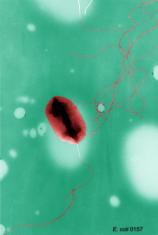
kswfoodworld E.coli O157

Image CDC


A German risk assessment agency has issued an opinion after STEC was frequently found in flour samples.

Shiga toxin-producing E. coli (STEC) was detected in multiple flour samples (wheat, spelt and rye) from mills during routine food monitoring in Germany in 2018.

The Federal Ministry of Food and Agriculture (BMEL) asked the German Federal Institute for Risk Assessment (BfR) to assess the sources, risk and prevention of STEC in flour.

Fifty STEC-positive samples were detected in 328 wheat, spelt and rye flour samples analyzed in 2018 as part of the Federal Monitoring Plan. A product recall in November 2019 of ready-made dough for short pastry biscuits shows STEC can occur in such a product.

Investigations of flour samples from mills in Germany for STEC have shown between 10 and 21 percent have positive samples. Viable STEC of different serogroups are detectable in flour for more than 50 weeks.