Consumers reminded that flour is not a ready-to-eat ingredient
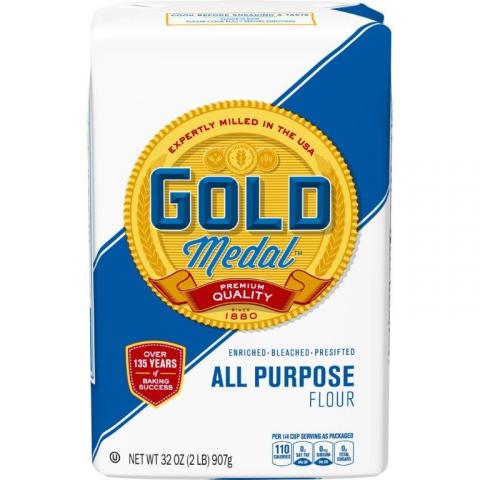
MINNEAPOLIS (April 28, 2023) – General Mills today announced a voluntary national recall of two-, five- and 10-pound bags of its Gold Medal Unbleached and Bleached All Purpose Flour with a “better if used by” date of March 27, 2024, and March 28, 2024. The recall is being issued for the potential presence of Salmonella Infantis,which was discovered during sampling of the five-pound bag product.
This recall affects two date codes of Gold Medal Unbleached All Purpose Flour in the five- and ten pound bags and two date codes of Gold Medal Bleached All Purpose Flour in the two- and five-pound bags. All other types of Gold Medal Flour are not affected by this recall.
Consumers are asked to check their pantries and dispose of the product affected by this recall. Consumers who have had to discard products covered by this recall may contact General Mills Consumer Relations at 1-800-230-8103.
Guidance from the Food and Drug Administration(FDA) and the Centers for Disease Control(CDC) warn that consumers should refrain from consuming any raw products made with flour. Salmonella Infantisis killed by heat through baking, frying, sautéing or boiling products made with flour. All surfaces, hands and utensils should be properly cleaned after contact with flour or dough.
This voluntary recall includes the following code dates currently in stores or consumers’ pantries:
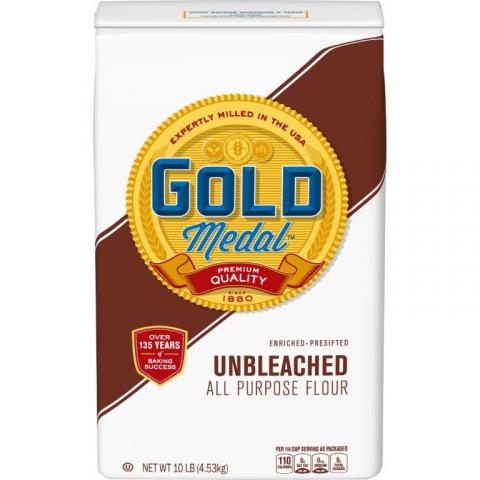
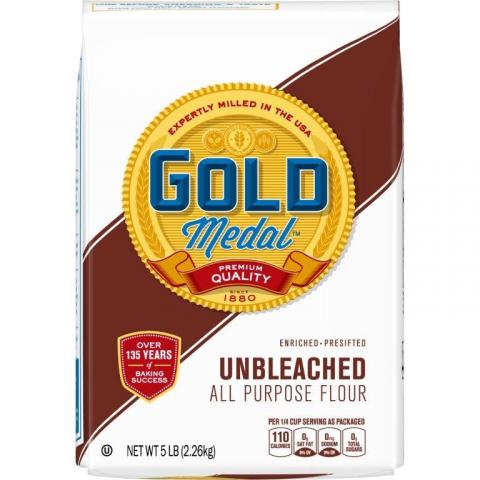
Gold Medal Unbleached All Purpose 5LB Flour
Package UPC
000-16000-19610
Recalled Better if Used by Date
27MAR2024 and 28MAR2024
Gold Medal Unbleached All Purpose 10LB Flour
Package UPC
000-16000-19580
Recalled Better if Used by Date
27MAR2024 and 28MAR2024
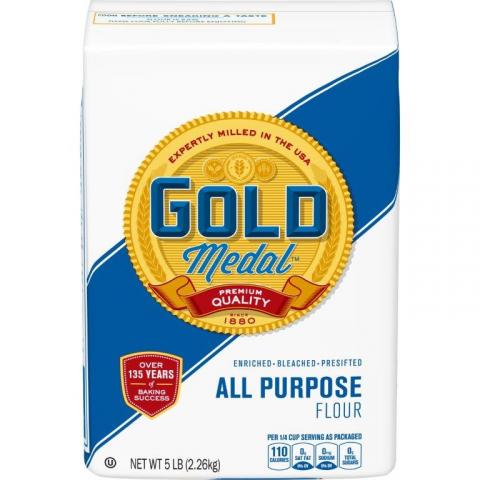
Gold Medal Bleached All Purpose 2LB Flour
Package UPC
000-16000-10710
Recalled Better if Used by Date
27MAR2024 and 28MAR2024
Gold Medal Bleached All Purpose 5LB Flour
Package UPC
000-16000-10610
Recalled Better if Used by Date
27MAR2024 and 28MAR2024
Healthy persons infected with Salmonella Infantis, a bacteria, often experience nausea, diarrhea, fever and abdominal pains. The CDC estimates there are 1.2 million cases annually in the U.S. Typically, symptoms start within six hours to six days after infection and last four to seven days. Any consumers concerned about an illness should contact a physician.
About General Mills
General Mills makes the food the world loves. The company is guided by its Accelerate strategy to drive shareholder value by boldly building its brands, relentlessly innovating, unleashing its scale, and standing for good. Its portfolio of beloved brands includes household names such as Cheerios, Nature Valley, Blue Buffalo, Haagen-Dazs, Old El Paso, Pillsbury, Betty Crocker, Yoplait, Annie’s, Wanchai Ferry, Yoki, and more. Headquartered in Minneapolis, Minnesota, General Mills generated fiscal 2022 net sales of $19.0 billion. In addition, the company’s share of non-consolidated joint venture net sales totaled $1.1 billion.
Identification information of the recalled product
Product category Feed
Product subcategory Eggs and egg products
Product brand name CACG
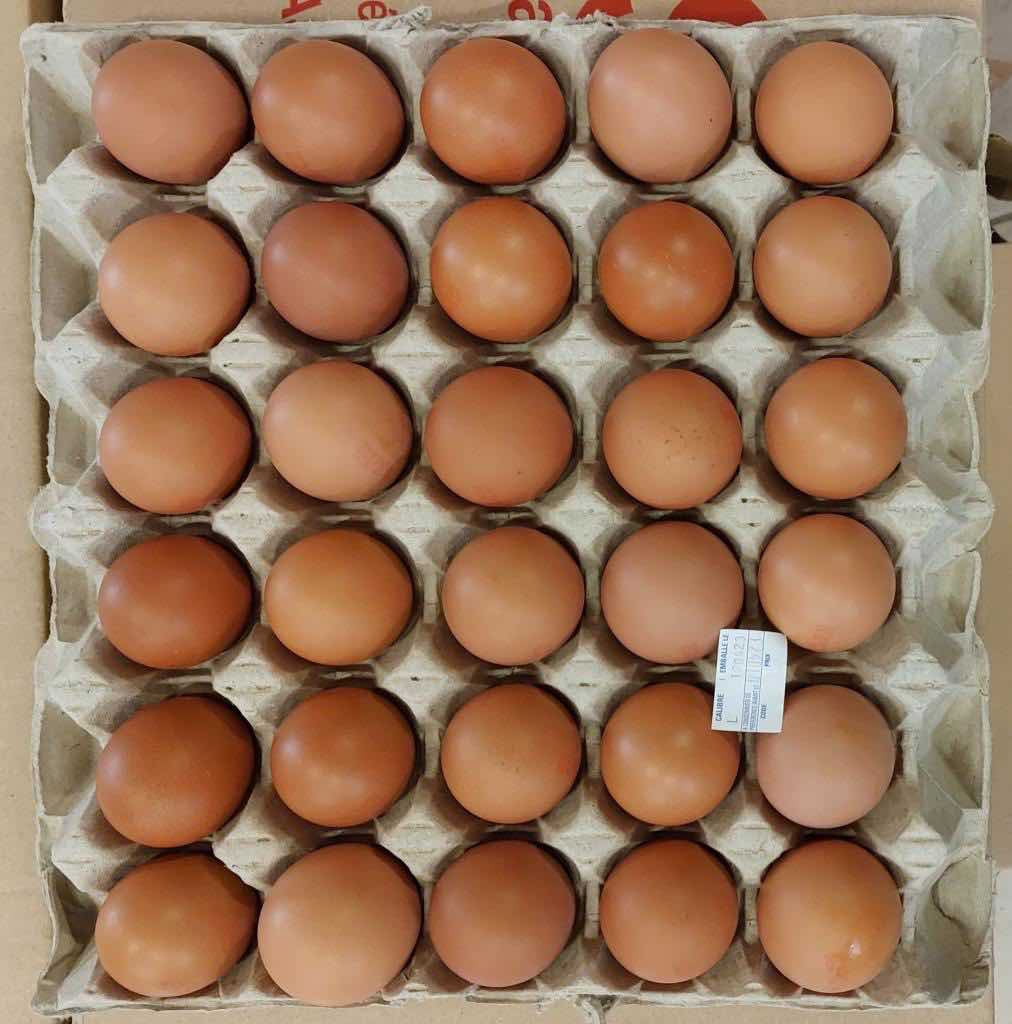
Model names or references boxes of 12 and cells of 30 code 2FRIHT01 to DCR 01-03-04/05/2023
Identification of products
Batch
Date
LOT 2FRIHT01
Recommended best before date between 01/05/2023 and 04/05/2023
Packaging boxes of 12 and cells of 30
Marketing start/end date From 04/11/2023 to 04/14/2023
Storage temperature Product to be stored in the refrigerator
Geographic area of sale Regions: Guyana
Distributors FRESH MARKET HOTEL KER ALBERTE BOULANGERIE AU SUCRE D’OR GLACIER DES DEUX LAKES VARIOUS INDIVIDUALS PROXI ROURA DELI ORIENTAL HQ SAS – U CAFE Sophie and co LA VILLA PHO EXPRESS TASTY ZONE SARL HEI PO – MONSIEUR LIFENG ZHU LS TING LS J
Müller has taken the precautionary step of recalling some batches of various Cadbury branded dessert products because of the possible presence of Listeria monocytogenes.
Product details
Cadbury Daim Chocolate Dessert
Pack size
75g
Use by
18 May 2023
Cadbury Crunchie Chocolate Dessert
Pack size
75g
Use by
17 May 2023
Cadbury Flake Chocolate Dessert
Pack size
75g
Use by
17 May 2023
Cadbury Dairy Milk Buttons Chocolate Dessert
Pack size
75g
Use by
18 May 2023
Cadbury Dairy Milk Chunks Chocolate Dessert
Pack size
75g
Use by
18 May 2023
Cadbury Heroes Chocolate Dessert (six pack)
Pack size
6 x 75g
Use by
18 May 2023
Risk statement
The products listed above might be contaminated with Listeria monocytogenes.
Symptoms caused by this organism can be similar to flu and include high temperature, muscle ache or pain, chills, feeling or being sick and diarrhoea. Some people are more vulnerable to listeria infections, including those over 65 years of age, pregnant women and their unborn babies, babies less than one month old and people with weakened immune systems.
Action taken by the company
Müller is recalling the above products and has issued point-of-sale notices to their customers. These notices explain to customers why the products are being recalled and tell them what to do if they have bought the products. Please see the attached notices.
If you have bought any of the above products do not eat them. Instead, return them to the store from where they were bought for a full refund (with or without a receipt). For more information contact Müller on team_cccare@muller.co.uk or 07354 835 893.
Lactalis McLelland Ltd have taken the precautionary step of recalling various goat cheeses because the products might contain Listeria monocytogenes.
Product details
Cricket St. Thomas Capricorn Goat Cheese
Pack size
100g
Use by
26 May 2023
Somerset Capricorn Goat Cheese
Pack size
100g
Use by
26 May 2023
Somerset Capricorn Goat Cheese
Pack size
85g
Use by
26 May 2023
Co-op Goats Cheese
Pack size
85g
Use by
26 May 2023
Risk statement
The products listed above might be contaminated with Listeria monocytogenes.
Symptoms caused by this organism can be similar to flu and include high temperature, muscle ache or pain, chills, feeling or being sick and diarrhoea. Some people are more vulnerable to listeria infections, including those over 65 years of age, pregnant women and their unborn babies, babies less than one month old and people with weakened immune systems.
Action taken by the company
Lactalis McLelland Ltd is recalling the above products. Lactalis McLelland Ltd and Co-op have issued point-of-sale notices to their customers. These notices explain to customers why the products are being recalled and tell them what to do if they have bought the products. Please see the attached notices.
Despite the recent advances in food preservation techniques and food safety, significant disease outbreaks linked to foodborne pathogens such as bacteria, fungi, and viruses still occur worldwide indicating that these pathogens still constitute significant risks to public health. Although extensive reviews of methods for foodborne pathogens detection exist, most are skewed towards bacteria despite the increasing relevance of other pathogens such as viruses. Therefore, this review of foodborne pathogen detection methods is holistic, focusing on pathogenic bacteria, fungi, and viruses. This review has shown that culture-based methods allied with new approaches are beneficial for the detection of foodborne pathogens. The current application of immunoassay methods, especially for bacterial and fungal toxins detection in foods, are reviewed. The use and benefits of nucleic acid-based PCR methods and next-generation sequencing-based methods for bacterial, fungal, and viral pathogens’ detection and their toxins in foods are also reviewed. This review has, therefore, shown that different modern methods exist for the detection of current and emerging foodborne bacterial, fungal, and viral pathogens. It provides further evidence that the full utilization of these tools can lead to early detection and control of foodborne diseases, enhancing public health and reducing the frequency of disease outbreaks.
A novel solid-phase extraction methodology followed by UHPLC-MS/MS has been developed for Ochratoxin A (OTA) analysis in herbal infusions. For this purpose, a commercial polyurethane foam (PUF) was used as sorbent, and the experimental conditions were fully optimized. The strategy was satisfactory for reducing the matrix effect and allowed for OTA quantification in black tea and herbal infusions, with suitable recoveries and quantitation limits in agreement with those required by the maximum levels allowed by current regulations. The achieved results demonstrated the unprecedented use of polyurethane foam as an effective alternative for OTA retention and quantification in herbal infusions with the advantages of simple preparation, time saving, sustainability, and low cost for routine analysis.
Salmonella is one of the most common zoonotic foodborne pathogens and a worldwide public health threat. Salmonella enterica is the most pathogenic among Salmonella species, comprising over 2500 serovars. It causes typhoid fever and gastroenteritis, and the serovars responsible for the later disease are known as non-typhoidal Salmonella (NTS). Salmonella transmission to humans happens along the farm-to-fork continuum via contaminated animal- and plant-derived foods, including poultry, eggs, fish, pork, beef, vegetables, fruits, nuts, and flour. Several virulence factors have been recognized to play a vital role in attaching, invading, and evading the host defense system. These factors include capsule, adhesion proteins, flagella, plasmids, and type III secretion systems that are encoded on the Salmonella pathogenicity islands. The increased global prevalence of NTS serovars in recent years indicates that the control approaches centered on alleviating the food animals’ contamination along the food chain have been unsuccessful. Moreover, the emergence of antibiotic-resistant Salmonella variants suggests a potential food safety crisis. This review summarizes the current state of the knowledge on the nomenclature, microbiological features, virulence factors, and the mechanism of antimicrobial resistance of Salmonella. Furthermore, it provides insights into the pathogenesis and epidemiology of Salmonella infections. The recent outbreaks of salmonellosis reported in different clinical settings and geographical regions, including Africa, the Middle East and North Africa, Latin America, Europe, and the USA in the farm-to-fork continuum, are also highlighted.
During November 2021–May 2022, we identified 37 clinical cases of Streptococcus equi subspecies zooepidemicus infections in central Italy. Epidemiologic investigations and whole-genome sequencing showed unpasteurized fresh dairy products were the outbreak source. Early diagnosis by using sequencing technology prevented the spread of life-threatening S. equi subsp. zooepidemicus infections.
Streptococcusequi subspecies zooepidemicus is a β-hemolytic streptococcus expressing Lancefield group C antigen and is 1 of 3 S. equi subspecies. S.equi subsp. zooepidemicus is an opportunistic pathogen that can infect domestic animals, pets, and wildlife (1–6). Sporadic human cases have been reported (7), characterized by clinical manifestations that vary from meningitis to sepsis. Human infection generally occurs through direct contact with infected animals or by consumption of contaminated unpasteurized milk or other dairy products (8–10). We report a large S.equi subsp. zooepidemicus outbreak in Italy.



 FoodWorld