Category Archives: Food Microbiology Research

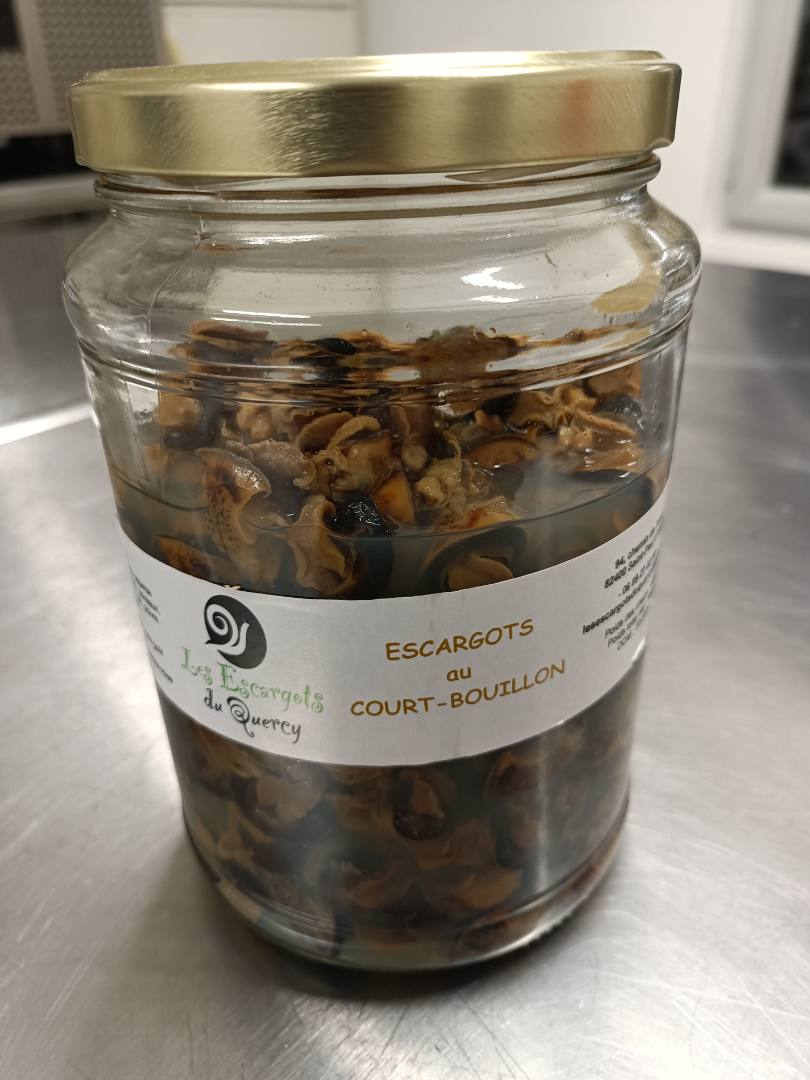
France – Snails in court broth – Clostridium botulinum

Gov France

Product category
Food
Product subcategory
Snails and frogs
Product brand name
Quercy Snails
Model names or references
Preserved short broth snails net weight 660g Minimum durability date March 2025
Product identification
Batch Date
03/2025 Minimum durability date 03/01/2025
Packaging
canned glass 1500 ml twist off type
Start/end date of marketing
From 06/01/2023 to 10/22/2023
Storage temperature
Product to be stored at room temperature
Health mark
unbranded
Geographical sales area
Departments: HAUTE-GARONNE (31), GERS (32)
Distributors
Quercy Snails

France – Burgundy parsley ham LABEL ROUGE – Salmonella

Gov France

Product category
Food
Product subcategory
Meats
Product brand name
Gourmet Heritage
Model names or references
Burgundy parsley ham LABEL ROUGE
Product identification
GTIN Batch Date
3257980723734 307143 Use-by date 03/12/2023
Packaging
product sold at the cut stand
Start/end date of marketing
Since 08/11/2023
Storage temperature
Product to keep in the refrigerator
Health mark
FR 21 231 005 CE
Geographical sales area
Whole France
Distributors
Cora (39 hypermarkets see attached list)
List of points of sale
Listing_stores_CORA_concerned.pdf

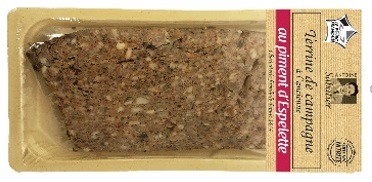
France – Old-fashioned country terrine with Espelette pepper – Salmonella

Gov France

Product category
Food
Product subcategory
Meats
Product brand name
Antoine Sabatier
Model names or references
Old-fashioned country terrine with Espelette pepper slices 160g
Product identification
GTIN Batch Date
3441700283381 306082 Use-by date 06/12/2023
Packaging
160g slice in tray under Modified Atmosphere
Start/end date of marketing
Since 11/13/2023
Storage temperature
Product to keep in the refrigerator
Health mark
FR 21 231 005 CE
Geographical sales area
Whole France
Distributors
Auchan, Disfrais, Leclerc, U sign, Intermarché, Carrefour, Gamm vert, Cora, bi1, maximimarché

USA – CDC – Persistent Strain of Salmonella Newport (REPJJP01) Linked to Travel to Mexico, Beef, and Soft Cheese

CDC

REPJJP01

REPJJP01 is a persistent, multidrug-resistant strain of Salmonella Newport bacteria that has caused illnesses and outbreaks in the United States and globally.

Illness caused by this strain was first reported to PulseNet in late 2015. As of March 31, 2023, information from 2,423 people infected with REPJJP01 was reported to PulseNet. Among 1,378 people interviewed, 31% were hospitalized. Among 1,175 people with information on the outcome of infection, fewer than 1% died. Among 1,312 ill people, 63% self-identified as Hispanic/Latino, 33% self-identified as non-Hispanic/Latino White, and 4% self-identified as being non-Hispanic/Latino and another race. The median age of ill people was 38 years (interquartile range, 22–55 years) and 55% were female. Illnesses caused by this strain happen throughout the year but are less common in winter.

Almost half (49%) of 1,383 people with information reported traveling to Mexico before their illness began. People with illness caused by REPJJP01 also have reported consuming contaminated beef products from the United States and Mexico and consuming contaminated cheese (including queso fresco and Oaxaca cheese) obtained in Mexico.

This strain of Salmonella Newport is relatively diverse genetically. Bacteria in this strain are within 21 allele differences of one another by core genome multilocus sequence typing (cgMLST). This is more genetically diverse than typical multistate foodborne outbreaks in which bacteria generally fall within 10 allele differences of one another.

USA- Method Update ; BAM Chapter 29: Cronobacter

FDA

Revision History

  • November 2023:
    1) Removed the use of SmartCycler for qPCR.
    2) Removed the requirement to perform qPCR without IAC and to perform qPCR on two aliquots per sample.
    3) Updated the 7500 software version.
    4) Added ROX to the qPCR assay and revised the 7500 FAST analysis settings on threshold and baseline.
    5) Revised the stock concentrations and volumes of each qPCR component without changing their final concentrations.
    6) Added extra wash buffer to the pellet to improve the quality of the resultant DNA extract.
    7) Added temperature and time tolerance ranges for incubation of enrichment and agars.
    8) Added optional use of CCI agar and ESIA agar incubated at their respective temperatures as well as R&F agar incubated at 41.5°C.
    9) Added more figures and detailed phenotype description of the colony morphologies on different agars.
    10) Removed the option to use RAPID ID 32E for cultural confirmation.
    11) Revised the chapter with updated nomenclature of Cronobacter and non-Cronobacter species.
    12) Updated other part of the chapter to improve clarity and to provide detailed instructions with additional texts and figures.
  • April 2012: Sections D.1.a, D.1.b, D.2.3; Correction: The fluorescence is recorded at the end of each annealing step, not at the end of each extension step.
  • March 2012: New Chapter (This chapter has replaced the method for Isolation and Enumeration of Enterobacter sakazakii from Dehydrated Powdered Infant FormulaExternal Link Disclaimer.

World – Nearly 150 sick in Salmonella outbreak affecting 11 countries

Food Safety News

Eleven countries, including the United States, have recorded almost 150 Salmonella infections that could be linked to tomatoes.

Since January 2023, 149 cases of Salmonella Strathcona have been reported. Germany has the most patients, with 47, while Italy has 34. Most people fell sick between August and October.

The U.S. has eight cases. Six interviewed sick people had been to Spain, Italy, Croatia, France, and Slovenia. Four patients reported travel to Italy.

Austria has 17 cases, the Czech Republic and the United Kingdom have 13, and France has nine. Other affected countries are Finland, Denmark, Luxembourg, and Norway.

Read more at the link above

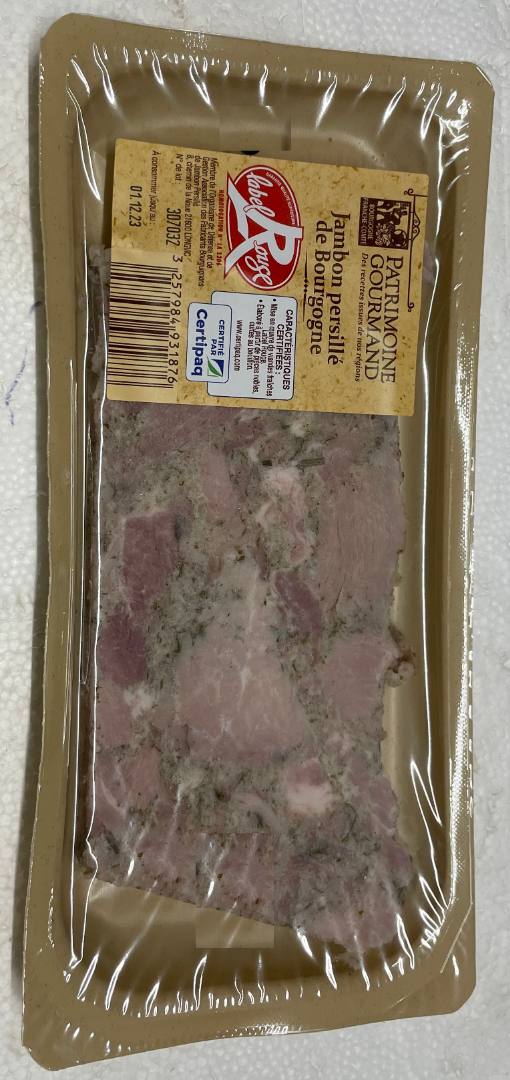
France – Red Label parsley ham – Salmonella

Gov France

  • Product category Food
  • Product subcategory Meats
  • Product brand name Gourmet Heritage – Cora
  • Model names or references Red Label parsley ham
  • Product identification
    GTIN Batch Date
    3257984931876 307032 Use-by date 01/12/2023
  • Packaging Fresh Packaged Slices, Modified Atmosphere
  • Start/end date of marketing Since 08/11/2023
  • Storage temperature Product to keep in the refrigerator
  • Health mark FR 21 231 005 CE
  • Geographical sales area Whole France
  • Distributors Cora

France – Old-fashioned country terrine with shallots – Salmonella

Gov France

  • Product category Food
  • Product subcategory Meats
  • Product brand name Antoine Sabatier
  • Model names or references Old-fashioned country terrine with sliced ​​shallot
  • Product identification
    GTIN Batch Date
    3441700283374 306072 Use-by date 06/12/2023
  • Packaging Slice in tray under ATM
  • Start/end date of marketing Since 11/13/2023
  • Storage temperature Product to keep in the refrigerator
  • Health mark FR 21 231 005 CE
  • Geographical sales area Whole France
  • Distributors Auchan, Disfrais, Leclerc, Colruyt, U brand, Salaisons Dijonnaises factory shop

USA – FDA Leafy Greens STEC Action Plan Updated

FDA

Introduction

Leafy greens are among the most widely consumed vegetables and an important part of an overall healthy diet. However, while millions of servings are consumed safely every day, leafy greens have been repeatedly associated with illnesses caused by Shiga toxin-producing E. coli (STEC), the most common of which is E. coli O157:H7. FDA is committed to breaking this cycle of reoccurring outbreaks.

Over the last several years, the FDA and partners in the public and private sectors have worked to enhance the safety of leafy greens through the development and implementation of the Leafy Greens STEC Action Plan (LGAP). This work includes prioritized inspections, focused sampling, stakeholder engagement and collaboration, data sharing, root cause investigations, and advancements in the science of detection and prevention.

Collectively, this work has expanded our body of knowledge about how and why outbreaks linked to leafy greens have occurred, which has guided and informed the evolution of the action plan over the years. Still, we know that we cannot fix the issue of leafy green contamination on our own. Industry leadership, along with collaboration among growers, processors, retailers, state partners, and the broader agricultural community, is critical to preventing foodborne illness.

The link above goes to a  table that provides the approaches for three priority areas: Prevention, Response, and Addressing Knowledge Gaps, as well as accomplishments that have been made since the action plan launched in March 2020 (updated and current as of October 2023)

Foodborne illness source attribution estimates for Salmonella, Escherichia coli O157, and Listeria monocytogenes — United States, 2021

CDC

Executive Summary
Each year in the United States an estimated 9 million people get sick, 56,000 are hospitalized, and 1,300 die of foodborne disease caused by known pathogens. These estimates help highlight the scope of this public health problem. However, to develop effective prevention measures, food safety agencies and partners need to understand the types of foods contributing to the problem.

The Interagency Food Safety Analytics Collaboration (IFSAC) is a tri-agency group created by the Centers for Disease Control and Prevention (CDC), the U.S. Food and Drug Administration (FDA), and the U.S. Department of Agriculture’s Food Safety and Inspection Service (FSIS). By bringing together data from CDC, FDA, and FSIS,
and by developing sound analytical methods, IFSAC scientists can improve estimates of the sources of foodborne illness.

Using outbreak surveillance data from 1998 through 2021, this report presents annual estimates of the percentages of foodborne illness attributed to 17 food categories for Salmonella, Escherichia coli O157, and Listeria monocytogenes.

Salmonella illnesses came from a wide variety of foods. More than 75% of Salmonella illnesses were attributed to seven food categories: Chicken, Fruits, Pork, Seeded Vegetables (such as tomatoes), Other Produce (such as nuts), Beef, and Turkey.

Escherichia coli (E. coli) O157 illnesses were most often linked to two categories.
Over 80% of Escherichia coli (E. coli) O157 illnesses were linked to Vegetable Row Crops (such as leafy greens) and Beef.

Listeria monocytogenes (Listeria) illnesses were most often linked to Dairy products, Vegetable Row Crops, and Fruits. More than 75% of illnesses were attributed to these three categories, but the rarity of Listeria outbreaks makes these estimates less reliable than those for other pathogens.

Attribution estimates for Campylobacter are not presented in this year’s report. Evidence suggests the sources of Campylobacter outbreaks likely differ considerably from the sources of non-outbreak-associated illnesses caused by this pathogen. IFSAC is exploring alternative approaches for estimating the sources of Campylobacter illnesses.

IFSAC derived the estimates for 2021 using the same method used for previous estimates, with some modifications. The original method, dating back to the estimates from 2012, was described in a report, a peer- reviewed journal article, and at a public meeting. The data in this year’s report came from 47,657 illnesses linked to 1,322 foodborne disease outbreaks that occurred from 1998 through 2021 and for which each confirmed or suspected implicated food was assigned to a single food category. The method relies most heavily on the last five years of outbreak data (2017 – 2021). Foods are categorized using a scheme IFSAC
created that classifies foods into 17 categories that closely align with the U.S. food regulatory agencies’ classification needs.

Examples of foods included in each food category can be found in the appendix.
This collaborative effort to provide annual attribution estimates continues IFSAC’s work to improve foodborne illness source attribution, which can help inform efforts to prioritize food safety initiatives, interventions, and policies for reducing foodborne illnesses. These consensus estimates allow all three agencies to take a consistent approach to identifying food safety priorities to protect public health. For more information on
IFSAC projects visit https://www.cdc.gov/foodsafety/ifsac/projects/index.html.