Category Archives: Food Microbiology Research

Research – Comparative Analysis of Growth, Survival, and Virulence Characteristics of Listeria monocytogenes Isolated from Imported Meat

MDPI

Listeria monocytogenes is an important foodborne pathogen with worldwide prevalence. Understanding the variability in the potential pathogenicity among strains of different subtypes is crucial for risk assessment. In this study, the growth, survival, and virulence characteristics of 16 L. monocytogenes strains isolated from imported meat in China (2018–2020) were investigated. The maximum specific growth rate (μmax) and lag phase (λ) were evaluated using the time-to-detection (TTD) method and the Baranyi model at different temperatures (25, 30, and 37 °C). Survival characteristics were determined by D-values and population reduction after exposure to heat (60, 62.5, and 65 °C) and acid (HCl, pH = 2.5, 3.5, and 4.5). The potential virulence was evaluated via adhesion and invasion to Caco-2 cells, motility, and lethality to Galleria mellonella. The potential pathogenicity was compared among strains of different lineages and subtypes. The results indicate that the lineage I strains exhibited a higher growth rate than the lineage II strains at three growth temperatures, particularly serotype 4b within lineage I. At all temperatures tested, serotypes 1/2a and 1/2b consistently demonstrated higher heat resistance than the other subtypes. No significant differences in the log reduction were observed between the lineage I and lineage II strains at pH 2.5, 3.5, and 4.5. However, the serotype 1/2c strains exhibited significantly low acid resistance at pH 2.5. In terms of virulence, the lineage I strains outperformed the lineage II strains. The invasion rate to Caco-2 cells and lethality to G. mellonella exhibited by the serotype 4b strains were higher than those observed in the other serotypes. This study provides meaningful insights into the growth, survival, and virulence of L. monocytogenes, offering valuable information for understanding the correlation between the pathogenicity and subtypes of L. monocytogenes.
Research – Cronobacter sakazakii

ACSA

Cronobacter sakazakii  is a   gram-negative, motile, non-spore-forming, facultative anaerobic, bacillary-shaped, oxidase-negative, catalase-positive bacterium Due to its ability to form biofilms and its resistance to desiccation, it can be found widely in soil, water, plants and animals, being able to grow in a wide range of temperatures (6°C-47°C).

Cronobacter sakazakii  infection  is uncommon worldwide, but presents a high proportion of cases with neurological complications and death. The infection causes diarrheal enteritis, which often turns bloody and, in some cases, can be complicated by meningitis that leaves neurological sequelae or ends in the death of the infected baby.

The organism has been isolated from various foods of vegetable or animal origin, both dehydrated, smoked, frozen, etc. C. sakazakii  is an occasional contaminant of different foods such as cereals, porridges, dehydrated for special diets, foods for medical uses, and powdered infant formulas, being able to persist in these foods for at least 2 years due to their ability to withstand environments dry It is also necessary to consider powder preparations intended for elderly people and those intended for special medical uses given the special vulnerability of this population group.

Powder formulas

Powdered formulas are not sterile and, although they are heat treated during manufacture and conform to established microbiological criteria, they may occasionally contain low concentrations of microorganisms, including pathogens such as Cronobacter sakazakii and Salmonella enterica.

During manufacturing, microorganisms can be introduced into the powder preparations through the ingredients added in the dry mixing operations or from the environment during the drying or packaging stage. Also, powdered formulas can be contaminated by improper preparation at home.

These microorganisms are not able to multiply in dry powder preparations, but they can survive there for long periods of time, even longer than a year. Instead, the reconstituted preparation offers an ideal environment for them to proliferate.

The large-scale production and distribution of these products and the low number of infections in nursing infants indicate that the products are generally safe.

UK – Listeriosis in England and Wales: summary for 2022

UKHSA

Main points for 2022

This report summarises the number, demographics and clinical outcomes of confirmed cases of listeriosis from England and Wales in 2022. The main points are:

  • in 2022, 167 cases of listeriosis were reported from England and Wales which is 6.4% increase compared to the previous 5 years median
  • incidence rates of listeriosis were highest in people aged 80 years and over
  • overall, the incidence of listeriosis was greater in men than women, with the exception of higher incidence in women for the age groups 20 to 29, 30 to 39 and 70 to 79 years
  • pregnancy associated infections accounted for 14.4% of all reported cases and 28.6% of the pregnancy associated cases (where known) resulted in still birth or miscarriage
  • among non-pregnancy associated cases of listeriosis, death was reported for 33 cases (23.1%), of whom 18 (55%, or 12.6% of all non-pregnancy associated cases) were known to have listeriosis recorded as a cause of death on the death certificate
  • mortality amongst non-pregnancy associated cases was lower compared to the years preceding the COVID-19 pandemic (2015 to 2019), with a case fatality rate of 23.1% compared to a median of 39.2%
  • incidence of listeriosis varied geographically, with the lowest incidence in the West Midlands (0.17 per 100,000 population) and the highest in London (0.43 cases per 100,000 population)
  • there were 4 listeriosis outbreaks investigated in England and Wales in 2022, including a national outbreak associated with smoked fish

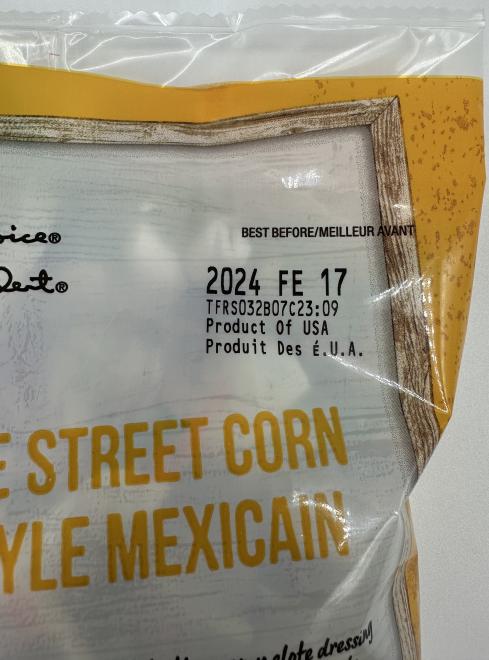
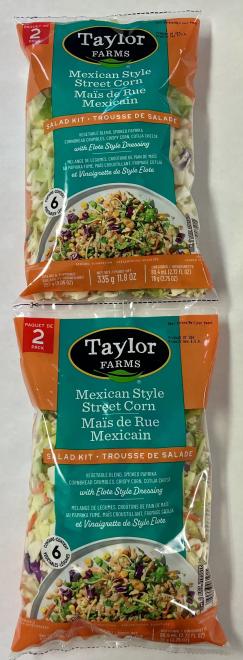
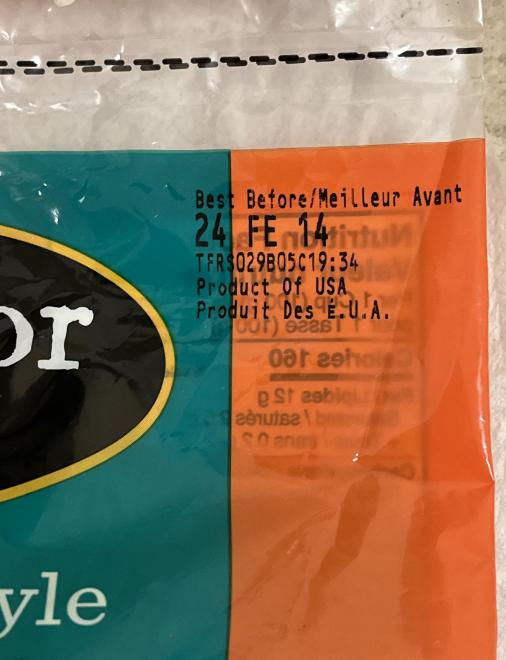
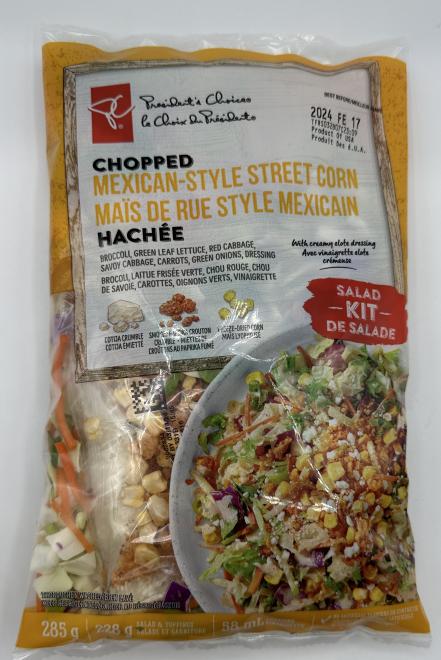
Canada – President’s Choice brand and Taylor Farms brand Mexican-Style Street Corn Salad Kits recalled due to Listeria monocytogenes

CFIA

Product
Mexican-Style Street Corn Salad Kits
Issue
Food – Microbial Contamination – Listeria
What to do

Do not consume, use, sell, serve, or distribute recalled products

Distribution
National

Issue

The affected products are being recalled from the marketplace due to possible Listeria monocytogenes contamination. These products were made using cheese recalled by Rizo-López Foods, Inc. in association with an outbreak investigation in the US.

What you should do

  • If you think you became sick from consuming a recalled product, contact your healthcare provider
  • Check to see if you have recalled products
  • Do not consume, serve, use, sell, or distribute recalled products
  • Recalled products should be thrown out or returned to the location where they were purchased

Food contaminated with Listeria monocytogenes may not look or smell spoiled but can still make you sick. Symptoms can include vomiting, nausea, persistent fever, muscle aches, severe headache and neck stiffness. Pregnant women, the elderly and people with weakened immune systems are particularly at risk. Although infected pregnant women may experience only mild, flu-like symptoms, the infection can lead to premature delivery, infection of the newborn or even stillbirth. In severe cases of illness, people may die.

Research – Power Law for Estimating Under-detection of Foodborne Disease Outbreaks, United States

CDC

Abstract

We fit a power law distribution to US foodborne disease outbreaks to assess under-detection and underreporting. We predicted that 788 fewer than expected small outbreaks were identified annually during 1998–2017 and 365 fewer during 2018–2019, after whole-genome sequencing was implemented. Power law can help assess effectiveness of public health interventions.

Each year in the United States, >800 foodborne outbreaks are reported, causing >14,000 illnesses and >800 hospitalizations (13). Foodborne outbreaks range from small, localized outbreaks, such as those associated with a locally contaminated meal shared by family or friends, to large, multistate outbreaks associated with a contaminated food that is widely distributed. Selection and information biases, pathogen testing methods, and outbreak size can affect detection, investigation, and reporting (4). However, few methods are available to estimate the extent of outbreak under detection and underreporting.

Outbreaks can be considered natural occurrences with a mathematical relationship between frequency and size. Several studies have used a power law distribution, where one variable is proportional to the power of another, to help describe disease outbreaks or transmission (59). We examined the mathematical relationship between foodborne outbreak frequency and size to estimate the number of expected outbreaks of different sizes, comparing power law, log-normal, and exponential distributions by using censored and complete data to clarify under detection and underreporting.

Research – The financial impact of foodborne illness outbreaks at restaurants: Chipotle Mexican Grill

Wiley Online

As demand for food away from home increases, outbreaks at restaurants become an important source of food-related illness. In the United States, over 60% of foodborne illness outbreaks occur at restaurants and 97% of outbreaks are limited to a single state. Despite this, we currently know little about restaurant outbreaks and in particular, single-state outbreaks are not well understood. We use Chipotle Mexican Grill’s eight outbreaks (2015–2018) to evaluate the media and stock market responses to both single and multistate outbreaks. Using news and stock market data, we provide evidence that multistate outbreaks brought swift stock price declines and single-state outbreaks’ impact depended on their timing, rather than their severity. Before Chipotle’s more well-known, multistate outbreaks, the firm’s single-state outbreaks brought little reporting and no financial losses, whereas after the multistate food safety events, single-state events resulted in national media coverage and large financial impacts. Our findings are consistent with the literature on food scares that can result in chronic low-level anxiety, which can bring about a large resurgence of concern for smaller outbreaks. The lessons learned from Chipotle’s case underscore the importance of investment in outbreak prevention. [G14 (Information and Market Efficiency, Event Studies, Insider Trading)].

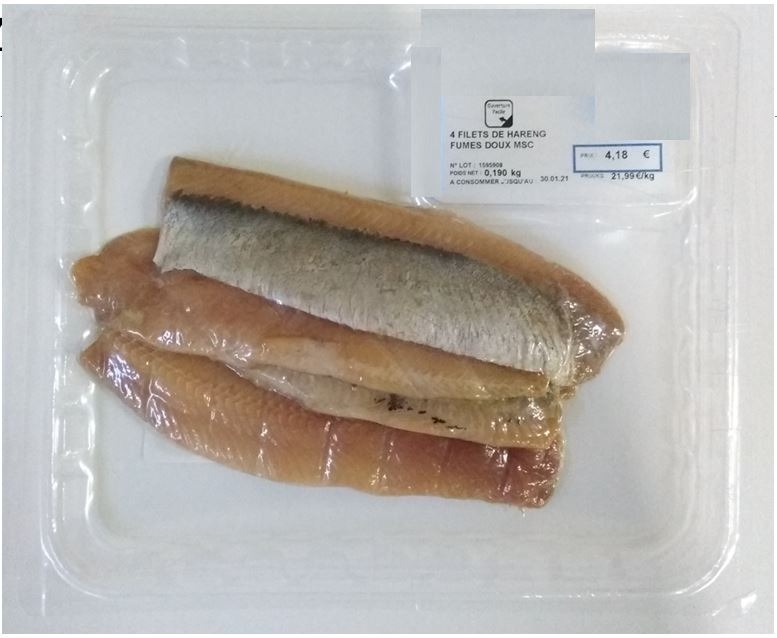
France -MILD SMOKED HERRING FILLET – Listeria monocytogenes

Gov France

Product category
Food
Product subcategory
Fishing and aquaculture products
Product brand name
UNBRANDED
Model names or references
SWEET HERRING FILLET
Product identification
GTIN Batch Date
2298105000003 2097332 Use-by date 02/04/2024
2298105000003 2097792 Use-by date 02/04/2024
2298105000003 2098344 Use-by date 02/04/2024
Packaging
vacuum tray, variable weight
Start/end date of marketing
From 01/23/2024 to 02/04/2024
Storage temperature
Product to keep in the refrigerator
Health mark
FR 47 091 046
Geographical sales area
Whole France
Distributors
FRANPRIX, COEUR DE FRAIS, CARREFOUR CONTACT, MDF, CONSOMACTECOEUR47, ADOR, SUPER U, O MARCHE FRAIS, SAVEURS D’ICI, MERICQ BOUTIQUE AGEN

Peanuts From China Most Common Nuts Reported for Aflatoxin Contamination in EU

Food Safety.com

Aflatoxin-contaminated nuts and seeds dominated mycotoxin notifications made through the EU’s Rapid Alert System for Food and Feed (RASFF) between 2011 and 2021, according to a recent study.

RASFF is a platform for exchanging information about food safety incidents between EU Member States. For the present study, the researchers aimed to discover the extent to which nuts were responsible for RASFF mycotoxin notifications in recent years. Mycotoxins are secondary metabolites that present serious threats to public health, and the most prevalent, toxic, and carcinogenic mycotoxins observed in human food and animal feed are aflatoxins.

Italy – American giant blueberries – frozen product – Norovirus

Salute

Brand : Freshona

Name : American giant blueberries – frozen product

Reason for reporting : Recall due to microbiological risk

Publication date : 2 February 2024

Documentation

Documentation

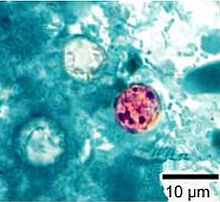
Research – Editorial for the Special Issue Cyclospora cayetanensis and Cyclosporiasis

MDPI

This Special Issue presents important advances, particularly regarding the better detection methods now available, and reviews important aspects of C. cayetanensis and cyclosporiasis. It includes two publications about the epidemiology of the parasite in humans, one in Ghana and another in Colombia. The study in Ghana, one of the few studies of this parasite in Africa, confirmed that immunosuppressed patients are more prone and vulnerable to C. cayetanensis infection. In endemic countries, the most susceptible populations are children, foreign people, and immunocompromised patients, while in industrialized countries, C. cayetanensis affects people of any age [2]. The study in Colombia showed the high endemicity of C. cayetanensis in the Colombian Wiwa indigenous people and observed a higher prevalence of C. cayetanensis in the rainy season (July–November) compared to a previous study performed in the same area during the dry season (January–April) [4]. C. cayetanensis infection is remarkably seasonal, although it varies by geographical region most likely due to human activities, environmental contamination, and the optimal sporulation conditions in each area