Category Archives: Food Microbiology Research

UK – New research shows societal burden of foodborne illness in the UK

FSA

The FSA Board has welcomed a report which presents new comprehensive estimates of the societal burden caused by foodborne illnesses in the UK.

The outcome of an extensive programme of work conducted over a five-year period was scrutinised by Members at the FSA Board Meeting, and provides a more in depth understanding of the wider impacts of foodborne diseases such as norovirus, campylobacter and listeria.

For the first time, the study also incorporates estimates based on the impacts of foodborne illness cases where a specific pathogen is not identified, often as a result of people not seeking medical attention.

The new model which produced the estimates follows an established process used in the UK and internationally to assess the financial impacts and the ‘human costs’ such as pain grief and suffering and changes to quality and length of life.

Estimates for these ‘human costs’ were developed in part by surveying more than 4,000 people to produce monetised values to measure the impact of different foodborne pathogens.

This will allow for these intangible human impacts to be considered alongside financial impacts when decisions relating to foodborne illnesses are made.

The model shows that for 2018:

  • the burden arising from the 13 main foodborne pathogens is around £3bn. Norovirus imposes the greatest burden at an estimated annual cost of £1.68bn followed by Campylobacter spp. (£0.71bn) and Salmonella spp. (non-typhoidal) (£0.21bn).
  • foodborne illness cases where a pathogen was not identified causes an estimated societal burden of around £6bn.
  • Taken together, the two estimates lead to a headline figure of approximately £9bn, as the annual cost burden of foodborne illness in the UK in 2018.
  • cases of Campylobacter, which are more common but generally less severe, impose a burden of £2,380 each while Listeria, the least common of the 13 measured, has a burden equivalent to £230,748 due to a higher proportion of fatalities, resulting in a higher ‘human cost’.


The Board welcomed the work and the report’s findings which provides the FSA with a more robust and comprehensive awareness of the impact of all foodborne illnesses and an additional tool to direct future decisions on prevention.

Heather Hancock, Chair of The Food Standards Agency said:

“I welcome this vital new research.  Being able to put a cost on the personal, social and economic burden when someone becomes ill as a result of food, represents a milestone for the FSA.

“We will use this new analysis of the cost of illness, and how it varies between different germs, to help set our priorities for tackling foodborne illness and to focus the FSA’s expertise, money and influence.”


Professor Rick Mumford, Head of Science Evidence and Research at the Food Standards Agency said:

“For the first time this model gives the FSA and other partners a much more detailed picture of how foodborne illnesses can impact society.

“We have designed it from the ground up to measure the impacts of specific pathogens as well as for the first time providing an estimate of the majority of cases where no pathogen is attributed.

“As a result, we are now equipped with robust, quantitative evidence on the impact of foodborne disease which significantly strengthens our decision-making ability.”


Richard Smith, Deputy Pro Vice Chancellor and Professor of Health Economics at the University of Exeter said:

“Providing an understanding of the impact of foodborne disease on individuals and wider society is a critical building block to understanding where and how to best deal with it.

“The FSA has a rich history of developing such analyses, and this latest work builds on that with significant revisions and updates to provide the most robust values yet of the societal impact of foodborne disease.

“This provides a robust, powerful and flexible tool to assist FSA in determining its priorities for tackling foodborne disease, which remains a serious challenge for our society.”

FSA economists worked with academics from leading UK universities to develop the Cost of Illness (COI) model to identify and measure all the costs of a particular disease.

The model is loosely based on the Health and Safety Executive (HSE)’s Cost to Britain model (Opens in a new window)which estimates the annual cost of workplace fatalities, self-reported injuries and ill health at £15bn.

This new model was quality assured internally and externally by independent experts and represents a significant improvement from the previous, much simpler model used to estimate the burden of foodborne illness. Further work is currently ongoing to apply these methodologies to other areas, including food allergy and hypersensitivity.

Notes to Editors

Publications

The Burden of Foodborne Disease in the UK 2018 Report

Other notes

Comparisons to previous estimates is not possible as this is the first time that the FSA have estimated the total burden of foodborne illness.

This estimate is therefore inevitably greater than the estimates for identifiable cases alone for the following reasons:

  • this is the first time we are measuring cases where no specific pathogen is attributed, which account for 60% of cases
  • the estimated number of illnesses cases attributed to foodborne illnesses has increased from 1 million to 2.4 million as announced last month
  • The new model uses a different methodology to calculate the non-financial ‘human costs’, which account for almost 80% of the overall burden

Research -New Monoclonal Antibody Treatment Takes Aim at Bacterial Biofilms

Contagion Live

Microbial biofilms can present a variety of medical challenges by generating chronic infections, modulating host immune response, contaminating medical devices or environments, and facilitating the emergence of antimicrobial resistance.

Investigators at the Lewis Katz School of Medicine at Temple University have shown that a new monoclonal antibody treatment is able to break apart these communities of harmful bacteria, which could aid existing antibiotic treatments in more efficiently clearing out infections. Their research was published in Nature Communications.

The investigators tested a human monoclonal antibody with pan-amyloid-binding activity, mAb 3H3, against biofilms formed by Salmonella enterica serovar typhimurium.

The antibody was isolated from a healthy human subject. The study team was interested in 3H3’s ability to attach to β-amyloid.

New Zealand – New Zealand Food Safety sets significant new goal to reduce foodborne Campylobacter by 20 per cent by 2025

MPI

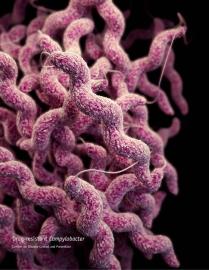
campy2

Image CDC

Deputy director-general for New Zealand Food Safety Bryan Wilson announced today a new goal to significantly reduce foodborne Campylobacter poisoning by 20% by 2025.

Campylobacter is the most common cause of notifiable foodborne illness in New Zealand. Symptoms can include stomach cramps, nausea, fever and diarrhoea, lasting for about a week.

“Contributing factors are Kiwis’ ever-increasing level of consumption of fresh chicken meat and the way we handle, prepare and cook poultry meat in New Zealand.

“Working with the poultry industry, New Zealand Food Safety’s risk management strategy has achieved more than a 50% reduction in foodborne cases since 2006. This is a substantial reduction and one that we could not have achieved without partnership and support from industry. But, the rate of gastrointestinal illness caused by this bug remains high,” says Mr Wilson.

“New Zealand Food Safety and industry continue to work collaboratively to reduce Campylobacter rates in the country with an updated strategy and action plan that includes enhanced consumer education, better hygiene through the poultry processing and food distribution chain, and improved measures at the poultry farm level,” says Mr Wilson.

New Zealand Food Safety commissioned the study to add a high level of scientific rigour to efforts to reduce foodborne illnesses, and the findings of the study Source assigned campylobacteriosis in New Zealand were also released today.

The results from the study found more than 80% of human foodborne cases are likely due to the consumption of poultry meat.

“The intensive 12-month study included interviews with 666 individuals who’d been infected with the bug.

“As well as identifying the sources of Campylobacter illnesses in humans, the study identified several factors that may increase the likelihood of an individual contracting the disease.

“We’ll continue our work with industry to drive down the level of Campylobacter in poultry by understanding where the bacteria enter the food chain and where cross-contamination is likely happening.

“It’s important consumers know how to prevent Campylobacter in the home by continuing to follow the advice on the New Zealand Food Safety web page Clean, Cook, Chill.

“Cooking chicken properly until the juices run clear and having good hygiene practises at home to prevent cross-contamination will minimise your risk to Campylobacter and other foodborne illnesses,” says Mr Wilson.

Source Assigned Campylobacteriosis in New Zealand Study (SACNZS) – Report [PDF, 5.4 MB]

Find out more about Campylobacter

Clean, Cook, Chill

Research – In vitro antimicrobial effects of Myristica fragrans essential oil on foodborne pathogens and its influence on beef quality during refrigerated storage

Wiley Online

Nutmeg (Myristica fragrans) seed was subjected to the hydro‐distillation method to extract its essential oil (NEO). Its main constituents were α‐pinene (20.16%), sabinene (14.45%), and β‐pinene (13.26%) with great antimicrobial and antioxidant actions. A novel edible coating was then fabricated based on the sage seed mucilage (SSM) and NEO, to ameliorate the quality and shelf‐life of beef slices. The NEO‐loaded SSM coating was able to significantly decrease the population of total viable count, Escherichia coliStaphylococcus aureus, psychrotrophic bacteria, and fungi. Moreover, lipid oxidation of beef slices was remarkably suppressed upon the application of bioactive NEO‐loaded SSM edible coating, as compared with the control by Day 6. The coated beef sample, especially NEO‐rich SSM coated ones perceived a higher consumer acceptance and firmness than the SSM coated and noncoated samples. The SSM edible coating containing NEO could therefore have the potential to control the growth of pathogenic microorganisms and lipid oxidation, and to improve the color stability and sensory properties of meat and meat products.

Australia – Microbial recalls up but overall alerts down in Australia

Food Safety News

Undeclared allergens and microbial contamination were responsible for the majority of recalls in Australia this past year.

Undeclared allergens caused 32 of the 87 recalls in 2019 while 30 were due to microbial contamination. In 2018, 46 recalls were because of allergens and 20 due to microbial contamination out of 100.

Food Standards Australia New Zealand (FSANZ) collects data on Australian food recalls so trends can be identified as well as common problems in the industry.

Recalls are classified by FSANZ under microbial contamination, labelling, foreign matter, chemical/other contaminants, undeclared allergen, biotoxin and other.

Undeclared allergen and microbial recalls up
Between January 2010 and December 2019, FSANZ coordinated 707 recalls. The average per year for the last 10 years is 71.

The type mostly associated with a recall is mixed and/or processed food but this is likely due to the range in this category, including most long-life packaged food and manufactured items with multiple ingredients. Breads and bakery products, including biscuits, cakes and pastries, is the second largest type associated with recalls.


Research – Biofilm-inhibition activities of fractions of Senna Siamea (LAM) Irwin & Barneby leaf against Escherichia coli

Academic Journals ecoli

Escherichia coli has carved its niche in the urinary tract with the formation of a formidable matrix called biofilm. This biofilm is not only recalcitrant to the body’s immune system but also resistant to antibacterial agents. Senna siamea (Lam) Irwin and Barneby is a medicinal plant with established antibacterial effect against planktonic cells of many bacteria. An attempt was made herein to evaluate the effect of its leaf extract and fractions on biofilm of E. coli isolates. Crude extracts of leaf, stem bark and root of this plant were prepared using ethanol as the solvent for the cold extraction. Phytochemical screening was carried out on the three extracts. Two E. coli strains from different antenatal patients attending General Hospital, Kafanchan, Kaduna were donated to us by a researcher from Ahmadu Bello University, Zaria and the reference strain, E. coli, WDCM 00013 (from Germany) were tested for biofilm production using the Congo red method. Antimicrobial susceptibility testing of the crude extracts against the isolates was carried out using the agar diffusion method. The Minimum Inhibitory Concentration (MIC) and the Minimum Bactericidal Concentration (MBC) were determined for the leaf extract of the plant using micro broth dilution and agar diffusion methods respectively. In order to establish the antibiofilm activities of the leaf extract of the plant, sub-inhibitory concentrations (sub-MIC) were used against the test isolates in the remaining assays in the work. Column chromatography backed by thin layer chromatography (TLC) was used to fractionate leaf extract (having the best antibacterial activity) of the plant, using different ratios of a combination of hexane, ethyl acetate and n-butanol as fractionating solvents. MIC and MBC of the leaf extract were and 50 mg/ml respectively. High values of percentage biofilm inhibition were observed against all the bacterial isolates from the antibiofilm assay. Combination of solvents in the increasing order of polarity enhanced the antibiofilm activity of the various fractions of the leaf extract of Senna siamea. In conclusion, further fractionation of Senna siamea leaf extract increases its antibiofilm activities.

Research -Restaurants and takeaways cop blame for 60% of food poisoning cases

Food Service Equipment Journal

According to the FSA, there are an estimated 380,000 cases of norovirus linked to food occur in the UK per year.

A breakdown of the roles of the main transmission pathways in food suggest eating out accounts for an estimated 37% of all foodborne norovirus cases and takeaways at 26%.

Open-headed lettuce on retail sale at 30%, raspberries on retail sale at 4%, and oysters on retail sale at 3% make up the remainder.

The revised foodborne norovirus estimate, combined with better analysis of how many illnesses of unknown cause are also likely to be caused by food, suggest around 2.4 million estimated UK cases of foodborne illness occur each year.

Professor Guy Poppy, chief scientific adviser to the Food Standards Agency, said: “This work gives us a much better idea of the role of food in the spread of all infectious intestinal disease in the UK. However, this does not mean more people are getting unwell, only that we estimate food is responsible for more existing cases than previously thought.


Research – Campylobacter chicken liver outbreak adds to evidence of risk

Food Safety News

campy2

Image CDC

Researchers have called for increased awareness to reduce the risk of Campylobacter outbreaks linked to incorrectly cooked chicken liver dishes.

Communication from food safety and public health authorities may be required. Any strategy should ensure the risk profile of poultry liver-containing dishes is raised and availability of evidence-based preventative strategies for food preparation promoted, according to the study published in the journal Epidemiology and Infection.

There were 19 people who got campylobacteriosis linked to an outbreak in England 2016; seven confirmed and 12 probable cases. Chicken liver pâté was most strongly associated with illness. Three cases reported an incubation period of less than 24 hours, consistent with other outbreaks of campylobacteriosis associated with poultry liver.

Diversorium Ltd., the company which owned and operated the Downe Arms, a hotel in Wykeham near Scarborough, was fined £8,000 ($10,300) in November 2017 for two food hygiene related offences related to the outbreak.

Research -Foodborne Illness Pathogens And Fecal Contaminants Found On New Disposable Gloves

Yahoo Finance

New results of microbial testing of the surfaces of unused disposable gloves, in association with Eagle Protect PBC, have found bacterial genera and species specific to foodborne illnesses (FBI), food spoilage and skin infections. Strains of these microorganisms of concern were present on new and unused disposable gloves currently being used in the US food industry, and in some cases as medical exam gloves. Twenty-five (25) different brands of gloves were analyzed, providing specific profiles in respect to their manufacturing standards, or lack thereof. Food, dermal and respiratory pathogens as well as spoilage species were linked to the use of polluted water sources; sewage (fecal pollution); and human and animal gut bacteria introduced into glove production environments.


Research -Salmonella phage study underway on Kenyan poultry farms

Wattagenet

The use of bacteriophages to kill Salmonella in poultry flocks is currently being investigated in Kenya. The work, driven by concerns about antibiotic overuse and antibiotic resistance, should result in a commercially available product aligned to local needs and offering an alternative to antibiotics.

Full Article