Category Archives: Food Microbiology Research

Research – Survival and histamine production by histamine forming bacteria exposed to low doses of gamma irradiation

JFP

Histamine fish poisoning occurs when fish containing high amount of histamine are consumed. Since histamine is thermally stable, control of histamine forming bacteria in seafood is a good strategy to prevent the formation of histamine. One of the potential ways to do this is to apply gamma radiation on the histamine formers. In order to understand the effect of gamma radiation on the histamine forming bacteria, laboratory isolates of prolific histamine forming bacteria namely Morganella morganii, Klebsiella variicola and Proteus vulgaris were exposed to different doses of gamma radiation in nutrient broth and in tuna muscle spiked with histamine formers. None of the test bacteria survived in tuna muscle radiated at 2.0 kGy. Among the selected histamine formers, Klebsiella variicola was highly sensitive to gamma radiation and was eliminated at a dose of 1.5 kGy. Histamine production levels were also reduced as radiation dose increased. These results suggest that gamma irradiation can effectively eliminate histamine forming bacteria and the threat of histamine poisoning in seafood.

Scotland – New research into Campylobacter infection in Scotland

HPS

campy2

Image CDC

17 March 2020

Article: 54/1104

Food Standards Scotland (FSS) has published new research on Campylobacter, the most common cause of bacterial food poisoning in Scotland, which provides evidence concerning those at greater risk of infection and severe illness, and the estimated healthcare cost of infection. Conducted between 2013 and 2019, this research was undertaken by Health Protection Scotland (HPS) and the University of Aberdeen, on behalf of FSS.

The research confirmed that, while a higher number of cases are reported in more affluent areas of Scotland, those living in the most deprived areas are at an increased risk of developing serious illness and being hospitalised.

The results showed that overall, around 14% of Campylobacter cases lead to hospitalisation, with hospital admissions more likely to have one or more of the following risk factors:

  • being 65 years or older
  • having an underlying medical condition
  • being prescribed with proton pump inhibitor to reduce stomach acid production in the 90 days prior to infection

The findings from this research have enabled public health authorities to estimate that, with approximately 6,000 cases reported per year, Scotland’s total annual healthcare cost for Campylobacter infections is approximately three million pounds.

Research – Combination of ultraviolet light‐C and clove essential oil to inactivate Salmonella Typhimurium biofilms on stainless steel

Wiley Online

Abstract

Salmonella typhimurium is able to form biofilms as a resistance mechanism against antimicrobials; therefore, it represents a problem for assuring food safety and highlights the importance of research on anti‐biofilm technologies. In this study, S. typhimurium biofilms were inactivated with the combination of clove essential oil (CEO) and ultraviolet light (UV‐C). The volatile composition of the CEO determined by gas chromatography showed eugenol as the major constituent (82%). A combination of CEO with UV‐C achieved a complete bacterial reduction (6.8 log/cm2) on biofilms with doses of 1.2 mg/ml and 76.41 mJ/cm2, respectively. Individually, the CEO at 1.2 mg/ml caused a reduction of 1.8 log CFU/cm2 of attached bacteria cells on stainless steel, while UV‐C individually used at 620.4 mJ/cm2 caused a 2.9 log CFU/cm2 reduction compared to control biofilms. In conclusion, this study demonstrated a synergistic effect of combining CEO and UV‐C irradiation to inactivate biofilms of S. typhimurium.


Research – Pooling of laying hen environmental swabs and efficacy of Salmonella spp. detection

JFP imagesCAJOQ0KC

Environmental testing for  Salmonella  Enteritidis is required for U.S. shell egg producers with > 3,000 hens on a farm. The egg producer assumes all costs for the mandatory testing. According to the FDA Egg Rule, either manure scraper or drag swabs can be collected according to published guidelines and requirements. The current study was undertaken to determine the efficacy of  Salmonella  detection in single, two, and four swab pools of either manure scraper or drag swabs. Resistant isolates of  Salmonella  Enteritidis (1000 ppm streptomycin; SE), Heidelberg (200 ppm nalidixic acid (NA); SH), Typhimurium (200 ppm NA; ST), and Kentucky (200 ppm NA; SK) were utilized. Low (approximately 8.4 CFU) and high (approximately 84 CFU) dose inocula were introduced onto a single swab within a pool. A single flock of each conventional cage (manure scraper swabs) and cage-free barn (drag swabs) were monitored throughout the study at the ages required under the FDA Egg Rule. The greatest and most consistent recovery of inoculum was found in single swab samples. For low dose inocula, it was difficult to recover isolates from single manure scraper swabs (57.9 – 29.2 %) and decreased as more swabs were added to the pool. Recovery of isolates in manure scraper swabs was greater for high dose inoculum, though SH exhibited difficulty competing with naturally occurring flora. One and two swab pools of drag swabs had similar rates of recovery at both low and high dose SE, SH, and ST. When SE and SK were combined in an inoculum, SE was recovered at a much higher rate than SK for all types of swabs and doses of inocula. Pooling of two drag swabs allowed for similar detection of low and high dose  Salmonella  tested in the current study, but the pooling of manure scraper swabs decreased detection of low dose  Salmonella .

Research -Microbiological reduction strategies of irrigation water for fresh produce

JFP

Irrigation water can be a source of pathogenic contamination of fresh produce. The quality of the water used during primary production is important to control to ensure food safety and protect human health. Several measures to control the microbiological quality of irrigation water are available for growers, including preventative and mitigation strategies. However, clear guidance for growers on which strategies could be used to reduce microbiological contamination is needed. This study evaluates pathogenic microorganisms of concern in fresh produce and water, the microbiological criteria of water intended for agricultural purposes, as well as preventative and mitigative microbial reduction strategies. This article provides suggestions for control measures that growers can take during primary production to reduce foodborne pathogenic contamination coming from irrigation water. Results show that controlling the water source, regime, and timing of irrigation may help to reduce the potential exposure of fresh produce to contamination. Moreover, mitigation strategies like electrolysis, ozone, UV, and photocatalysts hold promise either as a single treatment, with pretreatments that remove suspended material, or as combined treatments with another chemical or physical treatment(s). Based on the literature data, a decision tree was developed for growers, which describes preventative and mitigation strategies for irrigation water disinfection based on the fecal coliform load of the irrigation water and water turbidity. It helps guide growers when trying to evaluate possible control measures given the quality of the irrigation water available. Overall, the strategies available to control irrigation water used for fresh produce should be evaluated on a case-by-case basis as one strategy or technology does not apply to all scenarios.

Research – Inactivation of Shiga Toxin-Producing Escherichia coli and Listeria monocytogenes Within Plant Versus Beef Burgers in Response to High Pressure Processing

JFP

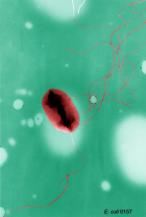
kswfoodworld E.coli O157

Image CDC

We evaluated high pressure processing to lower levels of Shiga toxin-producing Escherichia coli (STEC) and Listeria monocytogenes inoculated into samples of plant or beef burgers. Multi-strain cocktails of STEC and L. monocytogenes were separately inoculated (ca. 7.0 log CFU/g) into plant burgers or ground beef. Refrigerated (i.e., 4°C) or frozen (i.e., -20°C) samples (25-g each) were subsequently exposed to 350 MPa for up to 9 or 18 min or 600 MPa for up to 4.5 or 12 min, respectively. When refrigerated plant or beef burger samples were treated at 350 MPa for up to 9 min, levels of STEC were reduced by ca. 0.7 to 1.3 log CFU/g. However, when refrigerated plant or beef burger samples were treated at 350 MPa for up to 9 min, levels of L. monocytogenes remained relatively unchanged (ca. ≤0.3 log CFU/g decrease) in plant burger samples, but were reduced by ca. 0.3 to 2.0 log CFU/g in ground beef. When refrigerated plant or beef burger samples were treated at 600 MPa for up to 4.5 min, levels of STEC and L. monocytogenes were reduced by ca. 0.7 to 4.1 and ca. 0.3 to 5.6 log CFU/g, respectively. Similarly, when frozen plant and beef burger samples were treated at 350 MPa up to 18 min, reductions of ca. 1.7 to 3.6 and ca. 0.6 to 3.6 log CFU/g in STEC and L. monocytogenes numbers, respectively, were observed. Exposure of frozen plant or beef burger samples to 600 MPa for up to 12 min resulted in reductions of ca. 2.4 to 4.4 log and ca. 1.8 to 3.4 log CFU/g in levels of STEC and L. monocytogenes, respectively. Via empirical observation, pressurization did not adversely affect the color of plant burger samples, whereas appreciable changes in color were observed in pressurized ground beef. These data confirm that time and pressure levels already validated for control of STEC and L. monocytogenes in ground beef will likely be equally effective towards these same pathogens in plant burgers without causing untoward effects on product color.

Research – Some E. coli Strains May Be Linked to Development of Bowel Cancer

Food Poisoning Bulletin

CDC E.coli

Image CDC

According to a new study in the journal Nature, E. coli infections may be linked to bowel cancer. Some species of the intestinal microbiota, which is the collection of bacteria and viruses that live in the human gut, have been associated with colorectal cancer, but a direct role hasn’t been proven.

As it turns out, E. coli bacteria carry what is called a pathogenicity island pks, that creates enzymes that synthesize a compound called colibactin. Colibactin causes double-strand breaks in cultured cells. This damage can lead to cancer over time. Colibactin is found more often in fecal samples of people who do have bowel cancer than healthy people.

Research – The Growth and Aflatoxin B1, B2, G1 and G2 Production by Aspergillus flavus and A. parasiticus on Ground Flax Seeds (Linum usitatissimum)

JFP

Flax seed has become an increasingly popular food ingredient because of its nutrient richness as well as potential health benefits.  Flax seeds are often ground before consumption and flax seed cakes are used as animal feed.  Aflatoxin production may occur subsequently when the ground seeds are stored in an environment supporting fungal growth. The objectives of this study were to determine the growth of two  toxigenic fungi, Aspergillus flavus and A. parasiticus , and to quantify the concentrations of four major aflatoxins (AFB1, AFG1, AGB2, and AFG2) produced by the two fungi on ground flax seeds with 0.82, 0.86, 0.90, 0.94 and 0.98 a w incubated for 30 days at 20, 27 and 35°C. Results of the study showed that A. flavus was able to grow on ground seeds with 0.86-0.98 a w at all three temperatures, and the most rapid growth occurred at 0.90 and 0.94 a w at 27°C. Whereas A. parasiticus grew on seeds with 0.86-0.98 a w at 27 and 35°C as well as on seeds with 0.86-0.90 a w at 20°C, and the most favorable growth condition was 0.90-0.94 a w at 35°C. Aspergillus flavus produced aflatoxins on seeds with 0.90-0.94 a w at 27°C as wells as on seeds with 0.86-0.98 a w at 35°C and the maximum total aflatoxin (298 µg/kg), AFB1 (247 µg/kg) and AFG1 (51 µg/kg) were found on seeds with 0.90 a w at 35°C. Whereas, A. parasiticus produced aflatoxins under a wider range of conditions which included 0.86 a w at 27 and 35°C, 0.90 a w at 20 and 27°C, 0.94 a w at 27°C, and 0.98 a w at 35°C.  The maximum total aflatoxin (364 µg/kg) and maximum AFB1 (324 µg/kg) along with 34 µg/kg AFG1 and 6 µg/kg AFB2 were produced by A. parasiticus on seeds with 0.98 a w incubated at 35°C for 30 days. Linear regression models also indicated that high incubation temperature (35°C) was optimal for overall fungal growth as well as formation of high levels of aflatoxin by both fungi. Future studies should also address aflatoxin contamination in flax seed oil.

Research -Towards a better understanding of listeriosis risk among older adults in the United States: Characterizing dietary patterns and the sociodemographic and economic attributes of consumers with these patterns

JFP

Older adults are at higher risk of invasive listeriosis compared with the general population.  Some foods are more likely than others to be contaminated with or contain high levels of Listeria monocytogenes . The objectives of this study were to, 1) determine dietary consumption patterns, among older adults in the United States; 2) evaluate sociodemographic and economic characteristics of older adults associated with each pattern; 3) determine intake of foods associated with larger relative risk of listeriosis within these patterns; and 4) rank these patterns based on risk. Data of older adults, age 60 and older, participating in the cross-sectional National Health and Nutrition Examination Surveys (NHANES) 2009-2010, 2011-2012, and 2013-2014 (n=4,967) were included in these analyses. Cluster analysis was used to define dietary patterns based on day 1 and day 2 24-hour dietary recalls. Mean intake of foods associated with higher risk of listeriosis were examined within each pattern, and ANOVA with Dunnett’s method of adjustment was used to evaluate significant differences in mean intake of foods. Patterns were ranked based on relative risk of listeriosis using outbreak illness attribution data. Five distinct dietary patterns were identified. Patterns ranked at highest relative risk of listeriosis, based on US outbreak illness attribution data, were characterized by relatively higher intakes of, (1) fruits, vegetables, and cheeses (~13% respondents) or (2) cereal, milk, and yogurt (~14% respondents).  Individuals consuming these dietary patterns differed in sex, race, food security, self-rated diet quality, and self-rated health. Cluster analysis, despite methodological limitations, provides new information on consumption, sociodemographic, and economic characteristics of subgroups within susceptible populations that may be used to target educational messages .


Food and Coronavirus – EFSA – Coronavirus: no evidence that food is a source or transmission route

EFSA

EFSA is closely monitoring the situation regarding the outbreak of coronavirus disease (COVID-19) that is affecting a large number of countries across the globe. There is currently no evidence that food is a likely source or route of transmission of the virus.

EFSA’s chief scientist, Marta Hugas, said: “Experiences from previous outbreaks of related coronaviruses, such as severe acute respiratory syndrome coronavirus (SARS-CoV) and Middle East respiratory syndrome coronavirus (MERS-CoV), show that transmission through food consumption did not occur. At the moment, there is no evidence to suggest that coronavirus is any different in this respect.”

The European Centre for Disease Prevention and Control (ECDC) has said that while animals in China were the likely source of the initial infection, the virus is spreading from person to person – mainly via respiratory droplets that people sneeze, cough, or exhale. More information on coronavirus and food can be found in this FAQ by the BfR, Germany’s risk assessment body.

Scientists and authorities across the world are monitoring the spread of the virus and there have not been any reports of transmission through food. For this reason, EFSA is not currently involved in the response to the COVID-19 outbreaks. However, we are monitoring the scientific literature for new and relevant information.

Regarding food safety, the World Health Organization (WHO) has issued precautionary recommendations including advice on following good hygiene practices during food handling and preparation, such as washing hands, cooking meat thoroughly and avoiding potential cross-contamination between cooked and uncooked foods. More information can be found on the WHO website.