Category Archives: Food Microbiology Research

Research – Occurrence and Multidrug Resistance of Campylobacter in Chicken Meat from Different Production Systems

MDPI

Campylobacter kswfoodworld

Campylobacter is the leading bacterial cause of diarrheal disease worldwide and poultry remains the primary vehicle of its transmission to humans. Due to the rapid increase in antibiotic resistance among Campylobacter strains, the World Health Organization (WHO) added Campylobacter fluoroquinolone resistance to the WHO list of antibiotic-resistant “priority pathogens”. This study aimed to investigate the occurrence and antibiotic resistance of Campylobacter spp. in meat samples from chickens reared in different production systems: (a) conventional, (b) free-range and (c) backyard farming. Campylobacter spp. was detected in all samples from conventionally reared and free-range broilers and in 72.7% of backyard chicken samples. Levels of contamination were on average 2.7 × 10³ colony forming units (CFU)/g, 4.4 × 10² CFU/g and 4.2 × 10⁴ CFU/g in conventionally reared, free-range and backyard chickens, respectively. Campylobacter jejuni and Campylobacter coli were the only species isolated. Distribution of these species does not seem to be affected by the production system. The overall prevalence of Campylobacter isolates exhibiting resistance to at least one antimicrobial was 98.4%. All the C. coli isolates showed resistance to ciprofloxacin and to nalidixic acid, and 79.5 and 97.4% to ampicillin and tetracycline, respectively. In total, 96.2% of C. jejuni isolates displayed a resistant phenotype to ciprofloxacin and to nalidixic acid, and 92.3% to ampicillin and tetracycline. Of the 130 Campylobacter isolates tested, 97.7% were classified as multidrug resistant (MDR).
USA -Fish and Fishery Products Hazards and Controls

FDA

This guidance represents the agency’s current thinking on the hazards associated with fish and fishery products and appropriate controls for those hazards. It does not create or confer any rights for or on any person and does not operate to bind FDA or the public. An alternative approach may be used if such approach satisfies the requirements of the applicable statute and regulations.

How to Report Seafood-Related Toxin and Scombrotoxin Fish Poisoning Illnesses

To help FDA effectively investigate, remove unsafe seafood products from the market, and develop new prevention strategies, the FDA relies on illness reporting from public health officials and healthcare providers.

U.S. Department of Health and Human Services
Food and Drug Administration
Center for Food Safety and Applied Nutrition
(240) 402-2300
SeafoodHACCP@fda.gov

This guidance is intended to assist processors of fish and fishery products in the development of their Hazard Analysis Critical Control Point (HACCP) plans. Processors of fish and fishery products will find information in this guidance that will help them identify hazards that are associated with their products, and help them formulate control strategies. The guidance will help consumers and the public generally to understand commercial seafood safety in terms of hazards and their controls. The guidance does not specifically address safe handling practices by consumers or by retail establishments, although many of the concepts contained in this guidance are applicable to both. This guidance is also intended to serve as a tool to be used by federal and state regulatory officials in the evaluation of HACCP plans for fish and fishery products.

Items Available


Introductory Video

Transcript of Video   |   Help with CaptionsExternal Link Disclaimer


Seafood HACCP Video Series

The FDA has developed a Seafood HACCP Video Series, designed to help the seafood industry and federal and state regulators better understand specific concepts described in FDA’s Fish and Fishery Products Hazards and Controls Guidance. The series consists of 6 videos covering the following topics: Time-Temperature Indicators, Time and Temperature Controls during Unrefrigerated Processing, Secondary Processor Receiving and Storage Controls, Heat Process Validation, Primary Processor Scombrotoxin Controls – Overview and Testing at Receiving, and Primary Processor Scombrotoxin Controls – Harvest Vessel Records.


Download the Guidance

June 2022

This guidance represents the agency’s current thinking on the hazards associated with fish and fishery products and appropriate controls for those hazards. It does not create or confer any rights for or on any person and does not operate to bind FDA or the public. An alternative approach may be used if such approach satisfies the requirements of the applicable statute and regulations.

Note: This document was corrected on August 3, 2011. The Agency corrected a typographical error appearing in the April 2011 version of this document. The Agency corrected “15%” to “1.5%” so that the sentence in “Chapter 11: Aquaculture Drugs” now reads “Sodium sulfite Used in a 1.5% solution for 5 to 8 minutes to treat eggs in order to improve their hatchability.”

Errata: Corrections and Omissions (PDF – 67KB)

Denmark – Denmark hit by a trio of Listeria outbreaks with unknown sources; eight deaths reported

Food Safety News

AdobeStock_195439963

Officials in Denmark are investigating three separate Listeria monocytogenes outbreaks that have affected almost 30 people with eight deaths reported.

The Statens Serum Institut, Danish Veterinary and Food Administration (Fødevarestyrelsen) and DTU Food Institute are trying to find the sources of these outbreaks.

One had already been reported but the Statens Serum Institut has updated the number of people sick. This incident has affected nine people, all of them have been hospitalized and four have died. Five cases are men and four are women.

Patients range from 33 to 93 years old and all had an underlying disease or other immune system issue prior to infection that made them particularly vulnerable, such as meningitis or sepsis. Eight are from the Hovedstaden region of the country. Sample dates range from May 13 to June 6, 2022.

Whole genome sequencing found the strains were closely related and of the sequence type (ST) 37.

Speaking earlier in June, Nikolas Hove from Fødevarestyrelsen said it was rare to see so many Listeria infections in such a short period of time and officials were working to find out which foods were the cause of illness, so the outbreak could be stopped.

Fødevarestyrelsen has written to a number of large industry organizations calling for their members to sharpen in-house monitoring of Listeria. If they find the bacterium in the environment or products, they can have it typed for free at Fødevarestyrelsen’s laboratory.

USA – FDA Investigating Another Infant Death Potentially Related to Abbott Baby Formula

Food Safety Tech

On Wednesday, June 22, the FDA announced that it was investigating the death of an infant that occurred in January 2022 and is potentially related to Abbott baby formula. In a statement, the FDA said that it was notified of the death through a consumer complaint received on June 10, 2022. “The agency has initiated an investigation, given that the complaint referenced that the infant had consumed an Abbott product. However, the investigation of this most recent consumer complaint is in its preliminary stages and the agency will provide an update as it learns more,” the statement read.

The FDA has previously reported its review of complaints related to nine infant deaths. Two were found to be associated with the Abbott Nutrition Sturgis plant investigation. However, the FDA notes that, despite extensive investigation, the evidence does not rule in or rule out a definitive link between these infant deaths and the product produced at Abbott Nutrition’s Sturgis, Michigan-based plant.

USA – Outbreak Investigation of Salmonella: Peanut Butter (May 2022)

FDA

The FDA, along with CDC and state and local partners, are investigating a multistate outbreak of Salmonella Senftenberg infections linked to certain Jif brand peanut butter products produced at the J.M. Smucker Company facility in Lexington, Kentucky.

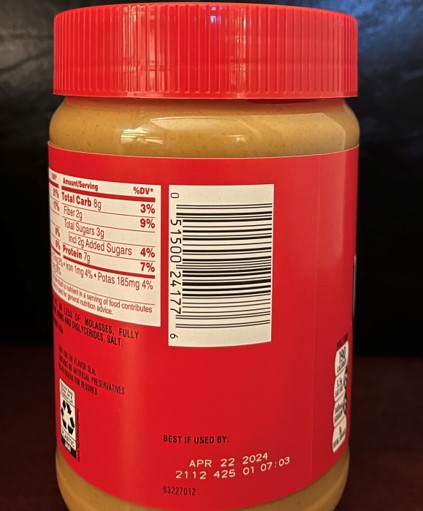
J.M. Smucker Company has voluntarily recalled certain Jif brand peanut butter products that have the lot codes described below. Photo examples are included below.

FDA has posted a list of additional recalls being conducted by companies that have used the recalled Jif peanut butter as an ingredient in the manufacturing of a new product (e.g., chocolate products) or in repackaging the product (e.g., snack cups). This list will be updated as the agency receives notification of new recalls.

In addition, USDA has issued a recall on ready-to-eat Super Asian Chicken Salads that were made with recalled Jif peanut butter and sold at an Amazon Go retail location in Washington state.

As of May 25, 2022, CDC reports that of the 10 people interviewed, 10 (100%) reported eating peanut butter prior to becoming ill. Nine people reported brand information, and all nine (100%) reported eating different varieties of Jif brand peanut butter.

FDA’s investigation is ongoing and more information will be provided as it becomes available.

Recommendation

Consumers, restaurants, and retailers should not eat, sell, or serve any recalled Jif brand peanut butter, including recalled products that contain the recalled Jif peanut butter. Consumers should also avoid feeding recalled peanut butter to pets or other animals, including wild birds.

For Consumers

Follow these steps:

  1. Check if you have Jif peanut butter in your home.
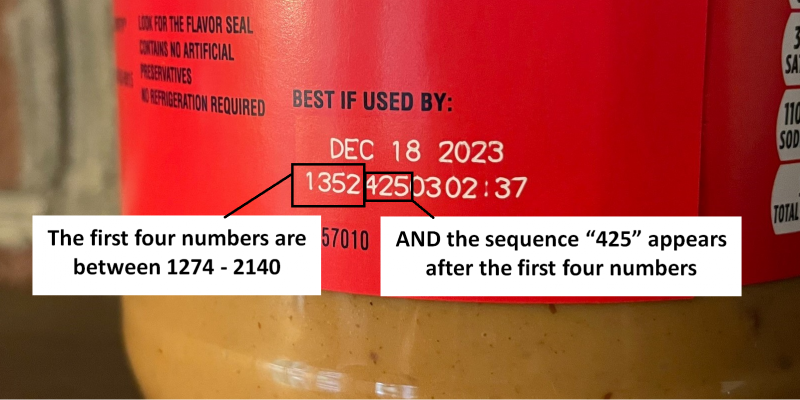
  2. Locate the lot code on the back of the jar, under the Best If Used By Date (the lot code may be next to the Best If Used By Date for cups or squeeze pouches).
  3. In the lot code, if the first four digits are between 1274 and 2140, and if the next three numbers after that are ‘425’, this product has been recalled and you should not consume this product. An example is below.

If you are unsure what to do with your recalled product, you can call or email J.M. Smucker Company for more information:

The J.M. Smucker Co. Hotline: 800-828-9980
Website: jif.com/contact-usExternal Link Disclaimer

FDA recommends that if you have used the recalled Jif brand peanut butter that have lot code numbers 1274425 through 2140425 and the first seven digits end with 425, you should wash and sanitize surfaces and utensils that could have touched the peanut butter. If you or someone in your household ate this peanut butter and have symptoms of salmonellosis, please contact your healthcare provider.

For Retailers, Re-packers, and Manufacturers

In addition to the steps above, FDA recommends referring to the firm’s recall press for the UPC codes and other retailer information. Do not sell or serve recalled peanut butter or products containing recalled peanut butter.

Product Images

Outbreak Investigation of Salmonella in Peanut Butter (May 2022) - Sample Recalled Product Label
Outbreak Investigation of Salmonella in Peanut Butter (May 2022) - Sample Label

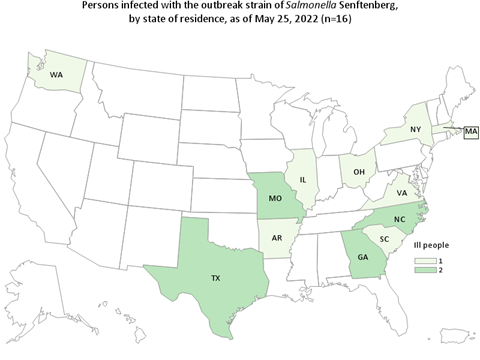
Case Count Map Provided by CDC

Outbreak Investigation of Salmonella in Peanut Butter (May 2022) - CDC Case Count Map as of May 25, 2022

Case Counts

Total Illnesses: 16
Hospitalizations: 2
Deaths: 0
Last Illness Onset: May 2, 2022
States with Cases: AR (1), GA (2), IL (1), MA (1), MO (2), OH (1), NC (2), NY (1), SC (1), TX (2), VA (1), WA (1)
Product Distribution: Nationwide and International (see below)

International Distribution for Recalled Products

The recall impacts markets outside of the U.S.

Customer information provided by J.M. Smucker on May 23, 2022 shows that it was distributed to the following countries and locations: Canada, Dominican Republic, Singapore, Malaysia, Taiwan, Korea, Thailand, Honduras, Spain, Japan.

For additional information, international officials and customers can visit the company’s recall page.

USA – Several people sickened by bacterial outbreak in Sanders County – Campylobacter

KPAX

The source of a bacterial outbreak in Sanders County that caused several people to become ill has been confirmed.

State and county officials recently notified the Montana Department of Transportation (MDT) that the Kennedy Creek water box has been associated with a Campylobacter outbreak.

The Montana Department of Environmental Quality (DEQ) has labelled this untreated water as a health concern and advised MDT to close off public access to the water.

After Sanders County Public Health officials confirmed several cases of infection from Campylobacter bacteria, the water from the untreated creek was tested and the presence of this bacteria was confirmed, according to MDT.

Over 20 people have tested positive for the bacterial infection and have reported diarrhea, abdominal pain, nausea, and fever after drinking water from the location.

Research – A restatement of the natural science evidence base regarding the source, spread and control of Campylobacter species causing human disease

Royal Society Publishing

Abstract

Food poisoning caused by Campylobacter (campylobacteriosis) is the most prevalent bacterial disease associated with the consumption of poultry, beef, lamb and pork meat and unpasteurized dairy products. A variety of livestock industry, food chain and public health interventions have been implemented or proposed to reduce disease prevalence, some of which entail costs for producers and retailers. This paper describes a project that set out to summarize the natural science evidence base relevant to campylobacteriosis control in as policy-neutral terms as possible. A series of evidence statements are listed and categorized according to the nature of the underlying information. The evidence summary forms the appendix to this paper and an annotated bibliography is provided in the electronic supplementary material.

Research – June is peak time for Campylobacter food poisoning; chlorinated chicken will not help

Oxford Martin

Campylobacter kswfoodworld

Around 3,500 Brits are hospitalised every year with campylobacteriosis – food poisoning caused by Campylobacter contamination. It causes the greatest number of hospitalisations of any food-borne disease in the UK and is the number one cause of bacterial food poisoning. Yet, despite falling Campylobacter levels on chicken over the past five years, levels of illness have not changed. An expert review of the sources, spread and control of Campylobacter from the Oxford Martin School at the University of Oxford concludes today that further interventions are needed – but no one solution will provide perfect control.

Led by Professor Matthew Goddard from the University of Lincoln and published earlier this month in the Proceedings of the Royal Society B, the restatement clarifies the scientific evidence available from a variety of sources in order to better inform policy decisions and provide clarity on the broad scientific consensus. This is vital as the prevalence of antibiotic resistant Campylobacter is increasing in the UK and has been designated a ‘high priority’ pathogen by the WHO.

Key conclusions of the restatement include that there was no clear evidence that long-term use of chlorine rinses, as practised in the USA, lowered levels of the bacteria or food poisoning caused, and that a broader series of control measures had strong evidence for its overall effectiveness as a package.

The UK’s poultry industry has successfully reduced the quantity of retail chicken testing positive for Campylobacter from 73% in 2014 to 40% in 2018. However, cases of illness have not reduced over the same period. In addition to wider control measures, beef, lamb and pork need to be more widely understood to be carriers of the bacteria and potential causes of food poisoning.

USA – Daily Harvest Issues Voluntary Recall of French Lentil + Leek Crumbles Due to Potential Health Risk

FDA

Company Announcement Date:
FDA Publish Date:
Product Type:
Food & Beverages
Vegetable Protein Product
Foodborne Illness
Reason for Announcement:
Gastrointestinal illness and potential liver function issues
Company Name:
Daily Harvest
Brand Name:
Daily Harvest
Product Description:
French Lentil + Leek Crumbles

Company Announcement

June 23, 2022, Daily Harvest, Inc., New York, NY.  Daily Harvest has voluntarily recalled all French Lentil + Leek Crumbles due to consumer reports of gastrointestinal illness and potential liver function issues.

From April 28 to June 17, 2022, approximately 28,000 units of the recalled product were distributed to consumers in the continental United States through online sales and direct delivery, as well as through retail sales at the Daily Harvest store in Chicago, IL and a “pop-up” store in Los Angeles, CA. Samples were also provided to a small number of consumers. Daily Harvest directly notified by email those consumers who were shipped the affected product, and other consumers for whom the company had contact information, and consumers were issued a credit for the recalled product.

Consumers who may still have the recalled product in their freezers should immediately dispose of it.

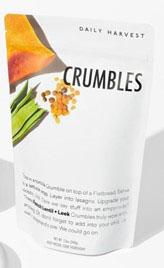
French Lentil + Leek Crumbles is a frozen product packaged in a 12oz white pouch with the words “Daily Harvest” at the top, a large “CRUMBLES” immediately below the top and the words “French Lentil + Leek” in bold, as shown below. All lot codes of the French Lentil + Leek Crumbles are affected.  No other Daily Harvest products are affected or part of this recall.

To date, the company has received approximately 470 reports of illness or adverse reactions. Consumer safety is our highest priority, and we have taken immediate steps to stop production and distribution of the product and conduct a root cause investigation, which is ongoing.

This recall is being made in cooperation with the U.S. Food and Drug Administration.

Consumers who have questions or would like to report adverse reactions should contact Daily Harvest by email at crumbles-recall@daily-harvest.com or by visiting https://www.dailyharvest.com/content/french-lentil-leek-crumbles-advisory#External Link Disclaimer or by calling 1-888-302-0305 9am – 9pm Eastern Time, 7 days a week.


Company Contact Information

Consumers:
Daily Harvest
 1-888-302-0305
 crumbles-recall@daily-harvest.com

Product Photos

Research – Manuscript type: Research Paper Development of a modelling tool to assess and reduce regulatory and recall risks for cold-smoked salmon due to Listeria monocytogenes contamination

Journal of Food Protection

While public health risk assessments for Listeria monocytogenes (Lm) have been published for different foods, firm-level decision making on interventions targeting Lm involves considerations of both public health and enterprise risks. Smoked seafood is a ready-to-eat product with a high incidence of Lm contamination and associated with several recalls. We thus used cold-smoked salmon as a model product to develop a decision support tool (the Regulatory and Recall Risk [3R] Model) to estimate (i) baseline regulatory and recall (RR) risks (i.e., overall risks of a lot sampled and tested positive [e.g., by food regulatory agencies]) due to Lm contamination and (ii) the RR risk reduction that can be achieved through interventions with different underlying mechanisms: (i) reducing the prevalence and/or level of Lm and (ii) retarding or preventing Lm growth. Given that a set number of samples (e.g., 10) are tested for a given lot, the RR risk equals the likelihood of detecting Lm in at least one sample. Under the baseline scenario, which assumes a 4% Lm prevalence and no interventions, the median predicted RR risk for a given production lot was 0.333 (95% credible interval: 0.288, 0.384) when 10 25-g samples were collected. Nisin treatments, which reduce both the prevalence and initial level of Lm, reduced RR risks in a concentration-dependent manner to 0.109 (0.074, 0.146; 5 ppm), 0.049 (0.024, 0.083; 10 ppm), and 0.017 (0.007, 0.033; 20 ppm). In general, more effective reduction in RR risks can be achieved by reducing Lm prevalence, compared to retarding Lm growth, as the RR risk was reduced to 0.182 [0.153, 0.213] by a 50% prevalence reduction, while only to 0.313 [0.268, 0.367] by bacteriostatic growth inhibitors. In addition, sensitivity analysis indicates that prevalence and initial level of Lm, as well as storage temperature have the largest impact on predicting RR risks, suggesting that reliable data for these parameters will improve model performance.