Category Archives: Food Microbiology Research

Denmark – Outbreak with invasive Listeria infection sequence type 7 in Denmark

SSI

Between 18 August and 13 October 2022, five cases of Listeria monocytogenes have been registered at the Statens Serum Institut . The Statens Serum Institut, the Danish Veterinary and Food Administration and the Norwegian Food Institute DTU are investigating the disease outbreak.

Last edited on October 31, 2022

About the disease outbreak

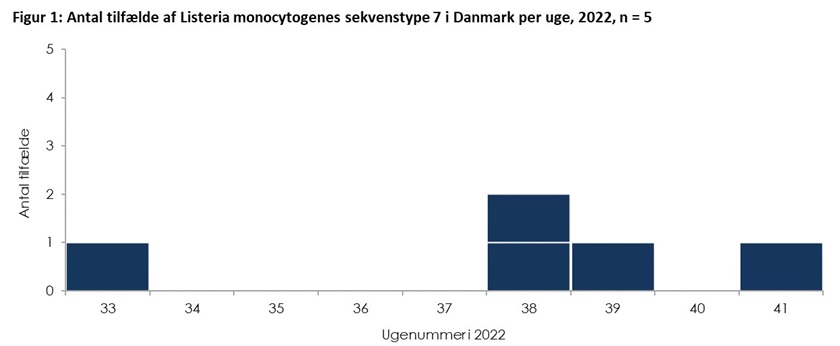
Between 18 August and 13 October 2022, the Statens Serum Institut registered five people who are infected with the same type of Listeria monocytogenes (figure 1). Among the sick are 2 men and 3 women. The patients are between 6-83 years old (median age is 75 years). The patients are infected throughout the country (table 1).

Figure 1 Number of cases of Listeria monocytogenes sequence type 7 per week 2022 in Denmark

Table 1. Patients with the same type of Listeria monocytogenes in Denmark, August to October 2022, per region (n=5)

Region

Number of patients

The capital  1
Central Jutland  1
Northern Jutland 0
Zealand 1
Southern Denmark 2
Total 5

The investigation of the outbreak

The outbreak is handled by the Central Outbreak Group, which consists of SSI, the Danish Veterinary and Food Administration and the DTU Food Institute. SSI stands for whole-genome sequencing of listeria isolates from the patients and interviews with patients or relatives with a view to identifying a possible source of infection.

The outbreak strain

The bacteria is of the type Listeria monocytogenes . By whole-genome sequencing of the Listeria monocytogenes bacteria isolated from the patients, it can be seen that they are very closely related and belong to sequence type 7.

Can noroviruses be transmitted through food?

MAST

Food Borne Illness - Norovirus -CDC Photo

In winter, an increase in norovirus cases can be expected, as the infection is called the winter plague in some languages ​​(eg vinterkräksjuka in Swedish). The main symptoms of norovirus infection are malaise, vomiting, diarrhea, fever and abdominal pain.

The virus is highly contagious and only a few viruses are needed to cause infection. Noroviruses can be transmitted through food from people who are ill or have recently been ill with norovirus. There are examples of norovirus being transmitted through food in Iceland and abroad, such as frozen raspberries, oysters and food from restaurants. Such infections can cause group infections.

For example, the consumption of frozen raspberries caused a widespread norovirus infection in Denmark a few years ago. Subsequently, the Danes established rules that frozen raspberries should be heated before consumption, and such instructions can often be seen on packaging.

But how can the virus be prevented from spreading to food at home, in canteens, restaurants and other food businesses?

  • The production, cooking and serving of food should be avoided during illness and for at least 48 hours. after the symptoms are over.
  • Wash hands before handling food.
  • Wash hands before eating
  • Offer options for hand disinfection at the buffet.
  • Prevent utensil handles from coming into contact with food.
  • Food companies have clear rules regarding staff illness and their return.

The risk of norovirus being transmitted through food can be reduced if these guidelines are followed.

Advanced material:

Research – Survey of the occurrence of Giardia duodenalis cysts and Cryptosporidium spp. oocysts in green leafy vegetables marketed in the city of Valencia (Spain)

Science Direct

Abstract

The role of vegetables usually consumed without prior culinary treatment is known to contribute to the prevalence of foodborne diseases. Cysts and oocysts can contaminate food, which can then be the source of infection in humans. The aim of the study was to assess the occurrence of Giardia duodenalis and Cryptosporidium spp. (oo)cysts in green leafy vegetables marketed in the city of Valencia (Spain) combining parasitological methods, two real-time qPCRs and light microscopy. An experimental field study was conducted on 129 vegetable samples, 64 from conventional farms and 65 from ecological (organic) farms. The samples were washed with water, and the resulting solution after removing the vegetables, was subjected to 24-hour sedimentation. The concentrated sediment was used for the search for protozoa. A positive result by both real-time PCRs, or a positive result by one qPCR and confirmation by microscopy was established as a positivity criterion. Giardia duodenalis was detected in 23.0 % of the samples, and Cryptosporidium spp. in 7.8 %. G. duodenalis (41.5 %) and Cryptosporidium spp. (20.0 %) were more frequent in ecological crops. The high level of contamination detected in organic vegetables may be due to the type of fertilizers and the quality of the water used for their irrigation and reinforces the need to take extreme hygiene measures in vegetables that are consumed raw.

USA – The Incident Command System and Foodborne Illness Outbreak Investigations

Food Safety Magazine

The Coordinated Outbreak Response and Evaluation (CORE) Network is the coordination focal point for all FDA resources during outbreak investigations

The Basics of Foodborne Illness Outbreak Investigations

When a foodborne illness outbreak is detected, public health and regulatory officials work together to determine what caused the outbreak and then take actions to avert additional illnesses from happening.1,2 During outbreak investigations, public health and regulatory authorities collect three types of data to determine a common food consumed by ill people: epidemiologic, traceback, and laboratory.

State and local partners, in collaboration with the Centers for Disease Control and Prevention (CDC), identify outbreaks and the foods that may be causing the illnesses through public health surveillance and epidemiologic evidence. State and local partners work with the U.S. Food and Drug Administration (FDA) to conduct traceback investigations and examine the food supply chain to determine the origin of the foods identified by the epidemiologic investigations.3 State and local authorities, in partnership with FDA, may use product and environmental sampling, followed by laboratory analyses, to further confirm the identified food as the outbreak source.

The data analyses and subsequent decision-making require extensive input from all investigation partners. Through a combination of the data gathered during an investigation, a food may be implicated as the source of an outbreak. FDA, CDC, and state and local partners work together to inform the public of outbreaks and provide information on how the public can protect themselves from foodborne illness. Based on investigational data, FDA, for example, may ask a firm to recall the product from the market or, in the case of imported products, may issue an import alert to provide additional information to the field to help stop outbreaks and protect public health.

Research – Whole-Genome Sequence Comparisons of Listeria monocytogenes Isolated from Meat and Fish Reveal High Inter- and Intra-Sample Diversity

MDPI

Interpretation of whole-genome sequencing (WGS) data for foodborne outbreak investigations is complex, as the genetic diversity within processing plants and transmission events need to be considered. In this study, we analyzed 92 food-associated Listeria monocytogenes isolates by WGS-based methods. We aimed to examine the genetic diversity within meat and fish production chains and to assess the applicability of suggested thresholds for clustering of potentially related isolates. Therefore, meat-associated isolates originating from the same samples or processing plants as well as fish-associated isolates were analyzed as distinct sets. In silico serogrouping, multilocus sequence typing (MLST), core genome MLST (cgMLST), and pangenome analysis were combined with screenings for prophages and genetic traits. Isolates of the same subtypes (cgMLST types (CTs) or MLST sequence types (STs)) were additionally compared by SNP calling. This revealed the occurrence of more than one CT within all three investigated plants and within two samples. Analysis of the fish set resulted in predominant assignment of isolates from pangasius catfish and salmon to ST2 and ST121, respectively, potentially indicating persistence within the respective production chains. The approach not only allowed the detection of distinct subtypes but also the determination of differences between closely related isolates, which need to be considered when interpreting WGS data for surveillance.

Research – Joint FAO/WHO Expert Meeting on the pre- and post-harvest control of non-typhoidal Salmonella spp. in poultry meat

FAO

Conclusions
The expert consultation noted that no single control measure was sufficiently effective at reducing either the prevalence or the level of contamination of broilers and poultry meat with NT-Salmonella spp. Instead, it was emphasized that control strategies based on multiple intervention steps ( multiple or multi-hurdle)would provide the greatest impact in controlling NT-Salmonella spp. in the broiler production chain.
The expert consultation concluded the following: Primary production interventions for the control of NT-Salmonella spp. Biosecurity and management approaches for the control of NT-Salmonella spp.
•At all levels of farm production, stringent biosecurity measures including sanitation and hygiene are important factors to prevent and control NT-Salmonella spp.in flocks.
•It is important for breeding flocks to be NT-Salmonella-free, and this begins at the parent/grandparent flock level and in the production environment. Vaccination-based approaches for the control of NT-Salmonella spp.
•Vaccine-based strategies reduce the prevalence and/or level of shedding of NT-Salmonella spp.in flocks but do not eliminate NT-Salmonella spp. Antimicrobial approaches for the control of NT-Salmonella spp.

 •There was no strong evidence that the use of substances with antimicrobial activity such as additives in feed and water resulted in effective control of NT- Salmonella spp. in broilers. Competitive exclusion/probiotics approaches for the control of NT-Salmonella spp.
•A promising strategy for NT-Salmonella spp. control was a combination of different competitive exclusion products (e.g., probiotics and prebiotics) but there was a limited number of published studies using naturally contaminated chicks and/or under commercial conditions to allow for adequate conclusions. Feed and water characteristics and management approaches for the control of NT-Salmonella spp.
•The efficacy of specific feed- and water-based strategies were study-specific and dependent upon the physiological status of both the pathogen and the animal, the broiler gastrointestinal tract environment, the concentration of the additive, and the method of its application.
•The use of feed modifications, including the acidification of feed and water, are not stand-alone hazard-based control measures for the control of NT-Salmonella spp. in poultry. However, feed-based strategies, when used in conjunction with good hygienic practices, may further reduce NT-Salmonellaspp.in poultry.
•Based on the information available, further studies are needed to assess how extensive scale application of modified feed and management approaches could impact NT-Salmonella spp. levels Bacteriophage-based approaches for the control of NT-Salmonella spp.
•There is limited information as to the effectiveness of bacteriophage-based control of NT-Salmonella spp. at the farm level. Further research is needed, especially in the long-term efficacy of bacteriophage-based control. Processing interventions for the control of NT-Salmonella spp.
•Good hygienic practices are important in minimizing the risk of NT-Salmonella spp. contamination during slaughter and processing.
•The effect of processing interventions on NT-Salmonella spp. are influenced by a variety of conditions, including but not limited to characteristics of the NT-Salmonella strain, pH, agent concentration, temperature, contact time, absorbed dose, product characteristics, and processing parameters.
•There was extensive information on the use of water additives, but the current scientific literature is not sufficient to draw objective conclusions regarding the effectiveness of some of them. However, chlorine-based compounds and organic acids (lactic acid, peroxy acetic acid (PAA), and acidified chlorate solutions) showed potential effectiveness.
•High pressure processing may be effective in reducing NT-Salmonella spp. in poultry meat.
•An extensive body of scientific evidence suggested that ionizing radiation can achieve any level of NT-Salmonella spp. reduction from pasteurization to complete sterility.

 •Other interventions or combinations of interventions, including but not limited to novel additives, thermal processes and physical treatments applied to the meat still require further refinement. Post-processing interventions for the control of NT-Salmonella spp.
•Control measures applied during processing may extend shelf-life and control the growth of NT-Salmonella spp.at the retail or consumer level, however, the literature in this area is sparse and the application of post-processing interventions needs further examination to assess feasibility.
•Emphasis should be placed on encouraging a positive food safety culture through human behaviour and consumer education as it applies to transport, storage, handling and cooking practices.
The experts highlighted several paragraphs in the Guidelines for the Control of Campylobacter and Salmonella in Chicken Meat (CXG 78-2011) that could benefit from an update (Annex 2).Other factors that the expert panel considered that have the potential to impact NT-Salmonella spp. control strategies in the future included changes in climate, broiler value chain, human behaviour and awareness, food safety culture, pathogens and their hosts.
With the advent of next generation technologies including machine learning, omics, tools for traceability and a better understanding of the interactions between Salmonella and the microbiome will lead to more accurate quantitative microbial risk assessments (QMRA) and improved One Health.

Research – Quantitative risk assessment model to investigate the public health impact of varying Listeria monocytogenes allowable levels in different food commodities: A retrospective analysis

Science Direct

Abstract

Invasive listeriosis is a potentially fatal foodborne disease that according to this study may affect up to 32.9 % of the US population considered as increased risk and including people with underlying conditions and co-morbidities. Listeria monocytogenes has been scrutinized in research and surveillance programs worldwide in Ready-to-Eat (RTE) food commodities (RTE salads, deli meats, soft/semi-soft cheese, seafood) and frozen vegetables in the last 30 years with an estimated overall prevalence of 1.4–9.9 % worldwide (WD) and 0.5–3.8 % in the United States (US). Current L. monocytogenes control efforts have led to a prevalence reduction in the last 5 years of 4.9–62.9 % (WD) and 12.4–92.7 % (US). A quantitative risk assessment model was developed, estimating the probability of infection in the US susceptible population to be 10–10,000× higher than general population and the total number of estimated cases in the US was 1044 and 2089 cases by using the FAO/WHO and Pouillot dose-response models. Most cases were attributed to deli meats (>90 % of cases) followed by RTE salads (3.9–4.5 %), soft and semi-soft cheese and RTE seafood (0.5–1.0 %) and frozen vegetables (0.2–0.3 %). Cases attributed to the increased risk population corresponded to 96.6–98.0 % of the total cases with the highly susceptible population responsible for 46.9–80.1 % of the cases. Removing product lots with a concentration higher than 1 CFU/g reduced the prevalence of contamination by 15.7–88.3 % and number of cases by 55.9–100 %. Introducing lot-by-lot testing and defining allowable quantitative regulatory limits for low-risk RTE commodities may reduce the public health impact of L. monocytogenes and improve the availability of enumeration data.

Research – Listeriosis outbreak caused by contaminated stuffed pork, Andalusia, Spain, July to October 2019

Eurosurveillance

On 5 August 2019, local primary care epidemiologists at the Aljarafe Health District in the province of Seville, Andalusia, notified to the SVEA three cases of food poisoning that had occurred in the previous week. One case was hospitalised; this patient’s blood culture later revealed  growth. In the following days, five additional clusters comprising a total of 32 cases were notified in Seville and one adjacent Andalusian province, and the same pathogen was identified in two of those clusters. These events prompted the local health authorities’ response on 7 August, with instructions to intensify the epidemiological surveillance and environmental sampling in certain food establishments.

By 9 August, the aggregate patient count had reached 22, which included four other cases requiring hospitalisation. In the following days, given the information from epidemiological interviews, in conjunction with microbiological results from non-human samples, the regional government constituted a multidisciplinary committee to investigate the outbreak, comprised of professionals from epidemiological surveillance, healthcare (including urgent care and infectious diseases), microbiology, food safety, and health authorities.

The aim of the outbreak investigation was twofold: (i) to identify the causative agent and the source of infection in order to prevent any further cases and (ii) to discover the reasons behind such a rapid progression of the outbreak. Here, we describe the outbreak and the epidemiological, microbiological and environmental investigations that were carried out to answer these questions.

Research – Control measures for Shiga toxin-producing Escherichia coli (STEC) associated with meat and dairy products

FAO

Executive summary
Shiga toxin-producing Escherichia coli (STEC) are estimated to cause more than 1.2 million illnesses and 128 deaths globally each year. The previous work of FAO and WHO identified beef and other types of meats, dairy products and produce as significant risk factors for STEC infection. As such, at its 42nd Session, the Codex Alimentarius Commission (CAC) endorsed the Codex Committee on Food Hygiene’s (CCFH) recommendation for the development of guidelines for the control of STEC in beef, raw milk and cheese produced from raw milk, leafy greens and sprouts.

To facilitate this work, the CCFH requested that FAO and WHO Joint Expert Meeting on Microbiological Risk Assessment (JEMRA) provide scientific advice on the effectiveness and utility of control measures against STEC during primary production, processing and post-processing of raw meat, raw milk and raw milk cheeses.

During the meeting, the expert committee reviewed interventions for the control of STEC in cattle, raw beef and raw milk and raw milk cheese manufactured from cows’ milk, and also evaluated available evidence for other small ruminants (goat, sheep), swine and other animals (reindeer, yak, camelids, bison, buffalo and swine). The expert committee was tasked with scoring the degree of support for the effectiveness of interventions for the specific control of STEC as high, medium or low based on the evidence available within the scientific literature.

In meat production and processing systems, many approaches to support control of STEC are based on good agricultural practices (GAP) and/or good hygiene practice (GHP) that aim to generally reduce the spread of pathogens and are not specifically focused on STEC. On-farm, these include managing the hygienic conditions of housing, bedding and drinking water hygiene, appropriate animal density and biosecurity measures, effective sanitation of facilities and proper disposal of manure.

On-farm, several dietary and herd management strategies with varying levels of impact on STEC populations in beef and dairy animals have been explored. Evidence to support cattle demography

(Section 2.1.3), animal density

(Section 2.2.2), biosecurity

(Section 2.2.1), and environmental hygiene

(Section 2.2.3) were rated as having a medium or medium to high degree of support with regards to their ability to impact STEC. Interventions including feeding of forage versus concentrate rations, specific grain types

(Section 2.3.3), and the inclusion of citrus products and essential oils in feed

(Section 4.2.5) were supported at low to medium or medium degree of support, yet probiotics may be useful with administered to cattle, goats and sheep through feed

(Sections 2.3.4.1 and 6.1.1). Some vaccines have been shown to reduce faecal excretion of STEC O157:H7

(Section 2.4.1), but their efficacy is variable depending on the vaccine and the number of doses administered.
Long distance transport and the stress of interim unloading/loading have been shown to increase faecal excretion of STEC that can lead to cross-contamination between animals

(Section 2.6). Transport distances should be minimized in accordance with best practices for animal welfare, and the evidence related specifically to the control of STEC was supported at a low degree. A summary of primary production control
measures for STEC in cattle and their degree of support rating (high, medium, low), based on scientific evidence, is available in Annex 1.
Avoiding contamination of the carcass through contact with hides, gut contents or faeces during slaughter is an accepted management practice during meat processing, but evidence supporting the effectiveness and reliability of these
measures for the control of STEC was limited. Processing measures where evidence supported a high or medium to high rating for efficacy in STEC reduction included steam vacuuming of visible faecal contamination on carcasses (Section 3.3.4.3),
and the use of a hot potable water carcass wash, steam pasteurization followed by 24 h air chilling and combinations of these

(Section 3.4). The use of knife trimming to remove carcass tissue contaminated with faecal material is common and is supported by a medium confidence level in the evidence

(Section 3.3.4.2). Despite the commercial use of pre-chill carcass decontamination treatments using organic acids and other chemical agents, the confidence in the evidence was low in cattle and other small ruminants due to high variability in results

(Section 3.4.3). A summary of processing control measures for STEC in beef and their degree of support (high, medium, low), based on scientific evidence, is available in Annex 2.
The efficacy of available control measures for reducing or eliminating STEC on primal cuts, trim, cheek meats, and ground beef was widely varied. Yet, the use chemical antimicrobial dips

(Section 4.2) for primals and trims were supported at a low to medium level of confidence, and high-pressure processing (HPP)

(Section 4.1.6), gamma irradiation and electron beam sterilization (eBeam)

(Section 4.1.7) produced significant reductions of STEC in ground beef and in retail packs. A summary of post-processing control measures, and combinations of these, for STEC in beef and their degree of support (high, medium, low), based on scientific
evidence, is available in Annex 3.

Pork products and meat from wild game have occasionally been confirmed as vehicles of STEC transmission, but there are no interventions or practices during the processing of these animals that are specific for STEC. Meat from these species could be treated post-harvest in a similar fashion as beef to reduce STEC, but reports of the efficacy of these interventions are not available.
Contamination of milk with pathogens, including STEC, mainly occurs during milking or via milking equipment, milking personnel, and from the farm environment. Thus, factors affecting the carriage of STEC in live animals and those practices surrounding milking hygiene can reduce, but not assure the absence of contamination of raw milk.

The efficacy of the interventions against STEC during the production of raw milk and raw milk cheeses varied greatly depending on the animal origin of the raw milk, manufacturing practices, the scale of production, and the microbial load. Temperature control and hygiene during milking, storage and transportation can significantly affect the microbiological safety of raw milk prior to processing, packaging and sale of milk intended for drinking or for manufacturing of raw milk cheeses. Although these interventions can mitigate the growth of E. coli and other indicator organisms, the degree of support in the evidence for these interventions and the control of STEC ranged from low to medium

(Section 2.5). Apart from pasteurization, which is very effective, several technologies have been evaluated to mitigate the presence of STEC in raw milk. Bacteriophages specific to E. coli and STEC have shown some reductions in STEC during refrigeration storage of raw milk

(Section 5.1.5). The effect of adding bacteriophage to control E. coli during milk fermentation in the making of cheeses has also been examined with varying results depending on the STEC serovar. The degree of support in the evidence of bacteriophage to specifically control for STEC was evaluated as low

(Section 5.2.3). Gamma or eBeam irradiation are very effective at reducing bacterial levels in milk and on cheese surfaces, yet off-flavors are often reported. The degree of support for the evidence was rated as medium

(Section 5.3.2). A summary of processing and post-processing control measures for STEC in raw milk and raw milk cheese and their degree of support rating (high, medium, low), based on scientific evidence, is available in Annex 4.
The implementation of monitoring plans at the farm level to measure the impact of STEC prevalence is considered impractical, although sampling and testing of beef and raw milk products are a means to verify that food safety program are successful. Because STEC are often present only at low levels in foods, culture enrichment of food samples is a critical step in detecting STEC in meat, dairy and other foods. Since STEC testing is complex, the quantitative detection of non-type specific (NTS) E. coli has been proposed as an alternative hygienic indicator during processing and post-processing stages, although it is not an absolute estimate of STEC levels.

The use of molecular techniques, such as PCR, that target STEC virulence genes are highly sensitive and specific for STEC detection but presumptive results must be confirmed by traditional culture-based methods or by immunomagnetic
separation (IMS). Methods are needed that enable the efficient and specific isolation of STEC O157:H7 and non-O157 STEC.

The expert committee also discussed some of the limitations and gaps regarding the available data. In-plant scientific evaluations of interventions and treatments to control STEC throughout raw beef, raw milk and raw milk cheese production are
frequently prohibited due to health risks associated with the potential introduction of pathogens into the food supply and the cost associated with testing large number of samples required for detecting STEC in food matrices. Consequently, surrogate
bacteria, such as NTS E. coli, are used as substitutes and the results extrapolated, meaning that evidence of intervention effects specifically for STEC may not be available currently or in the future. Therefore, there is doubt and uncertainty as to
whether the detection and reduction levels observed in surrogate studies are truly representative of STEC or of commercial production and processing.

Many studies focused on the impact of an individual control measure at a specific stage in the food chain, rather than in the context a total food chain or of the safety of the food available to the consumer. Many food businesses have implemented
multiple control measures concurrently or sequentially on farms and in processing facilities, but the overall efficacy of multiple “hurdles” in the total chain remains difficult to quantify

It was recognized that with advances in analytical methods, including increasing use of molecular tools, the evaluation of evidence concerning some STEC control measures and interventions may need to be revised in the future.

USA – Say No to Raw Dough!

CDC

What You Need to Know

  • Don’t taste or eat raw (unbaked) dough or batter.
  • Don’t let children handle or play with raw dough, including play clay and dough for crafts.
  • Uncooked flour and raw eggs can contain germs that can make you sick if you taste raw dough.
  • Wash your hands, bowls, utensils, and countertops after handling raw flour, eggs, or dough.

Spending time with family while baking is a great way to celebrate special occasions. When making cookies, brownies, cakes, or bread, you might be tempted to taste a bite before it’s fully baked.

But you can get sick after eating or tasting raw (unbaked) dough or batter. Children can get sick from handling or eating raw dough used for crafts or play clay, too. Follow these safety tips to help you and your loved ones stay healthy when preparing and handling raw dough.

Raw Dough Can Contain Germs That Make You Sick

Flour doesn’t look like a raw food, but most flour is raw. That means it hasn’t been treated to kill germs that cause food poisoning, such as Escherichia coli (E. coli). These harmful germs can contaminate grain while it’s still in the field or flour while it’s being made. Steps like grinding grain and bleaching flour don’t kill harmful germs—and these germs can end up in flour or baking mixes you buy at the store. You can get sick if you eat unbaked dough or batter made with flour containing germs. Germs are killed only when food made with flour is baked or cooked.

CDC investigated outbreaks of E. coli infections linked to raw flour or cake mix in 20162019, and 2021. Some of these investigations led to recalls. Flour and baking mixes containing flour have long shelf lives, meaning they do not go bad quickly. It’s a good idea to check your pantry to see if you have any flour or baking mixes that have been recalled in recent years (search FDA’s recall listexternal icon). If you have any recalled flour or baking mixes, throw them away.

Raw eggs are another ingredient in dough and batter that can make you or your loved ones sick. Raw or lightly cooked eggs can contain Salmonella, a germ that causes food poisoning. Find out how to handle and cook eggs properly.

Some companies make edible cookie dough and brownie batter that you can find in stores. These products are made with heat-treated flour and pasteurized eggs or no eggs. Read the label carefully to make sure the dough is meant to be eaten without baking or cooking.

Stay Safe When Handling Flour and Other Raw Ingredients

Follow these practices to prevent food poisoning when you are baking and cooking with flour and other raw ingredients.

  • Do not taste or eat any raw dough or batter. This includes dough or batter for cookies, brownies, cakes, pie crusts, tortillas, pizza, biscuits, pancakes, or crafts made with raw flour, such as homemade play dough or holiday ornaments.
  • Do not let children play with or eat raw dough, including dough for crafts.
  • Bake raw dough, such as cookie dough, and batter, such as cake mix, before eating.
  • Follow the recipe or package directions for cooking or baking. Use the temperature and cooking time given in the recipe or directions.
  • Do not make milkshakes with products that contain raw flour, such as cake mix.
  • Do not use raw homemade cookie dough in ice cream.
    • Cookie dough ice cream sold in stores contains dough that has been treated to kill harmful germs.
  • Keep raw foods, such as flour and eggs, separate from ready-to-eat foods. Because flour is a powder, it can spread easily.
  • Follow label directions to refrigerate products containing raw dough or eggs until they are baked or cooked (for example, store-bought cookie dough).
  • Clean up thoroughly after handling flour, eggs, or raw dough.
    • Wash your hands with soap and water after handling flour, raw eggs, or any surfaces they have touched.
    • Wash bowls, utensils, countertops, and other surfaces with warm, soapy water.