Category Archives: Food Inspections

Norway – Norway reports E. coli outbreak: Investigation ongoing

Outbreak News Today 

Health officials in Norway are reporting an E. coli O157: H7 outbreak that has sickened six people since June.

The six patients reside in different counties–Akershus, Oslo, Vestfold, Hordaland and Trøndelag.

The Norwegian Institute of Public Health is cooperating with the municipal health service and the Norwegian Food Safety Authority and the Veterinary Institute to investigate whether the patients may have a common source of infection.

Interviews are conducted with the patients, and samples from the homes are taken to find the source of infection if possible. Investigative work can be complicated and take time, and in many cases it will not be possible to find the source of infection or to clarify whether it is a common source”, says Solveig Jore, senior adviser at the National Institute of Public Health.


USA – At least 50 treated after reported Salmonella outbreak at teacher’s picnic in Pennsylvania

Barf Blog 

Salmonellaa

Image CDC

Health officials say at least 50 people were treated after a reported salmonella infection at a weekend picnic in central Pennsylvania.

The Centre Daily Times reports that Grace Prep High School aid in a Facebook video Saturday that at least half of the 100 to 150 guests at a going-away picnic for a longtime teacher Friday had fallen ill with symptoms of nausea and vomiting.

UAE – Some frozen food products ordered off UAE shelves over deadly bacteria – Listeria monocytogenes

Khaleej Times 

Listeria kswfoodworld food safety food poisoning

Image CDC

The UAE has withdrawn frozen fruits and vegetables of European origin produced by Greenyard over fears they could contain a deadly bacteria. According to a top official from the Ministry of Climate Change and Environment (MoCCAE), the decision is based on a warning issued by European Union countries regarding listeria-contaminated Greenyard frozen vegetables and fruit products, which have even resulted in deaths.

Listeria is a harmful bacteria that thrives in ready-to-eat foods that can cause serious food poisoning. The ministry has urged consumers to return or discard the items on the list as they may pose “serious health hazards, especially to the elderly, pregnant women and people suffering from immune deficiency”.

UK- Scotland – No fatal accident inquiry over girl’s E. coli death

BBC News

There will not be a fatal accident inquiry (FAI) into the death of a three-year-old girl from Dunbartonshire following an E. coli outbreak in 2016.

The Crown Office had previously said South Lanarkshire-based Errington Cheese would not face prosecution over the child’s death.

The firm’s Dunsyre Blue was named the most likely source of the outbreak.

The Crown Office said it had considered “all the relevant matters” before ruling out an FAI.

A total of 26 cases of the same strain of E. coli O157 were identified between July and September 2016 as a result of the outbreak, which left 17 people requiring hospital treatment.


Canada – Food Recall Warning – Europe’s Best brand Field Berry Mixes recalled due to Salmonella

CFIA

Recall details

Ottawa, July 13, 2018 – Hain Celestial Canada, ULC is recalling Europe’s Best brand Field Berry Mixes from the marketplace due to possible Salmonella contamination. Consumers should not consume the recalled products described below.

Recalled products

Brand Name Common Name Size Code(s) on Product UPC
Europe’s Best Field Berry Mix 600 g 2020MA03
2020MA04
2020MA10
2020MA11
8 71454 03618 7
Europe’s Best 4-Field Berry Mix 2 kg 2020MA02 8 71454 00200 7

USA – FDA Fast Facts: FDA works with partners to investigate a Cyclospora outbreak potentially associated with McDonald’s salads

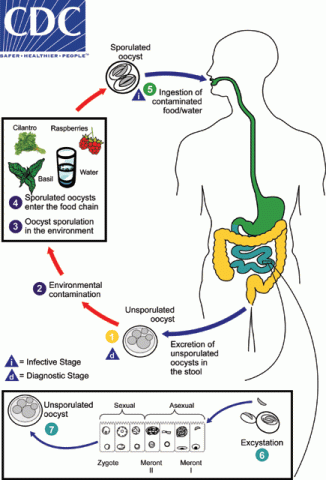
FDA Cyclospora_LifeCycle201

The U.S. Food and Drug Administration and the Centers for Disease Control and Prevention, along with state and local officials, are investigating a multi-state outbreak of Cyclospora infections. Yesterday, the Illinois and Iowa Health Departments identified McDonald’s salads as being potentially linked to cases of Cyclospora in both states. McDonald’s has voluntarily stopped selling salads at affected restaurants across 14 states and the CDC reports that 61 people across seven states have gotten sick.

“We understand how important it is to quickly identify the cause of this foodborne outbreak to help reduce additional illness and we’re working closely with our colleagues at CDC and state partners to get more answers. There’s still a lot to learn about this outbreak, and we appreciate that McDonald’s has removed salads from the menu in impacted restaurants while we work to determine whether they are in fact linked to the outbreak. We will continue to share our progress toward these goals and provide updates as we learn more,” said FDA Commissioner Scott Gottlieb, M.D. “It’s early in the investigation, but we are taking steps now to help ensure consumers know about the potentially contaminated product so that they can better protect themselves or seek treatment, especially if they have signs or symptoms of a Cyclospora infection. This is especially important as Cyclospora is not commonly tested for in a health care setting, so consumers who may think they have been exposed should raise their concerns with their health care professional.”

As part of this emerging investigation, the FDA is actively working with McDonald’s to identify the common ingredients in the salads identified by those who became sick and to trace back those ingredients through the supply chain.

Cyclospora is a parasite that can cause severe intestinal illness, but can be treated. Although it’s unknown exactly how food and water become infected with Cyclospora, people should be aware that rinsing or washing food is not likely to remove it.

The following is an update on the FDA’s ongoing investigation into this outbreak.

USA – FDA Advises Consumers to Avoid Potentially Contaminated Fresh Crab Meat Imported from Venezuela due to Vibrio parahaemolyticus

FDA 

CDC Vibrio

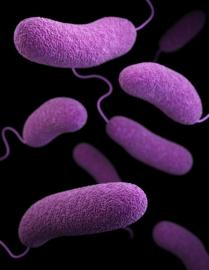
The U.S. Food and Drug Administration is working with federal, state, and local officials regarding a Vibrio parahaemolyticus outbreak linked to fresh crab meat from Venezuela. At this time, the FDA is advising consumers to avoid eating fresh crab meat from Venezuela, as it may be contaminated with Vibrio parahaemolyticus. Consumers are advised to ask where their crab meat is from, if dining out at a restaurant or in grocery stores. This product is commonly found in plastic tubs and may be labeled as “pre-cooked.” As this is an ongoing investigation, the FDA will share additional updates as soon as information becomes available. The FDA and the states are conducting an investigation to determine the source of contaminated fresh crab meat and ensure it is removed from the food supply. Retailers should not serve or sell fresh crab meat imported from Venezuela.

As of July 12, 2018, there are 12 cases of Vibrio parahaemolyticus. The states reporting cases associated with this outbreak include  Maryland (8), Louisiana (2), Pennsylvania (1), and the District of Columbia (1). Four of these cases are confirmed matches to the outbreak strain by Pulsed Field Gel Electrophoresis (PFGE), which is a type of DNA fingerprinting. All four of these confirmed cases are in Maryland. Four people (33%) have been hospitalized. Illnesses started on dates ranging from April 1, 2018 to July 3, 2018.

Food contaminated with Vibrio parahaemolyticus may look, smell, and taste normal.

RASFF Alert- Aflatoxin -Pistachio- Almonds – Ground Ogbono – Hazlenuts – Groundnuts – Peanuts

kswfoodworld food safety poisoning

RASFF-aflatoxins (B1 = 35.4; Tot. = 38.4 µg/kg – ppb) in pistachio kernels from the United States, via Turkey in Greece

RASFF -aflatoxins (B1 = 6.2; Tot. = 6.9 µg/kg – ppb) in almonds from the United States in Spain

RASFF-aflatoxins (Tot. = >24 µg/kg – ppb) in almonds without shell from the United States in Spain

RASFF-aflatoxins (B1 = >24.0; Tot. = >24.0 µg/kg – ppb) in almonds from the United States in Spain

RASFF-aflatoxins (B1 = 19.3; Tot. = 25 µg/kg – ppb) in ground ogbono from Nigeria in the UK

RASFF-aflatoxins (Tot. = 56.2 µg/kg – ppb) in hazelnut kernels from Turkey in Germany

RASFF-aflatoxins (B1 = 50; Tot. = 55 µg/kg – ppb) in groundnuts from India in the Netherlands

RASFF-aflatoxins (B1 = 9.0; Tot. = 9.0 µg/kg – ppb) in groundnuts from Argentina in the Netherlands

RASFF-aflatoxins (B1 = 18; Tot. = 22 µg/kg – ppb) in peanuts from Egypt in the Netherlands

RASFF-aflatoxins (B1 = 67.6 µg/kg – ppb) in groundnut kernels from India in Greece

RASFF-aflatoxins (B1 = 200 µg/kg – ppb) in groundnuts from Sudan in the Netherlands

RASFF-aflatoxins (B1 = 39; Tot. = 42 µg/kg – ppb) in pistachios from the United States in France

RASFF-aflatoxins (B1 = 134.8; Tot. = 139.4 µg/kg – ppb) in pistachios from the United States in the UK

RASFF-aflatoxins (B1 = 24 µg/kg – ppb) in almonds from the United States in Spain

RASFF-aflatoxins (B1 = 24 µg/kg – ppb) in almonds from the United States in Spain

RASFF-aflatoxins (B1 = 24.1 µg/kg – ppb) in almonds from the United States in Spain

RASFF Alerts – Listeria monocytogenes – Chorizo – Chilled Smoked Bacon – Frozen Cooked Bacon Pieces

kswfoodworld food safety poisoning

RASFF-Listeria monocytogenes (presence /25g) in chorizo from Portugal in Portugal

RASFF-Listeria monocytogenes (present /25g) in chilled smoked bacon from Poland in Poland

RASFF-Listeria monocytogenes (presence /25g) in frozen cooked smoked bacon pieces from the Netherlands in the UK

RASFF Alert – Yeasts – Organic Teriyaki Sauce

kswfoodworld food safety poisoning

RASFF-high count of yeasts in organic teriyaki sauce from the Netherlands in the Netherlands