Category Archives: Food Inspections

Research – Thermal Inactivation of Listeria monocytogenes in Crab Meat

Journal of Food Protection 

Listeria kswfoodworld food safety food poisoning

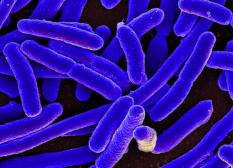
Image CDC


Listeria monocytogenes is an important bacterial pathogen in seafood products, but limited information is currently available on the thermal resistance of relevant isolates in seafood. Thermal inactivation studies were undertaken (i) to provide much needed thermal inactivation data for L. monocytogenes in crab meat and (ii) to investigate whether tryptone soya broth (TSB) is representative of crab meat in thermal inactivation studies involving L. monocytogenes. D-values were obtained for a cocktail of two crab isolates (serotypes 1/2a and 4b) at 50, 55, and 60°C. In crab meat, D-values were 174.4, 28.2, and 1.6 min, respectively. Similar D-values of 176.4, 28.8, and 1.4 min were obtained in TSB. The corresponding z-values were 4.9°C (crab meat) and 4.8°C (TSB), respectively. The conclusions were that (i) current pasteurization conditions (e.g., 70°C for 2 min) would achieve complete destruction of any L. monocytogenes present in crab meat and (ii) TSB could be used as a model matrix for assessing the thermal inactivation of L. monocytogenes in crab meat.

USA – Statement from FDA Commissioner Scott Gottlieb, M.D. and FDA Deputy Commissioner Frank Yiannas on new findings and updated consumer recommendations related to the romaine lettuce E. coli O157:H7 outbreak investigation

FDA Eurofins Food Testing UK

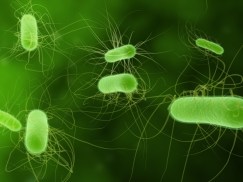
On Nov. 20, the U.S. Food and Drug Administration and the Centers for Disease Control and Prevention warned the American public of a multi-state outbreak of E. coli O157:H7 linked to romaine lettuce and advised against eating any romaine lettuce on the market at that time. The FDA then worked quickly with romaine producers and distributors who voluntarily withdrew the product from the market to help contain this new outbreak. This was an especially important step in advance of the Thanksgiving holiday. At the same time, we immediately launched a broad traceback investigation to determine the source of this outbreak.

We have new results to report from this investigation tracing the source of the contamination to at least one specific farm. Based on these and other new findings, we’re updating our recommendations for the romaine lettuce industry and consumers.

Shortly after our initial public warning, our traceback investigation was able to narrow down the scope of implicated product. Based on these initial findings, we immediately issued an updated public warning to consumers to avoid consuming romaine lettuce specifically from Monterey, San Benito, San Luis Obispo, Santa Barbara, Santa Cruz and Ventura counties in California. This information about the implicated regions helped consumers avoid potentially affected product. The information was provided in conjunction with a voluntary agreement that we reached with industry to provide more specific labeling information on the origin and harvest date of romaine lettuce as it was shipped to the market.

India – Beware! Consumption of contaminated ‘catla’ fish causing severe health problems – Cholera

Times Now News

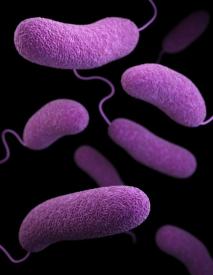
CDC Vibrio

Vijaywada: Research scholars from Sri Venkateshwara Veterinary University found that the catla fish being sold in the market is polluted by superbugs that can cause several health problems ranging from simple fever, vomiting and abdominal pain to serious issues like cholera, blood stream infection and septic shock.

According to a report in The Times of India, 15 different species of the bacterium Vibrio, including Vibrio cholerae, the bacterium responsible for cholera outburst, were identified in the fish. These bacteria are being called as superbugs because they are resistant to various potent antibiotics.

The superbugs were found in catla fish, a commercially popular freshwater fish variety. Yet the researchers fear that other species of fish might also get polluted by superbugs if they are caught from the contaminated water bodies.

T Srinivasa Rao, one of the researchers, told TOI that though proper and prolonged cooking can help get rid of the superbugs, their antimicrobial resistance is a matter of concern.

RASFF Alerts – Ochratoxin A – Sultanas

RASFF-Logo

RASFF-ochratoxin A (24 µg/kg – ppb) in sultanas from Turkey in Portugal

RASFF-ochratoxin A (18.4 µg/kg – ppb) in sultanas from Turkey in the UK

RASFF Alerts – Aflatoxins – Groundnuts

RASFF-Logo

RASFF-aflatoxins (B1 = 3.4; Tot. = 15 µg/item) in groundnuts in shell from China in Portugal

RASFF-aflatoxins (B1 = 11.3; Tot. = 12.8 µg/kg – ppb) in groundnut kernels from Brazil in Greece

RASFF Alerts – Listeria monocytogenes – Tuna Hummus – Smoked Salmon – Semi Soft Cow’s Milk Cheese

RASFF-Logo

RASFF-Listeria monocytogenes (200 CFU/g) in tuna hummus from Belgium in France

RASFF-Listeria monocytogenes (presence /25g) in smoked salmon from Latvia in Italy

RASFF -Listeria monocytogenes (<10 CFU/g) in semi-soft cow’s milk cheese from France in France

RASFF Alert – Mycotoxins – DON -Zearalone – Granola Purple Musli Mix

RASFF-Logo

RASFF-deoxynivalenol (DON) (15.28 mg/kg – ppm) and zearalenone (16.45 mg/kg – ppm) in granola purple müsli mix from Switzerland in Switzerland

RASFF Alerts – Salmonella – Frozen Blueberry – Live Mussels -Chicken Broiler Fillets -Chicken Broiler Thighs- Live Clams – Chilled Meat Preparations – Sesame Seeds – Cardomon – Hazlenuts – Turkey Meat – Chicken Broiler Wings

RASFF-Logo

RASFF-Salmonella (present /25g) in frozen blueberry from Poland, with raw material from Ukraine in Poland

RASFF-Salmonella (in 1 out of 5 samples) in live mussels from Italy, with raw material from Spain in Italy

RASFF-Salmonella (present /25g) in frozen chicken broiler chicken fillets from Poland in Lithuania

RASFF-Salmonella (presence /25g) in chilled chicken broiler thighs from Poland in Lithuania

RASFF-Salmonella enterica ser. Derby (presence /25g) in live clams (ruditapes phlippinarum) from Italy in Italy

RASFF-Salmonella (present /10g) in chilled meat preparations from Belgium in Belgium

RASFF-Salmonella (presence in 1 out of 5 samples /25g) in hulled sesame seeds from India in the UK

RASFF-Salmonella (presence /25g) in cardamom from unknown origin in Germany

RASFF-Salmonella (presence /25g) in shelled hazelnut kernels from Germany, with raw material from Spain in Germany

RASFF-Salmonella enterica ser. Mbandaka (presence /25g) in chilled chicken broiler wings from Poland in Lithuania

RASFF-Salmonella enterica ser. Typhimurium monophasic (1 ,4, [5], 12:i:-) (presence /25g) in turkey meat from France

UK – Dorset declared as E.coli hotspot

Dorset Echo CDC E.coli

Dorset has been ranked as the third highest hotspot for E.coli in the country, according to research by chemist-4-u.com.Between September 2017 and September 2018, 733 cases of E.coli were recorded by the NHS Dorset Clinical Commissioning Group (CCG).

Birmingham and Solihull CCG recorded the highest number of cases with 987, followed by Northern, Eastern and Weston Devon CCG in second with 781 recorded cases.

E.coli is a type of bacteria common in human and animal intestines, and forms part of the bacteria that exist in the bowel.Symptoms of E.coli include stomach cramps, diarrhoea, blood in diarrhoea, and occasionally a fever.

There are a number of different types of E.coli and, while the majority are harmless, some can cause serious food poisoning and serious infection.

In October, two children from the same family died after contracting E.coli. The pair died from a complication of E.coli called hemolytic uremic syndrome (HUS) which affects the kidneys.

The bacteria appears to be on the rise. 3791 cases were recorded in the 12 months to September this year across 195 CCGs in England, compared with 3535 during the same period the year before.

Indonesia – 34 snacks popular with Depok students found to contain E. coli

The Jakarta Post

Ecoli Istock

Thirty-four snacks that are popular with students have been found to contain Escherichia coli (E. coli) bacteria.

“There should be zero E. coli in food and beverages,” Health Agency secretary Ernawati told Tempo magazine on Wednesday.

She explained that the agency had collected samples from 44 primary schools for its research, including four schools in each district.

The amount of E. coli that could cause diarrhea varied from person to person. The bacteria were usually waterborne, meaning they could be spread by food sellers touching or washing utensils, she added.