Category Archives: Food Inspections

USA – Apio, Inc. Voluntarily Recalls Five Skus of Eat Smart Single-Serve Salad Shake Ups™ – Listeria monocytogenes

FDA

Apio, Inc. of Guadalupe, California is voluntarily recalling five SKUs of Eat Smart® Single-Serve Salad Shake Ups™ (bowls). The recall comes after the Canadian Food Inspection Agency (CFIA) informed the company that one random sample of Eat Smart Single-Serve Salad Shake Ups Sweet Kale/Chou Frise Doux 156 gr. (5.5oz) with Best Before of Dec 14, 2018 tested positive for Listeria Monocytogenes. As a precautionary measure, we are recalling all products produced on the same day, same production line, as the one sample that tested positive by CFIA. At this time, we are not aware of any illnesses linked by health officials to this recall and no other products are affected by this recall.

The affected product can be identified with the following UPC and lot codes:

  • Eat Smart Single-Serve Salad Shake Ups – Asian Sesame – UPC 7 09351 30241 1, Lot 112 331
  • Eat Smart Single-Serve Salad Shake Ups – Avocado Ranch – UPC 7 09351 30177 3, Lot 112 331
  • Eat Smart Single-Serve Salad Shake Ups – Raspberry Acai – UPC 7 09351 30178 0, Lot 112 331
  • Eat Smart Single-Serve Salad Shake Ups – Sweet Kale – UPC 7 09351 30240 4, Lot 112 331
  • Eat Smart Single-Serve Salad Shake Ups – Tropical Lime – UPC 7 09351 30179 7, Lot 112 331
  • Eat Smart Single-Serve Salad Shake Ups – Avocado Ranch/Ranch ET Avocats – UPC 7 09351 30195 7, Lot 112 331
  • Eat Smart Single-Serve Salad Shake Ups – Raspberry Acai/Framboises ET Acai – UPC 7 09351 30196 4, Lot 112 331
  • Eat Smart Single-Serve Salad Shake Ups – Sweet Kale/Chou Frisé Doux – UPC 7 09351 30243 5, Lot 112 331

The product was shipped to retail and distributor customers in the following U.S. states: Arizona, California, Colorado, Florida, Iowa, Kansas, Oklahoma, Oregon, Texas, Utah and Washington. In Canada, the product was shipped to retail and distributor customers in the following provinces: Alberta, British Columbia, Ontario, Quebec and Saskatchewan.
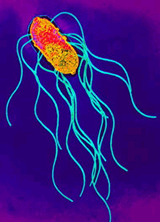

USA – Spokane Produce Voluntarily Recalls Northwest Cuisine Creations and Fresh&Local Sandwiches and Green Leaf Lettuce Filets

FDA

Spokane Produce Inc. of Spokane, WA initiates a voluntary recall of sandwiches containing green leaf lettuce and foodservice lettuce filets following notice of a produce industry ingredient recall by Adam Bros. Farming Inc. Sandwich products bearing the Northwest Cuisine Creations and Fresh&Local labels. These prod- ucts are recalled because they may be contaminated with Escherichia coli O157:H7 bacteria (E. Coli O157:H7). E. coli O157:H7 causes a diarrheal illness often with bloody stools. Although most healthy adults can recover completely within a week, some people can develop a form of kidney failure called Hemolytic Uremic Syndrome (HUS). HUS is most likely to occur in young children and the elderly. The condition can lead to serious kidney damage and even death.

All sandwiches bear the “best buy” dating 12/14/18-12/21/18. The product was distributed to grocery markets in Washington, Idaho, Montana, Wyoming and Oregon. In addition, Green Leaf Filets (no label) in five(5) and ten(10) pound containers are being recalled from foodservice accounts.

India – 11 dead in suspected religious food poisoning incident in India

CNN

New Delhi (CNN)Food shared among participants in a religious ceremony is believed to have caused at least 11 deaths and put more than 90 worshipers in hospital, police in the southern Indian state of Karnataka said Saturday.

The religious food offering, or “prasad,” involved was vegetable rice. “We believe the ‘prasad’ was poisoned,” Dharmender Kumar Meena, Police Superintendent of Chamarajanagar district, told CNN.
“There was a foundation-laying ceremony of a new Hindu temple and following the event the ‘prasad’ was distributed. People started vomiting shortly after,” Meena said.
Samples of the food have been sent to a laboratory for examination, Meena said.

Singapore – Singapore recalls frozen raw pork from the Netherlands after Salmonella outbreak

Channel News Asia Salmonella kswfoodworld

SINGAPORE: The Agri-Food and Veterinary Authority (AVA) is working with importers to recall implicated frozen raw pork products from the Netherlands, after a salmonella outbreak.

The move comes after the European Commission’s Rapid Alert System for Food and Feed issued an alert of a foodborne outbreak of the salmonella goldcoast bacteria, said AVA on Friday (Dec 14). This outbreak is suspected to be linked to the consumption of pork products from one slaughterhouse in the Netherlands.

The authority confirmed that about 1,200 tonnes of frozen pork from the affected slaughterhouse was imported into Singapore.

The recall is ongoing, it added.

NTUC FairPrice, Singapore’s largest supermarket chain, said on Saturday that although it carries frozen pork from the Netherlands, it has not been told to recall its pork products.

“We understand the affected batches of product come from a specific slaughterhouse,” a spokesperson for the supermarket said in response to queries from Channel NewsAsia.

Research – Principles of intracellular bacterial pathogen spread from cell to cell

PLOS One

A subset of intracellular pathogens, including Listeria monocytogenes, Shigella flexneri, Rickettsia spp., and Burkholderia spp. disseminate within nonphagocytic cells, such as epithelial and endothelial cells, through a process referred to as cell-to-cell spread [1]. These pathogens utilize the host cell actin cytoskeleton to move in the cytosol of infected cells and project into adjacent cells through formation of membrane protrusions. The formed protrusions resolve into vacuoles from which the pathogen escapes, thereby gaining access to the cytosol of adjacent cells (Fig 1). Here, we present the general principles and summarize the underlying mechanisms supporting this bacterial dissemination process.

Research – New study reveals hypervirulent Listeria strains and emerging clones

Medical Express kswfoodworld Listeria monocytogenes

Listeria monocytogenes is a major cause of severe foodborne illness in the United States. But recent research at NC State indicates that not all strains of the bacteria are equally virulent.

team led by Sophia Kathariou, professor of food science and microbiology, found that certain Listeria strain groups, or clones, acquired unique genetic determinants associated with hypervirulence – unusually high propensity to cause disease – and one of these clones has been responsible for three listeriosis outbreaks since 2014, all traced to .

“We looked in depth into especially problematic groups of Listeria, and we wanted to know if we could identify that are more prone to be found in than others,” Kathariou says. “We examined Listeria from various sources such as food and food processing environments, human disease, other animals and the natural such as soil and water.”

The study will provide baseline data critical for the development of targeted strategies to reduce food safety threats associated with Listeria-contaminated produce and other ready-to-eat foods.

Kathariou describes Listeria as “really problematic” because after ingestion through contaminated food it quickly leaves the gut and enters the bloodstream, becoming an invasive organism.

In people who are at risk (, the elderly and immunosuppressed patients) Listeria can spread to the placenta in the case of pregnancy, causing abortions and stillbirths, or to the central nervous system, causing meningitis. That’s a big part of the reason why she and her team have been working to further understand the ecology and virulence of Listeria and eventually help eliminate it from food processing environments.

USA – What’s lurking in your stadium food?

ESPN

Most Cracker Jack boxes come with a surprise inside. At Coors Field in Denver, the molasses-flavored popcorn and peanut snacks came with a live mouse.

A health department inspector found the mouse in a commercial-size bag of Cracker Jack at Coors Field in September 2016, along with five live cockroaches in a trap in a storage room. Two weeks earlier, inspectors had found copious amounts of mouse droppings on a kitchen floor, in food-prep trays, inside a bin of rice and amid bags of cookies that had been chewed. Dead mice were found, and another live one had been found.

Inspectors on both visits cited the Coors Field food locations with high-level health violations — just a few of thousands of such violations found at North America’s 111 NFL, MLB, NBA and NHL venues in 2016 and 2017, according to an Outside the Lines analysis of more than 16,000 routine food-safety inspection reports from local health departments. At about 28 percent of the venues, half or more of their food service outlets incurred one or more high-level violations, the type of unsanitary conditions or omissions that can pose a risk for a foodborne illness.

The violations run the gamut: chicken, shrimp and sushi festering at dangerous temperatures that can breed bacteria; employees wiping their faces with their hands and then handling food for customers; cooks sweating over food; beef blood dripping on a shelf; moldy or expired food; dirty utensils or contaminated equipment; and the presence of live cockroaches and mice. Less serious but still icky: dirty floors, fruit flies, pesky pigeons and, in one venue, beer leaking from a ceiling.

Canada – Food Recall Warning – Certain cauliflower, red leaf lettuce and green leaf lettuce produced by Adam Bros Farming Inc. recalled due to E. coli O157:H7

CFIA CIFA

Recall details

Ottawa, December 15, 2018 – Industry is recalling certain cauliflower, red leaf lettuce and green leaf lettuce produced by Adam Bros. Farming Inc. of Santa Maria, California, United States (US) from the marketplace due to possible E. coli O157:H7 contamination. The affected products described below have been imported from Adam Bros Farming Inc. by: Courchesne Larose Ltd., Anjou, QC, Dominion Citrus, Toronto, ON; Fresh Taste Produce Limited, Milton, ON; and Fruits et Legumes Gaetan Bono Inc., Montreal, QC. Consumers, retailers, restaurants and institutions should not sell, use or consume the recalled products described below.

The following products, grown in the US, are known to have been sold in Ontario, Quebec, New Brunswick, Nova Scotia, Prince Edward Island, and Newfoundland and Labrador and may have been sold in other provinces.

Recalled products

Brand Name Common Name Size Code(s) on Product Additional Info
Adam Brothers Family Farms Cauliflower Variable Carton tag numbers:
203-27263 331-18;
203-27263 332-18;
203-27263 333-18;
203-27263 334-18;
203-27268 334-18;
204-27268 332-18.
This cauliflower is wrapped and has the Adam Brothers Family Farms logo but no coding information.
If you are unsure as to whether products are included in this recall, contact the location where they were purchased.
None Green Leaf Lettuce Sold in bulk Carton Tag Numbers:
204-27247 331-18;
253-27268 331-18;
204-27268 331-18;
204-27268 332-18.
This product was sold in bulk without a brand name.
If you are unsure as to whether products are included in this recall, contact the location where they were purchased.
None Red Leaf Lettuce Sold in bulk Carton Tag Numbers:
253-27267 331-18;
204-27267 331-18;
203-27267 331-18.
This product was sold in bulk without a brand name.
If you are unsure as to whether products are included in this recall, contact the location where they were purchased.

Canada – Updated Food Recall Warning – Eat Smart brand Salad Shake Ups (single serve) recalled due to Listeria monocytogenes

CFIA

Recall details

Ottawa, December 14, 2018 – The food recall warning issued on December 4, 2018 has been updated to include additional product information. This additional information was identified during the Canadian Food Inspection Agency’s (CFIA) food safety investigation.

Industry is recalling Eat Smart brand Salad Shake Ups (single serve) from the marketplace due to possible Listeria monocytogenes contamination. Consumers should not consume the recalled products described below.

Recalled products

Brand Name Common Name Size Code(s) on Product UPC
Eat Smart Salad Shake Ups
– Avocado Ranch
143 g Best Before DEC 14 2018 DE 14
112 331
7 09351 30195 7
Eat Smart Salad Shake Ups
– Raspberry Açaí
142 g Best Before DEC 14 2018 DE 14
112 331
7 09351 30196 4
Eat Smart Salad Shake Ups
– Sweet Kale
156 g Best Before DEC 14 2018 DE 14
112 331
7 09351 30243 5

Research – Survival of Escherichia coli O157:H7 and Salmonella on Bruised and Unbruised Tomatoes from Three Ripeness Stages at Two Temperatures

Journal of Food Protection


Tomatoes are one of the major fresh produce commodities consumed in the United States. Harvesting tomato fruit at a later stage of development can enhance consumer acceptance but can also increase damage due to bruising. Bruising can affect the quality of whole tomatoes by causing an unacceptable appearance and accelerating decay. Bruising may also facilitate bacterial attachment to the fruit surface and support growth of pathogens. This study evaluated the survival and/or proliferation of Escherichia coli O157:H7 and Salmonella on the surface of artificially bruised and unbruised tomatoes at three ripeness stages (breaker, pink, and red) and two storage temperatures (10 and 20°C). A total of 1,440 tomatoes, 720 for each organism, were analyzed. Both E. coli O157:H7 and Salmonella counts declined significantly (P < 0.05) on the bruised and unbruised tomatoes over the 7-day storage period, by approximately 2.5 and 2.0 log, respectively. E. coli O157:H7 was not detected on pink tomatoes on day 7, whereas Salmonella persisted on the tomato surfaces throughout the 7-day study at all ripeness stages. Bruising had no significant effect (P > 0.05) on the survival of E. coli O157:H7 (CFU per tomato) compared with the unbruised tomatoes, in most cases. Tomatoes from the red ripeness stage showed a significant effect (P < 0.05) of bruising on Salmonella survival at both 10 and 20°C. Similar to the colony count results, the frequency (presence or absence) of inoculated tomatoes with detectable levels of inoculated bacteria decreased significantly (P < 0.05) over time. At the lower temperature, E. coli O157:H7 was recovered from significantly higher (P < 0.05) numbers of breaker and pink tomatoes, whereas there was no effect of temperature on the overall survival of E. coli O157:H7 on red tomatoes. Results from this study are essential for understanding the effects of bruising on produce safety and for producers and packers to develop mitigation strategies to control pathogenic and spoilage organisms.