Category Archives: Food Inspections

USA – JBS Salmonella Tainted Beef Sickens 333 People – 91 Hospitalised

Food Poison Journal 

kswfoodworld salmonella

An additional 87 ill people from 16 states were included in this investigation since the last update on November 15, 2018. States with newly reported illnesses include: Michigan, Mississippi, and West Virginia.As of December 12, 2018, 333 people infected with the outbreak strain of Salmonella Newport have been reported from 28 states.Illnesses started on dates ranging from August 5, 2018 to November 9, 2018.

91 people have been hospitalised. No deaths have been reported.

USA – Worker with Hepatitis A at Applebee’s in Winchester, KY

Food Poisoning Bulletin

A worker at the Applebee’s restaurant at 1525 West Lexington Avenue in Winchester, New York has been diagnosed with hepatitis A, according to a public health advisory posted by the Clark County Health Department. That person worked there from November 14 through November 25, 2018.

That means it is too late to get a hepatitis A or immune globulin vaccination, since the shot is only effective if given within two weeks of exposure. If you ate food or drank beverages there during that time period, all you can do is monitor yourself for the symptoms of hepatitis A.

Those symptoms include dark urine, lethargy, clay-colored stools, fever, loss of appetite, weight loss, stomach pain, nausea, and jaundice, which is yellowing of the eyes and skin. These symptoms can appear anywhere from two weeks to 50 days after exposure.

USA – Del Monte Foods Announces Limited Recall of Canned Fiesta Corn Seasoned with Red & Green Peppers Due to Under Processing

FDA

Del Monte Foods Inc. announced a recall of 64,242 cases of FIESTA CORN Seasoned with Red & Green Peppers due to under-processing. These deviations were part of the commercial sterilization process and could result in contamination by spoilage organisms or pathogens, which could lead to life-threatening illness if consumed. It is important to note that there have been no reports of illness associated with these products to date. No other production codes or products are affected by this recall.

The products subject to recall are 15.25-ounce (432g) cans with the following UPC number printed on the label: 24000 02770. The product will also have one of the following “Best if Used By” dates stamped on the bottom of the can:

  • August 14, 2021
  • August 15, 2021
  • August 16, 2021
  • Sept 3, 2021
  • Sept 4, 2021
  • Sept 5, 2021
  • Sept 6, 2021
  • Sept 22, 2021
  • Sept 23, 2021

The product was distributed to multiple distributors and retail locations in 25 states and 12 international locations.

USA -Organic Sunflower Butter recalled over Listeria monocytogenes

Food Poison Journal

Inspired Organics, LLC has issued a voluntary recall of Organic Sunflower Butter due to potential contamination of Listeria monocytogenes. Listeria monocytogenes is an organism, which can cause serious and sometimes fatal infections in young children, frail or elderly people, and others with weakened immune systems. Although healthy individuals may suffer only short-term symptoms such as high fever, severe headache, stiffness, nausea, abdominal pain and diarrhea, Listeria infection can cause miscarriages and stillbirths among pregnant women.

The product was distributed exclusively by Lipari Foods. LLC in Warren, Michigan to food service and retail stores throughout Florida, Illinois, Indiana, Kentucky, Michigan, Minnesota, Missouri, New York, Ohio, Pennsylvania, Tennessee, West Virginia, Wisconsin, and Ontario, Canada.

The affected product can be identified by:

Brand Product Lipari Item # Size Best By Date Lot # UPC
Inspired Organics Organic Sunflower Butter 967064 16oz 10/2019 099 863669742526

France -83 now sick with Salmonella from raw milk cheese in France

Barf Blog

The number of people sick from Salmonella in reblochons, a type of raw milk cheese specific to the Savoy region of the Alps in France, has risen from 14 to 83.

Public Health France first withdrew the reblochons on Nov. 24, 2018.

Of the 83 people identified so far, 65 were able to be interviewed by the ARS Auvergne-Rhône-Alpes and Public Health France about their symptoms and their food consumption before the onset of symptoms. Symptoms range from 16/09 to 19/11, with a peak in week 40 (from 1st to 07/10/2018). Fifteen people were hospitalized for their salmonellosis: they are now out and are well; no deaths have been reported. Consumption of reblochon with raw milk before the onset of symptoms is reported by 80% of the cases confirmed by the CNR and interviewed.

USA – DOH investigating after hundreds of Watson Clinic employees become sick after holiday luncheon

WFLA

LAKELAND, Fla. (WFLA) – The Department of Health is investigating after hundreds of employees got sick after a holiday luncheon.

According to a company spokesperson, 800 Watson Clinic employees were treated to a catered lunch at the main clinic location on Lakeland Hills Boulevard last week.

After the event, the company confirms that more than 250 employees suddenly got sick with stomach symptoms such as nausea and vomiting.

The Department of Health is working to trace the source of the illness.

UK – UK father paralysed after food poisoning issues safety warning to others – Campylobacter

Barf Blog

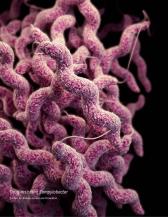
campy2

ITV news reports a father who became paralysed after contracting a rare illness from food poisoning has issued a warning to others about food safety.

Dai Braham, 40, was left paralysed from the nose down after becoming unwell while watching his six-year-old son play rugby in April.

Within a matter of days, he was in an induced coma. Father-of-two Dai was a keen bodybuilder and fitness fanatic

It was only later that medical staff discovered the fitness fanatic from Bridgend had been suffering from food poisoning campylobacter – which led to the rare autoimmune disorder Guillian-Barré Syndrome.

Israel – Achdut Recalls Multiple Brands of “Tahini” Because It May Be Contaminated with Salmonella Clarification for Baron’s Expiration Date

FDA Salm2

Achdut LTD. of Ariel, Israel, is recalling its Tahini products of all packages and sizes produced on the following dates: April 7th to May 21st 2018, because it may be contaminated with Salmonella, an organism which can cause serious and sometimes fatal infections in young children, frail or elderly people, and others with weakened immune systems. Healthy persons infected with Salmonella often experience fever, diarrhea (which may be bloody), nausea, vomiting and abdominal pain. In rare circumstances, infection with Salmonella can result in the organism getting into the bloodstream and producing more severe illnesses such as arterial infections (i.e., infected aneurysms), endocarditis and arthritis.

The recalled “Tahini” was distributed internationally in retail stores and through mail orders.

The tahini products are Tahini, Whole Tahini, Organic Tahini and Seasoned Tahini. Container sizes: 15oz, 16oz, 17.6oz, 635 oz (428g, 454g, 500g, 18Kg), with lot numbers 18-097 to 18-141 or with expiration dates April 7th to May 21st 2020, while the Baron’s brand carries an expiration date of 5/5/2021. The brand names of the products are: Achdut, Baron’s, S&F, Pepperwood, Soom and Achva.

Achdut is collaborating with health officials in connection with a positive finding of Salmonella in a US import sample of Achdut Tahini linked to a Salmonella outbreak that is currently being investigated by FDA and public health officials.

The probable root cause for this recall is cross contamination. The company has eliminated the source of contamination and preventive steps were taken.

Consumers who have purchased the Tahini above are urged to return them to the place of purchase for a full refund. Consumers with questions may contact the company at 972-3-9068020, Sun-Thu 08:00-17:00 GMT+2.

Research – Impact of egg sweating on Salmonella penetration

Poultry World Salmonella Eggs Food Poisoning Food Safety

Salmonella can be introduced into an egg through some 10,000 pores in the shell and entry could be facilitated by “egg sweating” or the formation of condensation on shell eggs, when they are moved from a cold to a warm environment with a minimum relative humidity.

Egg sweating occurs at many points during processing and transportation in the egg industry and Salmonella penetration into egg contents can increase when refrigerated eggs are moved to a warmer temperature. This occurs when eggs are tempered before wash, to minimise thermal cracks and before or after cold truck transportation if the ambient temperature and relative humidity permit.

Research – Effect of surrounding vegetation on microbial survival or die‐off on watermelon surface in an agriculture setting

Wiley Online Library

Abstract

Preharvest contamination of produce with food borne pathogens has been a major food safety issue. In this study, we investigated the effect of surrounding vegetation on the survival of natural and inoculated generic Escherichia coli on watermelon rinds in an agricultural field setting. There was no significant difference (p > .05) on the populations of natural generic E. coli (1–1.46 log Most Probable Number (MPN)/sample) and coliforms (<3.99 log CFU/cm2) on watermelons harvested from low, medium, and high levels of vegetation. However, the survival rate of generic E. coli inoculated on watermelon rind discs was variable with the level of vegetation. A significant reduction in generic E. coli count was observed within 12 hr at all vegetation levels. After 108 hr, discs placed at low vegetation level had a highest die‐off reduction (3 log Colony Forming Units (CFU)/cm2) compared to medium and high vegetation levels.

Practical applications

To ensure preharvest produce safety, the Food Safety Modernization Act (FSMA) produce safety rule has suggested a time interval between last irrigation and harvest for potentially contaminating microorganisms to die‐off. However, a knowledge gap exists regarding the influence of surrounding vegetation on microbial die‐off rates on produce in the agricultural field. The findings of this study emphasize the importance of considering the surrounding vegetation while making decisions for developing preharvest risk management strategies based on microbial die‐off rate calculations.