Category Archives: Food Illness

Turkey – 56 hospitalised over food poisoning in east Turkey

Vestnik

At least 56 people were hospitalized late Friday over suspected food poisoning in Turkey’s eastern Erzincan province, Xinhua reported citing Anadolu Agency.

And 21 among the patients were children, the report said.

Those affected had fever, nausea and vomiting after a farewell celebration dinner for conscript soldiers in Erzincan city center.

The patients were taken to the local hospital by ambulances immediately and were treated under medical observation.


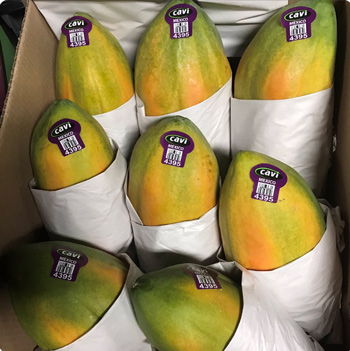
USA – Agroson’s Will Not Recall Cavi Papayas Likely Linked to Salmonella Outbreak

Food Poisoning Bulletin

The FDA has updated the Salmonella Uganda outbreak likely linked to fresh papayas imported from Mexico, stating that they have asked Agroson’s LLC, the distributor of the Cavi brand of papayas, to recall that product. Agroson’s has refused to initiate a recall.

USA – Outbreak Investigation of Salmonella Uganda Likely Linked to Whole, Fresh Papayas, June 2019 – Update

FDA

July 19, 2019

The U.S. Food and Drug Administration (FDA), along with the Centers for Disease Control and Prevention (CDC), and state and local partners, are investigating a multistate outbreak of Salmonella Uganda illnesses likely linked to Cavi Brand whole, fresh papayas.

The FDA has asked Agroson’s LLC, the exclusive distributor of this brand, to conduct a voluntary recall of Cavi brand papayas. Agroson’s LLC refused to initiate a recall. FDA contacted wholesale customers of Agroson’s LLC to ensure the fruit was no longer available for sale, has been discarded, or not further processed or frozen.  FDA is doing this to protect consumers as it pursues additional protective and regulatory actions.

Recommendations

Cavi papayas

For Consumers, Restaurants, and Retailers:

Consumers in all states should not eat any Cavi brand whole, fresh papayas and should throw them away. If consumers are unable to determine the brand of papayas, the product should be thrown away. Retailers, restaurants, and other food service providers in all states should not serve or sell whole, fresh papayas under the Cavi brand, which are distributed by Agroson’s LLC.

Consumers no longer need to avoid whole, fresh papayas, with the exception of Cavi brand papayas.

For Restaurants, Retailers, Importers, Suppliers, and Distributors in All States:

The FDA strongly advises importers, suppliers, and distributors, as well as restaurants, retailers, and other food service providers from all states to not sell or distribute whole, fresh papayas from Agroson’s LLC that are labeled under the Cavi brand.

Based on this new information, the hold FDA advised on June 28, 2019 for all imported Mexican papayas is no longer necessary.

Distributors don’t need to withhold Mexican papayas from distribution, with the exception of the Cavi brand.

Research – Number of foodborne illnesses associated with outbreaks in tomatoes decreased since 2001

FreshPlaza

About 48 million episodes of foodborne illness and 3,000 deaths occur per year in the United States. The most common foodborne pathogens cause an estimated annual burden of $14 billion to $36 billion. Produce has been implicated in 46 percent of foodborne illness outbreaks. Tomatoes have been the source of a number of foodborne illness outbreaks since 1998, but the annual number of foodborne illnesses associated with outbreaks in tomatoes has generally decreased since their high of nearly 900 in 2001. Ten outbreaks have caused more than 100 illnesses, while 2 were associated with deaths of individuals. In 2005 and 2006, multistate outbreaks of salmonella in tomatoes sickened 487 individuals.

Research – Norovirus most often responsible for foodborne outbreaks in Finland

Food Safety News norovirus-1080x655

More than 130 foodborne outbreaks were recorded in Finland between 2014 and 2016, according to a recent report.

Data comes from a register of foodborne and waterborne outbreaks maintained by the former Finnish Food Safety Authority (Evira) that became the Finnish Food Authority (Ruokavirasto) at the beginning of this year.

The number of people infected from foodborne pathogens was 2,761 in 132 outbreaks. Forty-eight people needed hospital treatment. No deaths were reported.

Vegetables and meat common food sources
Norovirus remained the most common agent in foodborne outbreaks between 2014 and 2016. It was responsible for 42, or 32 percent, of such outbreaks.

Russia – Moscow: Sandwich vending machines linked to dozens of food poisoning cases

Outbreak News Today

The Moscow Department of Rospotrebnadzor reported this week that dozens of people have been sickened after eating food from vending machines in Moscow, according to a Tass report.

As of Wednesday, at least 51 people developed symptoms of food poisoning and 26 required hospitalization.

“According to the latest data, as of 14:00 on July 17, 51 cases of acute intestinal infections were registered, the increase in the number of registered cases is associated with a late request for medical care for patients who previously consumed products under the Healthy food brand (legal entity Halfi Food Production – TASS’s note.) All the sick are adults. 26 people were hospitalized, six people were previously discharged from the previously hospitalized ones”, the report states.

The outbreak was first recognised earlier this month. Salmonella has been implicated in most cases of illness.

Information – Two varieties of E. coli behind multiple U.S. outbreak infections – O103 and O121

Food Safety News

This is a link to a  list of outbreaks in recent years that were caused by E. coli O103 and E. coli O121.

UK – Scotland – Salmonella and E. coli behind six outbreaks each last year in Scotland

Food Safety News

Shiga-toxin producing E. coli and Salmonella both caused six outbreaks last year in Scotland, according to figures from Health Protection Scotland.

Data comes from ObSurv, a surveillance system established in 1996 for general outbreaks of infectious intestinal disease in the country. It does not include those where infection is thought to have been acquired overseas.

The six outbreaks of Shiga-toxin producing E. coli (STEC) in 2018 were due to three different serogroups; three were O157, two were O145 and one was O26. A total of 22 people were affected with three outbreaks recording five cases. A source was not found for any of the outbreaks.

The total is comparable to the number of outbreaks in 2013 to 2017, when there was an average of five and a range of three to nine per year.

In five outbreaks the main mode of transmission was foodborne and in the sixth it was a combination of foodborne and person to person.

RASFF Alert – Foodborne Outbreak Salmonella – Chilled Cooked Pork Preparation

RASFF-Logo

RASFF – foodborne outbreak suspected to be caused by and Salmonella (present /25g) in chilled cooked pork preparation from Romania in Ireland

RASFF Alert – Foodborne Outbreak suspected (Histamine) – Chilled Tuna in Sunflower Oil

RASFF-Logo

RASFF – foodborne outbreak suspected (histamine) to be caused by chilled tuna in sunflower oil from Ecuador in Italy