Category Archives: Food Illness

UK – England: Health officials warn of E. coli STEC infections in individuals returning from Egypt

Outbreak News Today

British health officials are advising travelers to Egypt of a number of Shiga toxin-producing Escherichia coli (STEC) infections reported in people who traveled to the Hurghada region of Egypt.

There have been 18 cases of STEC in individuals returning from Egypt in 2019, including one case of Hemolytic Uremic Syndrome (HUS).

E. coli can cause an unpleasant diarrhea illness with stomach cramps and occasionally fever. Most people will recover without the need for medical treatment, but younger and older people may go on to develop complications of the infection, leading to kidney failure. This rare condition is called hemolytic uremic syndrome (HUS), which in very rare circumstances can be fatal.

E. coli is caught through ingesting contaminated food or water.

PHE

PHE recommends travellers to the region to:

  • where possible, avoid eating salads and uncooked vegetables
  • only eat fruit they can peel
  • avoid unpasteurised milk, cheese and ice cream
  • avoid food that has been left uncovered in warm environments and exposed to flies
  • ensure all meat is cooked thoroughly before you eat it, avoiding any meat that is pink or cold
  • avoid ice, unless made with filtered or bottled water, and tap water, even when brushing teeth
  • only drink bottled water or use ice made from bottled/filtered water
  • wash your hands thoroughly after visiting the toilet, and always before preparing or eating food. Alcohol gel can be helpful (but not entirely effective) when hand washing facilities are not available
  • when swimming, try and avoid swallowing water where possible and supervise children when swimming.
  • don’t swim whilst ill

For more information, visit NHS.UK.

This advice also applies to other countries where E. coli infections are common, including Turkey and Spain.

Dr Nick Phin, Deputy Director, National Infection Service, Public Health England, said:

We are aware of people returning from Egypt with E. coli infections, some with a serious kidney complication called haemolytic uraemic syndrome (HUS). We are gathering information about those affected to better understand the cause.

There are simple precautions that travellers can take. These include ensuring meat is cooked thoroughly, not drinking tap water or ice made from tap water and trying to avoid swallowing water when swimming.

Anyone suffering from diarrhoea and vomiting should ensure they keep well hydrated and seek medical advice if their symptoms don’t improve within 48 hours. They should also avoid preparing or serving food while they have symptoms and thoroughly wash their hands after using the toilet to stop the bug being passed to others. Individuals with symptoms after returning from holiday should seek medical advice from their GP or NHS 111.

 

USA – Salmonella Reading outbreak associated with a private event

King County

Summary

Public Health investigated an outbreak of salmonellosis (caused by Salmonella bacteria) associated with a private event held on April 20, 2019. Multiple potluck items were brought by party attendees. Assorted smoked and barbecued meat was also provided, including pork (whole pigs cut into quarters), turkey legs, and lamb. Some of this meat was partially prepared in a private residence.

Laboratory testing indicates this outbreak strain closely matches a national outbreak strain of Salmonella Reading related to raw turkey products, which suggests turkey as the likely source of illnesses from this private event. The national outbreak investigation is final, but CDC continues to monitor for reports of ill people because this Salmonella strain is present in the turkey industry.

Because we were unable to gather details about all foods served and consumed at this event and because no product remained for testing, we cannot identify the exact food item that was responsible for the illnesses.

USA – Outbreak of E. coli Infections Linked to Flour – Final Update –

CDC

This outbreak appears to be over, but the recalled flour products have long shelf lives and may still be in people’s homes. Consumers who don’t know about the recalls could continue to eat the products and get sick.

Recalls and Advice to Consumers, Restaurants, and Retailers
Illustration of a clipboard with check marks on it.
At A Glance


Photo of flour.

Several brands and types of flour were recalled because they may be contaminated with E. coli. Consumers should not use recalled products. The following products were recalled:

Brand Castle Mixes

  • On June 21, 2019, Brand Castle, LLC, of Bedford Heights, Ohio, recalledexternal icon several brands of cookie and brownie mix because flour used in them was potentially contaminated with E. coli. The following Brand Castle mixes, sold in 25-oz and 32-oz glass jars, were recalled:
    • Brand Castle Arctic Chill Chocolate Mint Cookie Mix: UPC 6-54448-01035-2, Lot L6112618
    • Brand Castle Hot Cocoa Cookie Mix: UPC 6-54448-01036-9, Lot L5111918
    • Sisters Gourmet Million Dollar Cookie Mix: UPC 6-54448-00002-5, Lot L2121818
    • Sisters Gourmet Billion Dollar Brownie Mix: UPC 6-54448-00017-9, Lot 31OCT2019BC8324
    • In the Mix Chocolate Mint Chip Cookie Mix: UPC 6-54448-01081-9, Lot LM101518
    • Brand Castle The Grinch Sugar Cookie Mix with Sprinkles: UPC 6-54448-01038-3, Lot 25JUL2019BC8324

Pillsbury Best Bread Flour

  • On June 14, 2019, Hometown Food Company, a customer of ADM Milling Co., announced a recallexternal icon of 5-lb. bags of Pillsbury Best Bread Flour with UPC Code 0 5150020031 5 and the following lot codes and use-by dates:
    • Lot Code: 8 342, Use-By Date: JUN 08 2020
    • Lot Code: 8 343, Use-By Date: JUN 09 2020

King Arthur Flour

  • On June 13, 2019, King Arthur Flour, Inc., a customer of ADM Milling Co., announced a recallexternal icon of 14,218 cases of 5-lb. bags of King Arthur Unbleached All-Purpose Flour. You can identify recalled flour by looking for the following best-used-by dates and lot codes on the bag’s side panel, below the nutrition facts box:
    • Best Used By 12/07/19 , Lot: L18A07C
    • Best Used By 12/08/19,  Lots: L18A08A, L18A08B
    • Best Used By 12/14/19,  Lots: L18A14A, L18A14B, L18A14C

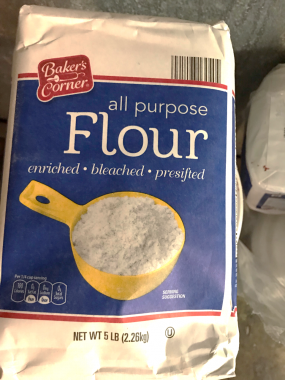
ALDI Baker’s Corner All Purpose flour

  • On May 23, 2019, ALDI, in association with ADM Milling Co., recalled pdf icon[PDF – 142 KB]external icon all 5-lb. bags of Baker’s Corner All Purpose Flour.
  • Recalled flour was sold at retail locations in the following states: Connecticut, Delaware, Massachussetts, New Hampshire, New Jersey, New York, Ohio, Pennsylvania, Rhode Island, Vermont, and West Virginia.

Consumers should not use any of the recalled flour. Throw it out.

  • If you stored flour in another container without the packaging and don’t remember the brand or “use by” date, throw it away.
  • Thoroughly wash the container before using it again.

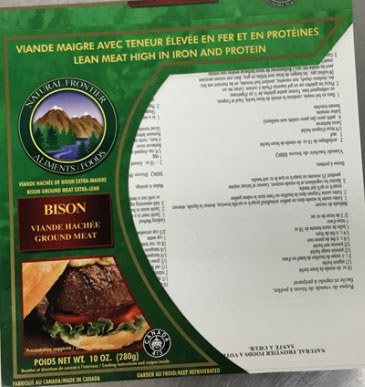
Canada -Food Recall Warning – Ground bison products recalled due to E. coli O121 and O103

CFIA Natural Frontier Foods - Bison – ground meat

Recall details

Ottawa, July 16, 2019 – Northfork Bison Distributions Inc. is voluntarily recalling ground bison products from the marketplace due to possible E. coli O121 and O103 contamination. Consumers should not consume the recalled products see link above.

This recall was triggered by the company and a recall in another country. The CFIA is conducting a food safety investigation, which may lead to the recall of other products. If other high-risk products are recalled, the CFIA will notify the public through updated Food Recall Warnings.

The CFIA is verifying that industry is removing recalled product from the marketplace.

Illnesses

There have been no reported illnesses associated with the consumption of these products in Canada. However, there have been reported illnesses in the United States linked to these products.


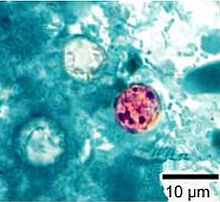
USA – Another State with Cyclospora?

Food Poison Journal Cyclospora_LifeCycle201

Northern Virginia Area Investigating an Increase in Intestinal Illness Associated with Cyclospora

Health Districts in the Region Seeking the Cause of Cyclosporiasis Increase

The health districts in northern Virginia are notifying the public that there has been a significant increase in the number of reported cyclosporiasis cases since mid-June 2019. To date there are 15 cyclosporiasis cases reported in the Northern Region of Virginia, up from eight at this time last year. Additionally, more than 40 people from two large businesses in the area have reported gastrointestinal illness, and are under investigation for suspected cyclosporiasis. A food or water source of this outbreak has not yet been identified, and the investigation is ongoing.

USA – Outbreak Investigation of Salmonella Infantis Linked to Del Monte Vegetable Trays, Spring 2019

FDA

July 12, 2019

The Food and Drug Administration (FDA) and state partners investigated an outbreak of Salmonella Infantis with cases reported in Wisconsin and Minnesota.

The FDA inspected the Del Monte facility that produced vegetable trays that the Wisconsin Department of Health Services linked to an outbreak of salmonellosis. The facility was in Kankakee, Illinois. The FDA also investigated distribution and supplier information for produce used in the vegetable trays. These investigation activities did not identify a single source or potential point of contamination for this outbreak.

Recommendation

It is not likely that the trays the Wisconsin Department of Health Services warned against eating on May 21are still on the market or still in people’s homes.

USA – Cyclospora at Italian American Community Center, Union College and Prime Life Restaurant

Food Poison Journal 220px-Cyclospora_cayetanensis_stained

The New York State Department of Health, working collaboratively with the Albany County Department of Health, Montgomery County Public Health, Saratoga County Public Health and Schenectady County Public Health Services, is investigating reports of multiple cases of Cyclosporiasis.

USA – Florida reports 10 Vibrio vulnificus cases year-to-date

Outbreak News Today

CDC Vibrio

Image CDC


Florida state health officials have reported 10 confirmed Vibrio vulnificus cases through July 12, according to the latest data.

Cases have been confirmed in the following counties: Broward, Charlotte, Hillsborough, Manatee, Osceola, Palm Beach, Pasco and Pinellas (3).

No deaths have been reported.

In 2018, health officials saw 42 confirmed cases and nine fatalities.

People can get infected with Vibrio vulnificus when they eat raw shellfish, particularly oysters. The bacterium is frequently isolated from oysters and other shellfish in warm coastal waters during the summer months. Since it is naturally found in warm marine waters, people with open wounds can be exposed to Vibrio vulnificus through direct contact with seawater. There is no evidence of person-to-person transmission of Vibrio vulnificus.

Vibrio vulnificus can cause disease in those who eat contaminated seafood or have an open wound that is exposed to warm seawater containing the bacteria. Ingestion of Vibrio vulnificus can cause vomiting, diarrhea and abdominal pain. Vibrio vulnificus can also cause an infection of the skin when open wounds are exposed to warm seawater; these infections may lead to skin breakdown and ulcers.

USA – Salmonella Braenderup Infections Associated with the Green Mill Hennepin County– April 2019

Food Poison Journal

On April 19, 2019, the Minnesota Department of Health (MDH) Public Health Laboratory (PHL) determined that two clinical Salmonella Braenderup isolates submitted through routine surveillance had indistinguishable pulsed-field gel electrophoresis (PFGE) patterns (Minnesota designation BR134). Initial interviews with these cases revealed that both had eaten food from the Green Mill in Bloomington in the week before their illness onset. City of Bloomington Environmental Health Division (CBEH) was notified, and an investigation was initiated.

USA – Red Robin in Westminster Colorado link in E. coli O157 Outbreak

Food Poison Journal

Three individuals, including one adult and two children, tested positive for the bacteria E. coli O157:H7 with all persons having reported eating at the Red Robin restaurant located at 799 W. 146th Ave in Westminster, Colorado. Tri-County Health Department inspected the restaurant on July 9, 2019, after receiving information about the outbreak from the Colorado Department of Public Health and Environment. Two of the three individuals infected were hospitalized, and the investigation is ongoing.