Category Archives: Food Illness

USA – Outbreak Investigation of Cyclospora: Bagged Salads (June 2020) CDC announces the end of the outbreak; FDA continues its investigation.

CDC

Investigation Update

September 25, 2020

As of September 25, 2020, CDC has announced this outbreak is over. FDA’s traceback investigation is complete, however the cause or source of the outbreak has not been determined. FDA’s investigation is continuing, in consultation with the state agriculture and regional water board.

FDA investigated multiple farms identified in the traceback, one of which led to sampling and investigation around a farm in south Florida. FDA continues to work with the state of Florida and the local water district to try to determine the source and impact of Cyclospora that was found in the regional water management canal (C-23), located west of Port St. Lucie, Florida. Given the emerging nature of genetic typing methodologies for this parasite in foods and in environmental samples, the FDA has been unable to determine if the Cyclospora detected in the canal is a genetic match to the clinical cases, therefore, there is currently not enough evidence to conclusively determine the source of this outbreak. However, the presence of Cyclospora in a canal that had previously supplied irrigation water in the region, and specifically to a farm identified in the traceback, suggests the need for a collaborative effort by state, federal and industry partners to better define the scope of the contamination and identify appropriate risk mitigation measures.

Previous Updates

USA – Outbreak Investigation of Salmonella Stanley: Wood Ear Mushrooms – Dried Fungus (September 2020)

FDA

Background Information

The FDA, along with CDC and state and local partners, is investigating an ongoing multistate outbreak of Salmonella Stanley infections likely linked to wood ear mushrooms imported by Wismettac Asian Foods, Inc. of Santa Fe Springs, CA. Wood ear mushrooms are a dried mushroom, also commonly labelled or referred to as Kikurage, Dried Black Fungus, Dried Fungus, or Mu’er/Mu Er/Mu-Err.

In interviews, ill people answered questions about the foods they ate and other exposures in the week before they became ill. According to the CDC, of 18 people with information, 16 (89%) reported eating ramen at a restaurant in the week before their illness started. Four illness clusters were identified at restaurants serving ramen in three states. Eight (89%) of the nine ill people linked to restaurant clusters reported eating wood ear mushrooms or ramen containing wood ear mushrooms in the week before their illness started.

As part of this investigation, the California Department of Public Health collected a sample of wood ear mushrooms, imported by Wismettac Asian Foods, Inc., from one of the restaurants where ill patients reported eating. This sample was reported positive for the presence of Salmonella. This sample is undergoing genetic testing, or whole genome sequencing, to determine if the Salmonella present in the sample has the same genetic fingerprint as the outbreak strain. More information will be provided as it becomes available.

Wismettac Asian Foods, Inc. acted quickly upon being notified of the positive test result and recalled all wood ear mushrooms within shelf life on September 23, 2020. This product was labeled as Shirakiku brand Black Fungus (Kikurage) with UPC Code 00074410604305, imported from China. Product was distributed in six packs of five-pound bags to restaurants in AR, CA, CO, CT, DE, DC, FL, GA, HI, IA, IL, IN, LA, MA, MD, MI, MN, MO, MS, NC, NV, NJ, NY, OH, OR, PA, SC, TN, TX, VA, WA, WI, and Canada.

Recommendation

Wood ear mushrooms imported by Wismettac Asian Foods, Inc. were only sold to restaurants and were not available directly to consumers. Although these items have been recalled, concerned or high-risk individuals should check with their restaurant to confirm that any wood ear mushrooms that have been used or are being used are not part of this recall.

Restaurants should not sell or serve recalled wood ear mushrooms distributed by Wismettac Asian Foods, Inc. Additionally, restaurants that received recalled products should use extra vigilance in cleaning and sanitizing any surfaces that may have come in contact with recalled product, to reduce the risk of cross contamination.

Restaurants should discard and not sell or serve wood ear mushrooms if they cannot tell where they came from.

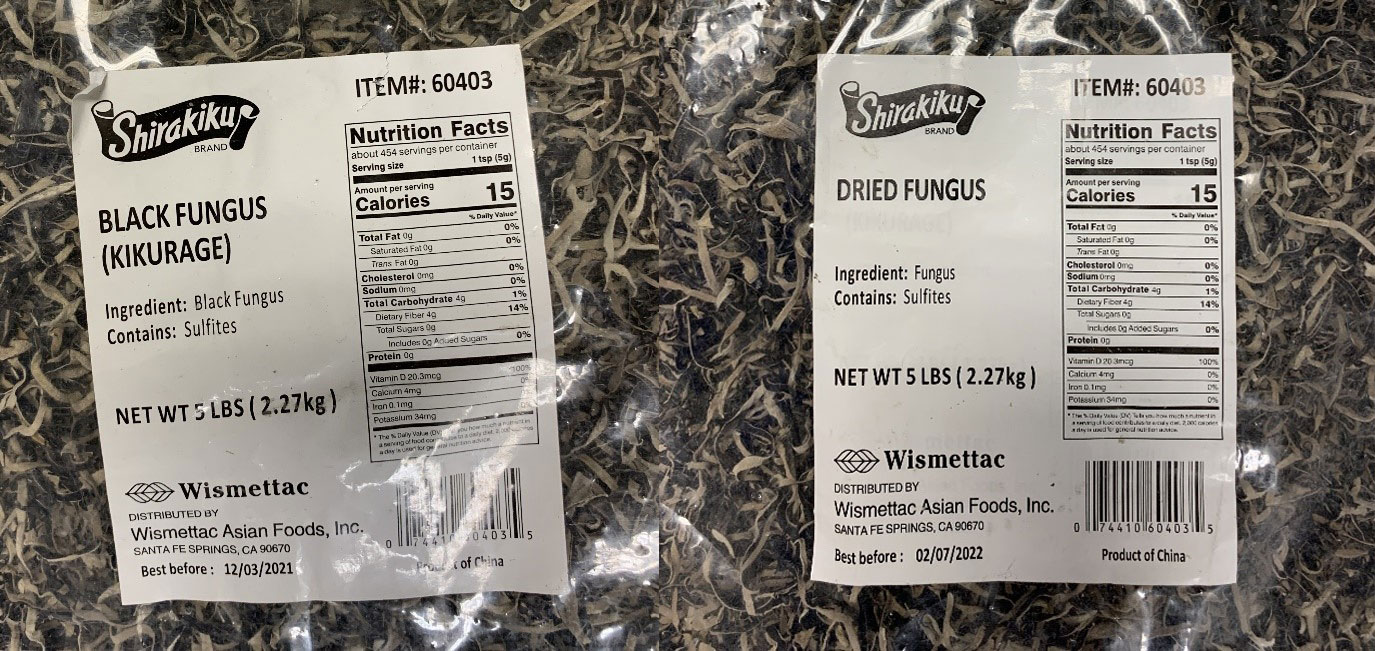
Product Images

Outbreak Investigation of Salmonella Stanley in Wood Ear Mushrooms (September 2020) - Photos of Recalled Shirakiku Dried Fungus

Russia – Six botulism deaths in Volgograd in first half of 2020

Outbreak News Today

Officials in the Volgograd region in Southern Russia have reported 60 botulism cases in the first half of 2020.

Of the sixty cases, six fatalities were reported.

About 200 people suffer from this severe disease affecting the central nervous system in the region every year. Now the inhabitants of the region are actively engaged in the preparation of homemade canned food for the winter.

This has prompted the Office of Rospotrebnadzor in the Volgograd region to put some restrictions.

Experts advise against buying pickles on the street and homemade smoked meats. Housewives should not reduce the amount of salt and vinegar or shorten cooking time during home preservation.

Research – Netherlands – Surveillance zoonoses in broilers 2018-2019

RIVM

Animals can carry pathogens that can cause disease in humans. The diseases which they cause are known as zoonoses. In 2018 and 2019 the National Institute for Public Health and the Environment (RIVM) and the Netherlands Food and Consumer Product Safety Authority [Netherlands Food and Consumer Product Safety Authority] (NVWA) investigated how often some of these pathogens occurred in broilers. This study involved broilers at 198 farms as well as 132 livestock farmers, family members and employees. RIVM assessed whether the same pathogens also occurred in these persons. Most of these pathogens usually cause diarrhoea, but the infections can sometimes be more severe. ESBL-producing bacteria were also assessed, as they are resistant to an important group of antibiotics.

A number of pathogens occur frequently in the investigated broilers. They are present in the animals’ intestines and therefore in the manure as well. Meat can become contaminated in the slaughterhouse if it comes into direct contact with the manure. People can prevent an infection by only eating chicken that has been thoroughly cooked. It is also important to prevent other food from coming into contact with raw meat.

Of the pathogens investigated, ESBL-producing bacteria were found most often, namely in the broilers on 36% of the farms. Among livestock farmers and family members, these bacteria were found in 7% of participants. This is comparable to the percentage in the general Dutch population.

Campylobacter was found on 32% of broiler farms. This is comparable to the numbers from Campylobacter surveillance conducted between 1999 and 2002. Campylobacter was also found in two of the human participants.

Salmonella surveillance is carried out on all broiler farms according to European legislation. Salmonella was reported in broilers from 11% of the farms. The types of Salmonella bacteria identified are those that can cause diarrhoea in people. Salmonella was also found in one human participant.

STEC and Listeria were found on very few broiler farms. These bacteria were detected on 1% (Listeria) or less (STEC) of the investigated farms.

Research – Listeria found for years at site of sandwich producer

Food Safety News

The factory of a sandwich producer in England linked to an illness was contaminated by Listeria for almost three years, a report into the incident has found.

In July 2017, Listeria monocytogenes was isolated from the blood of a 53-year-old in a hospital in Yorkshire and Humberside with an underlying health condition. The man had eaten sandwiches made by the company while in the hospital at least 12 times in the three weeks prior to illness.

The isolate was genetically indistinguishable to those from sandwiches and salads produced by the company based in Bradford who supplied National Health Service (NHS) hospitals, other institutions and retailers nationwide.

France – Gorgonzola AOP 200 gr of the Monoprix Gourmet brand

Oulah

Rappel produit : Gorgonzola AOP 200 gr de marque Monoprix Gourmet

ENCOUNTERED PROBLEM

Presence of Listeria monocytogenes

PROPOSED SOLUTION

Those in possession of this product are asked not to consume it and to return it to the point of sale where it was purchased for reimbursement.

People who have consumed this product and who have a fever, isolated or accompanied by headaches, are invited to consult their doctor, notifying him of this consumption.
Pregnant women should pay special attention to these symptoms, as well as immunocompromised people and the elderly. These symptoms may suggest listeriosis, a disease that can be serious and can take up to eight weeks to incubate.

FURTHER INFORMATION

▸ Lot
P231002

▸ Barcode
3 350 031 979 941

▸ Packaging
200 g tray

▸ DLC
01/10/2020

▸ Consumer service contact
0 800 084 000

▸ Source
https://www.60millions-mag.com/


India – 32 people including a child hospitalised in Aizawl due to food poisoning

Nenow

At least 32 people, including a 10- year-old boy, from the eastern part of Aizawl, have been admitted to hospitals, including a makeshift centre, due to food poisoning.

The people suffered from food poisoning after consuming fermented soybean, a health official said on Wednesday.

At least 53 people have been affected by food poisoning due to consumption of fermented soybean sold by a woman in the neighbourhood, he said.

Of the 53 people, 3 have been admitted at nearby Greenwood hospital, Aizawl civil hospital and 28 people were admitted in a makeshift hospital arranged by the government at a Presbyterian church hall at Chite Veng on the behest of the local MLA and minister Robert Romawia Royte since Tuesday night, Lalzawmliana said.

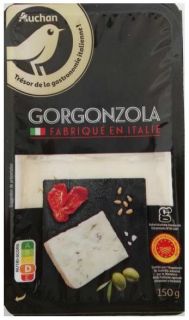
Luxembourg – RECALL: GORGONZOLA OF THE AUCHAN BRAND – RISK OF THE PRESENCE OF LISTERIA MONOCYTOGENES

SAP

Last name GORGONZOLA
Mark AUCHAN
Unit 150 g
Bar code 3596710406647
Best before date (DLC) 01/10/2020
Lot P230003

Danger  : Risk of presence of Listeria monocytogenes

Listeria monocytogenes can cause fever, headache, and gastroenteritis. Vulnerable people such as the immunocompromised and the elderly and young children may experience neurological symptoms due to meningitis. Pregnant women should also pay special attention to these symptoms. Gastroenteritis can appear between a few hours and 3 days after consumption, while neurological symptoms can only appear after 3 months. People who have consumed these products and who present these symptoms are advised to consult a doctor, notifying him of this consumption.

Sale in Luxembourg by: Auchan

Source of information: Recall notification by Auchan

Communicated by: Government Commission for Quality, Fraud and Food Safety .

Canada – N.B. declares outbreak of shellfish bacteria causing gastrointestinal illness – Vibrio parahaemolyticus

Global News CA

Food Illness - Vibrio

Image CDC

New Brunswick health officials have declared an outbreak of vibrio parahaemolyticus, a bacteria found in shellfish that causes gastrointestinal illness in humans.

The province says nine cases of vibrio have been confirmed. The average for New Brunswick is typically only two to three cases a year.

“I am advising all New Brunswickers to ensure that they obtain shellfish and other seafood from a licensed establishment or harvest shellfish from fishing zones which are currently open by Fisheries and Oceans Canada,” said N.B. chief of health Dr. Jennifer Russell in a news release.

USA – Health departments probe Salmonella outbreak in NE counties

Journal Advocate

Salmonella kswfoodworld

Investigators with the Colorado Department of Public Health and Environment and the Northeast Colorado Health Department are looking into a cluster of Salmonella infections in residents of northeastern Colorado counties.

According to Deanna Herbert, a communications manager with CDPHE, 17 cases of Salmonella illness have been reported in northeast Colorado between Aug. 1 and Sept. 17. Eleven of those cases were in Logan County. Herbert said that typically, fewer than 12 cases are reported in the six northeastern counties during the months of August and September.

“Public health investigates reported Salmonella cases to determine if the cases have common exposures that might indicate that an outbreak is occurring,” Herbert said. “A single common exposure for all of the reported cases in August and September has not been identified and the investigation is ongoing.”