Category Archives: Food Hygiene

Research – Evaluation of the growth potential of Listeria monocytogenes in Belgian farm cheeses, according to a committee of experts

Background and terms of reference In its advice 02-2016, the Scientific Committee (SciCom) made recommendations for carrying out challenge and durability tests for Listeria monocytogenes (L. monocytogenes) in cheese.On the basis of these recommendations, a scientific study was carried out in order to collect data from Belgian homestead cheeses. The Scientific Committee was asked to evaluate the  growth potential of L. monocytogenes in Belgian homestead cheeses. Method Based on new scientific knowledge and data (including the results of the study project “Étude du potentiel de croissance de Listeria monocytogenes dans les fromages produits par les producteurs fermiers, 2019”) and based on expert opinion, the Scientific Committee has assessed the growth potential of L. monocytogenes in Belgian homestead cheeses (fresh cheeses, soft cheeses and semi-hard cheeses).
Results
The production processes of Belgian homestead cheeses and their characteristics were
examined by means of a survey of 142 producers and a market study of 65 different Belgian homestead cheeses. Subsequently, the growth of L. monocytogenes in 32 Belgian homestead cheeses was studied by means of challenge tests. No growth of L. monocytogenes was observed for fresh cheeses. For soft cheeses, there was growth of L. monocytogenes in 7 out of 8 cheeses. For the semi-hard cheeses, much variation was observed for the growth potential of L. monocytogenes. Durability tests were carried out on five Belgian farm cheeses which were naturally contaminated with L. monocytogenes, each on one batch. Only for feta, no growth was detected in this durability test.
Conclusions
Based on the available data, the Scientific Committee concludes that in fresh cheeses (Belgian homestead cheeses) the risk of L. monocytogenes growth is low if the pH value drops below 5,0 by the end of the production process. Based on the challenge tests, the growth of L. monocytogenes in soft cheeses and semi-hard cheeses cannot be excluded. Soft cheeses are a known risk product. Semi-hard cheeses present a potential risk for growth of L. monocytogenes and the growth potential should be assessed on a case-by-case basis. The durability test with feta shows no growth of L. monocytogenes. However, a single durability test is not sufficient to conclude that all feta cheeses are a low risk product. In addition, a correct implementation of Good Manufacturing Practices (GMP) and an adequate Hazard Analysis and Critical Control Points (HACCP) remain essential, with the aim of striving for the absence of L. monocytogenes (in 25g) in Belgian homestead cheese (preferably sampling several units n=5) for the delivery of a safe product to the consumer.
Recommendations
The Scientific Committee recommends that pH controls at the end of the production process of fresh cheeses (Belgian homestead cheeses) are included in the HACCP procedures as a control measure, so that the operator can ensure that a sufficient pH reduction has occurred at the end of the production process. It is recommended that in future durability studies with low initial concentrations of L. monocytogenes (< 10 cfu/g) also semi-quantitative data are collected by carrying out isolations on smaller quantities such as 10 g and 1 g or by determining the Most Probable Number of L. monocytogenes. Finally, for durability tests it is proposed to use, when possible, an initial contamination level below 1000 cfu/g L. monocytogenesin order to be able to effectively assess the growth potential.
The full text is available on this website in dutch and in french.

Hong Kong – Food Alert Not to consume a batch of bottled fruit juice drink contaminated with patulin

CFS

Issue Date 8.4.2020
Source of Information Routine Surveillance Programme
Food Product A bottled fruit juice drink imported from New Zealand
Product Name and Description Product name: 100% Raw Apple Juice with Manuka Honey, Lemon & Ginger

Country of origin: New Zealand

Manufacturer: The Homegrown Juice Company

Importer: The Dairy Farm Company Limited

Volume : 1 litre per bottle

Best-before date: June 21, 2020

Reason For Issuing Alert
  • The test result showed that the sample contained patulin at a level of 150 parts per billion (ppb), exceeding the action level of 50ppb adopted by the CFS.
  • Patulin mostly occurs in rotten apple and its products. Generally speaking, apple juice with a low level of patulin will not cause acute intoxification. However, studies have shown that gastrointestinal hyperaemia, distension, haemorrhage and ulceration could be resulted if animals are exposed to high levels of patulin over a short period of time.
Action Taken by the Centre for Food Safety
  • The CFS has informed the importer concerned of the irregularity, and the importer has stopped sale and removed from shelves the affected batch of the product and initiated a recall according to the CFS’ instructions.
  • Prosecution will be instituted should there be sufficient evidence.
Advice to the Trade
  • Stop using or selling the affected products immediately if they possess them.
Advice to Consumers
  • Not to consume the affected products.
Further Information The CFS press release


Members of the public may call the company’s hotline at 2299 1133 for enquiries about the recall during office


Information – How Do You Know If You Have a Botulism Infection?

Food Poisoning Bulletin

Botulism is one of the scariest and most lethal foodborne illness infections. The bacteria Clostridium botulinum produces a toxin as it grows. A tiny, tiny amount of that toxin is enough to kill an adult. So how do you know if you have a botulism infection?

Most people think that botulism outbreaks are tied to canned food. It’s true that the bacterium grows in an anaerobic environment, which means that there is no air in the container that holds the food. But botulism can also grow in honey, which is why babies under the age of 1 should never be given honey.

And a deadly botulism outbreak linked to nacho cheese sauce served at Valley Oak and Fuel in Walnut Grove, California in May, 2017 sickened 10 people and killed one person.

The bacteria and the toxin do not change how the food looks, smells, or tastes, and the texture is not affected. The only way to protect canned food against this toxin is to make sure that all canned food is made according to food safety regulations.

USA – Homestead Creamery Unsalted Butter Recalled For Possible Listeria

Food Poisoning Bulletin

listeria

Image CDC

Homestead Creamery unsalted butter is being recalled because it may be contaminated with Listeria monocytogenes bacteria, according to a press release issued by the Virginia Department of Agriculture and Consumer Services. No illnesses have been reported to date in connection with this problem. The creamery is located in Wirtz, Virginia.

The Homestead Creamery unsalted  butter was distributed to the company’s distribution partners, through home delivery, and was sold in the company’s retail store. The recalled unsalted butter was packaged in 1/2 pound packages, marked with an expiration date of 04/30 printed on a sticker that was attached to the plastic packaging.

The potential for contamination was found after routine testing by Homestead Creamery found the pathogenic bacteria in the unsalted butter. Production of this product has been suspended while public health officials investigate the source of the contamination.

If you purchased this butter, do not eat it. There is zero tolerance for Listeria monocytogenes contamination in ready-to-eat products. You can discard the butter in a secure garbage can, or take it back to the place of purchase for a full refund.

Research- FAO and WHO report rise in foodborne diseases related to Vibrio species

New Food Magazine

The FAO/WHO assessment revealed that there have been a series of pandemic outbreaks of V. parahaemolyticus foodborne illnesses due to the consumption of seafood and outbreaks have occurred in regions of the world where it was previously unreported.

Full Report


Canada – Updated – Fromagerie Blackburn brand Le Mont-Jacob semi-soft cheese recalled due to Listeria monocytogenes

CFIA

Recall details

Ottawa, April 5, 2020 – The food recall warning issued on March 26, 2020 has been updated to include additional product information. This additional information was identified during the Canadian Food Inspection Agency’s (CFIA) food safety investigation.

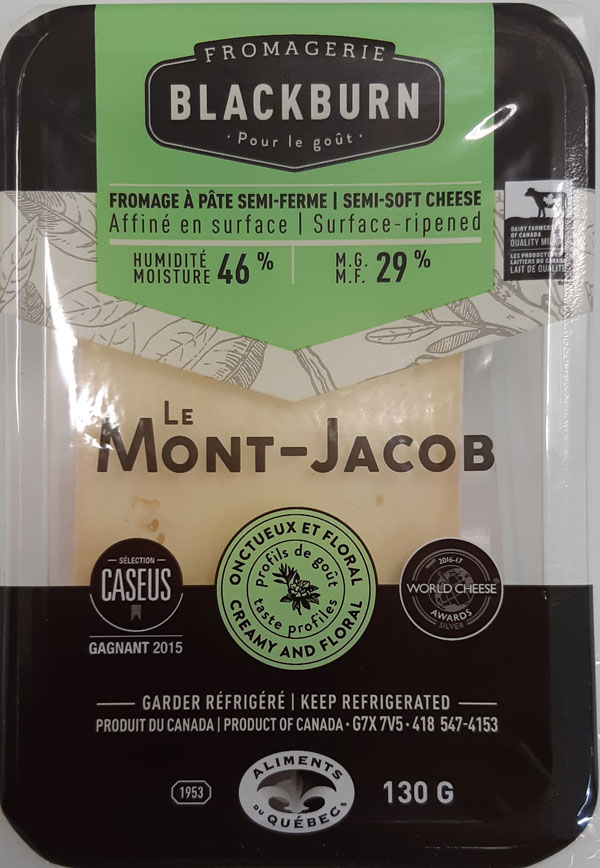
Fromagerie Blackburn is recalling Fromagerie Blackburn brand Le Mont-Jacob semi-soft cheese from the marketplace due to possible Listeria monocytogenes contamination. Consumers should not consume the recalled products described below.

Cheese wheels of Le Mont-Jacob semi-soft cheese have been sold cut up and re-packaged. Consumers who are unsure if they have purchased the affected product are advised to contact their retailer.

Recalled product

Brand Product Size UPC Codes Lot
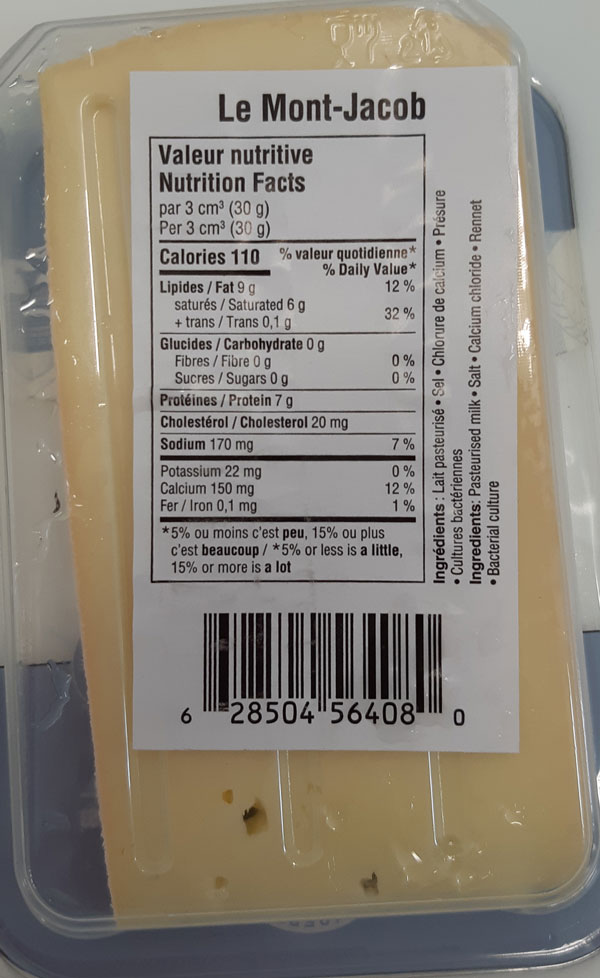
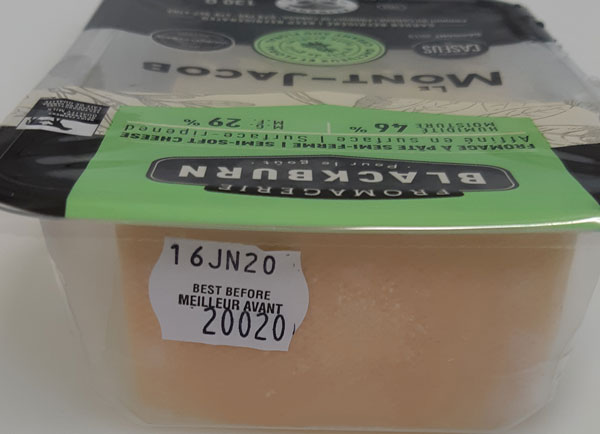
Fromagerie Blackburn Le Mont-Jacob semi-soft cheese 130 g 6 28504 56408 0 Best Before
05JN20
16JN20
25JN20
20007
20020
20028
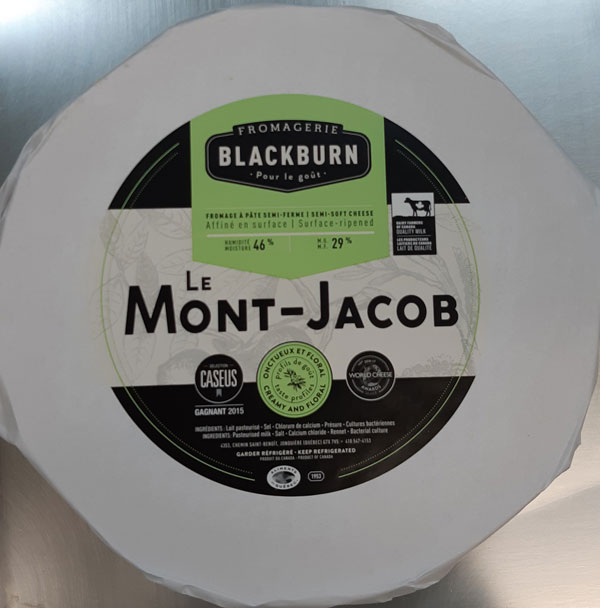
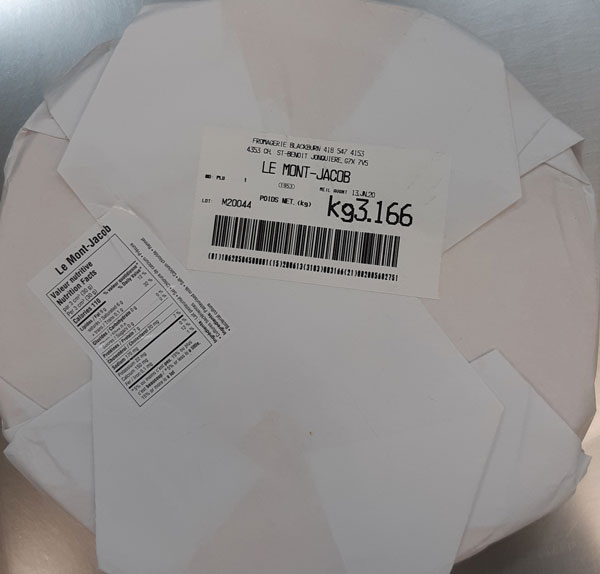
Fromagerie Blackburn Le Mont-Jacob semi-soft cheese Variable weight – cheese wheels 6 28504 56403 5 All products with a BBD up to and including 15JN20 20007,
20008,
20014,
20015,
20016,
20020,
20021,
20022,
20028,
20036,
20042,
20043,
20044,
20050
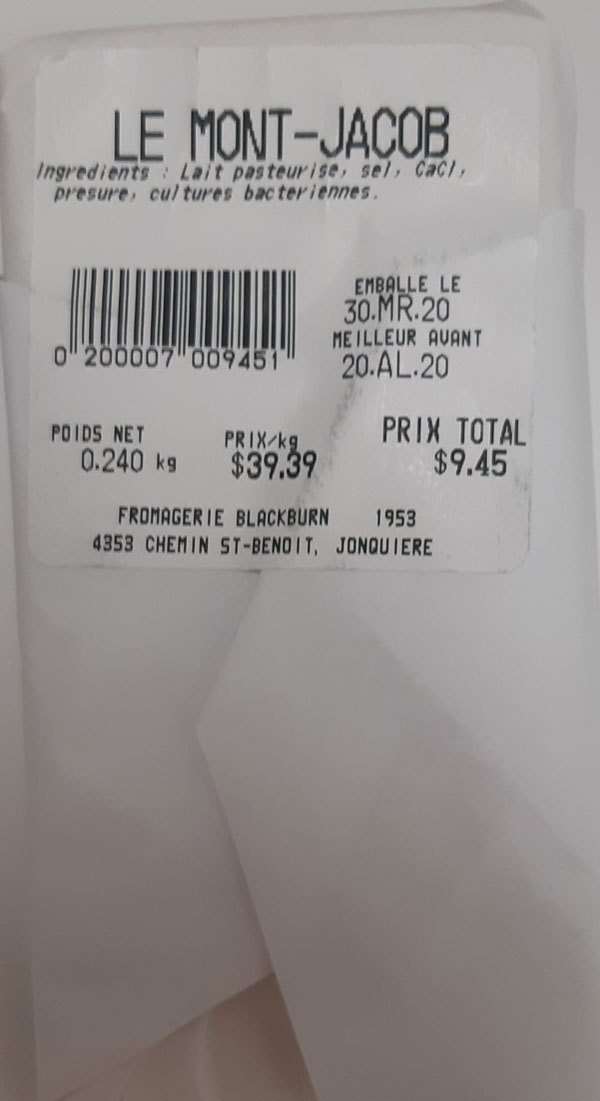
Fromagerie Blackburn Le Mont-Jacob semi-soft cheese Variable weight Begins with 0 200007 All units sold up to and including April 5, 2020 None

What you should do

If you think you became sick from consuming a recalled product, call your doctor.

Check to see if you have the recalled products in your home. Recalled products should be thrown out or returned to the store where they were purchased.

Food contaminated with Listeria monocytogenes may not look or smell spoiled but can still make you sick. Symptoms can include vomiting, nausea, persistent fever, muscle aches, severe headache and neck stiffness. Pregnant women, the elderly and people with weakened immune systems are particularly at risk. Although infected pregnant women may experience only mild, flu-like symptoms, the infection can lead to premature delivery, infection of the newborn or even stillbirth. In severe cases of illness, people may die.

Background

This recall was triggered by the company. The Canadian Food Inspection Agency (CFIA) is conducting a food safety investigation, which may lead to the recall of other products. If other high-risk products are recalled, the CFIA will notify the public through updated Food Recall Warnings.

The CFIA is verifying that industry is removing the recalled products from the marketplace.

Illnesses

There have been no reported illnesses associated with the consumption of these products.

Product photos

Printer ready version of photos

  • Fromagerie Blackburn – Le Mont-Jacob semi-soft cheese – 130 grams (front)
  • Fromagerie Blackburn – Le Mont-Jacob semi-soft cheese – 130 grams (back)
  • Fromagerie Blackburn – Le Mont-Jacob semi-soft cheese – 130 grams (best before date)
  • Fromagerie Blackburn – Le Mont-Jacob semi-soft cheese – Variable weight – cheese wheels (front)
  • Fromagerie Blackburn – Le Mont-Jacob semi-soft cheese – Variable weight (back)
  • Fromagerie Blackburn – Le Mont-Jacob semi-soft cheese – Variable weight (UPC)

France – Salmonella – Roasted fillet of MASTER COQ turkey, thinly sliced ​​turkey FULL FLAVOR, Turkey breasts of MASTER COQ turkey, CARREFOUR turkey legs

AFSCA

Following a notification via the RASFF system (European rapid alert system Food and Feed), the AFSCA is withdrawing from the sale the following products: roasted turkey fillet MAITRE COQ, minced FULL FLAVOR turkey, cutlets of turkey MAITRE COQ, CARREFOUR turkey legs and reminds them of consumers due to the possible presence of Salmonella.


Research – Testing important to monitor mycotoxin risk to animals

Feed Strategy

Wet corn harvests in 2018 and 2019 mean producers must closely track the levels of mycotoxins in feed

“Everybody needs to test because there’s a broad variation in risk across the country,” he said in a webinar on mycotoxin management on March 31. “If we don’t test, we can’t understand what that risk is, and we have to understand the risk in order to formulate a program.”

USA – Mountain Rose Herbs Recall on “Organic Kudzu Root Herbal Supplement” Due to Salmonella

Food Poisoning News

Mountain Rose Herbs Recall on “Organic Kudzu Root Herbal Supplement” Due to Salmonella

Mountain Rose Herbs, located in Eugene, Oregon, is issuing a recall on all sizes of the companies “Organic Kudzu Root Herbal Supplement” due to the presence of Salmonella which was found through routine quality testing procedures. The recalled Organic Kudzu Root Herbal Supplement, which is used in traditional Chinese medicine because of its antioxidant properties, is packed in clear plastic or poly-woven bags, weighing in ranges of 4 ounces to 50 pounds. The two lots of Organic Kudzu Root Herbal Supplements that are affected in the recall are Lot #24247-X and Lot #24247.

To check and see if the product purchased in a part of the recall for Salmonella contamination, the lot number is located on the bottom corner of the label.

RASFF Alert – STEC E.coli – Frozen Sausages

RASFF-Logo

RASFF – shigatoxin-producing Escherichia coli (stx2+) in and absence of labelling (UBD missing) on frozen sausages from the United Kingdom in Germany